

Decluttering is helping when you can use your home more easily: sit at the table, reach what you need, open a cabinet, or move through a room without shifting belongings first. For South Carolina households staying in their current home, those observable changes offer a better measure of an initial effort than bags filled or items removed. Compare a specific task before and after, and check whether the improvement created a problem elsewhere.
Quick answer: Choose an ordinary activity that clutter interrupts. Describe the obstacle, make a limited change, then try the activity again. Progress means the activity works better, essential belongings remain accessible, and displaced items have a clear destination. A smaller pile alone does not establish that result.
What should you compare before and after decluttering?
Start with a sentence about how you want to use the space. “I want to eat at this table without moving paperwork” gives you something concrete to test. “I want the house to look better” leaves too much open to interpretation.
Record the obstacle in plain words.
Useful comparisons include:
- Kitchen: Preparing food requires clearing a usable section of counter.
- Bedroom: Reaching everyday clothing requires moving stored bags.
- Living room: A chair holds belongings, so someone cannot sit there.
- Entry: Opening the door requires pushing objects out of its path.
- Desk: Finding a needed document means searching through unrelated papers.
Choose the comparison that matters to the people living there.
If identifying a manageable starting point is the immediate problem, read How do you start decluttering when you feel overwhelmed?. This guide focuses on judging the result once an initial task has been attempted.
For help discussing the household’s intended use of a space, explore Clutter Cleaner of South Carolina’s downsizing and organizing service.

Look for evidence in ordinary daily use
A useful result should show up during something you actually do. An empty surface can be evidence, but its value depends on what that surface now allows.
For example, clearing a dining chair helps if a household member can sit down comfortably. Clearing the same chair by filling the only accessible coat closet may leave another activity harder.
Look for changes such as:
- A needed object can be retrieved without moving unrelated belongings.
- A drawer or cabinet opens and closes as intended.
- A work surface supports its intended activity.
- A walking route no longer requires stepping around the sorted belongings.
- Items used together are accessible where that activity happens.
Room function and feelings about the room can differ. Someone can dislike the appearance of a room even when it functions better. Another person can like a freshly cleared room while still struggling to find their belongings. Evaluate the practical change on its own terms.
Ask each person who uses the area to try the relevant activity. A placement that works for the person doing the sorting may be inconvenient for someone with different reach, movement, or household responsibilities.
Judge the arrangement against the actual user.
How do you test whether a cleared space really works?
Repeat the activity you named before starting. If the goal was making breakfast, use the counter for breakfast preparation. If it was accessing clothing, retrieve the clothes you normally wear.
Avoid changing the test to make the result look successful. A table cleared for eating has not met that goal if it only works after the household moves the remaining sorting boxes.
A short written comparison can capture the result:
- Before: Papers covered the place where we set meals.
- After: Meals fit, but the papers now block a cabinet.
- Finding: The table works better; paper placement still needs a decision.
That finding is more useful than “mostly done.” It identifies both the gain and the unresolved obstacle.
Try the space under its ordinary conditions, with the belongings you need present.
If the original task was too broad to test, How do you choose the first decluttering task? can help you define a smaller target. Keep the success measure tied to that target rather than expanding it to every nearby problem.
Check where the clutter went
A clear area can hide an unfinished transfer. Bags may move into a hallway, papers into a bedroom, or useful objects into an unlabeled box. The original spot improves, but the household loses access somewhere else.
After testing the cleared area, look at the destinations of the moved belongings.
Distinguish among:
- A usable home: The item has an accessible location suited to its use.
- A temporary holding place: The item is contained while a specific decision remains open.
- A new obstruction: The item interrupts another activity or route.
- An outside destination: The household has chosen a recipient or provider, with acceptance or arrangements still to confirm.
Temporary holding can be reasonable. Treat it as unfinished work rather than proof that an item has left the household.
Inherited belongings may also require a different decision process. If your task involves an estate, the existing guide How do estate cleanouts work? provides a relevant next read. Keep ownership and authorization questions separate from whether your current living space functions better.
For ways to contain an initial effort while preserving room use, see How do you declutter without making a bigger mess?.
Record the result without building a tracking system
A brief note is enough to preserve what you learned. You are evaluating the initial change, so there is no need to turn the exercise into an ongoing household reporting routine.
Use a few plain statements:
- Intended use: Read and sort incoming mail at the desk.
- Observed improvement: The desk surface is usable, and current papers are easy to retrieve.
- Remaining obstacle: Archived papers occupy the chair.
- Decision needed: The household must choose an accessible location for records it needs to retain.
This note separates completed work from work that merely changed location.
Photographs are optional. If you use them, compare the same area under similar conditions and keep private documents out of view. A photograph can show a clear surface, but it cannot demonstrate that a needed item remains easy to find.
What does partial progress tell you?
Partial progress can be meaningful when the change improves the activity you chose. You do not need to clear an entire room for a useful result.
Suppose a bedroom still contains stored belongings, but everyday clothing is accessible and the bed can be used without relocating boxes. Those are specific gains. They do not establish that every remaining storage decision is resolved.
Describe the outcome accurately:
- Working: The chosen activity can happen without the original obstruction.
- Partly working: The activity is easier, but a named obstacle remains.
- Not yet working: The original obstacle persists or has moved into another essential area.
Also check for lost function. Removing a familiar storage spot may make a room look clearer while leaving frequently used belongings scattered. That suggests the arrangement needs revision.
Keeping more belongings than expected does not erase a functional improvement. Removing more than expected does not prove that the arrangement works.
Adjust the obstacle your test revealed
Let the observed result determine the next decision. If the table works but the displaced papers block a cabinet, expanding into another room will not resolve that specific problem.
The household might choose to relocate retained records, separate papers awaiting a decision, or ask the appropriate adviser which documents must be kept. The right choice depends on the contents and the people responsible for them.
Other findings point to different adjustments:
- A reachable shelf is too crowded for easy retrieval, so retained items need a different arrangement.
- An object fits neatly but is stored far from where it is used.
- A temporary box prevents another person from using their usual seat.
- An item marked for donation has no confirmed recipient.
Outside storage is a separate household choice. Consider what would be stored, how it would be retrieved, and the provider’s terms before treating it as a solution.
Donation, recycling, and disposal also require separate destination decisions. Confirm what the recipient or responsible provider accepts, particularly for materials that need special handling. A bag by the door is still awaiting that step.
Discuss practical help and professional boundaries
When speaking with a practical cleanout or move team, describe the activity you want to restore and the obstacle that remains. “We need access to everyday clothing, and these boxes have no agreed destination” provides a clearer starting point than “everything needs to go.”
A team may discuss access, sorting boundaries, belongings that must remain available, handling concerns, and the proposed scope. Confirm responsibilities before work begins, including who makes decisions and which arrangements require separate providers.
The household can decide its preferred room use and authorize choices about belongings it owns, subject to any applicable obligations. Other decisions belong with the responsible professional or authority:
- Legal: An attorney or authorized decision-maker addresses ownership disputes, estate authority, and document-retention obligations.
- Appraisal: A qualified appraiser determines value when a formal valuation is needed.
- Real estate: The responsible real-estate professional advises on listing and sale preparation.
- Repairs and inspection: The appropriate contractor or inspector evaluates building conditions and proposed work.
- Compliance: The responsible authority determines applicable requirements and whether they have been met.
Clearing a route is useful, but it does not certify safety or code compliance. Storage, contractor work, appraisals, and disposal arrangements should be confirmed separately rather than assumed to be included.
Short FAQ
Does progress require getting rid of belongings?
No. An initial effort may help by making retained belongings accessible and restoring a needed surface. Check that the arrangement supports daily use without creating another obstruction.
What if the space looks almost unchanged?
Try the activity you chose. A drawer that opens properly or clothing that can be reached may represent useful progress even when the room’s overall appearance changes little.
Should everyone agree that the room looks better?
Agreement about appearance is not the only measure. Discuss whether each person can use the shared area and locate essential belongings. Name any conflicting needs before making further changes.
When is outside help worth discussing?
Consider it when handling, access, unresolved sorting, or coordination prevents the intended use. Explain the specific obstacle and confirm the proposed scope.
Clutter Cleaner of South Carolina is physically located in Mount Pleasant, SC, serves Charleston as its primary market, and has a statewide South Carolina service territory. To discuss downsizing and organizing, call (843) 972-7020 with the daily-use outcome you want to achieve.
Photo credits
- Wooden table with surrounding stools: rawpixel.com rawpixel. Original photograph, CC0. Cropped and resized.
- Pale sectional sofa with cushions: GardenKings. Original photograph, CC BY-SA 3.0. Cropped and resized.
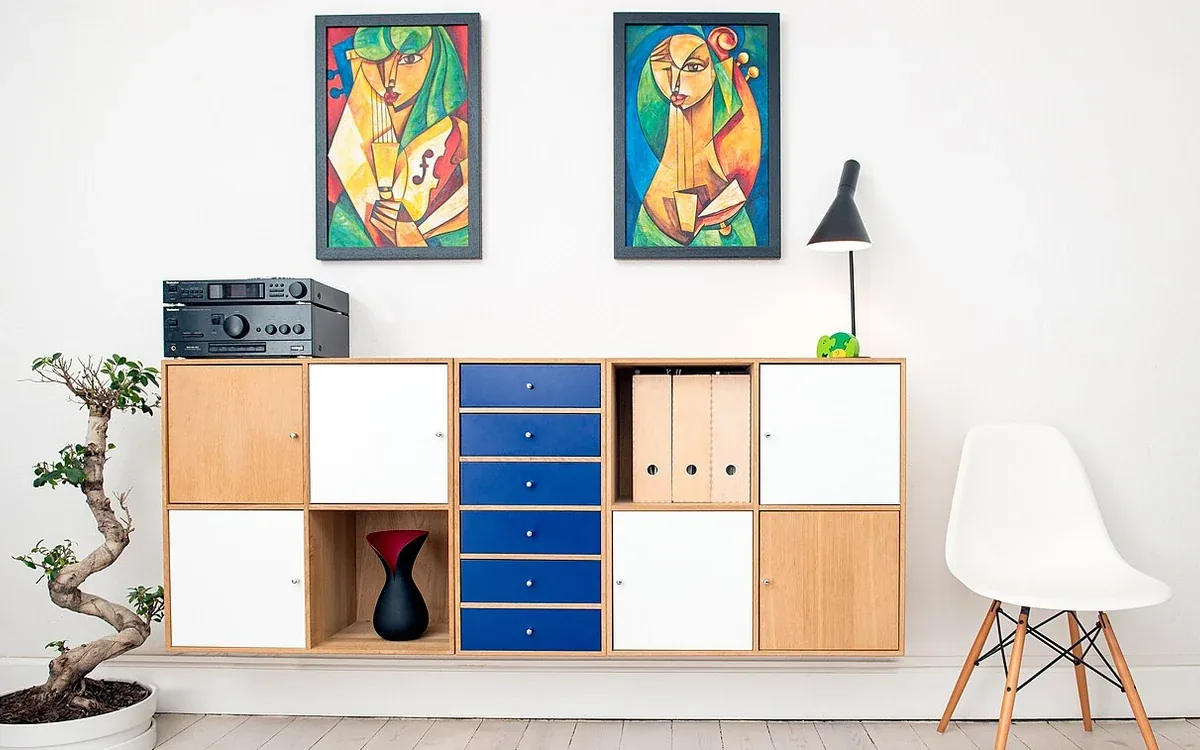
- Cabinet with open cubes and drawers: ATBO. Original photograph, CC0. Cropped and resized.






