
checklist
Tool 1
Pre-Listing Preparation Checklist
A clear handoff between cleanout work and the listing team.
- Step-by-step guidance
- Printable action checklist
- Workbook notes and fields
Separate belongings decisions from property tasks, then connect both to the listing plan.
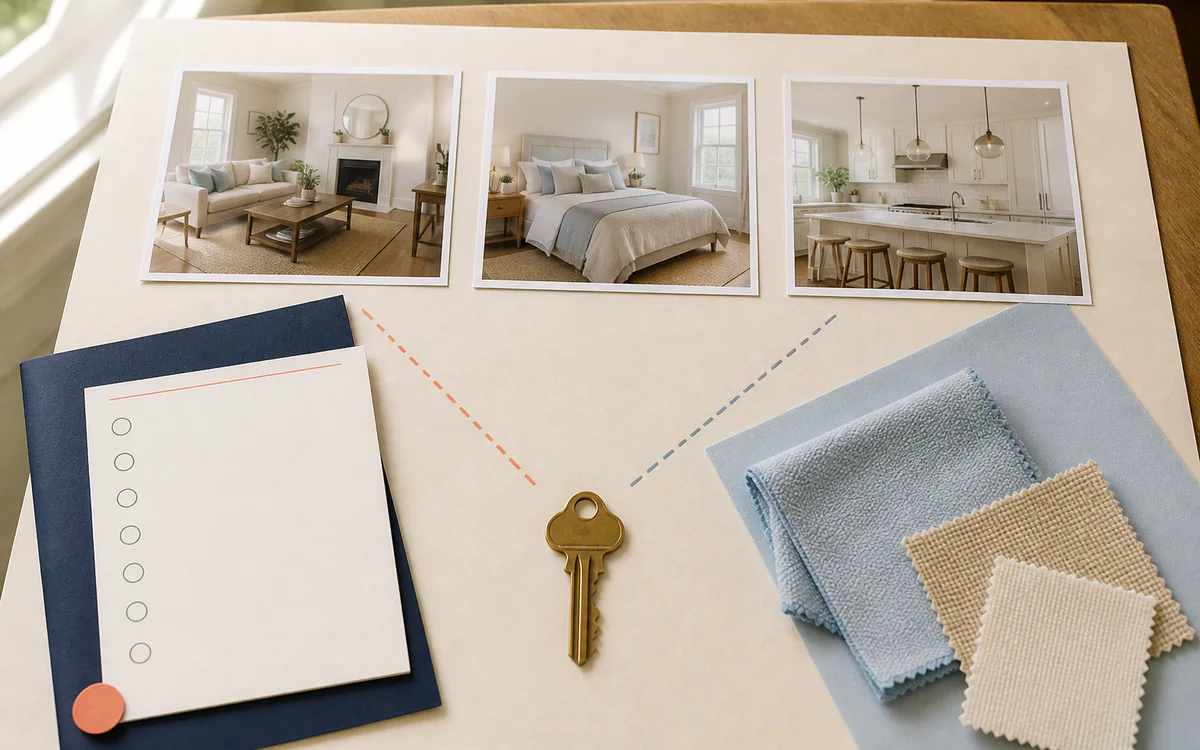
Begin with confirmed information. Assign questions to the person, provider, or public office responsible for answering them.
Protect documents, photographs, medications, valuables, devices, keys, and family-selected belongings before rooms change.
Prioritize the spaces needed for the listing plan, access, or authorized property work.
Record completed cleanout areas, remaining personal property, keys, open decisions, and the next responsible professional.
Each guide includes a quick answer, preparation steps, a printable checklist, workbook fields, practical boundaries, and a link to the related service.
Tool 1
A clear handoff between cleanout work and the listing team.
Tool 2
Prioritize the rooms and belongings that affect the next step.
Compare the Pre-Listing Preparation Checklist with the Home Decluttering Planner before choosing where to begin. The right order depends on what is already known and which decision must happen next.
Start with the pre-listing checklist when several people need one shared plan. Name who may approve choices about belongings and which rooms the listing contact needs first. Keep repair, inspection, disclosure, and real estate questions with the right qualified professional. That helps each person stay in their lane.
Use the decluttering planner when you need clear priorities for each room. Mark what must stay safe, what the family still needs to review, and what may leave through an agreed path. Connect each room to the next confirmed date for photography, a walkthrough, or other property work.
The checklist keeps household tasks apart from decisions that belong to real estate or other qualified professionals. The planner makes the approved work easy to follow by room. Use both when the home needs a clear schedule and firm boundaries around who decides each part.
A complete workbook is not required. The known property details, decision roles, and next deadline are enough to start discussing a proposed scope.
Cleanout and decluttering do not guarantee listing readiness, inspection results, buyer interest, a closing date, or a sale price. Brokerage, condition, repair, disclosure, title, tax, and legal questions belong with qualified professionals.
See how Home Sale Preparation can helpA planning tool should make the next conversation easier. It does not need to be perfect, and it should never force a personal or professional decision before the right person is ready to make it.
Write down confirmed facts first, then label uncertain items as questions. Keep private records out of a shared worksheet, and give legal, value, property-condition, carrier, or public-office questions to the professional responsible for answering them. A partial guide can still help the household see what is ready, what is waiting, and who should respond next.
Use them when the household needs a clearer view of the decisions, responsibilities, and next actions connected to sale preparation. You can begin before a consultation, bring an unfinished copy to the conversation, or use the questions to compare a proposed plan with the home's actual needs.
No. Fill in what you know and mark the questions that still need an answer. The property location, authorized decision-maker, next important date, and current obstacle are enough to begin a useful conversation. An incomplete worksheet can still show where coordination or another qualified professional may be needed.
Yes. Choose one current copy, name the person collecting decisions, and record who approved each important change. Avoid placing account numbers, medical details, identity documents, or other sensitive information in a broadly shared file. Keep private records in the care of the appropriate person.
The household or authorized representative makes decisions about belongings, access, priorities, and approvals. Clutter Cleaner can organize and coordinate the work included in the estimate, keep open questions visible, and follow the agreed sequence. Unclear decisions should pause for the person responsible for answering them.
No. The guides help organize facts, questions, and practical next actions. They do not determine ownership, value, taxes, legal duties, carrier terms, repair needs, inspection results, official requirements, or property outcomes. Keep those questions with the qualified professional, provider, or authority responsible for them.
Share the property, the known deadline, and the decisions that still need a practical path.
Share the basics. A real conversation can sort out the rest.
You're asking about Sale preparation.

By submitting, you agree that Clutter Cleaner of South Carolina may contact you about this request. Please do not include financial, legal, medical, identity, or other sensitive records. See our privacy policy.
The form could not load. You can still speak with the South Carolina team.
Call (843) 972-7020