
Start with the next home's space
Review room measurements, storage, doorways, and the furniture that supports everyday life. This gives each keep-or-release decision a clear reason.
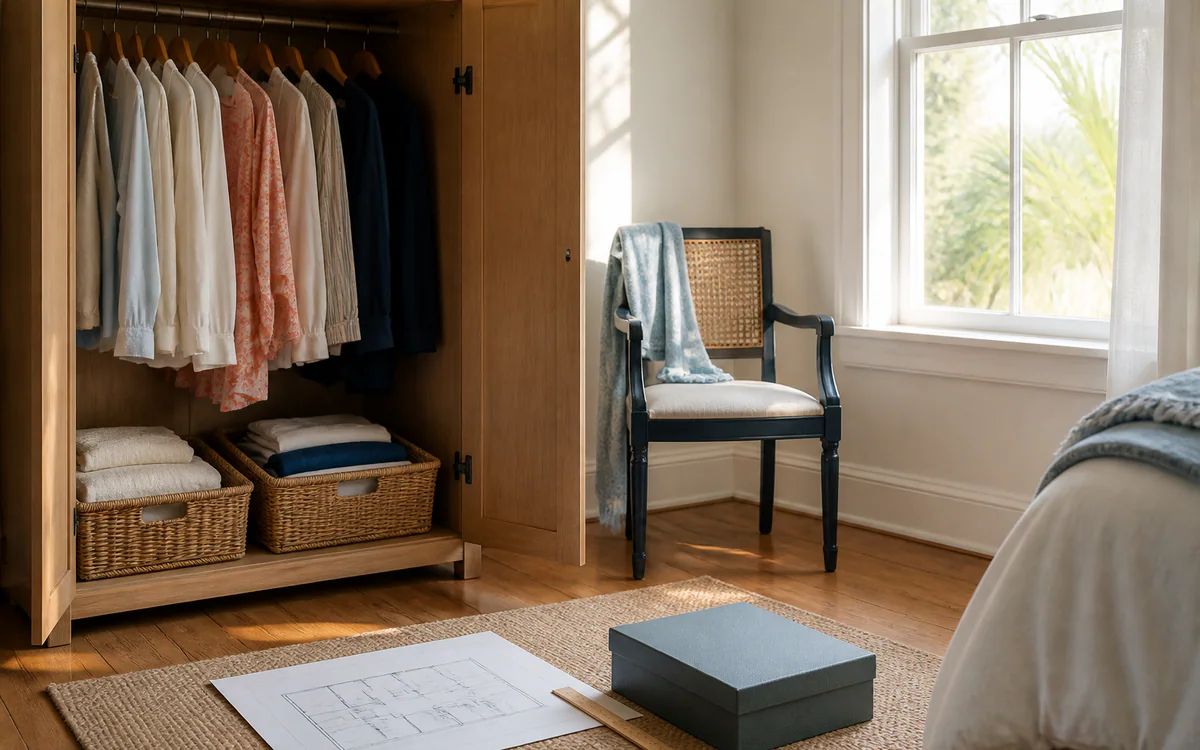
Room-by-room support for choosing what fits the next home and organizing the transition without rushing every decision.
Downsizing works best when it becomes a sequence of smaller decisions. The team helps organize belongings, plan what will fit, and keep the process moving at a respectful pace.
Downsizing support turns a whole-home decision into a room-by-room plan based on the next living space. It helps you decide what fits, what supports daily life, and where other items should go, while keeping personal choices with you and your family.
A smaller home does not require you to erase a lifetime. It asks for clear choices about space, comfort, routines, and the things you want close at hand.
The easiest starting point is often the next home, not the most crowded room in the current one. Measurements, storage, favorite furniture, everyday kitchen needs, and mobility around each room can guide decisions that otherwise feel arbitrary.
Clutter Cleaner of South Carolina helps households create that order across South Carolina. The pace can reflect the move date and the people involved. Important personal decisions remain yours, and unclear items can wait for another conversation.

Downsizing may be tied to retirement, a move closer to family, a simpler home, or support for a parent whose current space has become difficult to maintain.
The hard part is rarely knowing that there is too much. It is deciding what deserves space in the next home and finding an approved next place for the rest. A visible sequence can keep one difficult room from stopping the entire move.
Family members can participate without taking over. Agree on the older adult's preferences, the roles of helpers, and the decisions that require direct approval. Respect is part of the working plan, not an extra step added at the end.
You can begin with the most urgent concern. The rest can be sorted during the conversation.
The plan can connect the dimensions and storage of the next home with furniture choices, room-by-room sorting, approved next places, and the items needed for the first comfortable days. It can also identify tasks that belong to movers or other outside teams.
Review room measurements, storage, doorways, and the furniture that supports everyday life. This gives each keep-or-release decision a clear reason.
Protect the items used for meals, rest, hobbies, family connection, and familiar routines. A smaller space should still feel useful and personal.
Choose a room, cabinet, or category that can be finished. Smaller work areas make progress visible and reduce the temptation to create several unfinished piles.
Record what will move, stay with family, be considered for sale or donation, or leave through an agreed removal path. Do not assume an outside team will accept an item.
Group selected items by the room or routine they will support. Clear labels and a first-days list make unpacking less confusing when the new home is ready.
The work begins with your next space and your priorities. From there, each visit or work period can focus on a manageable set of decisions instead of reopening the entire home.
Talk about the new space, the date if one is known, who is participating, and the rooms that create the most concern. You do not need to pre-sort the home.
Compare furniture, storage, daily routines, and access in both homes when those details are available. Measurements can settle many choices more gently than guesswork.
Begin with a room or category that can create useful progress. Personal papers, photographs, collections, and disputed items can receive their own slower decision process.
Sorting, organizing, packing, sale or donation considerations, and removal are connected only as described in the estimate. Outside teams keep their own terms and roles.
Keep essential items easy to identify and place the most useful rooms first. The handoff should show what arrived, what still needs a decision, and who owns each follow-up.
Gather the move date if known, a basic floor plan or room measurements for the next home, a list of favorite furniture, and the names of people who should join decisions. It is also helpful to name one room you would most like to simplify first.
Bring reliable dimensions for large furniture and the next home's rooms, closets, and storage. If details are missing, list what still needs to be measured instead of guessing.
Note the items used every day, including clothing, kitchen items, comfort objects, hobby supplies, and important records. These should not disappear into a general moving pile.
Decide who is helping, who has final approval, and which choices must include the person moving. A clear role is especially important when several adult children are involved.
Share any mover, community, property contact, sale team, or donation organization already selected. Their schedules and terms may affect the order of work.
Break a large transition into room-sized decisions and plan around the space that comes next.
Use the checklists at your own pace, then bring any open questions to your estimate conversation.
See all downsizing toolsChoose a starting room and keep decisions visible.
Open the plannerRecord furniture, measurements, destinations, and open decisions.
Open the worksheetThese answers can help you prepare. Your written estimate should still define the work, limits, and responsibilities for your household.
Cost depends on the size and condition of the home, the amount of sorting, the tasks included, access, timing, and outside services. A first call and written estimate can define the proposed work for your household.
Begin as early as your situation allows, especially when many people must approve decisions or a lifetime of items is involved. The useful lead time depends on the home, move date, and decision pace.
No. Bring the facts you know and the decisions that feel stuck. The conversation can help choose a starting point, identify missing details, and separate urgent choices from those that can wait.
Yes. Agree on each person's role and keep the parent's preferences central whenever they can participate. Decide which choices helpers may handle and which ones require the parent's direct approval.
Use accurate measurements before deciding. Furniture that will not fit can be considered for a family transfer, sale, donation, storage, or removal, subject to owner approval and the receiving team's terms.
Yes, when both services are included in the approved scope. Downsizing decides what will move, while move management can connect agreed packing, moving-day planning, unpacking, and settling into the new space.
The downsizing planning tools can help organize what you already know, while the South Carolina service-area guide explains statewide coverage. You have also seen what the service can address, how the process works, what to prepare, and where the boundaries sit. Share the property location and the next decision creating pressure.
The South Carolina team can use those basics to begin a practical conversation. You do not need a finished inventory before reaching out.
Share the basics. A real conversation can sort out the rest.
You're asking about Downsizing.

By submitting, you agree that Clutter Cleaner of South Carolina may contact you about this request. Please do not include financial, legal, medical, identity, or other sensitive records. See our privacy policy.
The form could not load. You can still speak with the South Carolina team.
Call (843) 972-7020Share the property, the people involved, the known date, and the decision that feels stuck. You do not need to have everything figured out before you call.
Clutter Cleaner of South Carolina helps households throughout all of south carolina, with each conversation centered on the property, people, and next decision involved.
Call (843) 972-7020