To Downsize a Home Bar in Charleston, SC, start with drinks you serve. Choose glasses for those drinks, then sort tools and beverage contents apart. Keep what fits your next home and hosting plans. Set aside sale, gift, and removal choices before packing starts.
Quick answer: Keep a small set of glasses that works for several drinks. Choose the count from your real guest list. Treat bottles, bar tools, furniture, and powered items as separate groups. Give the move team clear keep and leave lists, with unresolved items marked for review.
How do you Downsize a Home Bar around drinks you serve?
Use downsizing and organizing planning to shape your keep list. The guide to how estate cleanouts work can help when family belongings are involved.
Start with your real drink habits, rather than your full glass collection. List the drinks your household makes and the guests you host. Then match each drink to a glass you own. This gives each kept piece a clear role in your next home.
A home bar often grows through gifts, trips, and past hobbies. A full cocktail set may reflect a phase you’ve left behind. You don’t need to keep that phase packed in a box.
Look at recent gatherings that felt normal for your household. A rare large party can skew your choices. If most visits involve two guests, plan around that pattern first.
Build a short menu on paper. It might include wine, beer, mixed drinks, and drinks without alcohol. Leave out drinks you enjoy ordering but never make at home.
Use these prompts to test the menu:
- Name the drinks you serve without buying special tools or learning new recipes.
- Count the guests you usually host, rather than the largest group you remember.
- Mark glass shapes that work for more than one drink on your list.
- Keep a small guest allowance only when you have space for it.
- Give each rare-use item a named future use or an exit choice.
The point isn’t to build the smallest bar possible. It’s to keep a bar that earns its space. A household that loves wine may keep more stemware than someone who serves iced tea.
Make room for each person’s habits. One partner may use a shaker often while another prefers simple pours. Both can have a place without keeping every past purchase.
Write the final menu beside your keep list. It becomes a calm reference when a tempting glass appears later. Ask which drink needs it before adding it back.
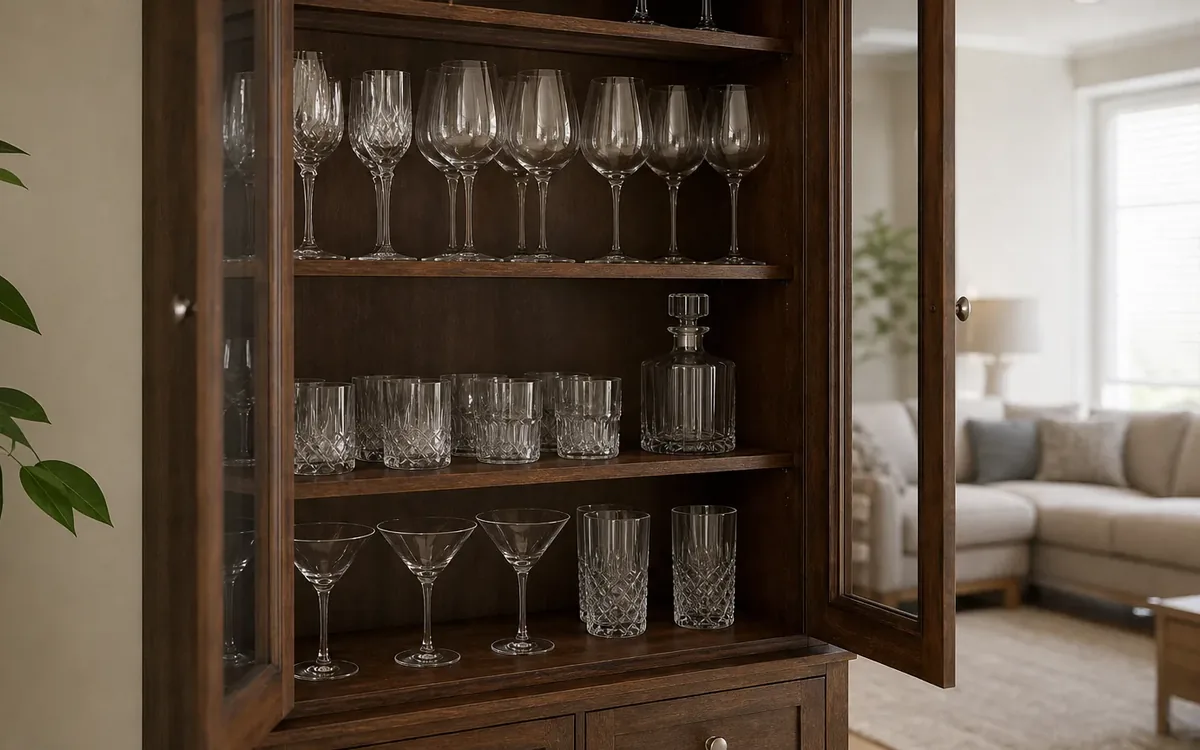
Which specialty glasses deserve space in your next home?
The downsizing and organizing service page supports planning a smaller collection. For an inherited bar, the estate cleanout planning guide offers broader sorting context.
Keep specialty glasses when you use them, value them, and have room. Start with the shapes that serve several drinks well. Then add a few favorites with clear roles. A complete matching set is a choice, not a rule for a useful home bar.
Sort glasses by shape before judging the sets. Put everyday tumblers together, then wine glasses and other types. You’ll see overlap that cupboard shelves can hide.
A short tumbler may cover water, juice, and several mixed drinks. A stemmed glass may suit the drinks you serve most. The best choice depends on your habits, comfort, and shelf space.
Compare your likely guest count with each group. Owning twelve glasses doesn’t mean all twelve must move. Keep the count you can explain from your hosting plan.
Avoid making every glass a separate debate. Decide the role first, then choose the pieces that fill it. This makes duplicate sets easier to release.
Sentimental glasses need a different question. Do you want the object, its story, or the whole set? One favorite piece may carry the memory you want.
Take a clear photo before parting with a set that matters. Add a note about the person or event linked to it. You can preserve that story without keeping every glass. For broader sorting ideas, see AARP’s guide to getting rid of anything.
For possible sale items, record maker marks and known set details. Don’t call a piece rare based on appearance alone. A qualified appraiser should handle value opinions when needed.
Keep uncertain sale items apart from general giveaway goods. A practical cleanout team may discuss photos, item groups, and handoff plans. Market interest and sale choices need separate review with the chosen provider.
If a set stays undecided, name the missing fact. You may need a family reply or an appraisal opinion. Give that question an owner so the box doesn’t become permanent storage.
What should happen to bottles and beverage contents?
Use downsizing and organizing support to keep contents separate from equipment. The guide to how estate cleanouts work helps frame clear household and provider roles.
Treat beverage contents as their own decision group. Don’t assume a mover, buyer, charity, or cleanout team will accept them. Record what you have, then ask the chosen provider about its terms. The household should decide what stays, while transfer and disposal questions go to the right source.
A bottle and its matching glasses may share a shelf. They still need different plans. Glassware can be listed as household goods, while beverage contents need separate review.
Make a brief inventory using the labels you can read. Note the beverage type and if the seal appears intact. Don’t taste unknown contents to decide what they are.
Keep decisions clear with a few plain notes:
- List beverage contents apart from glasses, tools, furniture, and powered bar items.
- Note opened bottles without making claims about their quality or remaining shelf life.
- Flag bottles with unclear contents for advice from the right local authority.
- Ask each transport or receiving provider what it accepts before arranging a handoff.
- Keep unwanted beverage contents off sale lists until transfer rules have been checked.
Don’t assume a private gift, sale, or shipment follows the same rules. Alcohol transfer questions belong with the relevant authority or a qualified legal adviser. A move team shouldn’t be asked to make that legal call.
For unwanted contents, check local waste directions before choosing a disposal route. General waste-reduction ideas appear in the EPA’s guide to what you can do. Local directions still control what your waste provider will accept.
Avoid pouring out unknown liquids based on a guess. Ask the local waste provider about the named material. If you can’t identify it, explain that before any collection plan is set.
Once a bottle decision is settled, update the inventory. Use clear labels such as keep, pending advice, or provider review. This prevents contents from slipping into the wrong moving group.
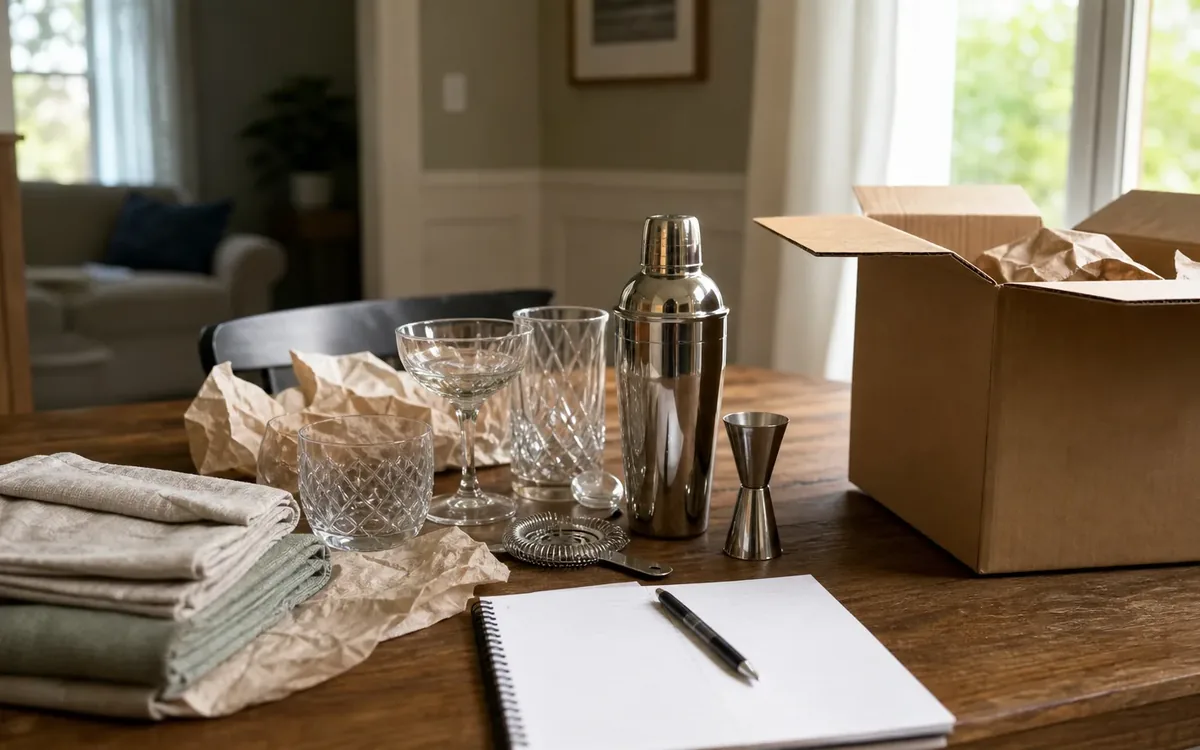
Build a clear handoff list for bar equipment
The downsizing and organizing service page can guide the scope discussion. The estate cleanout planning guide explains how broader household decisions fit together.
Give each bar item a named destination and a decision owner. Keep bar furniture and powered equipment on their own inventory. A practical team may discuss item lists, photos, access details, and provider needs. Technical work stays with a qualified provider, based on the exact item involved.
Use plain item names instead of broad labels like “bar stuff.” A shaker set, glass rack, bar cart, and wine fridge need distinct entries. Photos help tie the written list to the right objects.
Follow this five-step handoff plan:
- Record each item’s name, count, intended destination, and the person who can approve changes.
- Photograph powered items and furniture, including visible model labels when these can be read.
- Mark each item as keep, gift, sale review, donation review, or removal review.
- Ask the chosen providers about acceptance terms and any separate specialist work they require.
- Share the final list with all involved providers and keep unresolved items clearly marked.
For powered items, record the maker and exact model if known. Note manuals or other papers that are already available. This is inventory work, not an equipment assessment.
Don’t treat a photo or list as proof that equipment works. Qualified providers should assess technical needs using exact-model information. The same care applies to work involving bar furniture or built-in features.
A cleanout or move team may discuss which items fall within its agreed scope. Appraisals, storage, contractor work, and disposal remain separate provider or household choices. Confirm each choice rather than treating it as part of one package.
If the home is being sold, don’t guess what stays with it. Ask the real-estate professional or legal adviser to clarify disputed items. Inspection and compliance decisions belong with the responsible professional or authority.
Keep a single current list. Conflicting notes can send a gift item toward removal. When a choice changes, update the shared version before handoff.
Plan a smaller beverage station for your next home
Start with downsizing and organizing planning for the smaller keep list. For other home-transition topics, browse the Clutter Cleaner home-transition guides.
Plan the new station around your kept drinks and available storage. Set a clear space limit before adding extra sets. Use the next home’s known layout, rather than the old bar’s size. Furniture and powered items need their own provider review, separate from decisions about cups and tools.
A smaller South Carolina home or condo may call for a simpler setup. You might keep drink supplies in existing kitchen storage. You might prefer a dedicated spot if the new layout allows it.
Record the shelf or cupboard space you expect to use. Compare that space with your keep inventory. Avoid buying new storage before you know which supplies will move.
Plan by task rather than by collection. Your daily mugs may belong with breakfast supplies. Glasses for guests can stay with other hosting items. A home bar doesn’t need every drink-related object in one place.
Give backup supplies a clear limit. Spare tools and souvenir glasses often return during packing. Check them against the menu and guest count you already chose.
A box marked “extra bar items” deserves another look. Name each item’s purpose before keeping the box. If its only purpose is avoiding a decision, resolve that choice now.
Condo rules may affect provider access or the handoff plan. Ask building management for current requirements that apply to your move. Let the chosen providers confirm how those requirements affect their work.
Clutter Cleaner of South Carolina is based in Mount Pleasant, SC. Charleston is its primary market, and its service territory covers South Carolina. Households can discuss downsizing and organizing needs within that scope.
Before requesting help, gather the drink menu, keep list, and pending questions. These notes make the discussion more useful. They show what the household has decided and where outside advice is still needed.
Home bar downsizing FAQ
See downsizing and organizing options for household planning. The guide to how estate cleanouts work covers related handoff questions.
How many glasses should I keep?
Base the count on your household and usual guests. Then choose shapes that serve several drinks. There’s no single right count for every home. Keep a guest allowance only if you have room and expect to use it. Your next home’s storage should set a real limit.
Should I keep a full matching set?
Keep a full set if you use it and want it. You can choose a smaller group for your next home. Before splitting a set that may have value, seek advice from a qualified appraiser or sale provider. Don’t assume matching pieces have strong resale demand.
Can unwanted liquor go with donated glasses?
Keep beverage contents separate from donation goods unless the receiving group confirms acceptance. Don’t assume that accepting glasses means accepting alcohol. Check any legal transfer questions with the relevant authority or a qualified adviser. The household remains responsible for choosing a lawful route for unwanted contents.
What should I record for a wine fridge?
Record the maker, exact model, and intended destination. Add photos and any known history without guessing about its condition. Ask the chosen provider what information it needs. Technical assessment and any related work belong with a qualified provider using exact-model evidence, not a general cleanout inventory.
What if family members want the same glasses?
Pause that item’s handoff and record who has asked for it. Invite a clear household decision before packing or removal proceeds. If an estate is involved, follow the direction of the authorized decision-maker. A cleanout team can track choices, but it shouldn’t settle ownership or inheritance disputes.
Can I decide about extra items after moving?
You can defer a choice, but give it a named purpose. Record what fact is missing and who will resolve it. Storage is a separate household or provider choice. Moving a box without a plan often leaves the same decision waiting in a smaller home.