To downsize handbags and wallets in Aiken, SC, start with what you carry each day. Empty every pocket, set private items aside, and choose bags that fit your real errands. Keep the pieces you reach for, then plan where extras will go before packing for your move.
Quick answer: Build one main carry setup around your current needs. Add a spare or special-use bag only when it serves a clear purpose. Check all pockets before any bag leaves your home. Keep cards, keys, cash, and records under your control throughout the sort.
Downsize handbags and wallets around daily needs
The downsizing and organizing service can support broader planning. The home-transition resource library offers more guides for sorting before a move.
Choose your carry setup around the errands you do now. Think about shopping, work, visits, and trips away from home. A bag earns its place when it meets a clear need. A wallet earns its place when it holds current essentials without hiding cards you no longer use.
Start with your most recent routines, rather than an ideal future schedule. You may like a large tote but rarely need its space. You may own several small bags that cannot hold your daily items. Both patterns can leave you with plenty of bags and few useful choices.
Write down what must travel with you. Include your phone, keys, current cards, glasses, and any personal care items. Leave out things that live in the car or at home. This keeps the bag from becoming storage for every possible need.
South Carolina routines differ from household to household. Your setup should reflect your own errands in Aiken, SC, rather than a fixed local formula. Consider how often you stop at shops, carry papers, or spend time away from home.
- Keep a main bag that fits the items you actually carry.
- Keep a spare only when it fills a clear gap.
- Set event bags aside for a separate, honest review.
- Match each wallet to a current use, rather than a hoped-for need.
Avoid setting a bag count before you understand those uses. A small group with clear roles is easier to maintain than an arbitrary limit.
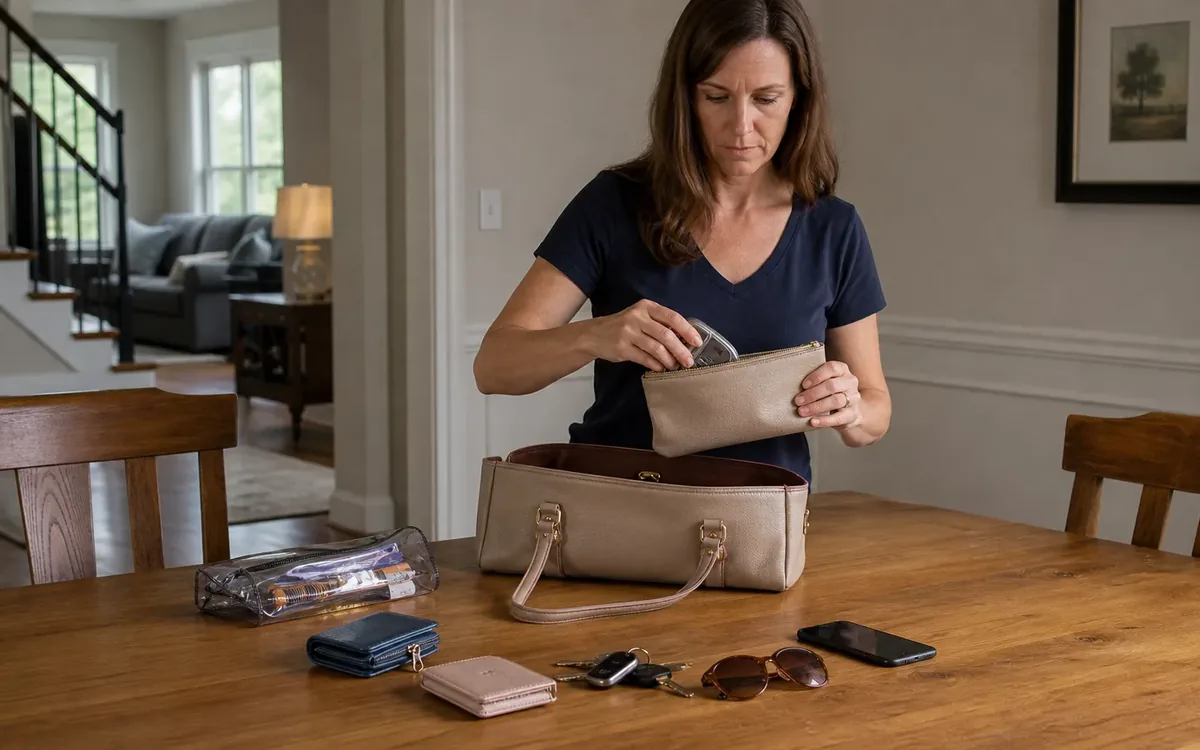
What should you check before a bag leaves?
The guide to the best way to clean out an estate offers a broader sorting framework. The downsizing and organizing service is relevant when these small items join a larger household project.
Check every pocket, slot, lining compartment, and removable pouch before releasing a bag. Look for cash, cards, keys, notes, and small keepsakes. Keep private finds apart from donation or sale items. Treat each bag as unchecked until you finish, even if it has sat empty for years.
Use one clear work surface and handle one bag at a time. Loose items can blend together fast. A key from one bag may matter more than it first appears. Keeping each bag’s contents together helps you trace a find back to its source.
Open pockets by hand and inspect them visually. Don’t force a stuck closure. If you cannot reach a compartment, keep the bag out of the release group. Ask an appropriate specialist about access rather than assuming the space is empty.
Use this five-step pocket review:
- Place the bag and its loose pouches on a clear surface.
- Empty each accessible pocket into a tray kept beside that bag.
- Separate private papers, money, keys, and keepsakes from ordinary loose items.
- Review each find before placing it in a keep or release group.
- Mark the bag as checked only after all accessible spaces are empty.
Pay special attention to zipped coin sections and card sleeves. Folded receipts can hide bills. An old purse may hold a family photo or a note worth keeping.
Remove personal luggage tags and labels before handoff. If a private item remains trapped inside, hold the bag back. Finishing the sort matters less than keeping control of your information.
Which bags feel right for your errands?
The downsizing and organizing service supports decisions about what stays. The home-transition resource library can help connect that choice with the rest of your move.
Select bags based on your known comfort, usual load, and ease of access. Compare the bags you already use without adding extra weight for a test. Favor shapes and straps you find comfortable. Set aside pieces with condition concerns for a qualified provider’s review, rather than trying repairs yourself.
Think about what has worked during normal use. Which bag do you reach for without much thought? Which one stays home because it feels awkward? These patterns can tell you more than brand names, colors, or the original cost.
Your daily items should have a clear home within the bag. A phone buried under loose papers creates needless searching. A wallet that only fits at one angle may make each stop harder. Useful pockets are those you can find and use with ease.
Compare overlapping bags side by side on the table. Note their size, purpose, and the features you value. You don’t need to carry each one to make every choice. Your past experience may already show which suits you best.
- Choose a bag whose usual feel matches your own comfort needs.
- Favor openings and pockets that make daily items easy to find.
- Keep a special-use bag when its purpose still fits your life.
- Record wear concerns before asking a repair specialist for advice.
A household can decide that a bag no longer fits its routine. That does not establish its repair needs or resale value. Those questions belong with the right specialist.
Avoid buying a new bag during the first sort. Your current collection may already contain a good fit once excess contents are gone.
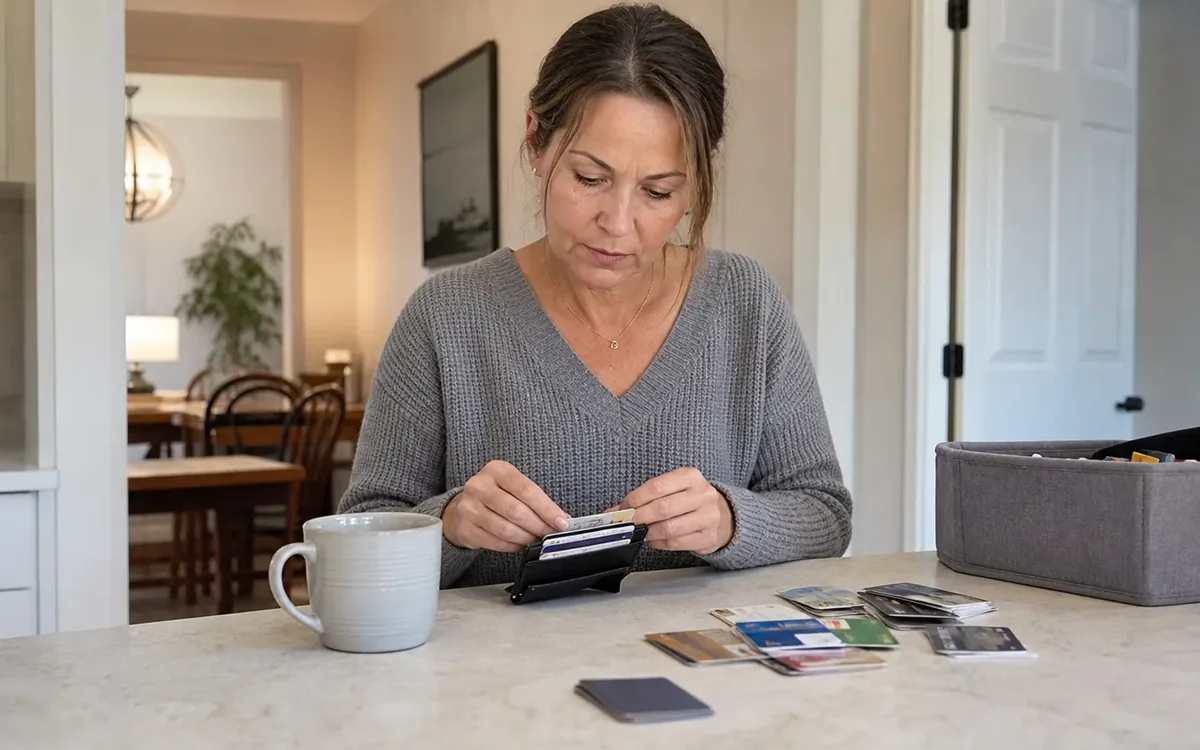
How do you clear old cards without losing access?
The guide to how estate cleanouts work explains a broader household handoff. The downsizing and organizing service can help frame the sorting plan while you retain control of private items.
Review each card before removing it from your daily wallet. Check its purpose, current status, and need for physical access. Set uncertain cards aside for follow-up with the issuer. Removing a card from a wallet does not close an account, cancel a membership, or change a legal record.
Sort cards into daily use, occasional use, and needs review. Keep those groups separate from bags marked for release. Store cards you still need in a place you can find. Don’t let an occasional-use group become a forgotten pile.
Old payment cards need more care than store flyers. Follow the issuer’s instructions for cards you no longer need. Some cards may require a return or a specific disposal method. Don’t give cards to a donation recipient or leave them in a wallet for sale.
Keep identification and health-related cards under your control. Ask the issuer before relying on a digital copy in place of a physical card. A practical move team cannot decide which forms an office, provider, or agency will accept.
Review receipts and notes with the same care. Some may relate to taxes, warranties, or active claims. Ask your tax or legal adviser about records you are unsure about. A cleanout plan should not set record-retention rules for you.
Move keys into a separate review tray. Label known keys without adding public address details. Ask the property owner or responsible person about keys you cannot identify. Don’t pass an unknown key along inside a bag.
Finish by checking that your daily wallet holds the cards you still need. Keep unresolved items in a private follow-up folder, separate from outgoing goods.
Give sentimental and valuable pieces a clear path
The estate cleanout planning guide offers context for family belongings. The guide to how estate cleanouts work helps distinguish household sorting from provider handoffs.
Keep memory value separate from daily usefulness and possible sale value. A bag can matter deeply without belonging in your daily rotation. You can retain a small memory group, ask family about shared keepsakes, or seek an appraisal. None of those choices requires keeping every piece you own.
Name the reason a piece matters. It might recall a person, an event, or a stage of life. That reason helps you choose among similar items. It may also show that a photo or written note holds the memory better than several bags.
Ask relatives before giving away items tied to shared memories. State clearly that you are offering a choice, not assigning storage. A family member may want one wallet and decline the rest. Respect that answer without making the release feel like a loss of loyalty.
For possible sale items, note the brand, model if known, and visible condition. Keep receipts or other records with the item when appropriate. Remove personal account details from any papers passed along. Don’t describe an item as authentic without a sound basis.
An appraiser or qualified resale specialist should address value and authenticity. A cleanout or move team may discuss grouping items for review. That discussion does not replace an appraisal or settle ownership disputes.
If estate property is involved, confirm who may approve release. Legal questions belong with the authorized estate representative and legal adviser. Put disputed items on hold rather than using a move deadline to force a decision.
Plan the release and move handoff
The downsizing and organizing service is a starting point for household planning. The estate cleanout process guide provides context when bags are part of a wider cleanout.
Keep daily carry items with you and label outgoing bags by destination. A practical team may discuss inventory, packing groups, and handoff needs within an agreed scope. The household chooses what stays or leaves. Donation, resale, storage, and disposal routes need their own checks before anything is released.
Make a short inventory for each outgoing group. Use plain labels such as checked donation bags or sale review. Include loose straps, dust bags, and pouches in the record. Describe these as included parts, without claiming that they add value.
- Confirm a recipient’s current rules before setting aside bags for donation.
- Ask a resale provider which items and records it will accept.
- Keep personal cards and keys outside all provider handoff groups.
- Label any storage group with its contents and household owner.
- Confirm disposal options with the responsible local program or provider.
The EPA’s guidance on reducing waste and reusing goods supports looking for reuse options. It does not establish what a specific recipient will accept. Condition, materials, and local rules still matter for each item.
Storage is a separate household choice and provider arrangement. Reserve it for items with a clear reason to stay. Moving bags into storage without a purpose can delay the same decision.
Clutter Cleaner of South Carolina lists statewide services, including downsizing and organizing. Its physical location is Mount Pleasant, SC, and Charleston is its primary market. For an Aiken, SC project, discuss the scope directly. Don’t assume storage, appraisal, disposal, or repair is included.
Frequently asked questions
The downsizing and organizing service can help with a broader transition plan. The home-transition resource library offers related guidance for the rest of the household.
How many handbags should I keep?
Keep enough to cover clear uses in your current life. Start with your main bag, then review needs it cannot meet. A work tote or event bag may earn a place. Avoid keeping several near-matches unless you use them. The right count follows your routine, space, and comfort.
Should I donate a worn wallet?
Ask the intended recipient about its condition rules first. Empty all slots and remove personal labels before offering it. Describe wear honestly, including closures that do not work. If the recipient declines it, review other options with a local program or provider. Don’t assume every wallet is accepted.
What if a pocket will not open?
Keep the bag out of the release group until you resolve access. Don’t force the closure or assume the pocket is empty. Ask an appropriate specialist about the next step. Tell any provider that a compartment remains unchecked. Hidden private items need to stay under household control.
Can a move team choose which cards to discard?
The household should make those choices with the card issuer when needed. A team may help separate cards from outgoing goods under an agreed plan. It should not decide account status or record needs. Keep identification, payment cards, and uncertain papers in a private group for your own review.
Should I sell a designer bag before moving?
Consider sale only after confirming ownership and checking all pockets. Gather any useful records, then consult an appropriate resale provider or appraiser. Ask about acceptance terms before committing. The household decides if a sale fits the move. Value, authenticity, and estate authority require separate professional review when relevant.