To Downsize Baking Pans for a move in Sumter, SC, start with your recipes and destination oven records. Keep pans that serve meals you still make. Record pan sizes, then ask a qualified provider about model-specific fit. A smaller collection should suit your cooking habits, storage space, and new home.
Quick answer: Make a pan inventory before choosing what leaves. Match each pan to a current recipe and a place in the new kitchen. Keep oven-fit questions separate from sorting decisions. Your household can choose quantities. A qualified appliance provider should address clearance and use for the exact oven model.
How should you Downsize Baking Pans before moving?
Downsizing and organizing support can help frame the household sorting plan. The guide to how estate cleanouts work explains a broader handoff process when other household goods need review.
Start with the dishes you expect to bake after moving. Group pans by those dishes, rather than by material or age. Then count how many you need at once. A pan earns its place through a real recipe, a clear need, and a storage plan you can explain.
An oven change can alter which pans belong in your kitchen. But the first choice is about meals, not the appliance. Think about the bread, cakes, casseroles, and sheet-pan meals you still enjoy. Separate current habits from plans you rarely follow.
A holiday pan may still have a clear purpose. A large roasting pan might matter for one family meal. That is different from keeping three similar pans because each once had a use. Write down the occasion instead of relying on memory.
Use these questions while sorting your collection:
- Name a dish you still make that needs each pan under review.
- Note when two pans serve one meal at the same time.
- Mark pans kept for a planned event rather than weekly cooking.
- Record who owns borrowed pans before making any release choice.
- Separate keepsakes from working pans so each group has a clear purpose.
These notes can reveal useful pairs that look like duplicates. Two cake pans may form a set for one recipe. Several loaf pans may support a batch you share. The goal is a smaller useful collection, not the lowest possible count.
Do this work before the pans disappear into moving boxes. Labels based on recipe needs are easier to follow later. They also help a move team understand which groups should stay together.
What destination oven details should you collect?
Use downsizing and organizing planning to connect the kitchen inventory with the move. The estate cleanout planning guide offers a useful framework for sorting records and household goods.
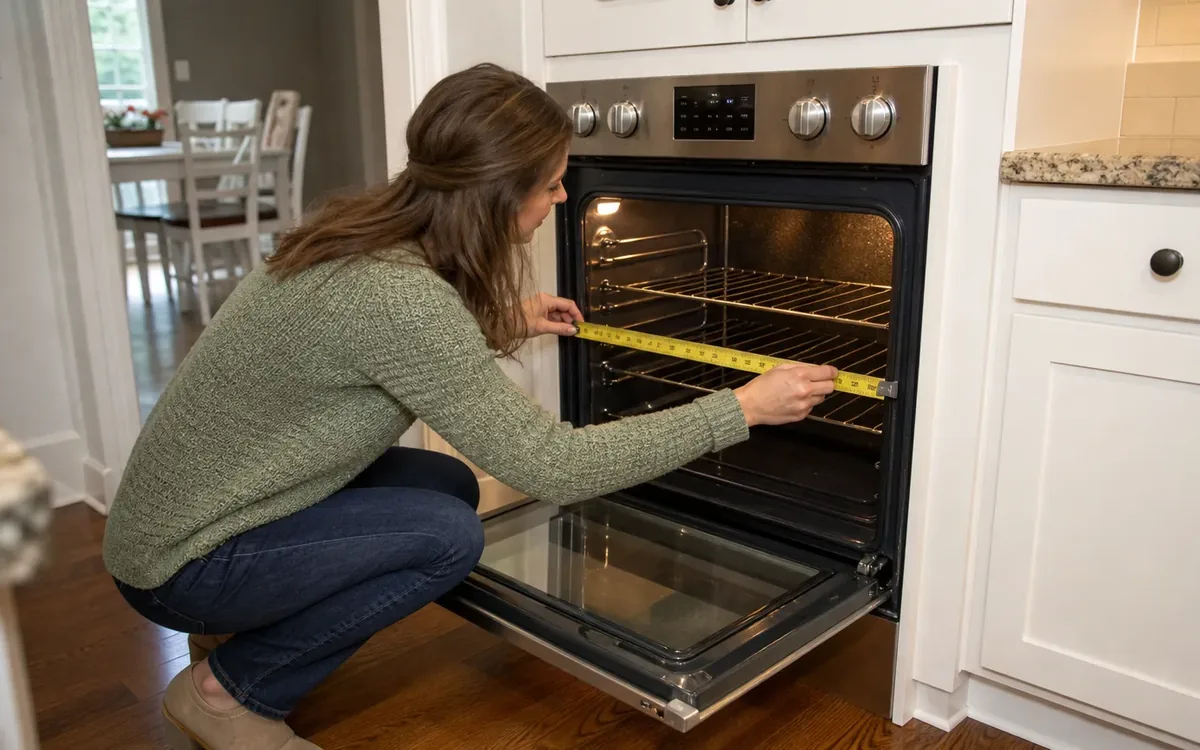
Collect the exact oven model, its manual, and existing kitchen measurements before deciding pan fit. Ask a qualified appliance provider to confirm usable space and required clearance. Do not treat a broad appliance size as proof that a pan fits. Keep the provider’s written findings with your inventory.
For the destination home in Sumter, SC, request the appliance model details early. A real-estate contact or household member may help obtain those records. Confirm that they describe the oven staying in the home. A listing photo alone may leave important details unclear.
Measuring kitchen appliances belongs in a provider task brief. Ask for exact-model findings, rather than trying to judge fit from appearance. Without that evidence, leave fit questions open. This guide does not provide oven measurement, clearance, or use instructions.
Record each loose pan’s stated size and its overall dimensions. Keep those entries separate. Handles and rims may extend beyond the size printed on a label. Share the full inventory with the provider handling oven-fit questions.
A useful record includes these details:
- Record the destination oven’s exact model from a supplied appliance record.
- Save the manual and any written model-specific findings from the provider.
- Note each pan’s stated size, overall dimensions, and any projecting handles.
- Mark unresolved fit questions so no one treats them as settled.
- Keep photos of pan labels beside their matching inventory entries.
A move team can discuss packing groups and delivery placement. It should not be asked to settle an unsupported appliance-fit question. If the oven changes before the move, update the records. Earlier findings may no longer address the appliance that will be there.
Which recipes should guide your pan choices?
Downsizing and organizing services provide a place to discuss keep groups and household goals. The Clutter Cleaner resource library can support broader planning while you focus on the pans your recipes need.
Choose pans around recipes you still make and portions you still need. List the pan size each recipe calls for, then match it to your inventory. Keep related pans together when a recipe needs a set. Leave recipe changes unresolved until you have a suitable recipe source.
A familiar pan can seem useful without serving a current meal. Your recipe list makes that gap clear. It can also protect a plain-looking pan that does important work. Focus on what you cook now, rather than what looks worth keeping.
Include meals for your expected household size. Add shared meals if they remain part of your plans. A move does not mean every large pan must leave. It does mean each large pan should have a named purpose.
Avoid making a smaller pan the answer to every space problem. Changing pan size can raise recipe questions. This guide does not give baking conversions or cooking directions. Keep those questions with a trusted recipe source rather than a cleanout team.
Build a recipe-to-pan note for each dish. Include the recipe name, called-for size, matched pan, and any open question. You can keep it on paper or in a simple file. Use terms everyone helping with the move can understand.
Review seldom-used pans with the same care. A special cake pan may hold personal meaning. You can keep it as a keepsake without calling it kitchen equipment. That choice makes its storage needs clearer and prevents it from inflating the working collection.
If a recipe has fallen out of use, record that honestly. There is no need to build a future meal plan around it. Keep the recipe itself if you value it. Decide the pan’s place based on your actual needs.
Build one pan inventory that supports decisions
Connect your inventory with downsizing and organizing support. Use the guide to planning an estate cleanout when ownership and release choices involve more than one person.
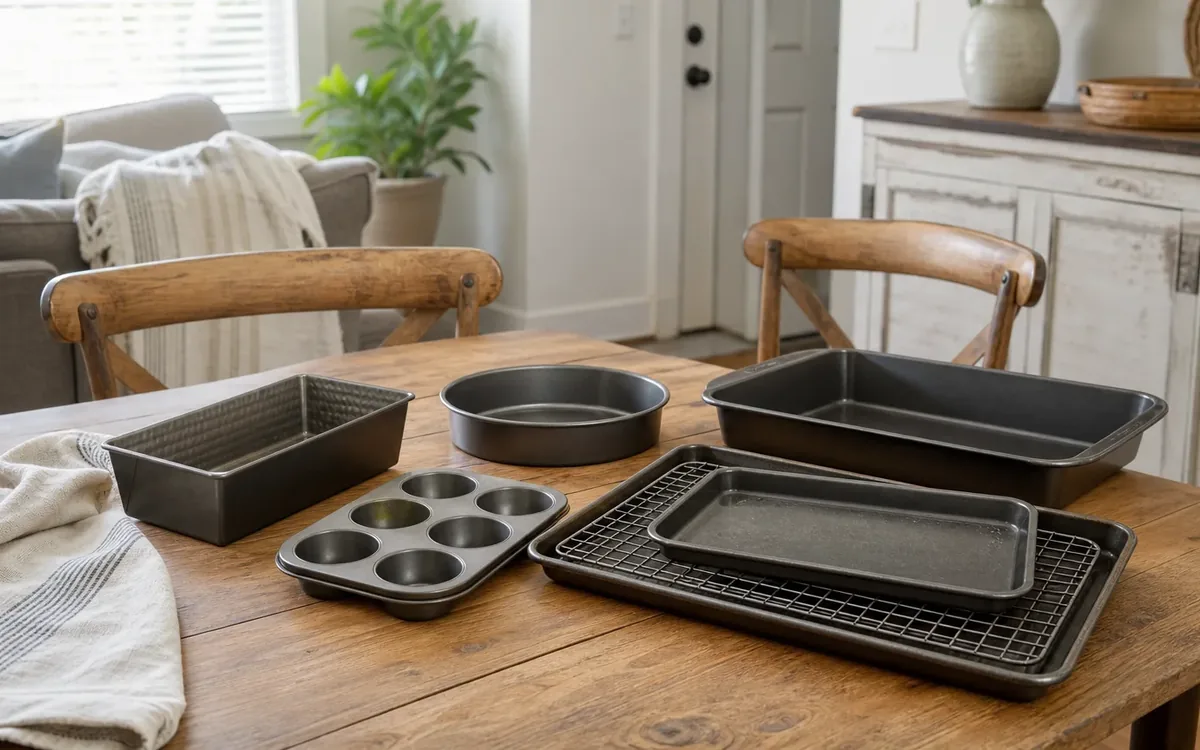
Your inventory should show what each pan is, why it stays, and what remains unresolved. Give each item a short label that matches its photo. Use one shared record for household choices and provider questions. That reduces confusion without asking a move team to make technical judgments.
Keep the record simple enough to update during sorting. A long file that no one reads adds little value. Pan names, recipe uses, dimensions, ownership, and decision status are enough to start. Add detail when it answers a real question.
Follow these five steps to build the record:
- Give each pan a clear name, such as the blue loaf pan or paired round cake pans.
- Add its recipe role, stated size, overall dimensions, and matching photo to one entry.
- Assign a status of keep, release, keepsake, or pending a named provider question.
- Record who can approve its release when ownership or family wishes are unclear.
- Share the final list with the household and relevant providers before packing begins.
Describe visible condition without making a use judgment. Record marks, missing labels, or other features you can see. Do not turn those notes into a claim that an item is suitable for baking. Keep condition questions separate from sentimental value.
The pending group needs a reason and a next contact. “Waiting for exact-model oven review” is clearer than “maybe.” “Waiting for owner’s choice” is equally useful. Each note shows what must happen before the item changes groups.
Review the final keep group against your recipe list. A pan without a role may still stay by choice. The record should say why. That lets you distinguish a deliberate keepsake from an item left behind by indecision.
Plan storage around the collection you choose
Use downsizing and organizing planning to discuss the destination kitchen layout. The guide to how estate cleanouts work can help you keep sorting choices separate from later removal arrangements.
Plan a storage place for the retained pans before final packing. Use existing cabinet records or measurements supplied by the household or provider. Mark storage gaps without treating them as oven-fit problems. Any changes to cabinets, shelves, or fixtures belong with the responsible qualified provider.
A pan can match a recipe and still lack a sensible place. Review the storage plan as its own step. Note which cabinet or drawer is intended for each group. Keep that plan separate from appliance clearance findings.
Think about access in plain terms. Which pans do you want near your usual prep area? Which seasonal items can go elsewhere? These are household preferences you can share with a team. They are not directions for changing or testing furniture.
If the collection needs off-site storage, treat that as a separate choice. Compare the storage provider’s terms and your household’s plans. Decide who will manage access and records. Do not assume storage is included in a cleanout or move service.
Label boxes by recipe group or destination space. “Weekly baking pans” gives more context than “kitchen.” “Holiday pans, pantry plan” can help protect a planned group. Leave placement questions open when the new space has not been confirmed.
Before packing ends, check for pans mixed into other rooms. Keepsakes may have moved to a family box. Borrowed pieces may await return. Update the inventory so the final count includes pans beyond the counter.
Set clear handoffs for pans that leave
Discuss sorting goals through downsizing and organizing support. Review the estate cleanout process guide for context when release plans involve a wider household cleanout.
Give each released pan a named route and an approved owner decision. Possible routes include a family transfer, donation inquiry, sale review, or disposal review. Each route needs its own provider or recipient checks. A practical team may discuss those choices, but unresolved ownership should remain unresolved.
Check acceptance before setting aside a donation group. The receiving group decides what it accepts. Ask about the items you have, rather than assuming all bakeware qualifies. Keep its response with the release list.
For broader sorting help, see AARP’s guide to getting rid of household items. Use it to explore release options as you plan.
Sale and appraisal are separate decisions. Your household may seek an appraiser if value affects the choice. A sale provider can discuss its own terms and selection process. Do not assign a value from a pan’s age or appearance alone.
For disposal, ask the relevant local authority or receiving provider about its rules. Do not assume every metal pan belongs in a recycling stream. Keep coatings, attached parts, and mixed materials in the item notes. Those details help the responsible provider answer the question.
The EPA’s waste reduction and recycling guide offers general guidance on reuse and recycling. Local acceptance rules still need a separate check.
Clutter Cleaner of South Carolina serves all of South Carolina, including Sumter. Its physical location is Mount Pleasant, SC, and Charleston is its primary market. A planning discussion may cover downsizing goals, move management, and a broader cleanout scope. Confirm the specific work before assigning tasks.
Legal ownership stays with the household and its legal adviser when needed. Real-estate decisions stay with the responsible property professional. Inspection, compliance, and contractor decisions stay with the relevant qualified professional or authority. A clear pan list supports those roles without replacing them.
Short FAQ
Should I keep a pan while oven fit is unresolved?
You can keep it in a clearly marked pending group. Record the recipe it serves and the question awaiting review. Ask a qualified provider to address the exact oven model. Set aside space for that group in your moving plan, so pending items do not quietly become final keep choices.
Are matching pans always duplicates?
No. Some recipes need a pair or a larger set. Match the pans to a recipe you still make, then note how many it calls for. Keep that group together in your inventory. Similar looks alone do not tell you how many pans your household needs.
What if a pan has strong family meaning?
Treat its personal value as a separate household choice. You can keep a pan as a keepsake even if it has no current recipe role. Name its storage place and owner in the record. That helps family members understand why it stays without confusing it with the working collection.
Who decides if an old pan has sale value?
Your household chooses whether to seek a value review. An appraiser handles appraisal questions, and a sale provider sets its own terms. A cleanout plan can flag the item for review. It should not turn age, brand, or family stories into an unsupported value claim.
Can a move team decide which pans fit the oven?
A move team can use your inventory and discuss packing or placement. Exact-model oven fit and clearance questions belong with a qualified appliance provider. Share that provider’s written findings with the team when relevant. Keep unresolved technical questions visible instead of treating transport plans as proof of fit.
What should I do if the destination oven changes?
Update the model record and mark earlier fit findings for review. Share the new details with the qualified provider handling those questions. Keep your recipe list and pan inventory, since they still describe household needs. Revisit only the decisions that depended on the former appliance’s confirmed details.