
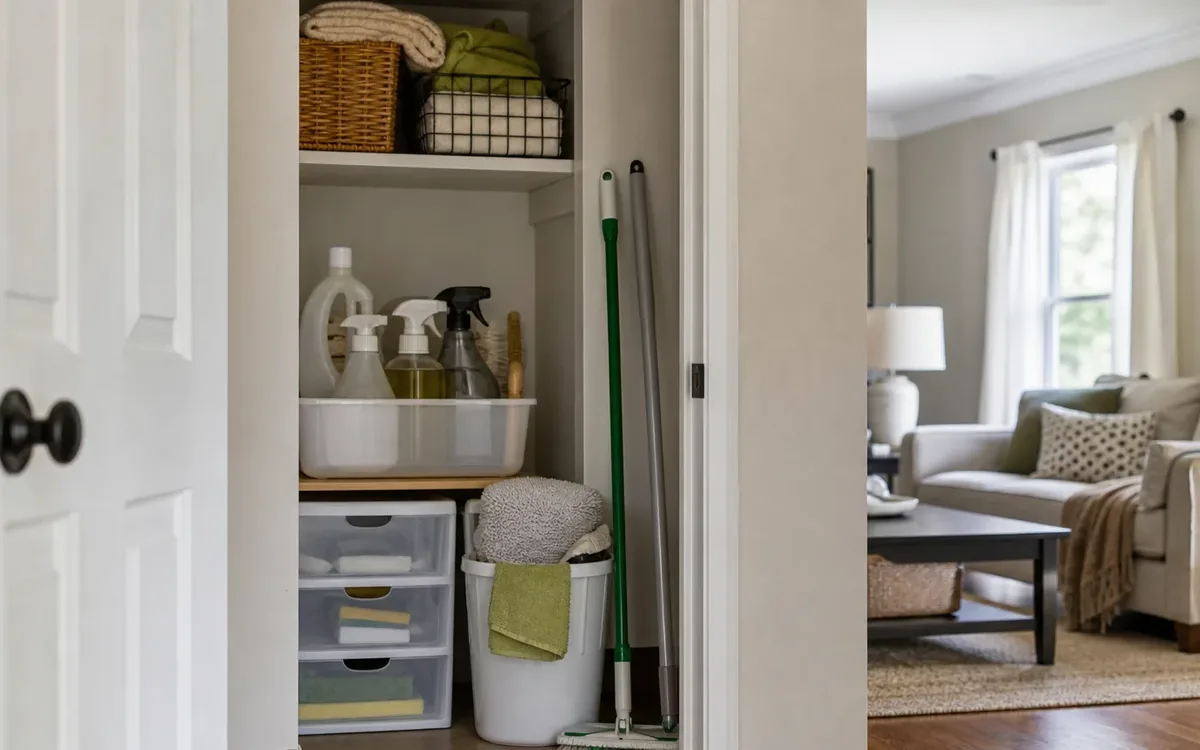
Organize cleaning supplies for a smaller home in three steps. Keep only products and tools you use. Keep the containers they came in and their labels. Choose safe indoor storage before you move. Build a small routine around your new home’s surfaces instead of moving every bottle from the old house. In South Carolina, do not treat a hot shed or garage as overflow storage without checking each product’s storage directions.
Quick answer: Inventory your supplies, remove unneeded duplicates, and choose an indoor place that meets product-label rules. Keep products that are unsafe to mix separated, protect access from children and pets, and put often used tools within easy reach. Handle unwanted chemicals through the local disposal process rather than pouring them away or packing them by default.
What cleaning supplies should you keep when downsizing?
Start with the home you are moving into, not the amount of storage you now have. A product that worked in a large house may have no use in the next home. Floors, counters, or appliances may be different. Link your supply list to downsizing and organizing support and move management planning so space and packing choices fit the same plan.
Make a short list of surfaces and tasks: bathroom fixtures, kitchen counters, floors, glass, laundry, and any special finishes. Check maker care instructions if you have them. A cleaner safe for one surface may damage another. Keeping fewer bottles should not mean using the wrong product.
Sort your current supplies into practical groups:
- Keep: Products with readable labels that serve a current cleaning need.
- Finish before moving: Useful duplicates you can in fact use as directed.
- Review: Specialty products, unknown chemicals, and containers with unclear condition.
- Remove through a safe route: Leaking containers, unwanted products, or items you cannot identify safely.
Do not combine half-full bottles to make the shelf look tidier. Similar packaging does not show that two products have the same formula. Keeping the containers they came in keeps directions, warnings, and a clear name.
For broader space planning, Clutter Cleaner of South Carolina’s downsizing and organizing service can help with sorting household belongings and thinking about what will fit. For product use and safe handling, check label directions. Ask the maker or local authority when you need guidance.
How can you reduce duplicate cleaning supplies?
Duplicates are often easier to spot by task than by brand. You may have several bathroom sprays but only one bathroom, or several floor tools saved through earlier moves. The guide to choosing a first decluttering task helps keep the sort small, while downsizing support connects it to the rest of the home.
Group products by use only if their labels say they can be stored together. You can compare products on a written list. You do not need to gather chemicals that are unsafe to mix. Note the product name, use, bottle state, and storage rules.
Choose a main product for each needed task. Keep a backup only when there is a clear use for it and a suitable place to store it. Bulk buying is not a space saving if the extra container takes space from something key.
Tools deserve the same review:
- Keep the broom or vacuum that works with your new flooring.
- Keep a mop only if it fits the surfaces and has usable replacement parts.
- Compare duplicate brushes by use, not appearance.
- Separate bathroom-use tools from kitchen-use tools.
- Remove broken handles and worn accessories from the moving supply list.
Avoid reducing everything to one so-called one-size-fits-all cleaner. A smaller stock should still meet the real care rules of your home. The goal is fewer unneeded items, not fewer safeguards or poorer cleaning results.
Where should cleaning supplies go in a smaller home?
Choose the place before buying bins or moving supplies. A bin cannot fix a poor storage place. The cabinet may be too warm or easy for a child to reach. The label may rule it out. Before buying storage, read whether storage bins can make clutter worse and tie the shelf plan to downsizing and organizing.
South Carolina households may be tempted to use a shed or garage when indoor closets shrink. Those spaces can become hot, and conditions may conflict with storage directions. Check each product rather than assuming that an outdoor utility space is suitable just because it has room.
Look for an indoor place that offers:
- Conditions that meet the product’s heat and air flow directions.
- Protection from sunlight or ignition sources where the label needs it.
- Separation from food, medicines, and personal care items.
- Upright storage on a firm surface.
- Access control suited to children, pets, and at-risk household members.
- Enough room to read labels without unpacking the whole shelf.
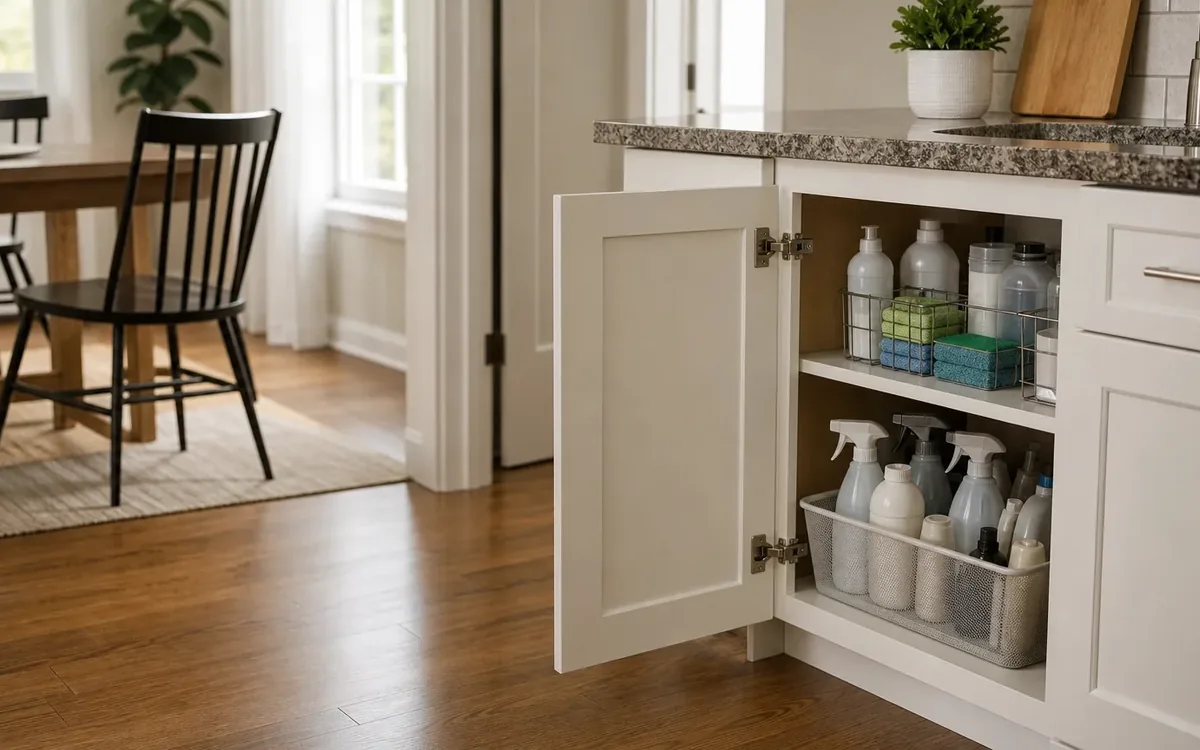
An under-sink cabinet is not by default the best answer. Plumbing leaks, awkward reach, and easy access may make another place more suitable. A high shelf is not always secure storage. Think about who can reach it and what the label requires.
If you are sorting a relative’s home, unknown supplies need more care. The guide to the best way to clean out an estate gives a plan for the larger sorting process. Set doubtful cleaning products apart from other belongings. Confirm a safe handling plan before moving them. Do not treat them as ready to donate.
Keep labels and separate products safely
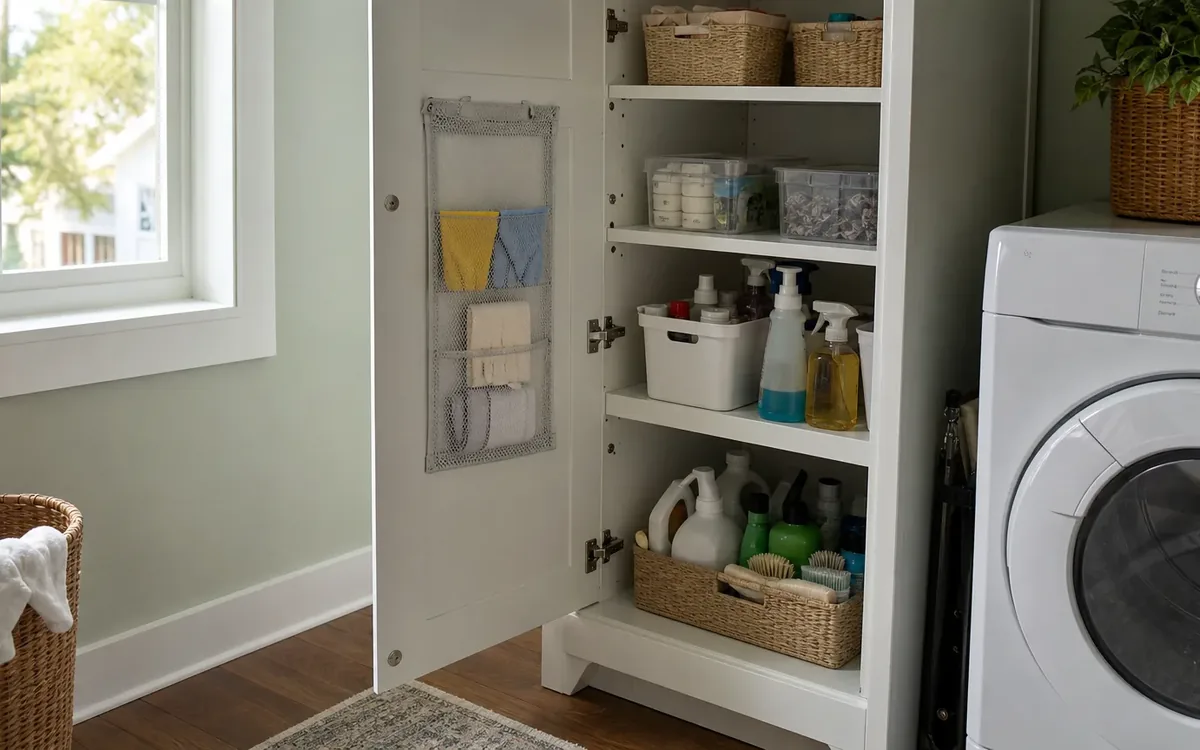
A tidy shelf should make safety details easier to find, not hide them from view. Leave products in the containers they came in with their product labels intact. Do not transfer cleaners into beverage bottles, food containers, or decorative dispensers. If these products came from a relative’s home, use estate cleanout planning with the estate cleanout guide to keep the wider sort clear.
If a label is missing or unreadable, do not identify the contents by smelling, testing, or mixing them. Seek guidance from the maker if the product can be reliably identified, or ask the local waste authority how to handle an unknown household chemical.
Organizing by room can be helpful, but safe chemical handling comes first. Do not mix bleach with ammonia, acids, or other cleaning products. Follow label directions for separation, use, and storage. Merely being sold for bathroom cleaning does not mean products belong together in one carrier.
For kept supplies:
- Keep caps closed and bottles upright.
- Face labels toward the front where you can.
- Use separate trays where product directions and safe handling allow it.
- Keep powders and liquids protected as their labels require.
- Avoid stacking heavy containers above weak packaging.
A tray may catch a small leak. It does not make a damaged package safe. It does not replace the need to keep some products apart. Do not put chemicals that are unsafe to mix into a shared tray where leaks could mingle.
If a chemical package leaks or looks damaged, do not make up a cleanup method. Do not guess how to repack it. Follow the product’s directions and get guidance for handling it.
Create easy access without displaying every bottle
Once you have a safe storage place, organize access around your real routine. Often used items should be easy to reach. Products you use less can go farther back. Keep the same safety limits for both. The bathroom decluttering guide offers a room plan, and downsizing and organizing support can frame where the kept tools fit.
A small cleaning kit may hold washable cloths and a suitable brush. Add gloves as the task requires. Include only the product you need, in its own container. It does not need to hold the whole household supply stock.
Think about separate tool zones:
- Kitchen tools: Cloths and brushes kept for food-preparation areas.
- Bathroom tools: Clearly labeled items that do not return to kitchen use.
- Floor tools: A set place for handles, attachments, and clean pads.
- Laundry supplies: Products stored according to their labels, with child access controlled.
Let reusable cloths and tools dry as directed before putting them away. A crowded closed bin is a poor solution for damp items. Keep used items apart from clean replacements so the system remains clear.
Use simple shelf labels such as “floor care” or “clean cloths.” These labels add to product labels; they never replace them. Choose wording that everyone in the household knows.
Access also matters. If bending or reaching is hard, choose a safer shelf height. Storage must still be secure. You can change shelf heights and routines. Basic cleaning should not mean climbing or pulling heavy bottles from overhead.
Plan what moves and what needs another route
Do not pack cleaning supplies just because they are already in the cabinet. Review the next home storage space and ask the mover about its rules for chemicals, liquids, aerosols, and other restricted items. Bring this list into move management planning; the guide to assigning move-day roles helps clarify who follows up on open tasks.
Approval varies by provider and product. Original packaging does not prove that an item can travel with the rest of your belongings. Avoid hiding restricted supplies inside boxes of linens or kitchenware.
A practical cleanout or move team may discuss:
- Which supplies the household wants to keep.
- Whether the planned storage area has enough usable space.
- How to identify tools and belongings that are ready for packing.
- Which doubtful products need a separate decision.
- What the mover permits and what needs another arrangement.
The household chooses what it wants to keep. The mover decides what it will carry. Product directions and the appropriate waste authority guide chemical handling and disposal.
For unwanted supplies, contact your county or city waste authority. Ask what it accepts, how to pack it, and where to take it. Do not assume normal trash, recycling, drains, or a donation outlet are appropriate. Do not give someone an unidentified or damaged container to avoid dealing with it yourself.
Storage rentals and special disposal arrangements are separate household or provider choices, not automatic parts of an organizing service.
Keep household decisions separate from professional decisions
Most cleaning-supply decisions are household decisions: which routines matter, which tools are comfortable, and how much shelf space to set aside. Write those choices down. A helper can then see which supplies should leave. Use downsizing and organizing services for the household plan and estate cleanout services for the wider inherited-home discussion.
Other questions require the responsible professional or authority. If cabinet fitting, air flow changes, or repairs are needed, discuss the work with a contractor. If the property has an inspection or compliance issue, the inspector or right authority decides current rules. Organizing a shelf does not show compliance.
In an estate, not everyone can discard, transfer, or sell property. Estate directions and legal roles may control these choices. Resolve doubt with the person in charge or legal professional. Ask an appraiser about value. Ask the real estate professional about getting the home ready for sale.
Clutter Cleaner of South Carolina is based in Mount Pleasant, serves all of South Carolina, and has Charleston as its main market. Its downsizing and organizing or move-management services may be useful to the wider move. Do not assume chemical disposal, contractor work, off-site storage, or special checks are included; discuss scope separately.
Short FAQ
A small supply shelf still needs clear labels and safe storage. Keep that goal in downsizing plans and move management notes, then check product instructions and the receiving provider’s rules.
Can I keep cleaning products in a South Carolina garage?
Only if the real conditions meet each product’s storage directions. Do not rely on a hot garage or shed just because indoor space is limited. Find suitable storage or pursue a safe removal route.
Can I combine matching bottles to save room?
Keep products in the containers they came in rather than combining them. Matching names or packaging do not remove safety concerns, and combining can separate what is inside from key label details.
Should I buy organizers before sorting?
Sort first, then measure the suitable storage space. Buy only what supports the kept stock, safe separation, and readable labels. A large organizer can encourage keeping supplies you do not need.
What if I cannot identify a cleaner?
Do not sniff, test, use, or mix it. Keep people and pets away from the doubtful container and ask the local waste authority for handling guidance.
A successful smaller-home setup is easy to understand: needed products, readable labels, separate tool uses, and suitable indoor storage. Leave empty space rather than filling it with backups. That space makes supplies easier to inspect and helps prevent the stock from growing again.



