

Declutter a bathroom for listing photos and showings by clearing nearly everything from counters and shower ledges, reducing visible personal products, organizing under-sink storage, and creating a simple daily reset routine. In humid South Carolina homes, also watch for damp textiles, condensation, musty odors, and toiletries that leave wet rings or residue. The goal is not to make an occupied bathroom look unused. It is to make the space look clean, functional, easy to maintain, and spacious enough for a buyer to understand.
Quick answer: Remove daily products from view, keep only a few clean essentials on display, empty the shower perimeter, sort the vanity by use, and place a small reset kit where household members can reach it. Before every photo session or showing, dry wet surfaces, hang fresh towels, close toilet lids, empty trash, and check for moisture or odor.
Why do bathrooms need a different decluttering approach?
Bathrooms are small, visually busy rooms. A few bottles, cords, towels, and cleaning supplies can dominate the photograph because the camera captures most of the room at once. Mirrors also double the visual clutter by reflecting items that might otherwise sit outside the frame.
Buyers may look at more than the open floor and counter. They may notice whether cabinets appear usable, whether the shower looks easy to clean, and whether the room seems adequately ventilated. In an occupied home, that makes hidden organization as important as surface clearing.
South Carolina humidity adds another concern. Damp bath mats, crowded shower caddies, wet towels, and products stored along tub edges can retain moisture. Decluttering improves airflow and makes it easier for the household to spot residue, leaks, damaged caulk, or discoloration that needs attention.
Decluttering does not resolve defects. If you find active leaking, damaged flooring, persistent growth, electrical concerns, or ventilation problems, the owner should consult the appropriate plumber, electrician, inspector, remediation provider, contractor, or other qualified professional. A cleanout or move team may help sort and remove approved household contents, but it should not diagnose building conditions.
For broader preparation beyond the bathroom, review the home sale preparation service. If the project is part of clearing an inherited property, the guide to how estate cleanouts work explains the larger sorting and removal process.
What should stay on the bathroom counter?
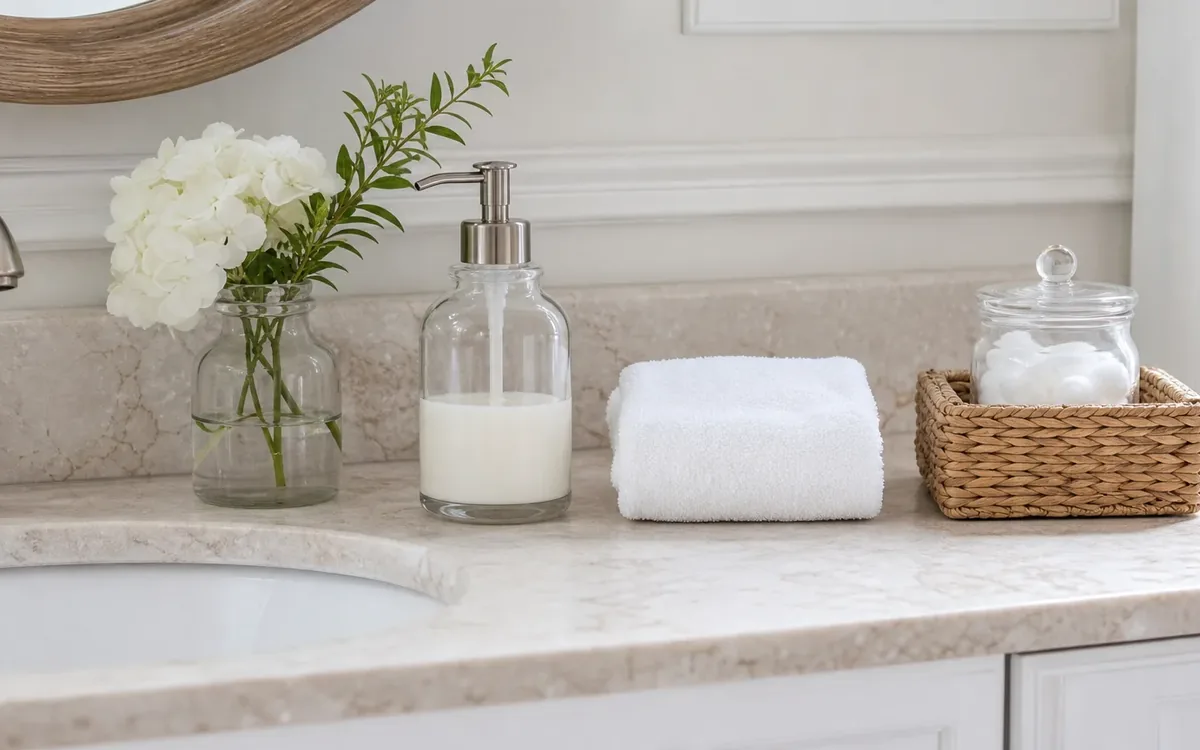
Keep the counter restrained rather than completely bare. A spotless but empty vanity can feel staged beyond practicality, while a crowded counter makes storage look inadequate.
A simple display may include:
- One clean soap dispenser
- One small tray for a limited group of attractive essentials
- One decorative item, if it does not crowd the sink
- A neatly folded hand towel placed where it will stay dry
Move toothbrushes, medications, razors, cosmetics, hair tools, contact-lens supplies, prescription labels, and personal grooming products out of sight. This protects privacy and removes small objects that create visual noise.
Unplug hair dryers, curling tools, electric toothbrush chargers, and shavers. Let heated tools cool fully before storing them. Avoid stuffing cords into a drawer where they can snag or prevent it from closing.
Check the counter from the bathroom doorway and in the mirror. Items beside the toilet, on a window ledge, or behind the faucet may appear prominently in reflections. Take a phone photo from several angles to identify clutter that is easy to overlook in person.
Do not conceal a known defect with a tray, towel, plant, or other display item. Questions about property condition, disclosure, repair, or representation belong with the owner and the responsible real-estate or legal professional.
How should shower and tub areas be cleared?
A shower crowded with bottles can look smaller than it is. Remove backups, nearly empty containers, razors, bath toys, washcloths, cleaning brushes, and products that are not used regularly. Keep only a minimal set of daily items in a clean caddy or store them elsewhere between uses.
Focus on the perimeter:
- Clear bottles from the tub rim and floor.
- Remove products from window ledges.
- Take down excess hanging caddies.
- Store bath toys in a ventilated container outside the photo frame.
- Remove personal scrubbers and worn shower caps.
- Wash or replace visibly soiled liners as the household chooses.
Product rings and soap residue become more visible after bottles are removed, so wipe and dry each cleared surface. Clean glass doors and metal tracks according to the material manufacturer’s instructions. Keep the drain area unobstructed.
For listing photos, a simple folded towel may soften the room, but avoid draping textiles over every rail and enclosure. During occupied showings, leave enough ventilation for used towels to dry rather than hiding damp items in cabinets or hampers.
Persistent staining, loose tile, failed sealant, slow drainage, or a suspected leak is not a decluttering question. The homeowner decides whether to seek an inspection or repair estimate. A qualified professional determines the cause and appropriate work, while the relevant real-estate or legal adviser addresses disclosure and transaction questions.

Organize under-sink storage without hiding a mess
Buyers may open built-in cabinets during a showing, subject to the seller’s instructions and local showing practices. An overfilled vanity can imply insufficient storage and may conceal moisture or plumbing concerns.
Use this five-part sort:
- Daily use: Keep frequently used products together in a removable bin.
- Backups: Retain a modest supply and move excess stock to another appropriate storage area.
- Cleaning supplies: Group compatible products upright and follow every label’s storage directions.
- Dispose or recycle: Separate empty, expired, leaking, or unwanted products according to label instructions and local requirements.
- Relocate: Move medications, documents, valuables, and highly personal items to secure storage.
Do not combine chemicals, pour products into unlabeled containers, or place leaking packages back in the cabinet. Medication disposal, aerosol products, chemicals, and other regulated materials may require specific handling. The household is responsible for confirming current instructions with the product label and the appropriate local authority or disposal provider.
Once the cabinet is empty, look for dampness, warped material, staining, corrosion, or an active drip. Do not simply line the shelf and cover a possible issue. Plumbing diagnosis and repair belong to a qualified provider. Inspection findings and transaction decisions belong to the appropriate inspector, owner, and real-estate or legal professional.
Return fewer items than you removed. Use bins that can be lifted out quickly, but do not buy organizers until you know what will remain. Organizers should support access, not become containers for products nobody uses.
Build a daily reset for an occupied home
The most useful bathroom plan is one household members can repeat before each showing. Assign every daily product a nearby home so clearing the room does not require moving loose items into random closets.
Create a portable routine kit with:
- A handled bin for toiletries used each morning
- A heat-safe solution for cooled styling tools
- A ventilated place for damp shower items
- A small supply of clean hand towels
- A bag or bin for bathroom trash
- Basic cleaning products stored according to their labels
Then follow this six-step reset:
- Return personal products to their assigned bin or drawer.
- Wipe the sink, faucet, counter, and obvious splashes.
- Dry the shower edge and remove wet items from view.
- Hang clean, coordinated towels with labels and worn edges hidden.
- Empty trash, remove laundry, and close the toilet lid.
- Check the room from the doorway for cords, reflections, odors, and floor clutter.
Household members can decide who completes each task and where the routine kit will live. If children share the bathroom, use storage they can reach without climbing. If someone has mobility limitations, keep necessary products accessible rather than prioritizing appearance over safety.
Do not create an unsafe rush before a showing. Avoid slippery floors, unstable stacks, overloaded cabinets, or hot styling tools hidden before they cool. A practical move or cleanout team may discuss sorting categories, packing priorities, removal options, and preparation tasks within an agreed scope. The household still decides what stays, what moves, and what may be discarded unless another legally authorized person has that responsibility.
Control moisture and odors without masking problems
A strong fragrance does not make a bathroom feel cleaner. Heavy sprays, plug-ins, candles, and scented cleaners may bother visitors and can suggest that an odor is being concealed. Aim for neutral air instead.
After bathing, use the bathroom’s ventilation features as intended and allow damp textiles to dry. Wipe condensation from mirrors, counters, windows, and other surfaces where moisture collects. Avoid packing wet bath mats or towels into closed hampers immediately before a showing.
Check common odor sources:
- Trash containing personal-care waste
- Damp towels and bath mats
- Laundry left behind a door
- Residue around the toilet base
- Hair and buildup near drains
- Wet cleaning cloths stored under the sink
- Products that have leaked inside a drawer
Visible surface cleaning is a household maintenance choice. Persistent musty odors, recurring discoloration, or moisture that returns after cleaning can indicate a condition requiring professional evaluation. A cleanout company should not determine whether a material is mold, whether remediation is required, or whether the home complies with a rule.
The responsible inspector, contractor, remediation professional, association, code official, or other authority addresses matters within their role. Sellers should direct questions about disclosure and marketing language to their real-estate and legal professionals.
Prepare differently for photos and showings
Listing photographs capture fixed angles, so the photo-day plan can be exact. Ask the real-estate professional or photographer whether they have composition preferences. They decide how the property will be marketed and photographed.
Before photos, remove:
- All toilet brushes and plungers from visible areas
- Scales and freestanding hampers
- Extra wastebaskets if they crowd the floor
- Personal photographs and identifying labels
- Brightly mismatched towels
- Portable fans or dehumidifiers, unless a responsible professional advises that equipment should remain in use
Showings are less predictable because visitors may view the bathroom from different positions and may open built-in storage where permitted. Keep cabinets orderly and protect valuables, medication, financial information, keys, and personal documents.
Never place unwanted bathroom contents in a garage or spare room without a plan. That merely moves the clutter into another part of the buyer’s tour. The household can choose to keep, donate, sell, recycle, discard, pack, or place items in separately arranged storage. Donation acceptance, disposal rules, auction suitability, appraisal, and storage terms are determined by the relevant provider or authority.
A practical home-sale preparation or move team may discuss packing, sorting, removal, and room sequencing. An appraiser determines value, a real-estate professional guides presentation and marketing, an inspector evaluates property conditions, and qualified contractors determine repair methods. These are separate decisions.
What should you do with items removed from the bathroom?
Avoid creating a permanent holding zone. Give each removed item a destination based on whether it will be used before the move.
Use three practical categories:
- Keep accessible: Daily toiletries, mobility aids, and essential supplies go into easy-to-move bins or organized drawers.
- Pack for the move: Unopened extras, guest towels, decorative pieces, and infrequently used appliances can be packed and labeled.
- Remove from the household: Unwanted items can be evaluated for donation, recycling, sale, or disposal based on condition and applicable requirements.
Used personal-care products may not be accepted by donation organizations. Do not assume that cosmetics, medicines, chemicals, linens, or electrical grooming tools can go into ordinary trash or recycling. Confirm acceptance and disposal rules with the relevant organization or local authority.
If items may have resale value, the owner may consult an auction provider, estate-sale professional, or qualified appraiser. A sorting team can separate possible sale items, but valuation and marketability stay with the appropriate specialist. If off-site storage is considered, the household should compare access, security, climate needs, insurance questions, and contract terms directly with the storage provider.
A focused final check from the doorway
Stand at the entrance rather than beside the sink. This is close to the first view a buyer or camera may have.
Confirm that:
- The floor path is open.
- Counters are mostly clear.
- Mirrors do not reflect hidden clutter.
- Shower and tub edges are unobstructed.
- Towels are dry and neatly placed.
- Cabinet contents are contained rather than compressed.
- Personal information and medication are secure.
- Trash and laundry are removed.
- No cleaning product or electrical cord creates a hazard.
- Moisture concerns are not being covered up.
The bathroom should communicate usable storage and routine care, not perfection. If maintaining the setup becomes difficult, reduce the number of daily products rather than adding more baskets.
Short FAQ
Should every bathroom counter be completely empty?
No. A soap dispenser and one restrained accessory can help the room feel usable. Remove personal products, cords, excess decor, and anything that crowds the sink.
Can toiletries be placed in the shower for a showing?
It is better to keep only a minimal, orderly set there. Store remaining products in a removable caddy or assigned cabinet space, allowing damp items to dry safely.
Should sellers hide a bathroom issue until after photos?
No. Decluttering should not conceal leaks, damage, odors, or other known concerns. Repairs, inspections, disclosures, and transaction decisions should be addressed by the owner with the appropriate qualified and responsible professionals.
Can a cleanout team decide what to throw away?
The household or legally authorized decision-maker determines what may leave the property. A practical team may discuss categories, packing, and removal options within its agreed scope, while disposal facilities and authorities determine acceptance or compliance requirements.
Where is Clutter Cleaner of South Carolina located?
Clutter Cleaner of South Carolina is physically located in Mount Pleasant, South Carolina. Charleston is its primary market, and its approved service territory covers South Carolina. Homeowners can call (843) 972-7020 to discuss whether home sale preparation, downsizing and organizing, move management, or another listed service fits the project.



