
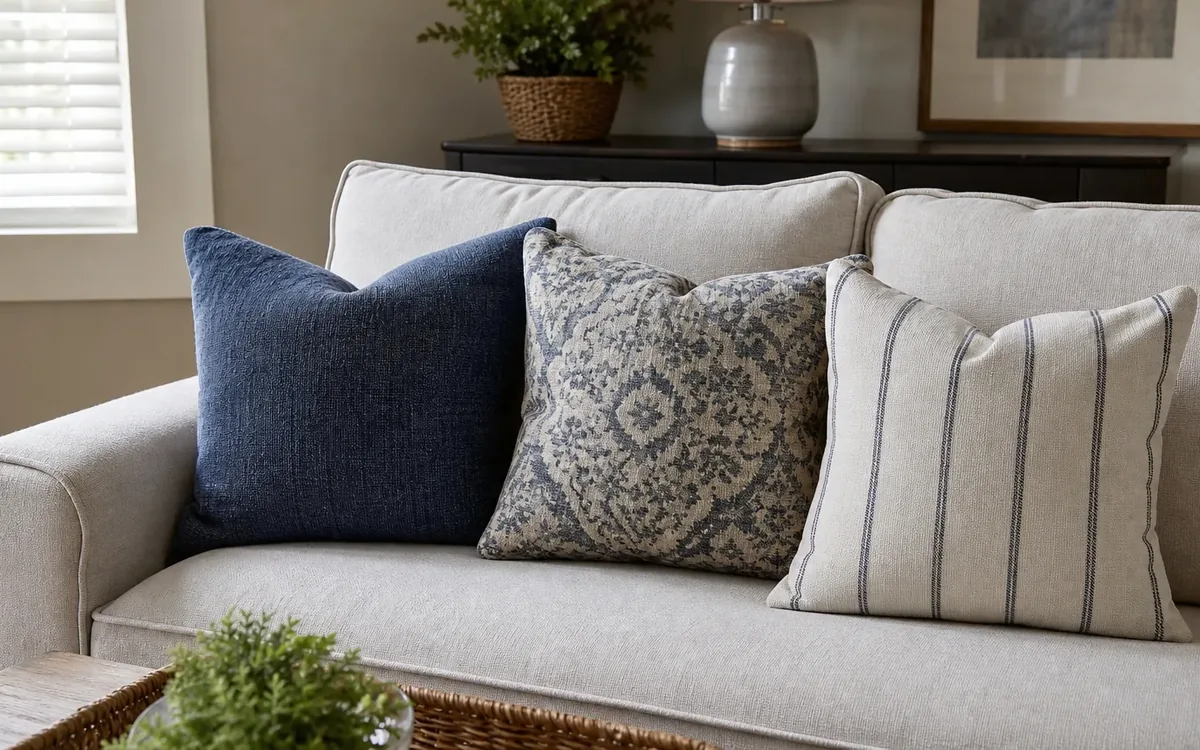
Sort decorative cushions by matching covers to inserts. Check how each pair fits your couch. Choose spare covers that have a clear purpose. For a move in Charleston, SC, make these choices before packing. Keep useful pairs together when you pack them. Compare their packed size with your spare space.
How should you sort decorative cushions before moving?
Start with complete cushion pairs, loose covers, and loose inserts in separate groups. Read about keeping household accessories with their items. This guide helps you keep those connections clear. Several cushion sets may have become mixed together. Downsizing and organizing support can help you choose clearly. Decide which cushions you intend to move.
Bring cushions from the same couch together. A cover may be tucked in a drawer. Its matching insert may still be on the couch. Sorting by where you found each piece can hide that connection. Work through one couch’s collection before opening another group.
Give each cushion a temporary name from its cover. Names could include green square or striped rectangle. Add a small distinguishing detail when two covers look alike. These names should help you spot matching pairs. You should not need to open each packed bundle.
- Keep a cover and insert together when you know they form a useful pair.
- Place an unmatched cover beside the other covers until you have checked all loose inserts.
- Set aside a cushion with an unclear purpose until you compare it with the couch you will use.
Avoid deciding by color alone. Two cushions may look similar but differ in depth or shape. A matching pattern does not prove that both belong in the same set. First, make a clear record of your cushions. Include any pairs that still have missing pieces.
How do you match removable covers with inserts?
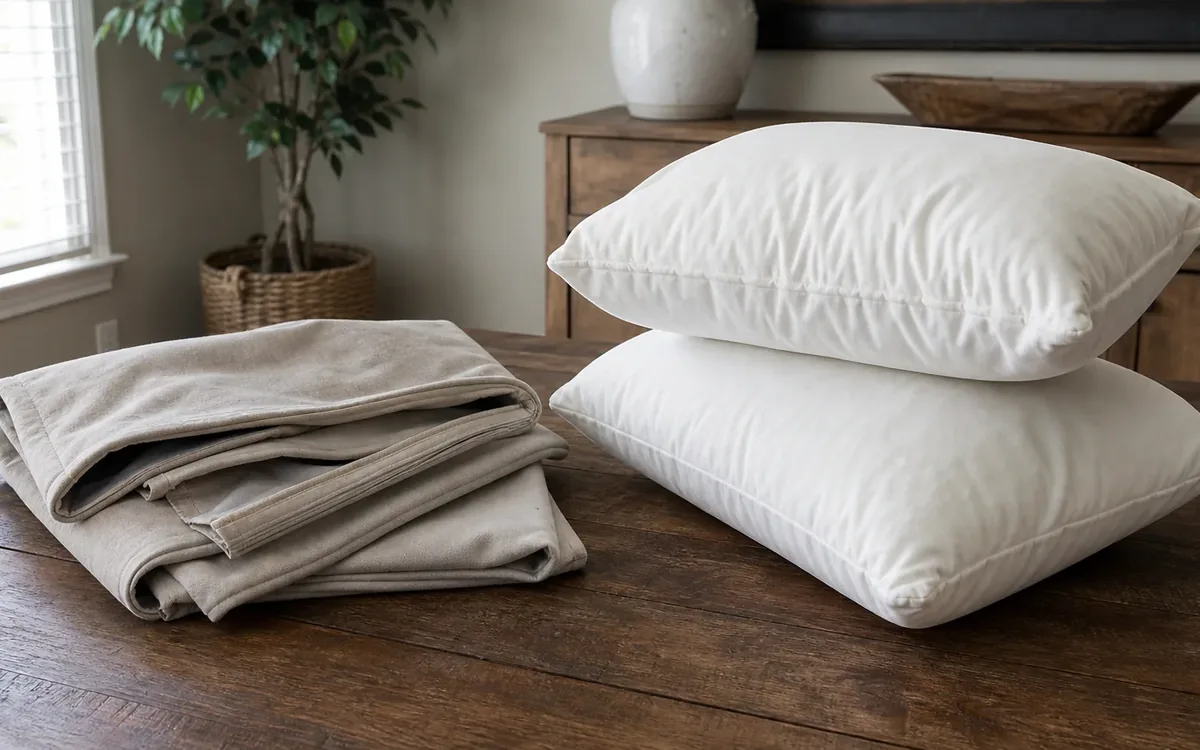
Match covers and inserts by shape, stated size, and a gentle fit check. Several sets may need a closer review. Use help with sorting household items in that case. Add confirmed pairs to your move management plan. A cover’s color or pattern cannot confirm a match. Those clues alone cannot tell you which insert belongs.
Read any size labels that remain. Record cover and insert details separately, since the labels may use different terms. If labels are missing, compare the pieces laid flat. Narrow your choices before you try a pair. Do not force every insert into a cover.
For a removable cover, check whether its opening works before attempting a match. Stop if the closure catches or the fabric pulls tight. Set that pair aside for review. A fabric or upholstery specialist can offer advice. Ask about damaged closures or fits that seem wrong.
Look at the whole cushion once a likely pair is assembled. Notice whether the corners look filled and whether the cover sits as intended. A loose corner does not always mean a wrong insert. It does give you reason to compare another likely match.
Record each confirmed pair on its packing label. Keep unmatched pieces separate and name what is missing. “Blue square cover, insert needed” gives more useful detail. It tells you more than “extra cushion” does. That detail makes a later choice easier. It also shows the cushion is not yet complete.
Which cushions fit your couch-seat proportions?
Keep cushions that suit your usable seat space. They should also suit the way you sit. Use organizing help for a smaller collection for support. Planning the move of matched sets keeps chosen pairs together. Judge the group on your next couch when available.
Start with the couch clear of decorative cushions. Then add the pairs you reach for most often. Sit as you normally would on the couch. Check the room left for your back, arms, and legs. A set can look balanced while leaving less room than you want.
Compare cushion width with the seat’s usable width. Also check depth, since a thick cushion can take up space behind you. A narrow rectangular cushion may have a different use. A broad square one may serve another purpose. Keep those roles clear instead of treating every cushion as interchangeable.
Try the smallest useful group first, then add one pair at a time. Stop when another cushion makes the seat harder to use. Also stop if it adds no clear benefit. Make a simple written note of the final group. Include where each cushion sits on the couch.
If the future couch is not available, use confirmed seat measurements where possible. Keep uncertain pairs separate from your chosen set. The next couch might need different cushion inserts. That alone does not justify buying replacement inserts. Nor does it justify keeping a large backup group.

How many spare cover sets should you keep?
Keep spare covers that fit inserts you keep. Each spare should also have a distinct use. Help with choosing useful belongings can ease that review. Coordination for your household move can keep spares beside sets. Choose based on fit, purpose, and storage space. Do not choose based on how many covers you own.
A spare cover can be useful without needing a spare insert. A cover may fit an insert you use. It then offers another look without another packed cushion. Label the link between that cover and insert clearly. This keeps the cover known after the move.
- Keep an alternate cover set when it fits your chosen inserts and offers a look you still want.
- Keep a replacement cover when it serves a named cushion and has a clear storage place.
- Release a duplicate cover when it adds no useful option beyond the covers you have selected.
Compare the spare sets side by side. Similar shades or prints may serve the same purpose. This holds even if you bought them separately. Choose the set you would reach for first. Leave room to keep a favorite cushion cover. Name that reason instead of calling every extra essential.
What should happen to cushions you will not move?
Check whether each unwanted cushion forms a complete pair. Then give each unwanted cushion a clear destination. Estate cleanout support may suit a larger home transition. Downsizing and organizing services can help sort items. This includes items you keep and those you release. Keep your choices about each cushion clear and specific. Do not let them delay sorting the remaining collection.
Describe a released cushion honestly. Note whether the cushion includes its matching insert. Record whether you can take the cover off. Also note whether you can confirm its size. Someone may want only the cover from a pair. Check that the remaining insert still has a purpose. Do this before you split a useful pair.
For any proposed donation or transfer, check the recipient’s current requirements first. Do not assume cushions or loose inserts will be accepted. Keep unknown destinations separate from those you have confirmed. Do not mark boxes ready to leave without known recipients.
An item may need its condition checked first. Seek that check before you assign its destination. Sorting does not require you to diagnose fabric damage. You need not promise that a cushion can be restored. A clear unresolved label is better than an unsupported claim about its condition.
How can you compare decorative cushion packing choices?
First, decide which pairs and spare covers to keep. Then compare the packing choices for those items. Move management assistance can help coordinate your chosen groups. Read the guide to keeping accessories with their items. It explains why each cover’s link to an insert matters. Choose a packing method that keeps those links clear. It should make packed size easy to judge.
Use the same box or storage space when comparing groups. A loose couch heap gives one impression of size. A packed box gives a different impression of size. Try an arrangement without forcing items into place. Note which cushions the space can actually hold.
| Choice | Useful when | Decision point |
|---|---|---|
| Keep assembled cushions together. | You want complete pairs ready to identify. | Check the full group’s volume after selection. |
| Pack covers beside labeled inserts. | Covers are removable and pairings are confirmed. | Record each pairing before separating it. |
| Pack spare covers as one labeled set. | Several covers fit the retained inserts. | Remove duplicates before packing the set. |
Separating a cover from its insert does not remove the insert’s bulk. The main space decision remains how many inserts you keep. Spare covers may take less space than complete cushions. Compare your actual items to check the space saved. Do not assume how much space you will save.
If the chosen group does not fit, return to its purpose. Review the least useful duplicate first. A cover may fold neatly into the box. That alone is no reason to keep another insert. Judge the complete packed collection.
How do you pack matched cushions without losing pairs?
Label pairs before taking removable covers off their inserts. Support with managing the move can link labels to plans. Use organizing assistance for cushion sets to resolve loose pieces first. Each packed group should show which pieces belong together. It should also show where matching pieces are packed.
A short inventory is enough. Use the same names on the inventory and the labels. Do not rely on patterns that describe several covers. This matters most when you pack pieces separately.
- Confirm each retained pair and give it a distinct name based on its shape, cover, and any detail that separates it from similar cushions.
- Record the matching insert on the cover label, and record the matching cover on the insert label if you separate the two pieces.
- Group spare covers by the inserts they fit, and identify which covers form an alternate set for the same couch.
- Note the box containing each group, and add a plain contents description that lets you check the inventory without opening the box.
- Compare the packed contents with your retained list, and move any unresolved piece back to the review group before closing the box.
Use labels attached to a bag or container rather than writing on fabric. Keep label wording brief but specific. Anyone opening the box should understand each pairing. They should not need to know your couch. Nor should they need to recall the unpacked cushions.
What should you check before the cushion boxes close?
Check that each cushion you keep has a purpose. Each split pair should have labels that match. Each spare cover should fit a named insert. A coordinated move plan can carry those details forward. Use the household accessory matching guide to check connections. Check before boxes close and pieces leave view.
Check whether you have counted any cover twice. It may be counted within an assembled cushion. It may also appear on the spare list. Also check for an insert left behind after its cover was packed. These gaps can be easy to miss when the collection contains similar shapes.
Review the unresolved group last. Decide whether each piece needs its fit checked. It may instead need a specialist’s view or confirmed recipient. Keep that reason visible. An unexplained extra box simply moves the same cushion decision to another home.
You may move within Charleston or elsewhere in South Carolina. The check of each item stays the same. The useful result is a clearly named collection. Its pairs, spares, and packed size are clear before transport.
What else should you know about sorting decorative cushions?
For unusual cushion choices, check their fit and purpose. Check the pieces you already plan to keep. Practical downsizing and organizing help can support a smaller collection. Estate cleanout services may suit a broader transition. These answers address common choices about your cushions. They do not assume each loose cover needs another insert.
Should every decorative cushion have its own insert?
A cushion you will use needs a suitable insert. Not every spare cover needs its own insert. Keep alternate covers linked to the inserts they fit. Before retaining an extra insert, decide whether you need another assembled cushion. This keeps spare covers useful for your move. Each cover need not mean packing more bulk.
Can you match covers and inserts by their labels alone?
Labels can help you spot likely matching pieces. They do not replace checking how pieces fit. Shape, depth, and the cover’s opening still matter. Compare the stated details, then gently check the likely pair. If the fabric strains or the closure catches, stop. Ask a fabric or upholstery specialist about damaged items. Also ask about any match you cannot confirm.
What if the next couch has different seat proportions?
Keep a small group with purposes you can explain. Mark uncertain pairs for a later fit check. Use confirmed couch measurements if you have them. Consider both cushion width and depth, since each affects usable seat space. Do not assume you need every cushion you have. First, judge how the group works on your next couch.
Is it better to pack cushions assembled or separate?
Either choice can work if you preserve the pairings. Assembled cushions are easy to identify as complete items. Separate covers need labels that point to their matching inserts. Compare the actual packed group before choosing. Taking covers off does not remove the insert bulk. The number of inserts kept still guides your space choice.
What should you do with a favorite cover that has no insert?
Keep it only with a clear reason and an honest label. You may value the cover enough to keep it. You might assess a suitable insert for it later. Do not count it as a complete cushion now. Record its shape and any stated size. Give that favorite piece a clearly defined storage place. Keep it known, not lost in an unnamed spare bundle.



