Prepare an adjustable bed move by gathering the model records first. Name the providers booked for each stage of the move. List controls, room access details, and the receiving home’s contact. For a move to or from Greenville, SC, share this file with the crew before move day.
Quick answer: Build a move file for the exact model. Include visible photos, a list of controls, and both homes’ access details. Record each provider’s role and the agreed handoff dates. The maker or qualified provider decides the method; household members keep records rather than handle technical tasks.
An adjustable base needs more planning than a plain bed frame. It may have motors, moving joints, cables, and paired controls. Some beds have two bases with separate remotes. Treat each base as its own item until the manual says otherwise.
What should an adjustable bed move plan include?
The move management service is a useful place to discuss handoffs. The home-transition resource blog offers broader planning help. Your bed plan should name the model, listed items, access limits, and booked providers. Add each provider’s scope, contact details, arrival window, and written handoff needs.
Start with the bed’s label, not its appearance. Look for the maker, model, and serial number. The label’s location will vary by design. Don’t reach beneath a raised base while someone operates it.
Find the manual through the maker’s official support channel. Check that it covers your exact base. A manual for a similar model may show different cables or locks. Save a copy where you can find it without the bed assembled.
Send model questions to the maker’s support team or qualified provider. Include the model record and photos already on hand. Save their reply with the booking details. The household’s role is to share records, not choose a handling method.
Build a small bed record with these items:
- Save the model number, serial number, and correct manual in one clearly named file.
- Take photos of visible items and labels without moving parts or exposing hidden areas.
- Record which mattress, base, remote, and accessories belong together before packing starts.
- Write down each agreed task and the person or provider who accepted it.
- Save any past service reports so providers can review the bed’s known history.
The household can decide where the bed will go. It can also choose which accessories to keep. Technical steps still need the maker’s instructions and an agreed scope of work.
How should you protect electrical parts and remotes?
Use the move management planning page to discuss handling needs. Browse the home-transition guides for related household tasks. Build a clear inventory from visible photos and model records. Give the booked provider this file, then record who will supply packing materials and confirm receipt of each listed item.
Gather past service notes before the provider’s visit. List concerns already reported during normal use. Add the date and source of each report. These records help the provider review the history without asking the household to test or diagnose the bed.
Take clear photos of what’s visible from the room. Include the bed’s overall view and labels already in sight. For split beds, name sides consistently in your file. Use photo captions such as “window side” and “door side” to avoid confusion.
Share the bed’s current room view with the booked provider. Add the move date and the crew’s arrival window. Leave technical preparation and method choices to the maker or qualified provider. If the schedule changes, update both contacts and save their replies in the move file.
List accessories shown in the purchase or service records. Include item names and counts where those details are known. Ask the provider to confirm which items its booking covers. Save any packing or transport limits in writing, with a named contact for follow-up questions.
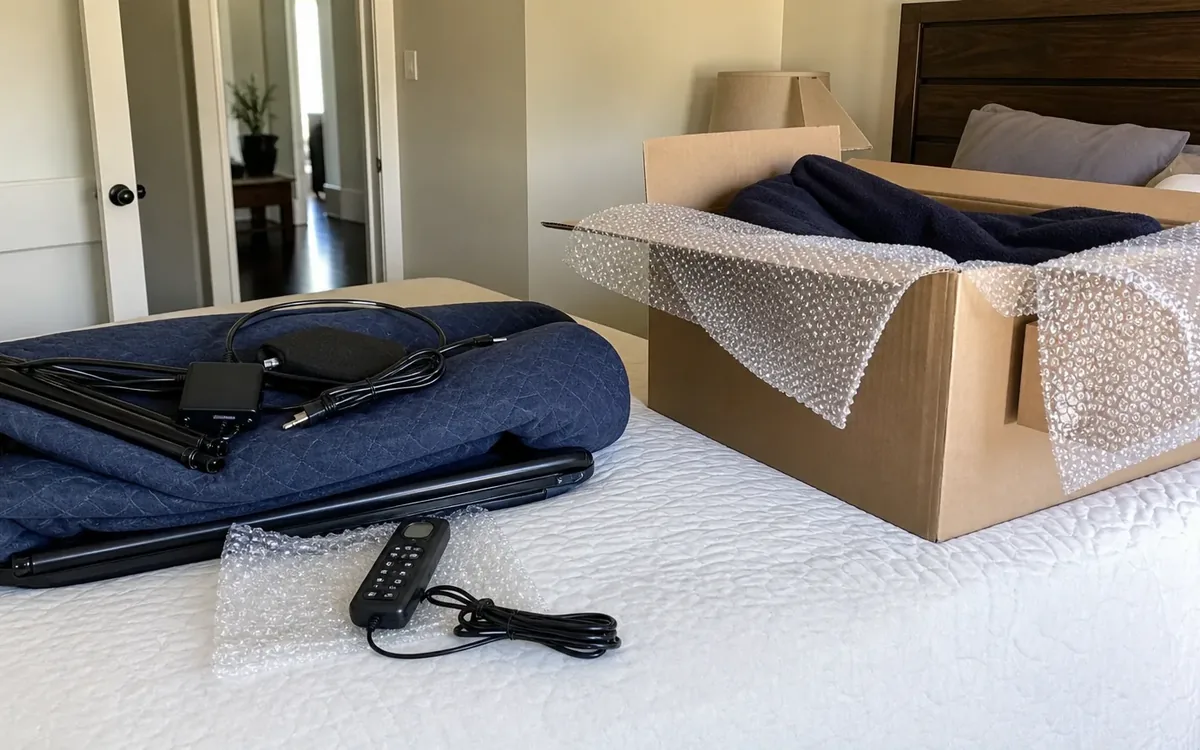
Pack remotes in a marked pouch with their assigned base. Keep that pouch easy to reach at delivery. A bedside drawer can become separated from the bed. Don’t hide essential controls in a general bedroom box.
Use photo captions to match visible items with the inventory. Record any labels that are already easy to read. Ask the provider how packed items will be identified at handoff. Keep that reply with the item list and booking record.
Who should handle disassembly and reconnection?
The move management service provides a starting point for scope discussions. The estate cleanout process guide helps clarify tasks during a larger home transition. Name a responsible person for each bed task. Don’t assume packing, transport, technical teardown, and reconnection are covered by one provider.
Ask the moving crew what it will accept. Describe the base, its shape, and any separate sections. Share the manual before asking for a firm handling plan. The crew should decide its own staffing and lifting methods.
Confirm the work in writing with the chosen providers. Terms such as “bed assembly” can mean different things. One provider may fit legs but exclude electrical reconnection. Another may require the base to arrive ready for transport.
Use this four-step handoff plan:
- Assign the model file, visible photos, and household inventory to one agreed contact.
- Record the qualified provider’s scope, arrival window, and handoff needs in the booking file.
- Ask the transporting crew to confirm packing coverage, access needs, and loading arrangements in writing.
- Name the receiving contact who will log delivered items and save the provider’s completion record.
If no one accepts technical work, contact the maker for guidance. A separate bed service provider may be needed. Don’t fill that gap through trial and error. Make the decision before the crew arrives.
Clutter Cleaner of South Carolina offers move management statewide. Its physical business location is Mount Pleasant, SC. Charleston is its primary market. A Greenville move can be discussed within that statewide scope, without assuming bed repair or electrical work is included.

Check access at both homes before packing
Discuss access through the move management service page. Use the household transition blog for wider planning needs. Measure the bed parts and their full route at both homes. Share tight turns, stairs, doors, and receiving rules with the crew. Let the crew assess handling needs before loading.
Measure the base in the form approved for transport. Include parts that remain attached, such as legs or brackets. A mattress measurement won’t tell you the base’s full size. Record each separate section if the model allows division.
Check the route from the bedroom to the loading point. At the receiving home, check the route in reverse. Measure door openings and note turns near stairs. Photos can help explain spaces that measurements alone don’t show.
Share these details with the crew and receiving residence:
- Note narrow doors, low ceilings, stair turns, and floor surfaces along the planned route.
- Ask the receiving residence about entry rules, lift use, and approved unloading areas.
- Share the planned bedroom and room photos so the provider can review space needs.
- Record the property contact’s name and any questions the provider needs answered before arrival.
- Plan where pets and household belongings will stay during the crew’s booked visit.
Let the crew choose safe handling methods. The household should not direct an improvised lift. Removing a door or changing trim is separate work. Get the property owner’s consent and use a suitable provider.
If the route won’t work, pause the plan. Storage is a separate household choice with its own terms. Contractor changes are another choice. Neither should be treated as an automatic part of move management.
Pack parts for a clear setup handoff
The move management service can anchor a discussion about packing responsibilities. The guide to cleaning out an estate helps when the move includes sorting other belongings. Keep bed parts grouped by base and labeled by use. Pack for clear identification at delivery, while following the maker’s protection instructions.
Keep small hardware in a closed, labeled container. State which base and part each bag belongs to. Don’t combine similar bolts from other furniture. A close match may still have the wrong length or thread.
Ask the crew how it wants hardware and controls presented. Some parts may travel with the base. Others may need a separate, accessible box. Agree where that box will go and who will receive it.
Ask the transporting crew to confirm its packing scope in writing. List who supplies materials and which items the quote covers. Save any exclusions beside the household inventory. The crew chooses its packing methods, while the household records what was booked and received.
Keep the manual with the setup kit. Include your connection photos and the record of existing faults. Add a simple note naming the person handling setup. This helps avoid guessing during a busy delivery.
If you remove the mattress, check its care instructions too. Mattress handling and base handling may differ. Keep sheets and pillows out of the hardware container. Clean bedding can travel in its own marked bag.
Don’t discard unidentified parts during packing. Set them aside for review against the manual. Disposal is a separate decision, subject to provider rules. If the bed is being sold instead, appraisal or sale advice belongs with the appropriate professional.
Reconnect carefully and keep decisions separate
Use the move management planning service to discuss the receiving handoff. The home-transition resource guides can support other move tasks. Give the receiving contact the inventory and provider booking details. Record each delivered item, any missing package, and the qualified provider’s completion status in one shared file.
Give the qualified provider the model file and arrival photos. Include the inventory and any past service notes. Ask for a written record of work completed within the booked scope. Save the provider’s next steps and contact details without making a household judgment about the bed’s safety.
Compare the delivery list with the household inventory. Record package counts and items the provider reports as missing. Add dates to the arrival photos already taken. Send any gap in the records to the named contact, and save the reply.
Keep each remote’s inventory entry with its recorded base. Split beds can create confusion in the paperwork. Use the room-side names from the move file. Send unclear item matches to the provider without trying controls or changing connections.
Leave safety and property decisions with the right people. An electrician handles concerns about outlets or electrical work. A building authority or responsible property manager handles applicable access rules. An inspector evaluates issues within their role, not the moving crew.
Legal decisions about ownership stay with the authorized person and legal adviser. Real-estate decisions stay with the owner and real-estate professional. Appraisals need the appropriate appraiser. A practical move team can discuss coordination without taking over those roles.
If the provider cannot complete the work, arrange another place to sleep. Ask for the open tasks and next visit date in writing. Keep the service record and visible photos for the next provider. Leave safety decisions to the maker or qualified provider, rather than the household.
FAQ
Can I move the adjustable base without taking it apart?
The maker or qualified provider decides that for the exact model. Give them the model record, room photos, and access details. Ask for written scope before booking the move. Save the handling plan with the crew’s quote. Household members record the plan rather than choose how the bed will travel.
Should I unplug the bed before lowering it?
Leave that task to the maker or qualified provider’s model-specific plan. The household should record who owns that part of the work. Share the model file before the booked visit. Add the provider’s arrival time and contact details. Don’t diagnose, test, disconnect, or change the bed for transport yourself.
Where should the remote go during the move?
Place each remote in a labeled pouch or protected container. Match it to its own base, especially with a split bed. Agree with the crew where it will travel. Keep it accessible for setup. A remote packed deep inside a general box can delay a useful function check.
Does move management include electrical repair?
Don’t assume electrical repair is included. Discuss the exact scope with each provider before the move. Coordination and technical repair are separate tasks. A qualified repair provider should assess damaged wiring or faulty parts. Questions about the home’s outlet or circuit belong with a qualified electrician, rather than the moving crew.
What if the bed won’t fit at the receiving home?
Ask the crew to review the route before loading. If access remains uncertain, discuss other choices with the household. Storage, a different room, or contractor work may be options. Each needs its own agreement. Don’t alter the bed outside its instructions or change the building without the required consent.
What should I do if the bed stops working after delivery?
Stop using it if movement or wiring seems unsafe. Compare its condition with your pre-move photos and notes. Contact the maker or the agreed repair provider for help. Follow the mover’s stated process for reporting transport concerns. Keep records, and avoid repeated tests that could worsen a fault.