When moving with an electric vehicle, check where you can charge on the route. Keep the right charging gear close at hand. Arrange a professional review of the new home’s electrical setup. For South Carolina households, separate moving-day needs from a home charger installation that may happen later. A garage, driveway, or visible outlet is not proof that a home can safely support your preferred charger.
Quick answer: Plan EV charging alongside the house move. Check chargers on the route and near the new home. Keep the gear with the driver, outside the moving load. Have a backup place to charge. Ask a qualified electrical professional to check the home setup. Get required property permission before relying on home charging.
What charging needs should you settle before moving day?
Decide who will drive the EV, where it must go, and where it can charge before moving day. Include trips for keys, family, and short-term lodging. Build these needs into your move management plan. The first step on a moving checklist can help you put the key tasks in order.
The household can decide who will drive the EV, which trips it will handle, and whether another vehicle will carry people or supplies. Those choices help decide where charging fits without requiring the moving team to make vehicle-specific judgments.
Write down the essentials in a shared move note:
- The connector your EV uses and the charging methods its maker allows.
- Who will watch the charge level and change the route if needed.
- Places to charge near both homes and along the route.
- A backup site if the first charger cannot be used.
- Charging rules for any place you will stay overnight.
- Where the gear, keys, and account access will be kept.
Use the vehicle maker’s guide to check each piece of charging gear. Match it to your exact vehicle. A plug that seems to fit is not proof. Check any adapter with the same care. If the guide is unclear, ask the maker before use. Do not treat a familiar-looking cable as an approved one.
Clutter Cleaner of South Carolina’s move management service can be part of the broader household move. Discuss how the vehicle plan affects packing priorities, departure access, and arrival coordination. Electrical evaluation, charger installation, and vehicle operation remain separate duties rather than assumed moving services.
Build the charging route around the actual move
Plan the route around each real stop, including keys, family, and storage. A short drive on a map may miss these needs. Use move management planning and the moving checklist starting guide to keep charging stops tied to the day’s tasks.
Use the charger operator’s current site details and the car’s planning tools. Check that the plug suits your car. Confirm access and payment rules. Check that you can park there with your load. Recheck near moving day. A listing that shows a charger does not reserve it. Treat it as booked only if the operator says so.
Useful questions include:
- Can you reach the charger at your planned arrival time?
- Is it only for guests, residents, customers, or permit holders?
- Can the driver start a charge with their account or payment method?
- Is there another usable site with different access rules?
- Is there a safe place for passengers to wait?
- Will bags or a carrier on the car make parking harder?
Avoid making the household moving truck’s schedule depend on the EV reaching a specific public charger. Coordinate separate arrival instructions so the move can remain organized if the driver needs an extra stop.
For South Carolina moves, changing weather, traffic, and detours can affect driving and stopping choices. Use current conditions and the vehicle’s guidance rather than assuming the same charging plan will suit every trip.
Keep charging gear out of the moving load
Keep the EV charging kit with the driver so it does not get lost in packed boxes. Give it a clear place before you start to pack. Include this in downsizing and organizing plans and move management notes so it stays out of the sale or removal pile.
Set aside a labeled bag or bin for the charging kit. Put in only gear approved for your car and setup. Keep it with the driver. It should not be buried in a load of boxes. Show the driver where it is before departure. Check that it is easy to reach when you arrive.
Consider including:
- Portable charging gear approved by the vehicle maker.
- Approved adapters that suit your vehicle and charging setup.
- Cases or plug covers supplied with the gear.
- The guide needed to identify each part and use it.
- A secure way to reach charging account details.
- A phone cable and access to the charging apps you need.
Do not use household extension cords or improvised adapters as a moving-day shortcut. Follow the maker’s guide. If you are unsure about a cable, adapter, or power supply, stop. Ask a qualified professional before use. A busy move is not a reason to make an unverified setup work.
Separate vehicle equipment from items being donated, sold, or discarded. If the move also involves clearing a family property, the guide How Do Estate Cleanouts Work? offers context for the broader sorting process. Charging cables, vehicle records, and property access items should receive clear keep instructions before that process starts.
Look for visible damage on portable gear. Do not attempt a repair. If a cable, plug, or case looks damaged, leave it out of use. Ask the maker or a qualified professional what to do. Keep it apart from the working kit so no one packs or uses it by mistake.
Can the new home actually support EV charging?
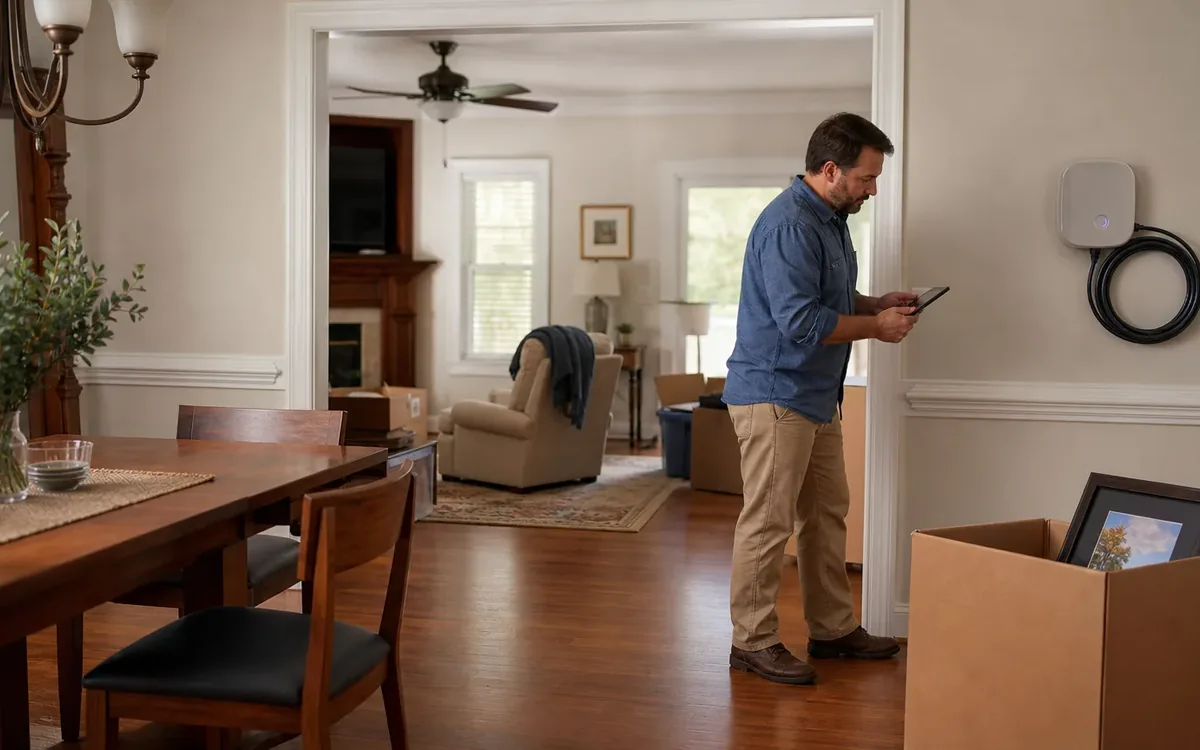
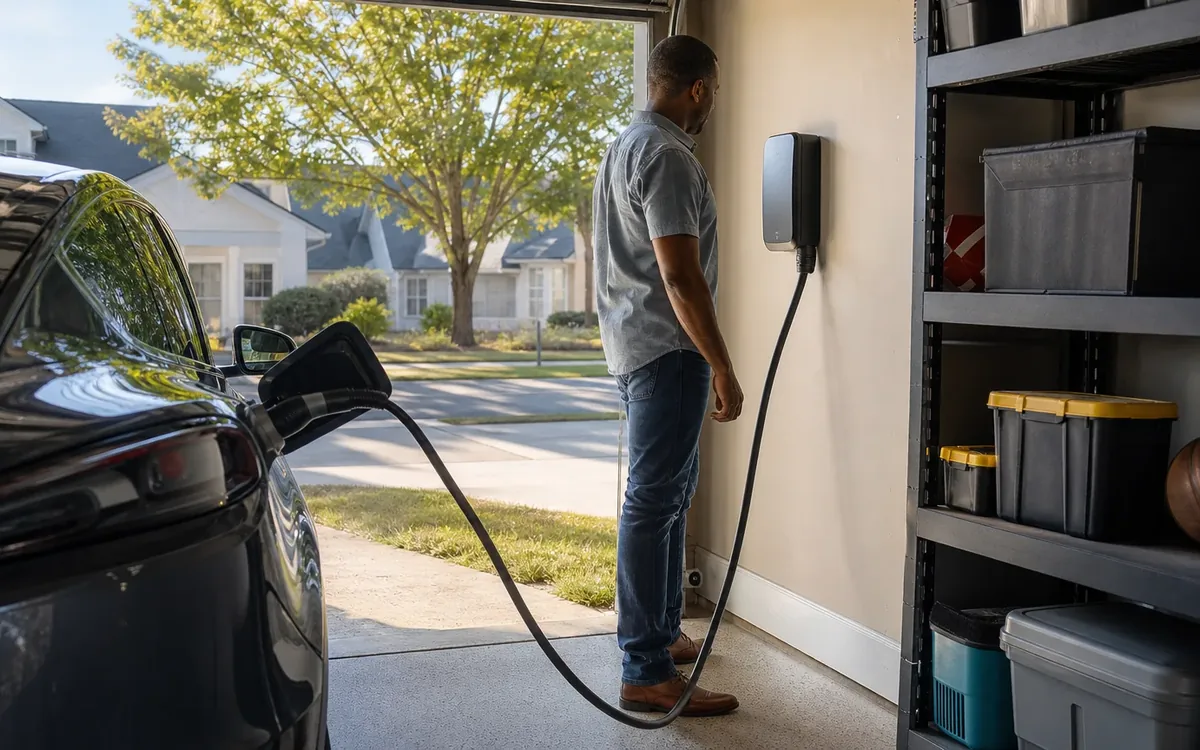
An outlet alone does not prove that a home can charge your EV safely. Ask a qualified electrical professional to assess the system and the planned equipment. Keep that task separate from move management support and home sale preparation, which help organize the wider transition.
Choose where the car would park at home. Think about how charging would fit daily trips. Gather any records you have for the existing setup. Keep the charger model details. Ask the seller, landlord, or property manager for the records they can provide. This helps the expert review the plan. It does not prove the setup is safe.
Ask a qualified electrical professional to assess the setup. Take the vehicle and charger details to that review. The review may need to cover:
- Whether the system can support the planned charging load.
- The state of the wiring, circuits, and outlets involved.
- The gear’s needs and a safe place for installation.
- Whether electrical work or an upgrade is required.
- Permits, inspections, and other rules that apply.
The responsible permitting or inspection authority decides its rules and approvals. A cleanout or move team should not certify capacity, approve an installation, or interpret code rules as a substitute for that authority.
If a listing mentions an existing charger, ask what is included in the property transaction and seek suitable verification of its condition and suitability. A real-estate professional can help address claims and sale papers. Meanwhile, electrical questions belong with the electrical professional. A legal adviser should handle disputes or legal interpretation where needed.
Until home charging is confirmed, plan as if you cannot use it. Find a backup you can reach. Keep it in the driver’s notes. This lets the household move proceed without depending on a feature still under review. Change the plan only once the needed checks and permissions are in place.
Separate portable gear from installed property equipment
Portable chargers and fixed chargers need separate move decisions. Check who owns each item and who may remove it before packing. Put those decisions in your home sale preparation plan and move management notes. Neither service settles electrical or legal questions.
The household can inventory each item and identify the intended destination. Photograph labels for reference and record whether equipment is portable, mounted, hardwired, or linked to a property agreement. Do not disconnect unfamiliar installed equipment just to make it ready for packing.
For a home being sold, confirm through the responsible real-estate or legal professional whether installed charging equipment is included, excluded, or addressed by a separate agreement. For a rental, review the setup with the landlord or property manager before removal or changes.
Any disconnect work, removal, or new installation requiring electrical work should be discussed with a qualified electrical contractor. A moving team may discuss packing equipment that has been safely prepared for moving. But that conversation does not confirm authority to perform electrical work.
If equipment will be sold, donated, or discarded, make that a separate household decision. An appraisal professional should address valuation when one is needed. Disposal options should be checked with the suitable provider or receiving facility, not assumed to be part of the move.
What if home charging is not ready when you arrive?
Have a safe charging plan for the first days if home charging is not ready. Base it on trips you expect to make and chargers you can use. Coordinate it with move management support and the guide to what to do first when unpacking so daily travel can continue.
For a rental, condominium, or shared parking area, ask the responsible property contact about charging access and permission. Clarify whether spaces are assigned, whether access requires an account, and how equipment use is governed. Do not assume that a nearby outlet or another resident’s charger is available to you.
For temporary lodging, confirm charging directly with the property. An amenity listing may not explain whether connectors suit your vehicle, access restrictions, or what happens when charging spaces are occupied.
Keep the fallback practical:
- Find a public charger that suits your EV near the new home.
- Check another site in case the first cannot be used.
- Choose who will make charging trips while others unpack.
- Keep the car available for the household’s needed trips.
- Review the plan as the real daily routine becomes clear.
Storage is a separate choice if charging equipment cannot yet be installed. Confirm suitable storage conditions with the equipment maker and any storage provider. Avoid placing equipment somewhere damp, exposed, or difficult to retrieve simply because the room is being unpacked later.
Coordinate arrival access without blocking charging
Choose where the car and moving truck will park before arrival. Charging and unloading may need the same driveway or garage space. Keep that choice in your move management plan and first-day unpacking plan so boxes do not block safe access.
A practical move team may discuss where to stage boxes, which garage areas should remain clear, and how to preserve access to the vehicle. It may also ask who can authorize placement changes. These are household plans, not electrical approvals.
Give the team a simple placement note:
- Leave the chosen parking space clear of boxes.
- Put charging gear with the items needed on arrival.
- Keep outlets, gear labels, and electrical panels accessible.
- Keep the walking route apart from the charging cable path.
- Send charging questions to the named household contact.
Do not route a charging cable through a path used to unload as a convenience measure. Follow equipment instructions and the assessed installation setup. If safe charging conflicts with unloading access, use the backup charging plan rather than making up a shortcut.
Clutter Cleaner of South Carolina is based in Mount Pleasant. Charleston is its main market, and it serves South Carolina statewide. When discussing move management, explain the EV-related access needs clearly. Arrange electrical and property approvals with the people responsible for them.
Short FAQ
Keep the driver’s plan clear while the home move takes shape. Use move management notes and the first-day unpacking plan to track charging access. Leave electrical decisions with the qualified professional. These answers help you list the next question to ask before moving day.
Should I charge before the household move begins?
Set departure charge for the route, stops, and maker’s guidance. Do not set it from the moving schedule alone. The driver should check the car’s needs and change the plan if needed.
Can I use an ordinary outlet at the new home?
Rely on an outlet only after confirming the gear and electrical setup are suitable. Follow the maker’s guide. Have a qualified electrical professional resolve doubts about the circuit, outlet, or charging load.
Who decides whether an installed charger moves with us?
The household can say what it wants to take. The property papers and the responsible real-estate or legal professional settle what may go. A qualified electrical contractor handles electrical removal or installation work.
What is the most important moving-day fallback?
Know how to reach and use a suitable charger without opening moving boxes. Do not rely on unapproved adapters or unverified home wiring. Keep gear and account access with the driver. Let the arrival plan continue if the car needs a separate stop.