
Plan folding table storage before your next move. Check its folded size and planned storage route. Also check how often you use the table. These checks help you choose where it belongs. Keep it close or choose a less handy spot. You may decide it no longer fits.
The EPA’s home reuse and recycling tips explain ways to reduce household waste. Keep useful items in good shape for reuse. Check where they can be reused before discarding them.
Where should a folding table fit in your move plan?
Choose a likely place for the table first. Then assign it space in your move plan. Use the household accessory matching guide for any supplied cover. It helps keep that storage cover with the table. Move management places this choice within the wider household plan. Start by naming the table’s next planned use. Then choose where it can wait between uses.
Family meals call for one table storage plan. An annual gathering calls for a different plan. Write down its actual purpose. “Extra surface” says too little about its purpose. That cannot justify its space in a smaller home.
Choose a possible storage spot and a possible setup room. These are separate decisions. A table may fit neatly in a closet. Moving it to its usual room may be awkward.
Before packing decisions become final, make a short record:
- Record the table’s purpose and the room where you expect to use it.
- Name the proposed storage spot and note whether its measurements are confirmed.
- Note whether the route between storage and use still needs review.
This record keeps the decision specific. If the destination is unknown, label the storage choice as provisional. Do not treat an unmeasured future closet as confirmed. It is not yet a checked table storage spot.
What folded footprint do you actually need to check?
Check the table in its planned folded state. Include any cover that changes its stored size. Downsizing and organizing can match that size to available space. Planning the move keeps those measurements available as room assignments change. The useful measurement is the space the stored table occupies.
Record its folded length, width, and thickness. Do not rely just on its open surface size. A product description recalled from memory is not enough. Built-in handles or other projecting features may change the space it needs.
Next, measure the proposed storage area’s usable interior and its opening. A closet may have enough room inside it. Yet its doorway may make access too awkward. Existing shelves and door hardware can reduce usable space. Nearby furniture can also limit the space available.
Check the intended storage position against the manufacturer’s guidance. Without that information, keep the planned position undecided. Wait until the missing details have been confirmed. This guide does not confirm suitable table supports. It does not confirm a suitable mounting method.
Mark each measurement as checked or estimated. Rough figures may help you compare homes or rooms. They should not settle whether a tight fit works. Keep the record with the room plan so nobody has to guess later.
How do you assess the carry path before choosing storage?
Check the whole route from the storage spot. Follow it to the table’s planned use room. Move coordination helps keep route questions in view. Household organizing support helps weigh access against available space. The best spot lets the table reach its usual room. Moving it should not disrupt your daily routines.
Use this ordered sequence to review the route:
- Identify the storage opening and the doorway into the room where the table will be used.
- Record narrow points, turns, and changes in level along the route.
- Note doors, furniture, and household items that reduce clear space.
- Mark uncertain passages for review before treating the storage choice as final.
This is a planning check, not a trial run. Record the folded size and the route measurements. Give them to the person who will move it. Ask that person to check any uncertain passages. Do not assume an awkward route will work.
Consider how the route functions during ordinary home life. A hallway may look clear during a viewing. Later, furniture or deliveries may fill that space. A closet reached through a busy room may be inconvenient when guests arrive.
You do not need to plan every movement yourself. You do need to flag the points that could change the storage decision. Keep those notes with the proposed storage location. A separate list could be missed during planning.
How often will your household use the table?
Base storage access on how you use the table. Include the effort of reaching its usual room. Organizing around household routines can help set your priorities. Estate cleanout services may suit a larger property transition. That may apply when an unused table is involved. Frequency helps decide which belongings deserve the easiest access.
Think about recent occasions when you used this particular table. Then consider which of those uses will continue after the move. A smaller dining room may change the table’s role. Different guest routines may also change its role. An existing work surface may change it too.
Separate real plans from possible uses. You may keep a table for future gatherings. That choice still needs a suitable storage spot. “We might need it” does not confirm a fit. Nor does it confirm you can reach the table.
Use these distinctions to compare access needs:
- Frequent use supports choosing a spot near the room where the table is usually set up.
- Occasional use may justify a less convenient spot if the access route remains practical.
- No clear future use supports reconsidering the table before assigning it scarce storage space.
Frequency alone does not settle the decision. A rarely used table may serve a clear purpose. Even a table used often may duplicate another surface. That surface may already be in the new home. Weigh use, fit, and access together.
Which storage choice fits your move stage?
Choose confirmed storage or a spot needing checks. Or decide to let the table go instead. Downsizing planning helps you compare those storage choices. Move management services keeps open decisions linked to the move. Your choice depends on what you know about the destination. It also depends on how much remains uncertain.
| Choice | When it makes sense | Next decision point |
|---|---|---|
| Confirm a storage spot. | The folded size, opening, route, and future use have been checked. | Review the spot if the room layout changes. |
| Keep a provisional spot. | The table has a clear purpose, but destination details remain uncertain. | Confirm measurements when access to the home is available. |
| Reconsider keeping it. | No practical spot or clear future use has been found. | Resolve its destination before the move plan is finalized. |
A provisional choice needs a specific unanswered question. “Check the closet opening” is useful. “Figure it out later” leaves the whole choice open. It also makes arrival harder for you to organize.
Avoid assuming that an overflow area will solve the problem. Check the spot’s size, access, and suitability first. Until then, it remains just another proposed spot.
Revisit the choice when room plans change. Adding a desk may remove your planned storage space. Changing a guest room’s purpose may do the same. Update the storage note when those changes happen. Keep the move plan in line with today’s layout.
What if the table fits but blocks access to other things?
A table can fit inside a storage area. It may still make that area hard to use. Planning usable storage helps you compare competing storage needs. Move planning support helps include your chosen layout in the destination plan. Check what becomes harder to reach when the table takes its proposed place.
Imagine the storage area with its normal contents in place. Can you still reach the belongings used most often? Does the open door give you clear access? Does the table block the space you need first?
Count the other items you would need to move. Consider this each time you want the table. That repeated disruption matters, even when each item has its own place. Some spots require moving several unrelated belongings first. Such spots may not suit regular table use.
The reverse can also happen. Keeping the table at the front may make daily supplies inconvenient to reach. Compare how often you use the table itself. Also check use of items sharing that area.
Revise the proposed spot if the arrangement creates a recurring conflict. The goal is to find a useful storage spot. Fitting all the objects together is not enough.
How should you plan the table’s arrival at the new home?
Name the table’s destination when it first arrives. Keep any open storage questions clearly in view. Managing the move helps link room assignments with household choices. Organizing the new space helps assess the chosen spot. This happens once the home’s actual furniture is there. Arrival should confirm the plan or reveal what needs revision.
Use a specific destination such as a named closet or utility room. “Storage” gives too little direction, especially when several rooms could hold the table. The final fit may still need to be confirmed. If so, add folded measurements to that same note.
Keep the route assessment available to the person responsible for moving it. If a doorway, turn, or storage opening still needs review, state that clearly. A provisional location should not look like a completed decision.
Once the room’s furniture is in place, review the access route again. The layout may differ from the empty-home plan. Check whether the table’s planned spot blocks the door. Also check access to the other stored belongings.
If that spot fails, review the table’s original purpose. Review how often you planned to use it. Those details help you compare another storage location. You will not need to restart the whole decision.
When is help useful for this decision?
Table storage may depend on several linked household choices. Help is useful when those choices affect each other. Downsizing and organizing services can address your space priorities. Move management support can link those choices to the move. Bring measurements, planned use, and any open route questions. This keeps the discussion focused on your actual home.
The business is physically based in Mount Pleasant, SC. Charleston, SC, is the service’s main market area. Its service area covers all of South Carolina. Those location facts provide context for seeking help with a household transition.
Explain where the decision is stuck. You may know the table is useful but have no confirmed storage spot. You may have suitable space but an uncertain route. Or you may choose between two similar items. The table and another item may serve one purpose.
A focused question makes that conversation more useful. Ask how its proposed spot fits the room plan. Or ask which measurements you still need to take. A general move discussion does not prove this. This specific storage plan may still need checking.
Keep product safety questions with the manufacturer or a responsible specialist. Storage planning does not confirm repairs or load limits. Nor does it confirm a suitable mounting method. Those questions need their own qualified review.
What common questions remain about folding table storage?
Most open questions concern size, awkward access, or future use. Household downsizing guidance can help compare those tradeoffs. Move coordination services can keep the resulting decisions in view. Use the answers below to find your next needed fact. Do this before choosing the table’s final storage spot.
Should I keep a folding table if I rarely use it?
Keep it if you can name a future use. You also need a practical place to store it. Rare use does not automatically make a table unnecessary. Check whether another surface already serves that purpose in the new home. Its role may be unclear, with little storage available. If so, rethink keeping it before finalizing the move.
Is measuring the closet interior enough?
No. Measure the storage opening and review the route to the closet as well. The space inside may be large enough for it. The entrance or a nearby turn may remain uncertain. Include the table’s folded thickness and projecting features in the record. Ask the person responsible for moving it to assess any unresolved access point.
What should I do if I cannot measure the new home yet?
Keep the location provisional and record exactly what remains unknown. Measure the folded table and name its planned use. Then list the area where you propose storing it. Confirm that area’s opening, interior, and access route when the home becomes available. Do not count an unmeasured closet as confirmed storage. Keep it unconfirmed in your final room plan.
Should a frequently used table go near its setup room?
Give a nearby spot priority if storage is suitable. It should also offer clear access to the table. Distance is only one factor. A close closet may still involve an awkward turn or blocked opening. Compare the whole route and belongings sharing the space. Then choose the available spot best matching household routines.
What should I label before the move?
Clearly label where the table is meant to go. Keep its folded measurements in the move record. If the spot needs checking, name the missing check. Do not present that spot as confirmed storage. Include the usual setup room and frequency of use. Those details explain the storage choice if the new home’s layout changes.
Photo credits
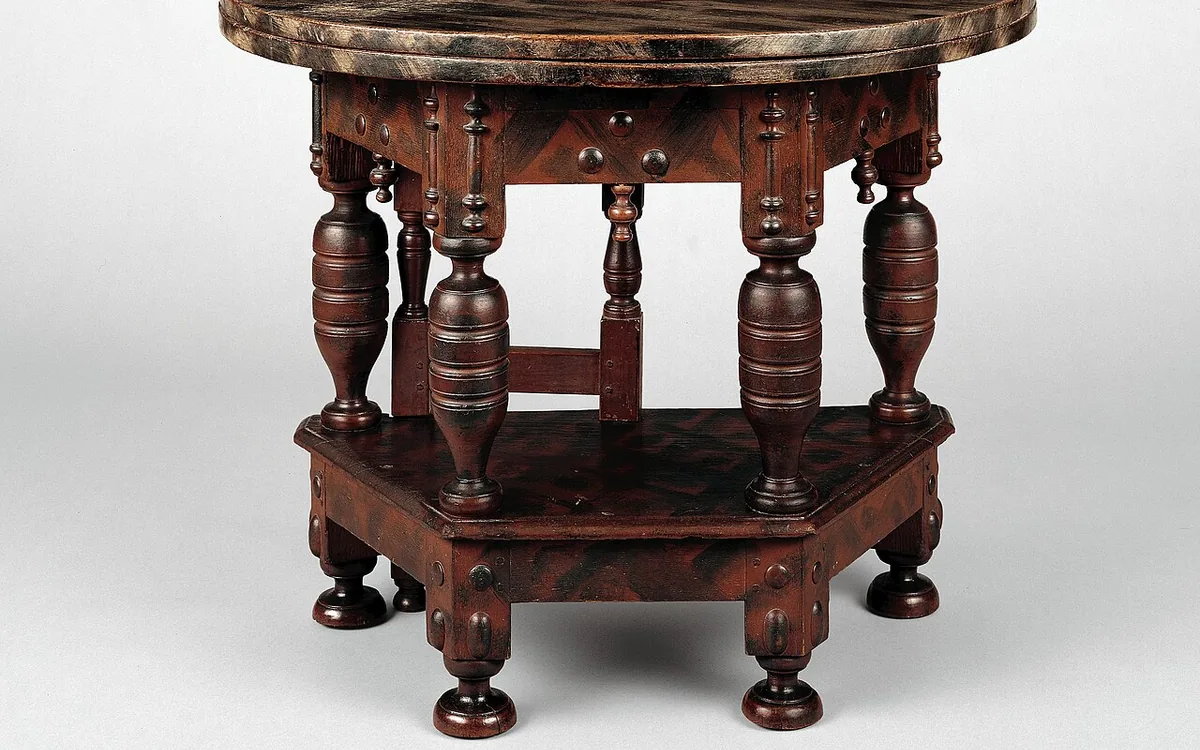
- Ornate wooden table with turned legs: . Original photograph, CC0. Cropped and resized.
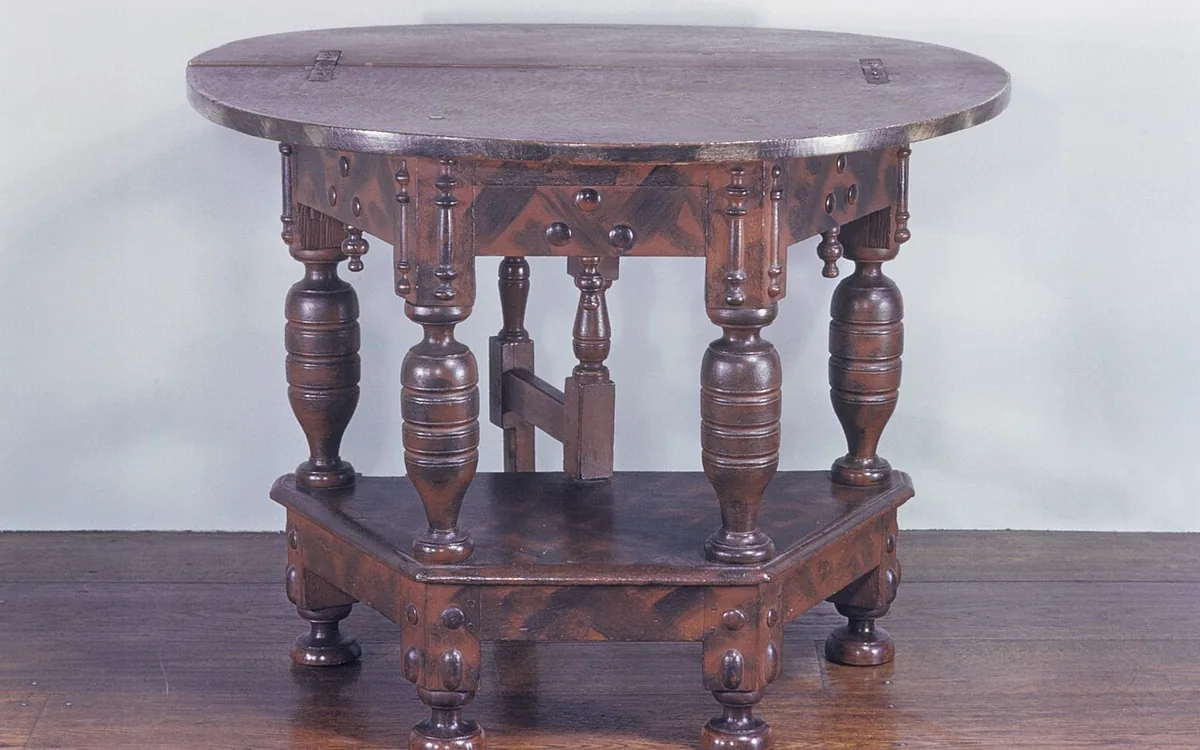
- Wooden table with a hinged tabletop: . Original photograph, CC0. Cropped and resized.
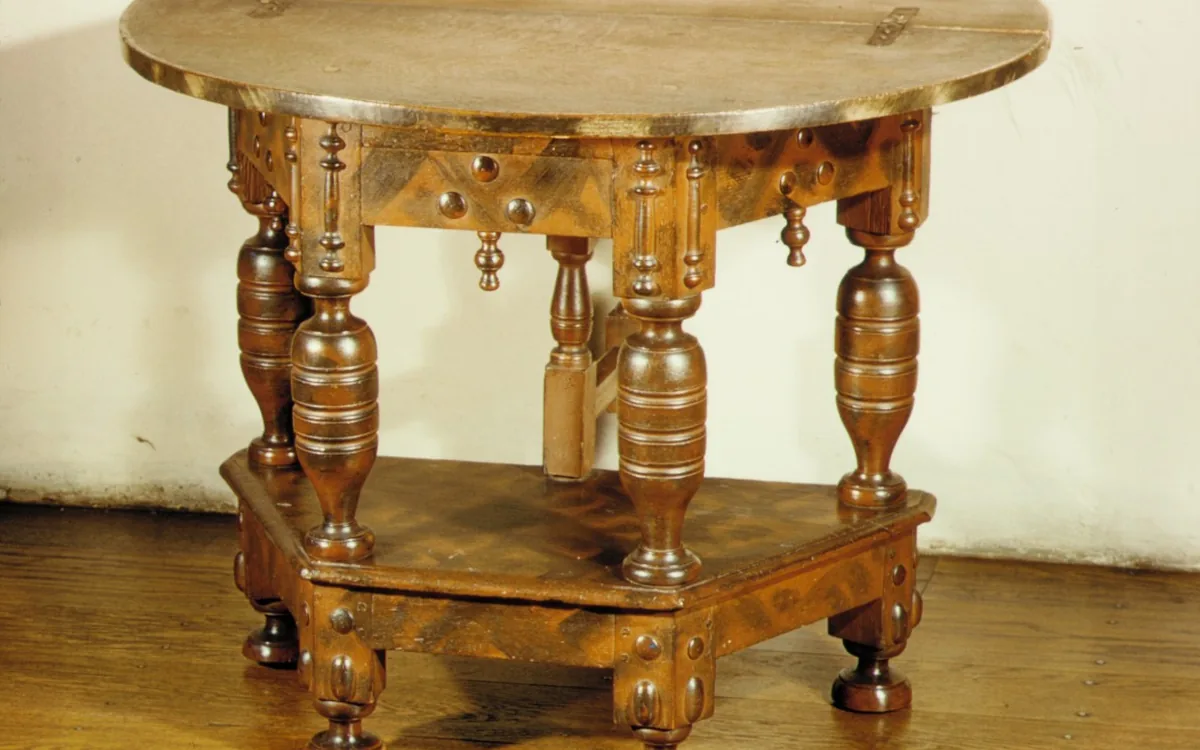
- Hinged wooden table beside a pale wall: . Original photograph, CC0. Cropped and resized.






