
Yes, the one-in, one-out rule can help with decluttering when a new item replaces something comparable and the outgoing item actually leaves. It works best for keeping manageable categories from growing. It will not clear an already crowded home by itself, and it needs exceptions for changing needs, shared belongings, essential equipment, and items requiring ownership or professional review.
Quick answer: Use one-in, one-out within a defined category, compare space and usefulness rather than item counts alone, and name the outgoing item’s destination before acquiring its replacement. If the category is already too full, reduce it first. Keep essential items and unresolved estate property outside an automatic removal rule.
What does the one-in, one-out rule actually control?
The rule connects an acquisition to an exit. Buying a jacket prompts a decision about another jacket. Bringing home a serving dish prompts a review of the dishes that serve the same purpose.
This link matters because a purchase and a removal can otherwise become unrelated promises. Saying you will donate something later leaves the new item inside and the old item waiting.
For the narrow problem of bags waiting inside the home, see How do you keep donation bags from becoming more clutter. The replacement rule depends on completing that exit rather than accumulating another holding area.
Think of the rule as a way to manage incoming belongings. It can support a broader household plan, described in How do you keep clutter from coming back, without replacing that plan.
For households in Charleston, SC, the useful question is whether the category still fits the space and daily routine. A balanced item count means little if drawers jam or someone must move boxes to reach what they use.
Define the category before choosing what leaves
A rule covering the entire house is easy to satisfy without improving anything. Bringing in a large chair and discarding a small kitchen utensil meets the count while increasing the space occupied.
Choose a category narrow enough for a fair comparison:
- Everyday shoes with everyday shoes.
- Food containers with containers used for similar meals.
- Reading books with books kept in the same reading collection.
- Living-room seating with seating needed in that room.
Ownership belongs in the definition, too. A person’s new shoes should not trigger removal of someone else’s shoes. Shared categories need a shared agreement.
If the household needs help deciding what fits, downsizing and organizing services provide a relevant starting point for discussing the project. The household can identify priorities, explain what needs to remain accessible, and ask what practical assistance fits the agreed scope.
Test clothing by fit, purpose, and available space
Clothing is a useful place to test the rule because replacements often have a clear purpose. A new work shirt may replace one that no longer fits, feels comfortable, or suits the person’s work.
The comparison should account for actual needs. Removing a warm coat to make room for a lightweight shirt may satisfy the count while leaving a gap.
Before treating a purchase as a replacement, ask:
- Does the existing item still fit and serve a current purpose?
- Does the new item improve comfort, access, or suitability?
- Will both items be needed for different activities?
- Can the category fit without crowded hanging space or compressed drawers?
A change in body size, mobility, employment, or caregiving can justify additions without a matching exit. Review clothing made unnecessary by the change separately. Nobody needs to discard a useful garment just to make the arithmetic look tidy.

Compare kitchen items by function, not pieces
Kitchen belongings expose a weakness in simple counting. A nested set of bowls and a bulky appliance may each be treated as a single acquisition, yet they have very different storage demands.
Start with what the household prepares and serves. A replacement saucepan should prompt a review of comparable pans. A new appliance calls for a decision about its own footprint, accessories, and reachable storage.
Keep duplicates when they have a clear use. The household may need similar containers for packed lunches or multiple pans for meals it actually cooks.
Watch for these warning signs:
- The new item needs storage that is already occupied.
- The outgoing item does a job the replacement cannot do.
- Accessories spread into other drawers.
- A rarely used purchase displaces something used often.
The rule works here when it protects useful space. Removing an unrelated spoon does not solve an appliance-storage problem.
Treat books, hobbies, and collections differently
Books and hobby supplies often enter for exploration rather than replacement. A new novel does not necessarily make another novel obsolete. New yarn may belong to a different project.
For these categories, pair the rule with a defined shelf, cabinet, or project area. The available space gives the household a concrete limit without requiring every acquisition to have an identical counterpart.
Consider whether an item belongs to active use, a valued collection, or an abandoned intention. Those are different reasons for keeping things.
Collections also need ownership and value questions resolved before removal. Do not assume an inherited object has little value because it looks ordinary or occupies awkward space.
When inherited belongings are part of the decision, How do estate cleanouts work? addresses the broader transition. Keep disputed property and items awaiting appraisal outside the household’s automatic replacement rule until the responsible person or professional resolves them.
Does one-in, one-out work when you are downsizing?
It can help protect space after downsizing decisions, but equal exchanges may preserve more belongings than the next home can hold.
Start with the destination. Furniture dimensions, storage access, room use, and the household’s priorities matter more than keeping an unchanged count.
For example, replacing a chair with another chair does not establish whether either one fits the intended room. Measure the furniture and usable space before choosing. Consider doors, walking routes, and access to frequently used items.
The household can decide:
- Which activities the next home must support.
- Which belongings deserve the available space.
- Which shared items require discussion.
- Which acquisitions should wait until layout decisions are settled.
Off-site storage is a separate household choice with a separate provider. It moves possessions elsewhere but does not resolve whether they remain useful. If storage is chosen, identify why each item is being kept and what decision remains open.
What counts as an item going out?
An exit means the item has reached its agreed destination. Moving it to a spare room, vehicle, garage, or donation bag is an intermediate step.
A replacement decision should include a realistic route. That might be transfer to a willing recipient, donation accepted by an organization, a separately arranged sale, or appropriate disposal through a suitable provider.
Keep the route specific:
- Name the recipient or receiving organization.
- Check whether the item is accepted in its current condition.
- Identify who will arrange transport or collection.
- Keep uncertain items separate from confirmed outgoing belongings.
Do not count an unconfirmed sale as completed removal. An asking price is not an appraisal, and interest from a buyer is not a completed handoff.
Build exceptions around needs and consent
A useful rule should make decisions clearer, not pressure people into removing necessary belongings.
Give exceptions a reason. “Needed for a new mobility requirement” is specific. “Maybe useful someday” leaves the decision unresolved.
Reasonable exceptions include:
- Essential health, safety, or accessibility equipment.
- Supplies needed for a new household member.
- Clothing required for a changed role or fit.
- Borrowed belongings that must return to their owner.
- Records whose retention requirements need professional guidance.
Gifts deserve a separate conversation. The recipient can decide whether to keep an item they own, but a household rule should not become permission to discard another person’s gift.
Shared belongings require agreement about both the new item and the proposed exit. If that agreement is missing, pause the exchange. Clear consent is more useful than a neatly balanced count.
How can you tell whether the rule is working?
Judge the result by access and decisions, not a perfect record of purchases and removals.
Choose a category with a recurring problem. Notice whether its storage closes comfortably, useful items remain easy to reach, and outgoing belongings complete their planned handoffs.
A brief household note can record:
- The incoming item and why it is needed.
- The comparable item selected to leave.
- The intended destination and person handling the exit.
- Any exception and its reason.
If the category keeps spreading, examine the comparison. Perhaps new items are larger, exits remain unfinished, or purchases serve needs the old category never covered.
A recurring pile can also reflect where belongings are used or where decisions stall. Why does clutter collect in the same spots explores that issue. Changing the purchase rule alone may leave the pile’s cause untouched.
What can a cleanout or move team help discuss?
A practical cleanout or move team may discuss sorting priorities, item locations, room access, packing needs, furniture measurements, and the sequence of an agreed project. Ask which tasks are included and who handles each handoff.
The household chooses what to keep from belongings it has authority to control. Estate authority, disputed ownership, and legal document-retention questions stay with the responsible representative, attorney, or other appropriate professional.
Keep other decisions distinct:
- Appraisals: A qualified appraiser addresses value when needed.
- Real estate: The responsible real-estate professional advises on listing and sale decisions.
- Inspections: The appropriate inspector assesses conditions within their scope.
- Contractor work: A separate contractor evaluates and performs agreed repairs.
- Compliance: The responsible professional or authority determines applicable requirements and whether they are satisfied.
- Storage and disposal: The household selects appropriate providers and confirms their terms.
Clutter Cleaner of South Carolina provides downsizing and organizing, estate cleanouts, and move management across South Carolina. Its physical business location is Mount Pleasant, SC; Charleston is its primary market.
To discuss a household project, call (843) 972-7020. Explain the category causing difficulty, the decisions already made, and any ownership or professional questions still open.
Short FAQ
Should the outgoing item leave before I buy its replacement?
When practical, yes. Completing the exit first avoids overlapping storage. If an essential replacement must arrive first, identify the outgoing item’s destination and who will arrange the handoff.
Can I use the rule only for shopping?
Include gifts, inherited belongings, and free items when they fall within an agreed category. Their acquisition cost does not change the space they need. Ownership questions still require separate resolution.
What if nothing in the category should leave?
Reconsider the purchase, confirm whether space exists, or record a specific exception. Keeping useful belongings can be the right choice. The rule should support the household’s needs, not force an unnecessary disposal.
Photo credits
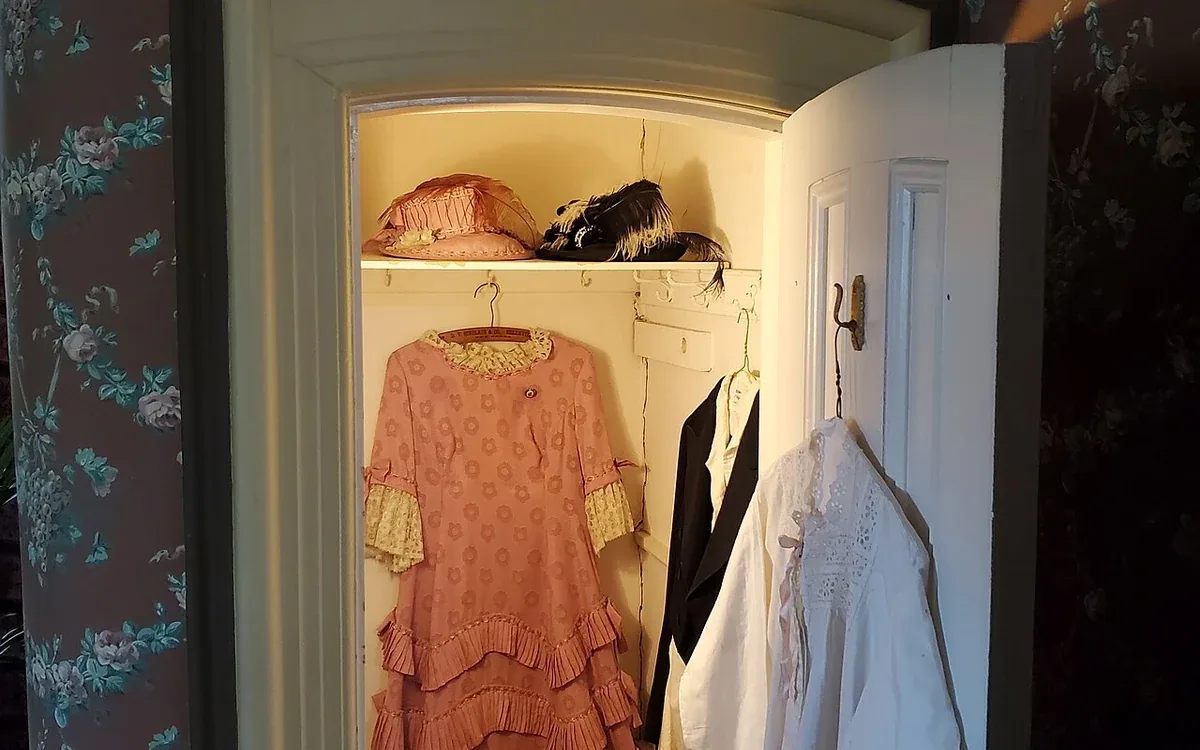
- Clothing hanging in a small open closet: Cantons-de-l’Est. Original photograph, CC0. Cropped and resized.
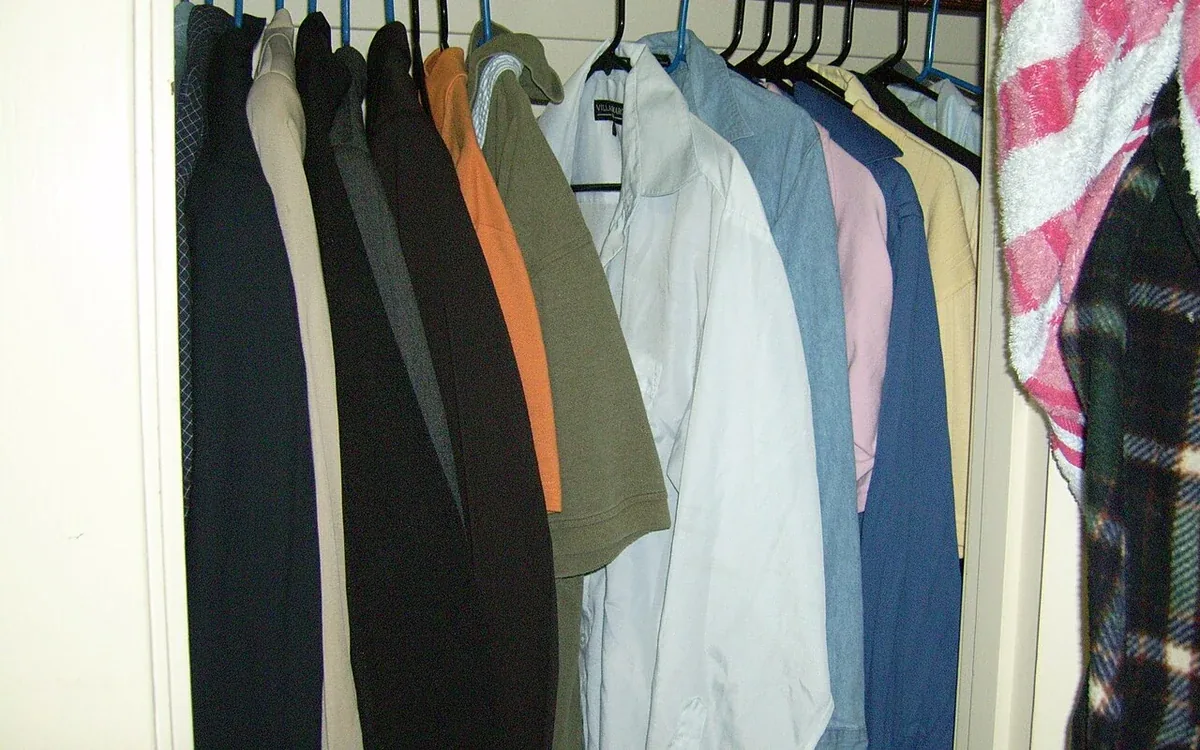
- Clothes arranged on a closet rail: Aavindraa. Original photograph, CC0. Cropped and resized.
- Wooden sliding wardrobe beside a bed: Spaceslide. Original photograph, CC BY-SA 3.0. Cropped and resized.






