
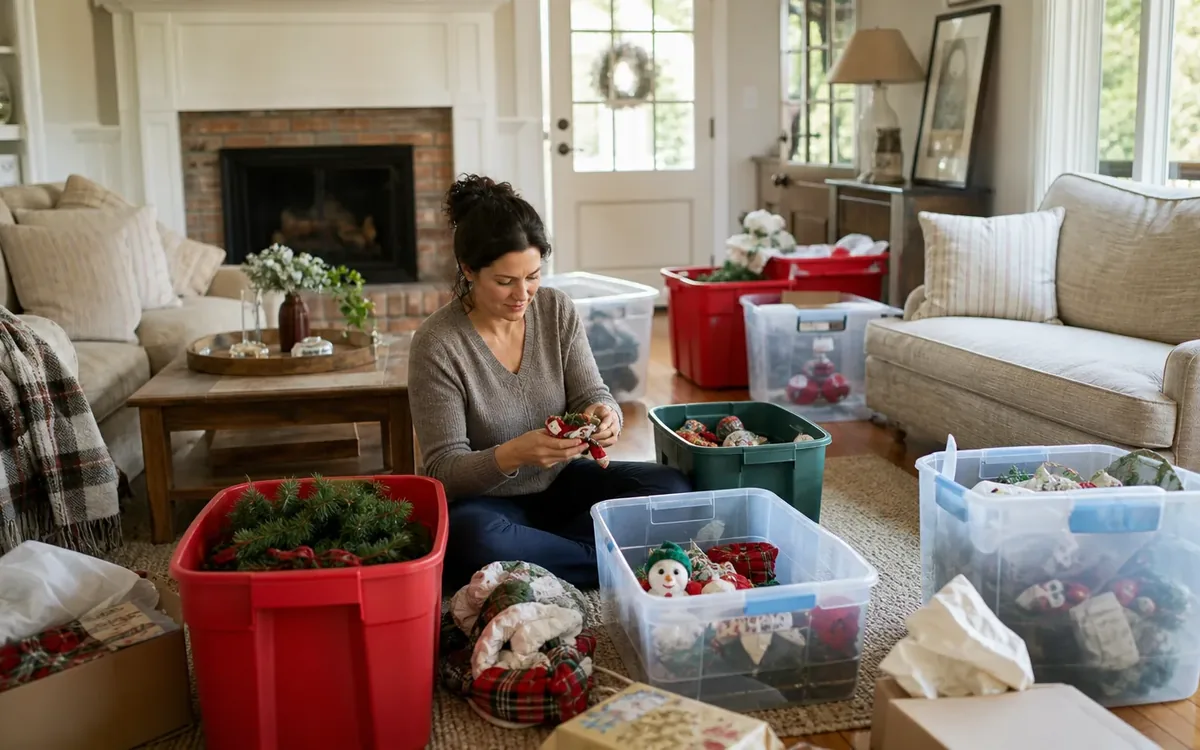
The best way to sort holiday decorations before moving to a smaller home is to set a firm storage limit, choose the pieces you genuinely display, and make separate plans for keepsakes, donations, sales, recycling, and disposal. Start with one holiday category at a time rather than emptying every box at once. This keeps decisions manageable and ties each item to the space available in the new home.
Quick answer: Measure the storage space in your smaller home, gather decorations by category, keep favorites that fit your current traditions, photograph sentimental items you cannot retain, and assign every extra to a specific exit route. Pack only after testing lights, checking condition, and creating a simple inventory.
Why sort holiday decorations before packing?
Moving boxes can hide decisions instead of resolving them. If every wreath, string of lights, and inherited ornament is packed automatically, the new home may begin with overcrowded closets and no practical place for everyday belongings.
Holiday decorations are especially easy to overpack because they are sentimental and used intermittently. They may also be scattered among attics, closets, garages, spare rooms, and outdoor storage. Sorting before packing reveals duplicates, damage, and items that no longer suit the household.
For a move within the Charleston area or elsewhere in South Carolina, the useful question is not simply, “Do I like this?” Ask whether the decoration earns space in the smaller home and whether it supports the way you expect to celebrate there.
Households that need help organizing the physical process can review downsizing and organizing services across South Carolina. A practical team may discuss sorting zones, packing order, donation planning, and coordination needs. The household still decides which possessions to keep and what sentimental value each item holds.

How much holiday storage will the smaller home have?
Determine capacity before deciding what stays. If possible, measure the shelves, closets, cabinets, or designated storage area in the new home. Record width, depth, and height, accounting for doors, pipes, utility access, and other obstacles.
Do not assume an attic, garage, or outdoor structure is appropriate for delicate decorations. Heat, humidity, moisture, pests, and restricted access can affect storage choices. A qualified home inspector, contractor, storage provider, or property manager should address building conditions, installation work, access restrictions, and community rules.
The household can decide:
- How much accessible indoor storage to reserve for decorations
- Which holidays or seasons matter most
- Whether décor should fit into matching bins or another defined container limit
- Which pieces must remain easy to reach
- How much lifting and ladder use will be practical after the move
Use the available space as a boundary. For example, if the planned closet section accommodates a particular set of containers, the goal is to select decorations for those containers, not find more places to hide overflow.
Storage outside the home is a separate decision. Compare access, climate control, insurance considerations, written terms, and total space needs directly with the storage provider. A cleanout or move team may help identify items being considered for storage, but it should not determine whether a particular facility protects them adequately.
What should you gather before making decisions?
Bring decorations together by category, but avoid creating one enormous pile. Work through a contained category such as ornaments, table linens, exterior lights, or gift-wrapping supplies. Complete that group before opening another.
Set up six clearly marked destinations:
- Keep and display: Items expected to be used in the smaller home.
- Keep as a keepsake: Meaningful pieces preserved for memory rather than regular display.
- Give to family or friends: Items intended for a named recipient.
- Sell: Pieces that appear suitable for an auction, estate sale, consignment shop, or direct sale.
- Donate: Usable decorations accepted by a chosen organization.
- Recycle or discard: Broken, unsafe, incomplete, or unwanted items without a viable reuse route.
This structure prevents a vague “maybe” pile from becoming another box loaded onto the moving truck. If a decision truly requires another person, label the item with that person’s name and set a household deadline for the answer.
Gather practical supplies before sorting:
- Painter’s tape or removable labels
- Markers and an inventory sheet
- Small bags for hooks, clips, and replacement bulbs
- Tissue or suitable cushioning for fragile pieces
- Sturdy containers in sizes that fit the planned storage area
- A phone or camera for documenting sentimental items
- Basic cleaning supplies appropriate for each material
If decorations are part of a larger inherited household, the process may overlap with estate responsibilities. The guide on what to get rid of first when downsizing explains how to establish authority and protect important property before broad sorting begins.
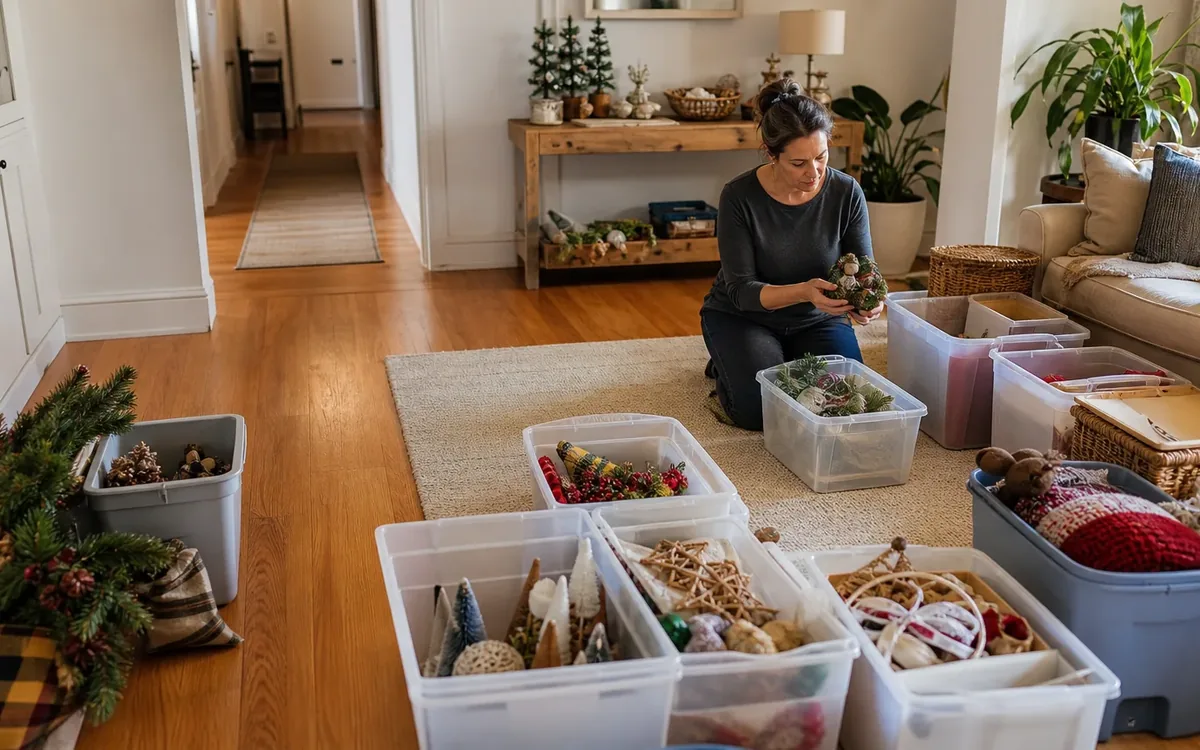
How do you choose which decorations deserve space?
Judge each decoration by use, meaning, condition, fit, and storage burden. Sentiment matters, but it does not require keeping every object connected to a memory.
Ask these questions:
- Did we display or use this during recent celebrations?
- Does it suit the size and layout of the new home?
- Is it safe and in usable condition?
- Do we own a similar piece we prefer?
- Would keeping one item represent this memory as well as keeping the entire group?
- Can we lift, assemble, display, and repack it comfortably?
- Is there a specific place for it in the new storage plan?
Begin with obvious favorites. These establish what the household values and make comparisons easier. Then remove broken duplicates, décor for traditions no longer observed, and bulky items that do not have a realistic display location.
For collections, choose representative pieces instead of evaluating the collection only as an all-or-nothing unit. A household might retain favorite handmade ornaments while releasing generic fillers, or keep one meaningful serving piece instead of an entire set that will not fit the new dining area.
Sentimental items can be divided into display keepsakes and archival keepsakes. Display keepsakes should work in the new home. Archival keepsakes need a defined, protected container limit. Photographing an item and recording its story can preserve context when the object itself cannot stay.
Sort by function, not only by holiday
Organizing every box under a broad label such as “Christmas” or “fall” makes future unpacking harder. Sort by how and where decorations are used.
Useful functional categories include:
- Entry and door décor
- Tabletop and dining items
- Tree ornaments and trim
- Mantel or shelf displays
- Exterior lights and yard pieces
- Textiles, including stockings and table linens
- Gift wrap, ribbons, tags, and reusable bags
- Candles, batteries, cords, timers, and display hardware
- Religious, cultural, or family ceremony items
This approach exposes redundant items. Three boxes may each contain extension cords, hooks, and ribbon that can be consolidated after inspection.
It also makes packing more purposeful. A container labeled “tree ornaments, hooks, and topper” is easier to retrieve than several mixed bins. Avoid packing candles, batteries, liquids, or temperature-sensitive materials without checking the mover’s restrictions and the product’s storage guidance.
Exterior decorations require extra scrutiny when moving to a home with less outdoor space. Do not assume that a balcony, porch, shared entrance, or yard can accommodate them. Owners, associations, landlords, property managers, local authorities, or other responsible parties determine applicable rules. An electrician or qualified contractor should evaluate electrical capacity, mounting work, and installation safety where needed.
What condition checks should happen before packing?
Inspect every retained item so the household does not pay to move damage or discover unusable décor during the next holiday.
Check lights for damaged insulation, loose connections, missing covers, corrosion, or other visible concerns. Follow manufacturer instructions, and replace or retire questionable products rather than attempting an improvised repair. Electrical safety judgments should be left to a qualified professional.
Review other categories carefully:
- Look for cracks, sharp edges, unstable bases, and missing components.
- Check fabrics for stains, mildew, pest damage, and weakened seams.
- Confirm that artificial greenery is clean, intact, and free of deteriorating wiring.
- Match specialty hardware to the item it supports.
- Remove leaking batteries and address any affected device according to manufacturer guidance.
- Separate unidentified, leaking, or restricted materials from ordinary donations and household trash.
Disposal requirements can differ by item and jurisdiction. The household should confirm current directions with the relevant municipality, county, facility, waste provider, or recycling program. A practical cleanout team may discuss removal categories, but the accepting facility or responsible authority determines what it can receive and under what conditions.
How should inherited and potentially valuable décor be handled?
Pause before donating, selling, or discarding inherited decorations that may have financial, historical, or family importance. Age alone does not establish value, and an online asking price does not prove what an item will sell for.
Separate pieces with signatures, maker’s marks, original packaging, documented provenance, unusual materials, or family records. Photograph identifying details and keep related paperwork with the item.
The household or legally authorized representative decides whether to seek professional advice. A qualified appraiser determines appraisal conclusions. Auctioneers, estate-sale companies, and consignment providers make their own recommendations about sale suitability and market approach. These roles are distinct from packing, organizing, moving, or cleanout work.
When an estate, trust, divorce, insurance matter, or ownership dispute is involved, do not distribute or dispose of decorations until the person with proper authority has been identified. Attorneys, personal representatives, trustees, insurers, courts, or other responsible professionals address those legal questions. A cleanout team should follow authorized instructions rather than decide title or beneficiary rights.
Create realistic exit routes for decorations not moving
“Get rid of” is not a complete plan. Assign each outgoing item to a specific recipient or channel, and verify acceptance before transport.
Consider these routes:
- Family transfer: Name the recipient and confirm that the person wants the item.
- Donation: Ask the organization about condition, seasonality, and current acceptance policies.
- Sale: Obtain advice from an appropriate auction, estate-sale, consignment, or resale professional when warranted.
- Recycling: Verify that the local program accepts the particular material and item format.
- Disposal: Follow the applicable provider’s instructions for broken or nonaccepted materials.
- Temporary storage: Use only after comparing the cost, conditions, and reason for delaying the decision.
Do not mix donation, sale, and disposal goods in one staging area. Keep each route physically distinct and label boxes on more than one side.
A practical cleanout or move team may discuss labor, packing, loading sequence, donation or disposal coordination, move management, and home-sale preparation within its stated scope. It does not set charity policies, guarantee resale results, establish value, interpret law, approve contractor work, or make regulatory decisions.
Pack the final selection for the new home
Pack according to the order in which decorations will be used, not according to where they happened to be stored in the old home. Keep fragile objects separated from heavy hardware and use appropriate cushioning.
Each label should identify:
- Holiday or season
- Functional category
- General contents
- Fragile status, if relevant
- Intended room or storage location
Create a brief inventory for keepsakes and higher-priority containers. Photographs can help with identification and future setup. Do not write detailed descriptions of potentially valuable contents on the outside of a box.
Before sealing the final container, review the storage limit again. If the selected items exceed it, return to comparison rather than planning overflow by default. One-in, one-out comparisons can help: choose between two similar wreaths, two tree toppers, or two sets of serving pieces based on fit and expected use.
Keep essential records, irreplaceable keepsakes, and items requiring controlled handling separate from routine household goods. Ask the mover directly about prohibited items, packing standards, valuation coverage, and claims procedures. Those policies belong to the chosen moving provider.
What can the household decide, and when is a professional needed?
The household can control preferences and practical limits. That includes choosing traditions, selecting favorites, setting a container allowance, naming family recipients, and deciding whether convenience justifies outside help.
A downsizing, cleanout, or move-management team may discuss:
- How to stage categories without blocking the home
- A workable sequence for sorting and packing
- Physical handling and labeling needs
- Coordination among approved donation, sale, storage, or disposal routes
- Preparation steps connected to a household move or property cleanout
Other decisions remain with the appropriate party:
- Legal authority and ownership: Attorney, court, personal representative, trustee, or other authorized party
- Appraisal and valuation: Qualified appraiser or relevant market professional
- Property marketing and transaction advice: Licensed real-estate professional
- Building condition: Qualified home inspector or appropriate specialist
- Repairs and installations: Properly qualified contractor or electrician
- Community and property restrictions: Owner, association, landlord, property manager, or responsible authority
- Waste and recycling compliance: Applicable government body, facility, or waste provider
- Storage suitability and terms: Chosen storage provider, with specialist input when needed
Clutter Cleaner of South Carolina is physically located in Mount Pleasant, with Charleston as its primary market and a stated service territory covering South Carolina. Call (843) 972-7020 to discuss whether downsizing and organizing, move management, estate cleanouts, auctions and estate sales, home-sale preparation, or code compliance support fits the situation. Availability and project scope should be confirmed directly.
Short FAQ
Should every family member get a chance to claim decorations?
For shared or inherited items, identify who has authority to distribute them and invite input where appropriate. Use named claim areas instead of an untracked pile. Legal ownership or estate questions should go to the responsible attorney, representative, trustee, or court.
Is it better to use small or large storage bins?
Choose containers based on shelf dimensions, item weight, and safe lifting. Smaller bins can reduce lifting strain, while larger ones may suit lightweight greenery or textiles. Avoid containers too deep for the planned shelves or too heavy to handle safely.
Should holiday decorations go into off-site storage?
Only if the household has a clear reason and has reviewed access, environmental conditions, insurance considerations, and provider terms. Storage can postpone decisions, so define what would cause the items to return home, transfer elsewhere, or leave storage.
Can decorations be sold as part of an estate sale?
Possibly, depending on ownership, condition, demand, and the sale provider’s criteria. The authorized household representative can request an evaluation, but the relevant sale professional should advise on suitability and approach.
What should be unpacked first after the move?
Unpack only what the season and household need. Place the remaining labeled containers directly into their assigned storage location. If they do not fit safely, revisit the selection instead of filling everyday living areas with overflow.



