
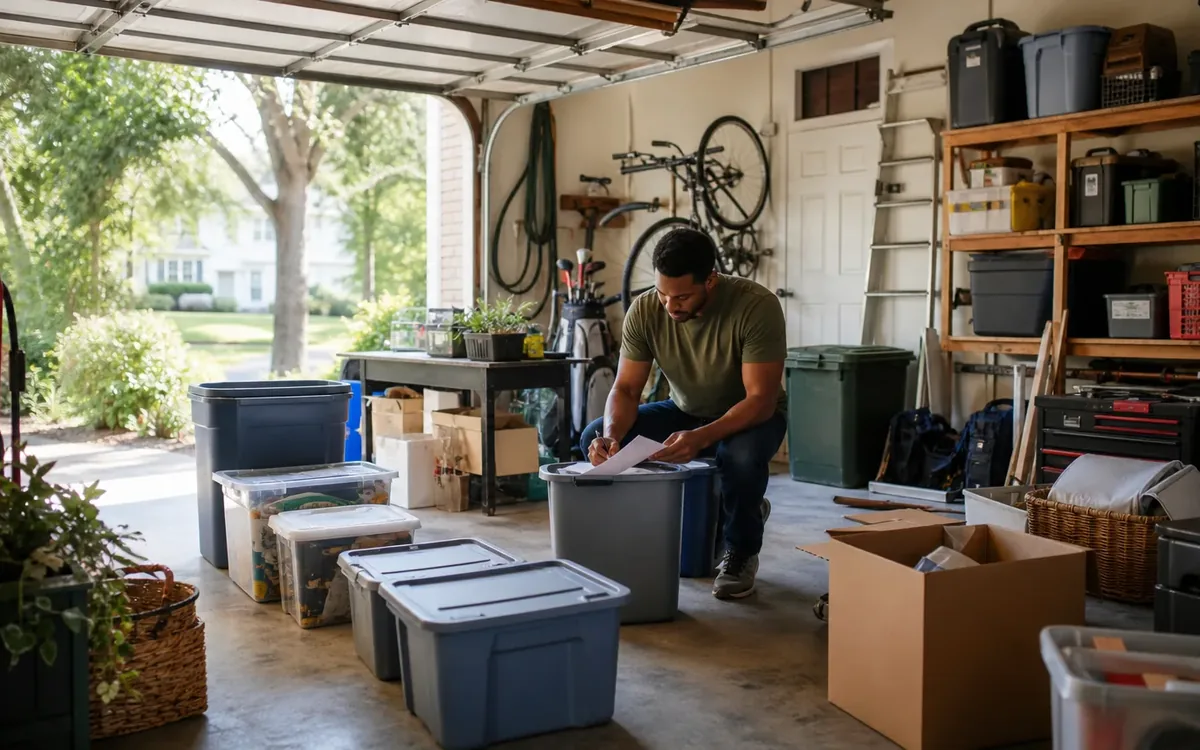
Downsizing a garage starts with deciding what the space must do, then keeping only the tools, outdoor gear, and storage that support those uses. Work by category rather than emptying everything at once. Measure the future storage area, separate hazardous materials early, and give every retained item a defined location.
Quick answer: Define the garage’s future jobs, measure its usable storage footprint, and sort one category at a time. Keep items that are used, safe, and suited to the next home. Sell, donate, recycle, or properly dispose of the rest. Leave chemical disposal rules, structural concerns, property valuations, and code questions to the appropriate professionals or authorities.
What should your downsized garage be able to do?
A smaller garage should be planned around function, not around how much shelving can fit inside it. Decide which activities must still happen there after the transition.
Common priorities include:
- Parking one or more vehicles
- Storing a lawn mower and basic yard tools
- Holding bicycles, beach equipment, or camping gear
- Supporting a small repair bench
- Keeping seasonal outdoor items accessible
- Providing a safe path between the house and driveway
- Accommodating trash, recycling, or utility access
Choose the top two or three functions. Treat everything else as optional. If vehicle parking is a priority, mark the vehicle footprint first and include enough clearance to open doors and walk safely.
The household can decide how it wants to use the space and which belongings matter. A practical downsizing and organizing team may discuss sorting zones, workflow, packing, and removal options. It should not decide what the family must keep or make legal, environmental, structural, or valuation decisions.

Measure the storage footprint before sorting
Do not use the current garage as the standard for what will fit. Use the dimensions and limitations of the next space.
Measure:
- Available wall width and height
- Shelf depth
- Floor area not needed for vehicles
- Door, window, electrical panel, and utility clearances
- The dimensions of cabinets, workbenches, and large equipment
- Any storage area in a shed, carport, closet, or utility room
Record both the total space and the usable space. A wall may look available while containing outlets, utility equipment, or a door swing that limits storage.
If the future home is not yet known, set a conservative limit. For example, assign one shelving unit to hand tools, one rack to outdoor gear, and one cabinet to approved household supplies. Defined limits produce clearer decisions than a general instruction to “keep less.”
A home inspector, contractor, property manager, homeowners association, fire official, or other responsible authority should address questions involving structural loads, required access, permitted storage, electrical equipment, or code compliance. A cleanout or move team can work within instructions from those parties but should not replace them.
How do you sort garage tools efficiently?
Sort tools by type and frequency of use, not by the drawer or box where they were found. This reveals duplicates and makes comparisons easier.
Create separate groups for:
- Hand tools
- Power tools
- Yard tools
- Automotive tools
- Painting and repair supplies
- Hardware and fasteners
- Specialty tools
- Protective equipment
Within each group, identify a reliable core set. A typical household may need one good hammer, a few screwdrivers, pliers, an adjustable wrench, a tape measure, a level, and basic gardening tools. The right set depends on the household’s actual habits and future property.
Ask these questions about each tool:
- Has it been used during the past two years?
- Is it safe and complete?
- Does another tool perform the same task?
- Will the next property require it?
- Would replacement cost less than moving and storing it?
- Is it specialized enough that borrowing or renting makes more sense?
Keep compatible batteries and chargers with cordless tools. Label them before packing. Tools with missing guards, damaged cords, swollen batteries, severe rust, or broken handles need separate review. Do not place questionable electrical items into a donation box without checking the recipient’s acceptance standards.
For a broader transition involving a deceased person’s property, the guide on what to get rid of first when downsizing explains why authority, records, and family communication should be established before removal begins.

Reduce hardware without creating a mystery collection
Loose hardware often occupies more space than expected because it is spread among cans, jars, drawers, and original packages. Consolidating it can produce a useful small supply without preserving every unidentified piece.
Use a shallow sorting tray and make simple groups:
- Common screws and nails
- Nuts, bolts, and washers
- Picture-hanging hardware
- Electrical or plumbing parts
- Furniture-specific hardware
- Unidentified pieces
Keep common hardware in labeled containers. Place parts belonging to a specific item in a sealed bag and label the item clearly. If you cannot identify a part, cannot match it to equipment, and have no likely use for it, keeping it indefinitely rarely helps.
Avoid mixing sharp hardware into general trash where it could puncture a bag. Ask the relevant waste or recycling provider how it wants scrap metal and sharp objects prepared. Requirements can vary by material and location across South Carolina.
Which outdoor gear deserves space in the next garage?
Outdoor gear should earn its space through realistic use, condition, and fit. Group it by activity before choosing what stays.
Possible categories include:
- Bicycles and helmets
- Camping equipment
- Fishing equipment
- Beach chairs, umbrellas, and carts
- Coolers
- Sports equipment
- Gardening supplies
- Holiday and outdoor decorations
Keep the best complete set for activities the household expects to continue. A tent without poles, a damaged chair, or an outgrown helmet should not automatically move because it belongs to a familiar category.
Inspect fabric items for moisture, mildew, pests, and deterioration. Empty coolers and allow them to dry. Remove batteries from seasonal equipment when appropriate. Clean soil and plant debris from garden tools before packing so the next storage area starts clean.
Long objects need a specific plan. Measure bicycles, ladders, fishing rods, paddles, and handled tools against the available wall or rack dimensions. Do not assume they can be suspended overhead. Rack installation, ceiling capacity, required clearances, and safe mounting should be evaluated by a qualified professional when needed.
Handle fuels, chemicals, batteries, and paint separately
Hazardous or regulated materials should never be treated as ordinary clutter. Pull them out of the main sorting process before donations, sale items, or moving boxes begin to accumulate.
Look for:
- Gasoline and fuel mixtures
- Propane cylinders
- Pesticides and herbicides
- Pool chemicals
- Automotive fluids
- Paint, stains, and solvents
- Aerosol cans
- Rechargeable and vehicle batteries
- Fluorescent lamps
- Unknown or leaking containers
Keep products in their original labeled containers when possible. Do not combine chemicals or pour them into household drains, storm drains, soil, or unmarked containers. Keep incompatible materials apart and away from heat or ignition sources.
Households can identify materials and decide that unwanted products need to leave. A cleanout team may discuss how such items affect scheduling, packing, or removal. The relevant South Carolina or local waste authority, facility, manufacturer instructions, fire authority, or environmental professional determines accepted materials, preparation rules, transport limits, and disposal methods.
Movers may also restrict fuels, compressed gases, chemicals, paints, and batteries. Obtain the mover’s prohibited-items list before packing. Emptying or preparing equipment must follow manufacturer guidance and applicable rules.
Decide whether to sell, donate, recycle, or discard
Choose an exit route only after identifying the item and checking its condition. Four clearly labeled zones can prevent unwanted belongings from returning to shelves.
Sell
Potential sale candidates include functional power tools, complete tool sets, newer yard equipment, bicycles, and quality outdoor gear. An appraiser, auction professional, or qualified market specialist should advise on value when an item may be significant. A cleanout or organizing team can help group and document items but should not present an informal opinion as a formal appraisal.
Donate
Donation works best for clean, safe, complete items that an organization currently accepts. Confirm requirements before loading a vehicle. Organizations may decline chemicals, damaged equipment, certain fuels, recalled goods, or incomplete power tools.
Recycle
Scrap metal, batteries, electronics, cardboard, and some containers may have recycling routes. Acceptance and preparation rules differ, so verify them with the relevant provider.
Discard or use an approved disposal route
Broken, contaminated, recalled, or unsafe items may require disposal rather than donation. Chemicals, fuels, batteries, and pressurized cylinders need material-specific guidance. Do not assume curbside trash is appropriate.
Set a deadline for sale items. If they do not sell by that date, move them to a preselected second option. This protects the garage timeline from becoming dependent on uncertain sales.
Build storage around limits, not empty wall space
Buying bins before reducing possessions often preserves too much. Select containers only after the final keep group is visible.
A compact garage usually benefits from:
- Shallow shelving that keeps contents visible
- Clear, labeled bins for small categories
- One container per activity or season
- Wall storage for lightweight, regularly used tools
- Lockable storage where appropriate
- Floor zones for wheeled or heavy equipment
Place frequently used items between waist and shoulder height when practical. Store heavy objects low. Avoid stacking unstable containers or blocking exits, electrical panels, utilities, doors, windows, and equipment that requires service access.
Use specific labels such as “camp stove and lantern” or “bike repair tools.” Labels like “garage” or “miscellaneous” do not help anyone maintain the reduced footprint.
Create a one-in, one-out rule for categories that tend to expand. A new cooler replaces an old one. A new power tool must fit within the assigned tool cabinet. The physical limit then maintains the downsizing decision.
What can a cleanout or move team help with?
A practical team may discuss a staged plan for sorting garage contents, organizing keep zones, packing approved items, coordinating household decisions, and routing ordinary unwanted contents based on available options. If the garage is part of a larger home transition, move management or home sale preparation may also affect the sequence of work.
Useful topics to discuss include:
- The required completion date
- Whether the home is being sold or transferred
- The future garage dimensions
- Items the household will decide on personally
- Tools or gear requiring valuation
- Materials needing special handling guidance
- Donation, sale, recycling, and disposal preferences
- Access conditions and vehicle parking needs
The household retains decisions about personal belongings unless another legally authorized person is responsible. An executor, personal representative, trustee, guardian, owner, or other authorized party should address questions about control of property. Attorneys provide legal advice. Appraisers and appropriate resale professionals address valuation. Real-estate professionals guide listing and marketing decisions. Inspectors and contractors assess condition and repairs. Authorities and qualified compliance professionals interpret applicable requirements.
Clutter Cleaner of South Carolina lists statewide service territory and can be contacted at (843) 972-7020 to discuss whether its verified services fit the project. Scope, timing, item restrictions, and responsibilities should be confirmed for the particular garage transition.
Use a three-pass garage downsizing schedule
A focused three-pass process keeps decisions moving without turning the project into a generic whole-house cleanout.
Pass one: Define and separate
- Mark the future vehicle and walking areas.
- Pull out chemicals, fuels, batteries, and leaking items.
- Group tools and gear by category.
- Identify items belonging to someone else.
Pass two: Reduce and route
- Select the core tool set.
- Reduce duplicate outdoor equipment.
- Assign sale, donation, recycling, or disposal routes.
- Refer valuation and regulated-material questions appropriately.
Pass three: Fit and label
- Test retained items against measured storage limits.
- Pack related tools with accessories.
- Label bins specifically.
- Photograph packed contents if that will help during the move.
- Keep prohibited moving items out of shipment.
Finish one category before opening several more. The visible progress makes it easier to maintain decision quality and prevents a hazardous maze of partially sorted piles.
Short FAQ
Should everything come out of the garage at once?
Usually not. Emptying the entire garage can create weather exposure, blocked access, and rushed decisions. Work in defined categories or zones while preserving a safe path.
How many duplicate tools should a household keep?
Keep duplicates only when they serve a clear purpose, such as separate tool kits or frequent joint use. Condition, future projects, storage limits, and replacement difficulty matter more than an arbitrary number.
Can paint and gasoline move with household goods?
Do not assume so. Movers commonly maintain prohibited-item lists, and disposal or transport rules depend on the material. Ask the mover and the responsible waste or safety authority before packing or transporting these products.
Who decides whether garage shelving is safe?
A qualified contractor, inspector, manufacturer, or other appropriate professional should evaluate installation, wall or ceiling capacity, damage, and required clearances. An organizing team can plan around an approved system but should not make structural determinations.
When should garage downsizing begin?
Start early enough to confirm sale, donation, recycling, and material-specific disposal routes. Tools and hazardous products often require more decisions than ordinary household contents, so they should not be left until moving week.



