
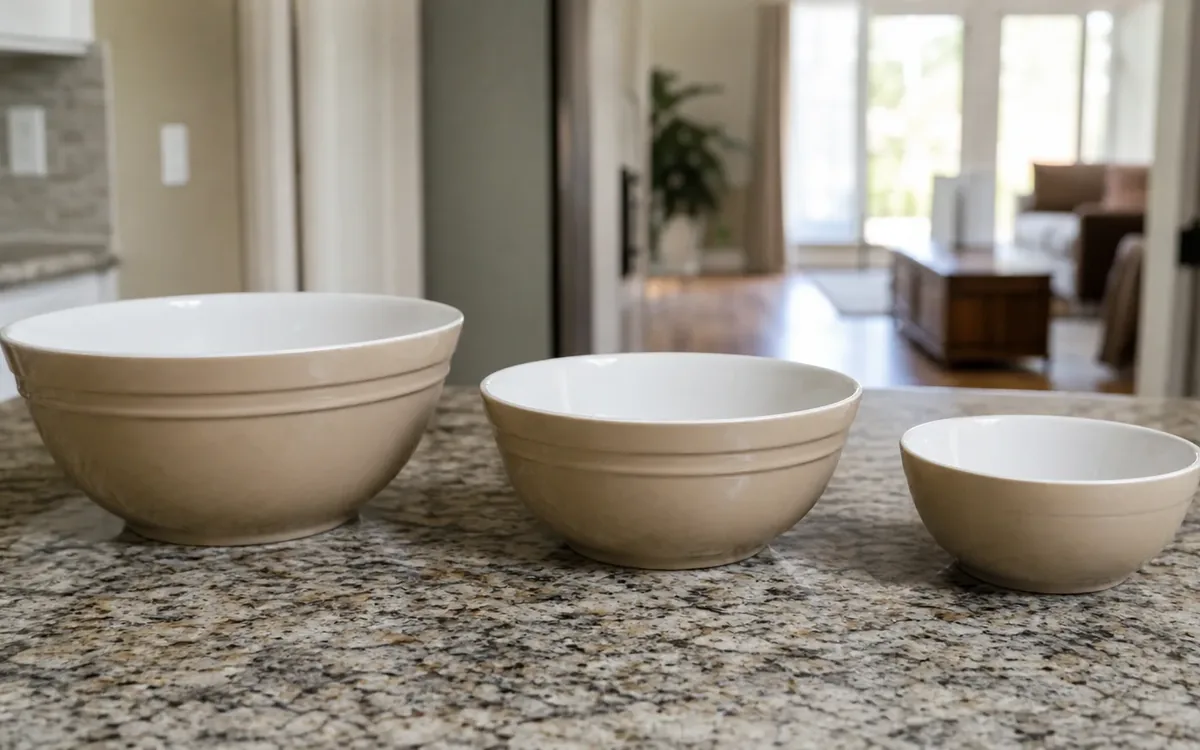
Keep mixing bowls that suit your regular recipes, fit your storage space, and work well together. Compare each bowl’s size, material, and nesting fit before choosing a set. A smaller collection can still support everyday baking if it includes the sizes you use and leaves room to reach them.
Which mixing bowls deserve space in your next home?
The best mixing bowls to keep are the ones you reach for during ordinary baking. Start with actual use through a focused downsizing review, then keep loose lids with their bowls using the household accessories guide. Choose useful sizes before deciding how many bowls belong in the final group.
Place the bowls where you can compare them without lifting a whole stack. Recall a few recipes you make often. Consider which bowl holds the main mixture, which holds a smaller batch, and whether you use another bowl at the same time. This gives each bowl a clear role. A bowl that looks useful but never appears in that routine needs a stronger reason to stay.
- Keep a large bowl if your usual batches need its space.
- Keep a smaller bowl if it handles a separate step in recipes you make.
- Keep a duplicate only when you regularly use both bowls together.
- Set aside a bowl that has no clear role in your current baking.
Size labels alone do not settle the choice. Two bowls with similar capacity may have different shapes. Compare the opening, depth, and base as you handle each one. Decide which shape suits your usual task and feels steady on your work surface. You do not need to build a complete matching set. You need a group that makes sense when you take out the bowls for a familiar recipe.
How can you check whether bowls nest well?
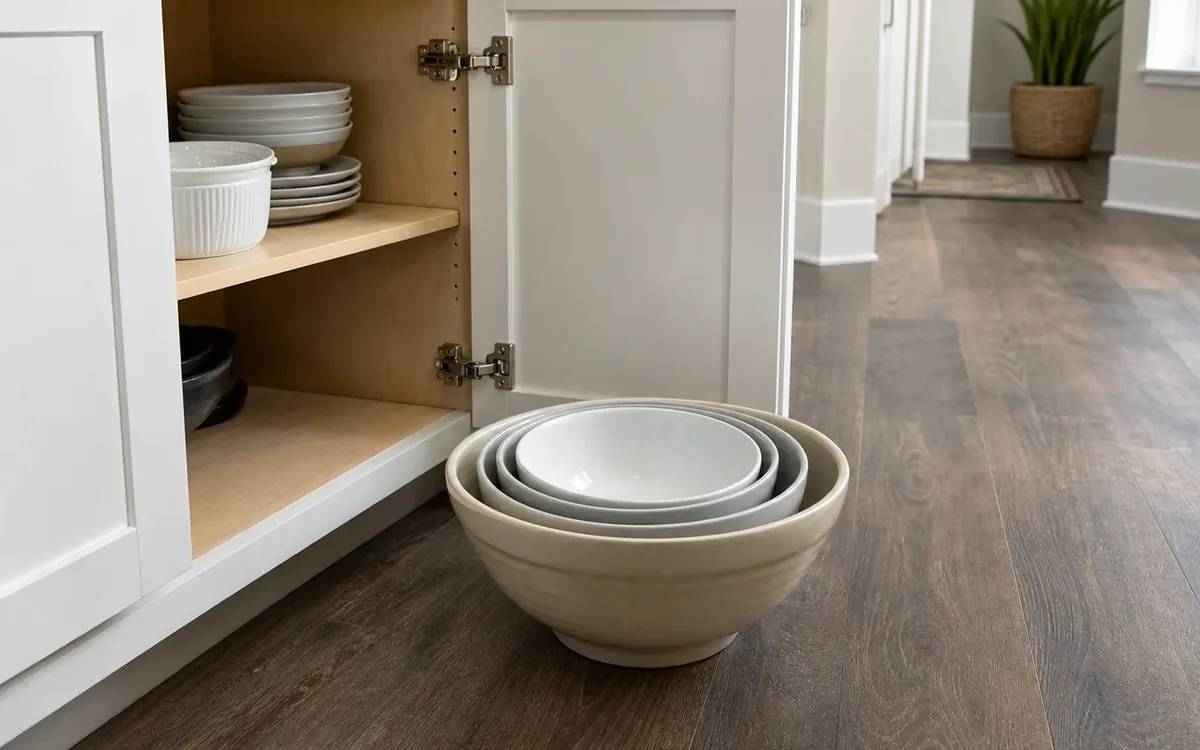
Good nesting means bowls sit together without becoming hard to separate or awkward to lift. During planning for the move, check the stack you intend to keep. Use help with downsizing decisions to compare space savings with easy access, since the smallest stack is not always the most useful arrangement.
Try the bowls in the order you would store them. Set the largest on a clear surface and add smaller bowls one at a time. Watch what happens to the stack’s height and balance. A smaller bowl may fit inside another yet leave a wide rim or handle sticking out. That changes the space the whole group needs.
- Place the largest bowl flat and check that it rests steadily.
- Add the next bowl without pressing it down or forcing a fit.
- Continue until you have tested every bowl in the proposed group.
- Lift each bowl out and note any piece that catches or needs extra handling.
- Remove awkward pieces and compare the revised stack with the first arrangement.
Test access as well as fit. If you use the middle bowl most often, consider how many pieces you must lift to reach it. You might keep that bowl beside the stack instead. A nest that looks tidy can still be inconvenient in daily use. Choose an arrangement you can lift and separate comfortably, and leave enough room above it to remove the bowls without squeezing them against a shelf.
Which bowl materials suit your everyday use?
Choose bowl materials by how your own bowls feel and function during familiar baking tasks. Sorting bowls while downsizing can focus on weight, grip, and preferred use. For moving the selected bowls, identify which pieces need separate attention during packing without assuming every material should be handled in the same way.
Compare bowls while they are empty. Notice whether you can lift each one comfortably and hold it while making a pouring motion. Think about your usual recipes, then check the maker’s guidance for any use you are unsure about. Material alone does not tell you everything. Shape, finish, weight, and your own preferences may matter more than choosing one material for the whole collection.
| Choice | What to compare | Decision point |
|---|---|---|
| A glass bowl | Check its weight, visibility, and grip. | Keep it if these qualities help your usual tasks. |
| A metal bowl | Check its shape, rim, and handling. | Keep it if you prefer using it for regular mixing. |
| A plastic bowl | Check its condition, base, and lid fit. | Keep it if it has a clear everyday role. |
| A ceramic bowl | Check its weight, depth, and storage fit. | Keep it if you comfortably use it for baking. |
Do not keep a bowl just to cover every material category. You may prefer one material for most tasks and another for a particular recipe. That is a useful reason to keep both. If a bowl has visible damage or you are unsure whether it remains suitable for food use, separate it from the keep group and consult the maker’s guidance. Do not attempt repairs as part of this sorting process.
How much storage space does the collection need?
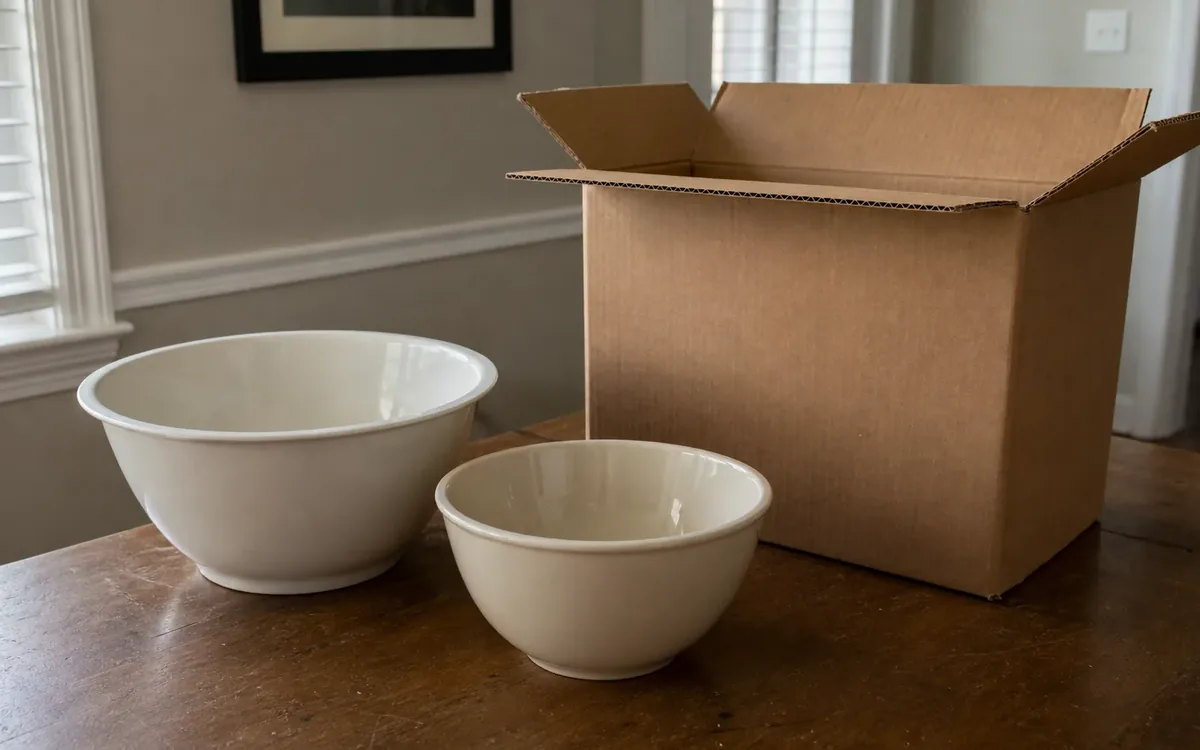
Measure the space your selected bowls occupy as a group, including any lids stored with them. Organizing a smaller collection works best when you account for access as well as footprint. Follow the guide to keeping accessories together so a tidy bowl stack does not leave its matching pieces scattered elsewhere.
Look at width, depth, and total height. Include any handle, pouring lip, or lid that extends beyond the bowl itself. If you know the destination cabinet measurements, compare them with the full arrangement. Leave room to put your hands around the bowls and lift them out. A stack that just fits between shelves may be less practical than two lower groups with space around them.
If the new storage space is unknown, record the footprint of the proposed keep group. That gives you something concrete to compare once measurements are available. You can also mark which bowl would be the first to leave if the space proves tighter than expected. Choose that piece based on limited use or duplication, rather than removing the largest bowl simply because it takes up the most room.
Storage should support the way you bake. A frequent-use bowl may deserve its own spot, even if nesting it would save space. Less-used bowls can sit together if they remain easy to reach. Check the arrangement with lids included, then check it again without them. This shows whether the storage problem comes from the bowls themselves or from accessories that need a different place beside their matching bowl.
How many bowls does your baking routine require?
Keep enough bowls for the recipes and batch sizes you actually make, including steps that happen at the same time. A practical downsizing plan helps distinguish regular needs from imagined ones. Use move management support to carry that chosen collection into the transition without letting unused duplicates quietly return to the keep group.
Pick a familiar recipe and trace only the bowl-related steps. You may need one bowl for the main mixture and another for a separate ingredient group. For a different recipe, one bowl may be enough. Repeat this exercise with another common bake. Look for needs that appear across both recipes, then consider whether a less frequent recipe justifies an extra bowl of its own.
- Keep separate bowls when your usual recipe requires mixtures to remain apart.
- Keep a second large bowl if you often prepare two batches together.
- Keep a small bowl when it serves a recurring baking step.
- Question an extra bowl kept only for a recipe you no longer make.
Be honest about how you prefer to work. If you often wash and reuse one bowl between steps, you may need fewer pieces. If you prefer to have each mixture ready before combining them, your useful collection may be larger. Neither approach requires a fixed bowl count. The right number follows your routine. Review duplicates by their actual role, and avoid shrinking the collection so far that it no longer supports the baking you enjoy.
What if the bowls came from a family home?
Family mixing bowls can carry memories while still needing a practical storage decision. Estate cleanout support can form part of a broader home transition, while downsizing and organizing keeps this choice focused on the bowls themselves. Separate personal meaning from everyday usefulness before deciding which pieces you want to keep and store.
First, identify the bowl that holds the strongest meaning for you. That may be one familiar piece rather than an entire set. Decide whether you want to use it for baking or keep it for its connection to the person who owned it. Either reason can be clear and valid. Trouble starts when every bowl receives the same vague label of “sentimental,” leaving no basis for choosing among them.
Then compare the remaining bowls with those you already use. An inherited bowl may replace a less comfortable one, or it may duplicate a size you have covered. Keep the comparison specific. Consider grip, shape, nesting, and storage. A family connection does not require you to treat the bowl as an everyday tool, but it does help to name its role before making room for it.
For a Charleston, SC home transition, the physical business is in Mount Pleasant, and its service territory covers all South Carolina. The same bowl decisions apply wherever the move takes you. If several people want a particular bowl, resolve that choice before placing it in a keep or release group. Questions about ownership belong with the responsible parties or their legal adviser, rather than being settled through an organizing decision.
How do you finish the bowl selection before packing?
Finish by reviewing one clear keep group and giving every remaining bowl a separate decision. Preparing the selected items for a move starts with knowing what will travel. Use the household accessories checklist to confirm that each retained lid belongs to a retained bowl and has a defined place with it.
Rebuild your preferred storage arrangement one last time. Take out the bowl you use most, then put it back. Check that the choice still feels practical after removing the pieces you decided to release. Compare the retained bowls against your familiar recipes again. This review can reveal a missing useful size or show that an extra bowl has remained in the group without a clear purpose.
Keep uncertain bowls apart from the final collection. Write the specific question beside each one, such as whether it fits the destination shelf or whether someone else wants it. A named question is easier to resolve than a general feeling of doubt. Settle it when the relevant information becomes available. Avoid placing an undecided bowl inside the selected stack, where it can easily become part of the move by default.
Once the choices are settled, make a brief record of the bowls and their matching lids. A simple description is enough to tell similar pieces apart. Note any bowl that you want accessible for everyday baking after the move. Share the final selection with whoever handles packing, along with any maker guidance that applies. This keeps the organizing decision clear and leaves packing methods to the person responsible for that work.
What else should you know about downsizing mixing bowls?
The last decisions usually involve duplicates, awkward nesting, or bowls saved for occasional baking. Downsizing support can help you weigh those tradeoffs, while coordination for the move helps carry the final choices forward. Use these answers to resolve specific doubts about your collection before it is ready to pack.
Should I keep an entire matching mixing bowl set?
Keep the entire set only if its pieces have useful roles and fit your storage space. A matching appearance does not make every size necessary. Compare each bowl with the recipes you make, then test the group for nesting and access. Keeping three useful pieces from a larger set can make more sense than storing bowls you rarely choose.
Is nesting always the best way to store mixing bowls?
Nesting works well when the bowls separate easily and the stack is comfortable to lift. It may be less useful if your favorite bowl sits beneath several others or the stack fills the shelf height. Test the arrangement before deciding. One frequently used bowl beside a smaller stack may give you a better balance of space and access.
Should I keep two bowls of the same size?
Keep two bowls of the same size when you regularly use them at the same time or prefer each for a distinct baking task. If both serve the same role and you consistently choose one, the second needs another clear reason to stay. Compare comfort, shape, and storage fit before choosing which duplicate belongs in the final group.
What should I do with a mixing bowl that has no lid?
A bowl can still earn its place through regular mixing use without a lid. Decide whether you actually need a lid for the role you expect it to serve. If you find a loose lid elsewhere, check its fit rather than assuming it belongs. Do not retain an unused bowl solely because you hope to find its missing lid.
Can I keep a bowl used only for special baking?
Keep a special-use bowl when the recipe still matters to you and you have space for it. Name the task it serves, then compare it with your everyday bowls. If another retained bowl can meet that need, the extra piece may be unnecessary. Occasional use is a valid reason to keep a bowl when the decision is specific.



