
Declutter your home when you live alone by choosing a small area, deciding only about belongings you own, and keeping everyday living spaces usable. Separate decisions you can make yourself from lifting, removal, valuation, or ownership questions that need help. You can stay in control without doing every task alone. The goal is a home that works for your life, with clear limits on what leaves and who handles it.
Quick answer: Start with a drawer or shelf you can sort and put away without disrupting your home. Keep essentials accessible, label undecided belongings, and approve items before they leave. Ask another person or a provider for help when handling is unsafe, ownership is unclear, or the work exceeds what you can comfortably manage.
What can you decide on your own when you live alone?
Living alone gives you room to organize around your own routines. It does not mean every object in the home belongs solely to you, or that every decision needs to happen immediately.
For belongings you own, you can choose what supports your daily life, what you want to display, and what you are ready to release. A crowded cupboard might need fewer mugs rather than a new storage system. A reading chair can stay because you enjoy it, even if someone else would remove it.
Write a brief decision rule before sorting: “I want to reach the things I use without moving unrelated items.” That gives you a practical test without requiring a bare room.
Useful boundaries include:
- Items you can approve for donation or another destination.
- Keepsakes you want to consider privately.
- Papers that need review before shredding.
- Belongings that must stay until ownership is clarified.
If you want help applying those choices, review Clutter Cleaner of South Carolina’s downsizing and organizing service. Discuss the occupied home, your priorities, and the scope of assistance before agreeing to work.
Start where a finished result will help you
Choose an area that has a clear purpose and a natural stopping point. A drawer for cooking tools is easier to return to service than an entire kitchen emptied onto the floor.
Define success in terms of use. You might want to find the can opener, clear a place to eat, or reach your everyday clothing. Avoid starting with family papers or a collection that raises questions about value.
Try simple questions as you handle your own belongings:
- Do I use this in the life I am living now?
- Would keeping it make this space harder to use?
- Am I ready to choose a destination, or do I need information?
An undecided item can stay undecided. Give it a labeled place rather than letting it stall the whole area. If choosing any starting point feels difficult, How do you start decluttering when you feel overwhelmed? addresses that starting problem in more detail.
Keep your home usable while you sort
When you live alone, there may be nobody nearby to restore a room you have emptied. Start with the amount you can put back, including the items you decide to keep.
Protect access to the bed, bathroom, kitchen, doors, and everyday supplies. Sorting should not make you climb over bags or lose track of keys and important papers.
Use a contained sorting spot, such as a clear part of a table, and return it to its normal purpose when you stop. Avoid placing temporary piles beside cooking equipment, across doorways, or where you walk.
Before ending a session:
- Return retained items to an accessible place.
- Put undecided items in a labeled container.
- Keep approved outgoing belongings separate from household waste.
- Restore the space you need for your next meal or routine.
If you cannot dedicate a room to the project, How do you declutter without a spare room for sorting? focuses on managing that space constraint.
Separate your belongings from items held for others
A borrowed tool, a relative’s stored furniture, or property connected to an estate needs a different decision process from your own unused household items.
Make a note of the item, the possible owner, and the question that needs an answer. Keep it apart from approved outgoing belongings. A photo can help you ask about a particular object without inviting someone to inspect your entire home.
You might say, “I’m organizing this cupboard. Is this yours, and what would you like to arrange?” Record any agreed handoff. Do not treat silence as permission to sell, donate, or discard.
For more on permission boundaries, read How do you declutter when some belongings are not yours?. If inherited property is involved, How do estate cleanouts work? is relevant background for a separate estate process.
Disputed ownership or questions about estate authority belong with the responsible legal professional or authorized representative. Living alone in the home does not, by itself, establish authority over every item inside it.
When should you ask another person for practical help?
Ask for support when the task requires more handling, attention, or judgment than you can comfortably provide alone. You do not have to finish sorting before making that request.
A trusted person can be useful for reading labels, carrying light items within agreed limits, or keeping you company while you decide. Their role should match the task, not expand into control over your possessions.
Pause before handling something that:
- Blocks your view while you carry it.
- Requires climbing, awkward reaching, or uncertain footing.
- Could tip, break, or damage the home if moved.
- Has unknown contents or needs specialist handling.
Do not test whether you can move a large object by yourself just to clear a sorting area. Discuss handling needs with a suitable provider and confirm what they accept.
Support can also be useful when every choice feels emotionally loaded. Ask someone to listen while you decide, without pressuring you to explain or defend each keepsake. You can stop the conversation and return to the item later.
Give helpers a defined job and keep approval with you
“Help me declutter” leaves too much open to interpretation. A specific request makes it easier to protect both your belongings and the relationship.
For example: “Please help me sort this bookcase. I will choose what stays. Put anything I approve for donation in the labeled box, and leave everything else here.”
Before anyone begins, agree on:
- The area they may work in.
- Items or rooms they should leave untouched.
- Which decisions require your approval.
- How uncertain items will be marked.
- Who confirms a destination before anything leaves.
Keep sensitive papers, valuables, and private items outside the shared sorting area when practical. Nobody needs unrestricted access to your documents to help organize a cupboard.
With a practical cleanout or move team, discuss access, furniture handling, protected areas, and how to confirm approved items. Request a written scope and clarify exclusions. A conversation about possible work does not mean every handling or removal task is included.
Choose a destination before belongings become a new pile
Deciding to release something and arranging where it goes are separate tasks. An outgoing box that stays beside the door can become another obstacle.
Choose destinations based on what you are prepared to arrange. Donation organizations, buyers, disposal providers, and storage businesses have their own acceptance rules and terms. Confirm those directly.
For a bag of clothing, the next step might be checking a chosen organization’s acceptance requirements. For furniture, it may be discussing collection and handling with a separate provider. Keep the item in a usable position until the arrangement is clear.
Storage is a household choice with ongoing responsibilities. Ask what you expect to retrieve and why keeping it outside the home helps. Moving undecided belongings into storage can postpone the same decisions.
For chemicals, electronics, or other items with special disposal requirements, check with the relevant local authority or receiving provider. Do not assume an ordinary collection service or a decluttering team can accept them.
Which decisions belong with a professional or authority?
Your preferences guide the organizing work, but some questions require a different kind of expertise. Keep those questions separate so practical help does not become an unsupported promise.
An appraiser can address value within their expertise. A household or authorized owner decides whether to seek an appraisal and whether to sell. A cleanout discussion should not be treated as a guaranteed valuation or sale result.
A real estate professional handles advice about marketing a property. An inspector or qualified contractor addresses building conditions and proposed repairs. Removing clutter does not establish that a home is ready for sale or that a defect has been resolved.
Legal professionals and responsible authorities address ownership, estate duties, and applicable requirements. Contractors and storage providers require their own arrangements.
Code compliance support is also distinct from an official compliance determination. The relevant authority remains responsible for interpreting and enforcing its requirements; confirm the scope of any support separately.
Make the new arrangement easy to maintain alone
A useful arrangement should work when you are tired, busy, or carrying groceries. Put everyday belongings where you naturally use them, with a return spot that does not require rearranging a stack.
Leave room to put something away. Filling every shelf tightly can recreate the same handling problem, even after many items leave.
Notice where objects collect after sorting. Mail on the dining table may need a defined review spot. A crowded entryway may need a place for the belongings you actually bring through the door.
Measure progress by easier use: you can open the cupboard, sit comfortably, or find the document you need. You do not need to match someone else’s idea of how a person living alone should furnish a home.
Short FAQ
Can I declutter without asking family to help?
Yes. You can decide about your own belongings and hire practical support if you prefer. Family involvement is a choice unless ownership or another responsibility requires someone else’s participation.
What if I cannot move the items I want to remove?
Leave them where they are while arranging suitable handling. Tell the provider about size, location, access, and any known concerns, then confirm whether the task fits their scope.
Do I have to discard sentimental belongings?
No. You can retain them, display selected pieces, or leave a decision open. Another person can help you talk through options without choosing for you.
Who can I contact about organizing support in South Carolina?
Clutter Cleaner of South Carolina offers downsizing and organizing across South Carolina. Its physical business location is Mount Pleasant, SC, and Charleston is its primary market. Call (843) 972-7020 to discuss your occupied home, the decisions you want to retain, and the practical assistance you need.
Photo credits
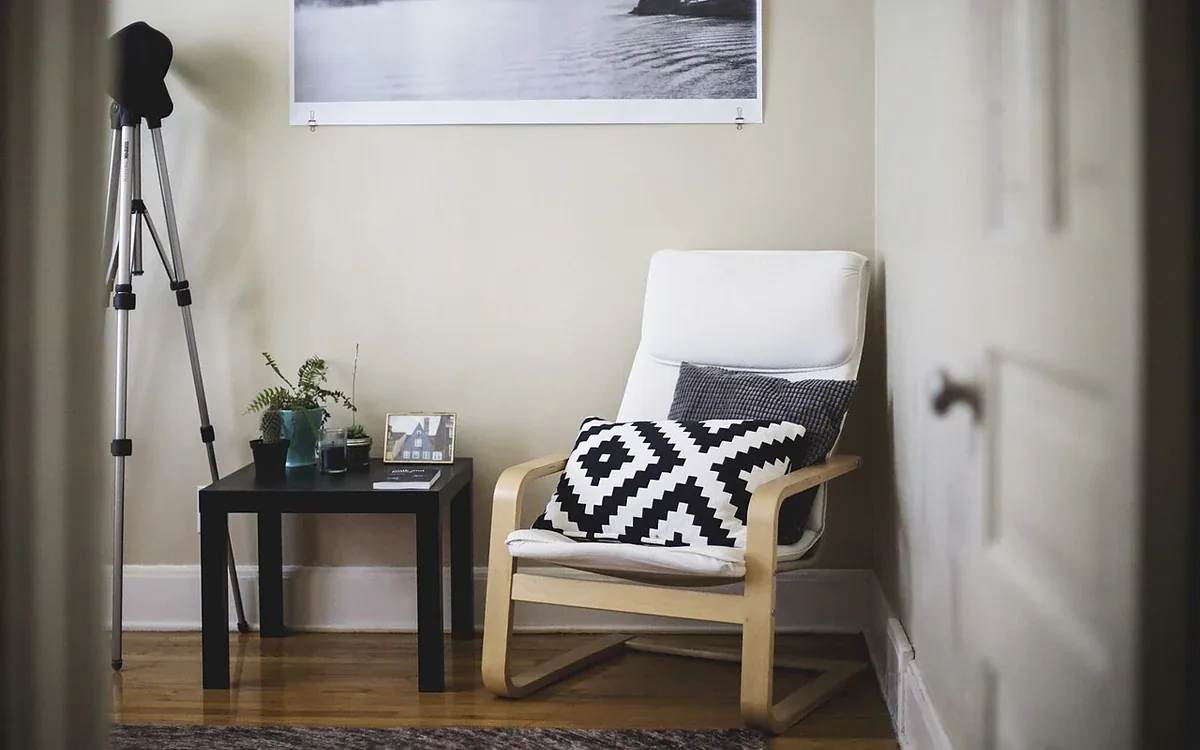
- Armchair beside a small table: Kari Shea karishea. Original photograph, CC0. Cropped and resized.
- Wooden chairs beside a table: Henry McIntosh henrymcintosh. Original photograph, CC0. Cropped and resized.
- Mustard-colored sofa cushions: Shixart1985. Original photograph, CC BY 2.0. Cropped and resized.






