

The best things to sell before downsizing are usually valuable items that will not serve a clear purpose in the next home: extra vehicles, duplicate furniture, quality tools, collectibles, jewelry, specialty equipment, and complete sets in good condition. Start with items that may require appraisal or take time to market. Sell ordinary household goods later, and donate or responsibly discard anything whose likely return does not justify the effort.
Quick answer: Sell high-value, unnecessary items first. Separate anything that may need professional appraisal, then prioritize vehicles, jewelry, collectibles, quality furniture, tools, outdoor equipment, and current electronics. Keep sentimental decisions separate from pricing decisions, and do not assume age alone creates value.
What should you sell first before downsizing?
Begin with possessions that combine three traits: they have plausible resale value, they are not needed in the next stage of life, and they may take time or expertise to sell.
A practical first tier includes:
- Extra cars, motorcycles, boats, trailers, or recreational vehicles
- Fine jewelry, precious metals, and watches
- Signed art, antiques, and documented collectibles
- Quality furniture that will not be retained
- Woodworking, automotive, lawn, or trade tools
- Outdoor power equipment
- Musical instruments
- Recent computers, tablets, cameras, and audio equipment
- Specialty hobby equipment
- Complete china, silverware, or decorative sets with identifiable makers
Do not place these items into a general giveaway pile before learning what they are. Gather receipts, certificates, model numbers, provenance records, service histories, and original packaging when available. Documentation can help an appraiser or buyer identify an item, although it does not guarantee value.
After potentially valuable items are separated, address ordinary household goods. Kitchen duplicates, basic bookcases, common lamps, linens, inexpensive décor, and older small appliances may have modest resale potential. Their value often depends on condition, completeness, demand, and the selling method.
Clutter Cleaner of South Carolina provides downsizing and organizing support statewide. A practical team may help households sort categories, stage decisions, organize removal sequences, and discuss possible disposition channels. The household remains responsible for deciding what to keep or sell unless an authorized fiduciary or other responsible party has that authority.

Use future usefulness, not original cost
A common obstacle is focusing on what an item originally cost. Purchase price is not the same as current market value, and neither figure answers whether the item belongs in the next chapter.
For every possible sale item, ask:
- Will someone in the household use this regularly?
- Is it difficult or expensive to replace if needed later?
- Does it carry unique emotional or family importance?
- Is there evidence of meaningful resale value?
- Is the likely return worth the work and delay involved?
An expensive dining set may no longer support the household’s routines. A modest hand tool may remain genuinely useful. A collector’s item may warrant specialist review, while a large cabinet purchased decades ago may attract limited demand.
This approach keeps the project focused on function and value rather than guilt. It also prevents every purchase from becoming a permanent obligation.
Which belongings may be worth an appraisal?
Consider professional appraisal when an item’s identity or value is unclear and a mistake could be costly. Appropriate appraisal credentials and specialties vary by property type, so the responsible household member, executor, trustee, attorney, insurer, or other authorized party should select the relevant professional.
Items that may justify review include:
- Fine art or signed works
- Antique furniture with maker marks or documented history
- Fine jewelry, gemstones, watches, and precious metals
- Coin, stamp, firearm, book, or sports collections
- Rare musical instruments
- Historical papers or memorabilia
- Designer goods with authentication concerns
- Specialized equipment with an active secondary market
Do not clean, polish, repair, reframe, or refinish a potentially valuable item before obtaining appropriate advice. Alterations can affect value. Preserve labels, signatures, inscriptions, cases, receipts, photographs, and related documents.
A cleanout, organizing, move, auction, or estate-sale team may point out items that appear to merit further review and discuss practical sale channels. That is not the same as issuing a formal appraisal. Valuation for insurance, tax, estate, charitable, equitable-distribution, or legal purposes belongs with a qualified appraiser and the relevant attorney, accountant, insurer, court, or agency.
If the sale is connected to an estate, consult the authorized decision-maker before distributing or listing property. The guide on can i sell items during a clean out explains why authority, records, and careful sequencing matter.
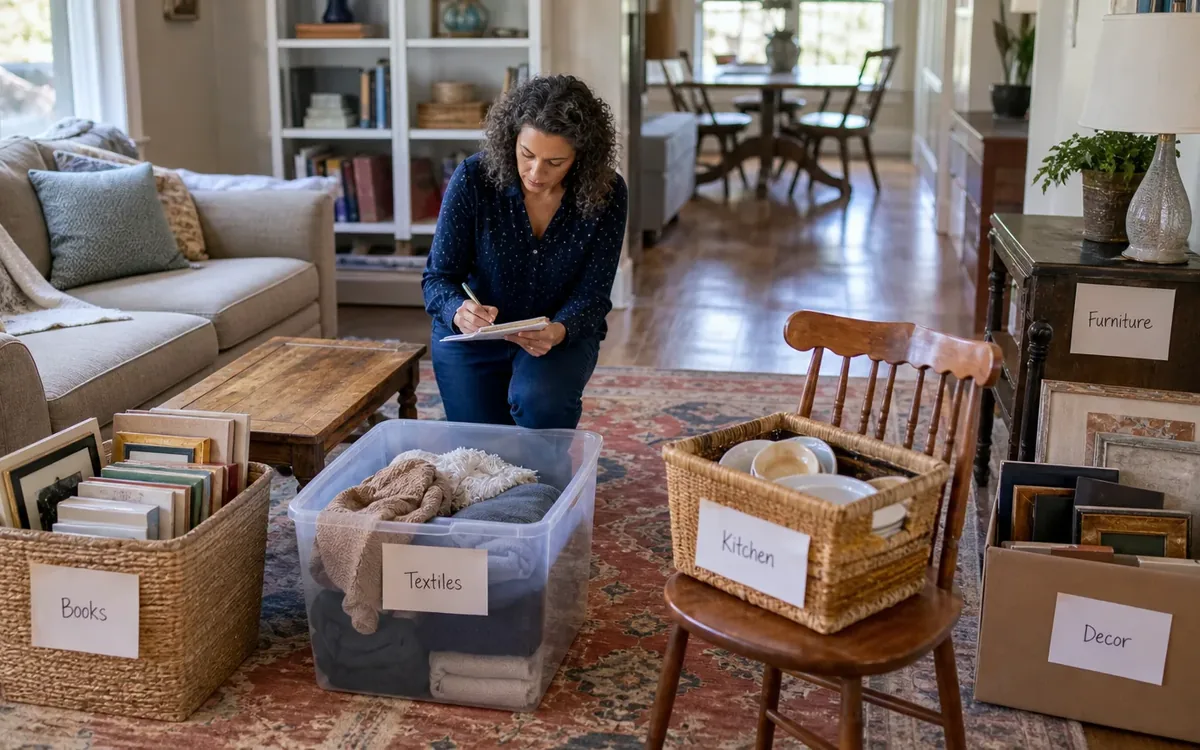
What furniture should you sell?
Sell furniture that will not have a defined use after the move, especially when it is bulky, duplicated, uncomfortable, damaged, or costly to transport relative to its likely value. This article focuses on sale decisions rather than planning room layouts.
Furniture with better resale prospects may include:
- Recognizable designer or maker pieces
- Solid-wood furniture in good condition
- Quality outdoor furniture without significant corrosion or damage
- Complete bedroom, dining, or office sets
- Well-maintained leather seating
- Distinctive vintage pieces with current demand
Mass-produced pieces can still sell, but expectations should be realistic. Upholstered furniture may be harder to place if it has stains, odors, pet damage, smoke exposure, structural wear, or missing safety labels. Mattresses and certain juvenile products may face health, safety, platform, or regulatory restrictions.
Record each promising piece with clear photographs, measurements, maker labels, material, age if known, and an honest condition description. Never describe an item as antique, authentic, solid wood, or professionally restored unless that statement can be supported.
For inherited furnishings, avoid dividing, selling, or removing items until the person with legal authority approves. A cleanout or move team can help organize approved categories and removal order, but cannot decide ownership or resolve beneficiary disputes.
Sell duplicates and complete groups strategically
Downsizing often reveals value hidden in duplication rather than rarity. Households may own several sets of cookware, multiple power drills, spare televisions, redundant patio equipment, or years of hobby supplies.
Start by choosing the best example for continued use. Compare condition, reliability, completeness, maintenance needs, and replacement difficulty. Then consider selling the rest.
Complete groups can be more useful to buyers than scattered pieces. Examples include:
- A tool with its charger, batteries, case, and manuals
- A camera with compatible lenses and accessories
- A china service with an accurate piece count
- A gaming console with controllers and cables
- A patio set with all chairs and cushions
- Craft equipment with organized supplies
- An instrument with its case and appropriate accessories
Do not force unrelated objects into a bundle simply to empty a room. A large mixed lot can reduce buyer interest or conceal an item that deserves separate evaluation.
Test ordinary electronics and equipment only when it is safe to do so. Remove personal data from phones, computers, tablets, smart-home devices, and storage media. The owner should follow manufacturer instructions or use an appropriate technology professional when secure data removal is uncertain.
How do you choose the right way to sell?
Match the sale method to the property’s likely value, quantity, audience, and time available. No single method is best for every possession.
Direct local sale
This may suit ordinary furniture, lawn equipment, tools, and household goods. It requires photographs, listings, buyer communication, scheduling, payment decisions, and a safe handoff plan.
Consignment
Consignment may fit selected furniture, décor, clothing, or accessories accepted by a particular shop. Ask about acceptance standards, commissions, markdown schedules, pickup, insurance, payment timing, and what happens to unsold goods.
Specialty dealer or marketplace
A focused buyer may be appropriate for jewelry, coins, instruments, art, firearms, vehicles, designer goods, or specialist collections. Compare written terms and understand whether the business is purchasing directly, brokering, or consigning.
Auction or estate sale
This approach may make sense when there is enough suitable property and a coordinated sale is more practical than individual listings. Clutter Cleaner of South Carolina lists auctions and estate sales among its statewide services. A team may discuss whether the quantity, condition, timeline, and item mix appear suitable, but final terms and any formal value conclusions should come from the responsible parties and relevant professionals.
Ask any prospective seller or sales provider:
- Which categories do you accept?
- How are fees and other charges structured?
- Who controls pricing and markdowns?
- When and how are proceeds reported and paid?
- Who handles pickup, delivery, or unsold items?
- What records will the household receive?
- Are there prohibited or regulated items?
Read agreements before property changes hands. Legal interpretation belongs with an attorney.
Items to pause before selling
Some possessions should enter a review category rather than the immediate sale stream. This pause protects the household from avoidable loss, conflict, and compliance problems.
Hold back:
- Wills, deeds, titles, tax files, and financial records
- Passports, birth certificates, military records, and identification
- Keys, access cards, passwords, and safe combinations
- Family photographs and unlabeled media
- Items specifically mentioned in estate documents
- Property that may belong to another person
- Firearms, ammunition, medications, chemicals, and regulated materials
- Leased, financed, rented, or business-owned equipment
- Medical devices that may contain personal data or face resale restrictions
- Recalled products and safety equipment with uncertain history
The household can decide which personal possessions it is ready to release when ownership and authority are clear. Executors, trustees, guardians, agents under valid authority, courts, or other responsible parties may control decisions in different circumstances. Attorneys determine legal interpretation, while government agencies and regulated professionals address applicable transfer, disposal, and compliance requirements.
For vehicles, boats, trailers, and titled property, verify ownership, liens, title status, and transfer requirements with the relevant authority before accepting payment. For firearms or hazardous materials, consult the appropriate authority or qualified specialist rather than placing them in an ordinary sale.
Build a sale sequence that protects the move
Sale order matters. Selling a daily-use item too early can create replacement costs, while waiting too long to address specialty property can produce rushed decisions.
A practical sequence is:
- Secure documents, valuables, data, and disputed property.
- Identify items that may need appraisal or specialist review.
- Decide which high-value items are not needed.
- Select the sale channel and confirm its terms.
- List or consign ordinary goods with enough lead time.
- Set a deadline for unsold property.
- Redirect approved leftovers to donation, recycling, or disposal.
- Keep essential furniture, tools, records, and supplies until they are no longer needed.
Use a simple inventory for consequential items. Include the description, identifying marks, photographs, proposed channel, responsible decision-maker, listing date, asking price, final disposition, and receipt location.
A practical cleanout or move team may discuss staging, sorting, packing, removal order, sale preparation, and coordination. Real-estate agents advise on market presentation and listing strategy. Home inspectors report within their professional scope. Appraisers provide applicable valuation opinions. Attorneys address ownership, contracts, estates, and disputes. Local or state authorities determine compliance obligations within their jurisdiction.
Avoid the low-value selling trap
Not every usable object should be sold. Photographing, researching, listing, messaging, negotiating, and arranging pickup all consume time. A five-dollar sale can delay a project just as easily as a valuable one.
Set a household rule based on effort rather than a universal dollar threshold. For example:
- List individually only when the likely return justifies the work.
- Group compatible, accurately described lower-value items.
- Give listings a firm expiration date.
- Donate useful unsold goods when appropriate.
- Recycle or dispose of items that are unsafe, broken, contaminated, or not accepted.
Keep sale proceeds and records organized, especially when multiple owners, an estate, a trust, taxes, or reimbursement questions are involved. An accountant or attorney should address reporting and legal obligations. A practical service team can help maintain physical categories, but should not decide tax treatment.
Short FAQ
Should sentimental items be sold first or last?
Review them early but do not force immediate decisions. Early identification prevents accidental removal, while a separate memory category gives family members time to decide without blocking every other sale.
Are old items automatically valuable?
No. Age is only one factor. Maker, rarity, condition, authenticity, completeness, provenance, and current demand can matter more. Seek qualified appraisal when the consequences of guessing are significant.
Should everything be cleaned before sale?
Ordinary goods may benefit from safe, basic cleaning. Do not polish, repair, refinish, or alter art, antiques, jewelry, coins, historical objects, or other potentially valuable property before specialist advice.
Can a downsizing team decide what the family should sell?
A team may help identify categories, organize choices, and discuss practical channels. The owner or legally authorized person makes disposition decisions. Appraisal, legal, real-estate, inspection, tax, and compliance conclusions remain with the appropriate professionals or authorities.
What happens if items do not sell?
Choose an end date in advance. The household can approve another channel, donation, recycling, transfer to family, or proper disposal. Regulated, hazardous, titled, or disputed property requires appropriate handling.
When should professional support begin?
Begin before valuable items become mixed with routine donations or disposal. Early organization preserves records, creates decision time, and helps the household direct effort toward possessions with the strongest sale potential.



