

Before selling a house, clean the areas buyers notice first, the surfaces they touch, and the spaces that suggest how well the property has been maintained. Start by removing excess belongings, then address odors, kitchens, bathrooms, floors, windows, storage areas, and the entrance. Leave repairs, inspections, appraisals, disclosure questions, and code decisions to the appropriate professionals.
Quick answer: Clean and declutter the entry, kitchen, bathrooms, living areas, bedrooms, floors, windows, closets, garage, and accessible outdoor areas. Remove trash and personal items, neutralize odors at their source, and wipe the surfaces buyers are likely to inspect. Do not cover defects or treat cleaning as a substitute for required repairs or disclosures.
What should you clean first before listing a house?
Clean in an order that prevents repeated work. It makes little sense to scrub floors while rooms are still full of boxes or to polish counters before sorting everything stored on them.
Use this five-step sequence:
- Remove items that are leaving the property. Separate belongings into keep, move, sell, donate, recycle, and discard categories. Confirm donation and disposal rules with the receiving organization or appropriate local authority.
- Clear working space. Empty crowded surfaces, reduce furniture where practical, and open access to walls, floors, cabinets, and closets.
- Address odor sources. Remove spoiled food, pet waste, smoking residue, damp materials, and overflowing trash rather than trying to mask them with fragrance.
- Clean from high to low. Dust fans, fixtures, shelves, trim, counters, and baseboards before vacuuming or washing floors.
- Finish buyer-facing details. Clean glass, mirrors, handles, switches, appliance fronts, faucets, and the entrance shortly before photography or showings.
If the property contains an estate, inherited belongings, or years of accumulated contents, sorting may be the real first step. The guide to how clean should a house be for showings explains how to protect important items before removal begins.
A household can decide what to keep, pack, donate, or offer for sale when ownership is clear. An executor, personal representative, attorney, or other authorized party should direct decisions involving disputed ownership, estate administration, court instructions, or unclear authority.

Focus on the entrance and first-view areas
The front approach and entry establish the buyer’s first impression. Cleaning these spaces also helps listing photographs look less distracted.
Address accessible areas such as:
- The front door, including smudges around the handle
- Door glass, sidelights, and nearby windows
- The threshold, porch surface, and doormat area
- Cobwebs around lights and corners
- Visible railings and mailbox surfaces
- Entry flooring, baseboards, and wall marks
- Coat closets or drop zones near the entrance
Remove dead plants, broken décor, empty delivery boxes, and other movable clutter. Landscaping, pressure washing, exterior repair, pest work, and elevated cleaning may require separate contractors with suitable equipment and expertise.
Do not make structural assumptions based on stains, cracks, moisture, or damaged materials. A qualified inspector or contractor should evaluate those concerns. The seller and relevant professionals should decide what must be repaired, documented, or disclosed.
How clean should the kitchen be before a sale?
The kitchen should look sanitary, usable, and easy to inspect. Buyers commonly look at counters, sinks, appliances, cabinets, drawers, and the spaces where food or trash has been stored.
Begin by removing expired food and excess countertop items. Then clean:
- Countertops and backsplashes
- Sink basins, drains, faucets, and handles
- Cabinet and drawer fronts
- Open cabinet interiors and empty drawers
- Appliance fronts and accessible interiors
- The range hood’s reachable exterior surfaces
- Floors, edges, and baseboards
- Trash and recycling storage areas
- Light switches, outlet covers, and door handles
Use products appropriate for the material. Natural stone, wood, stainless steel, painted cabinets, and laminate surfaces may require different methods. Check manufacturer guidance or consult an appropriate specialist when a finish is uncertain.
Avoid concealing leaks, water damage, mold-like growth, pest evidence, or nonworking equipment. Cleaning visible residue does not resolve the underlying issue. Inspectors, contractors, pest professionals, and other qualified providers handle evaluation. The responsible seller and real-estate or legal professionals handle disclosure decisions.
Clutter Cleaner of South Carolina’s home sale preparation service can be discussed when household contents, organizing, or move coordination are preventing a property from being readied for market. The exact scope should be confirmed for the home rather than assumed.
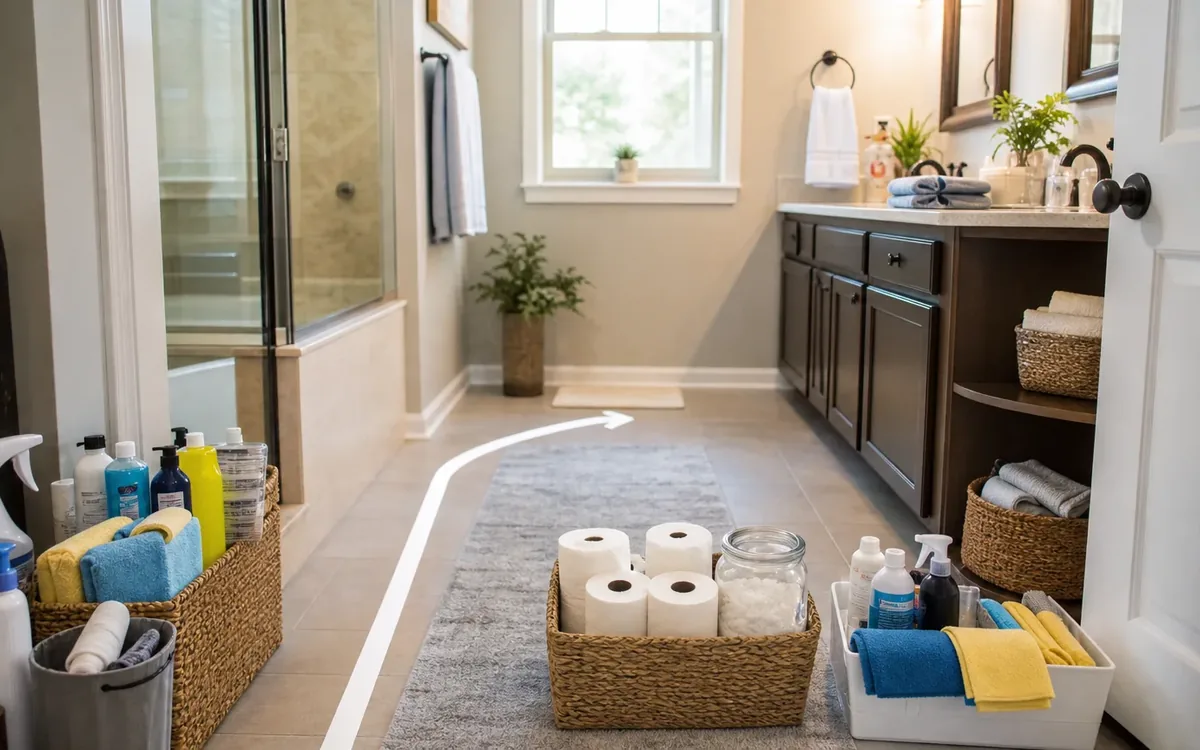
What should you clean in bathrooms?
Bathrooms need close attention because residue, odors, and moisture are highly visible in a small space. The goal is a clean room without hiding conditions that deserve inspection.
Clean these areas:
- Toilet bowls, seats, lids, bases, and surrounding floors
- Sinks, faucets, vanities, and mirrors
- Tubs, shower walls, doors, tracks, and accessible grout
- Cabinet fronts and empty storage interiors
- Exhaust-fan covers that can be reached safely
- Floors, corners, trim, and baseboards
- Handles, switches, towel bars, and shelving
Remove used toiletries, worn bath mats, nearly empty containers, and excess cleaning products. Keep only a small set of useful items if the home remains occupied.
Persistent staining, loose tile, soft flooring, active leaks, weak ventilation, or suspected mold may require professional evaluation. Do not paint over, caulk over, or arrange objects to conceal a material condition. A qualified inspector or contractor can assess the cause, while the responsible parties determine repairs and disclosures.
Clean living spaces for light, scale, and circulation
Living rooms, dining rooms, family rooms, and bedrooms should allow buyers to see the floor plan. Cleaning works best after excess furnishings and personal collections have been reduced.
Prioritize:
- Dust on fans, fixtures, vents, shelves, and trim
- Smudges on doors, handles, switches, and walls
- Pet hair on upholstery and flooring
- Dust beneath movable furniture
- Carpet edges and hard-floor corners
- Interior window glass and accessible tracks
- Blinds or shutters that can be cleaned safely
- Fireplace exteriors and nearby floors
Do not overload closets, spare rooms, or the garage with everything removed from the main living spaces. Buyers may inspect storage areas, and dense stacks can restrict access or create safety concerns.
If belongings must leave the property temporarily, the household can compare off-site storage, portable storage, or moving directly to the next residence. Storage is a separate household purchase unless expressly included in a written arrangement. Review access rules, insurance considerations, prohibited items, and contract terms with the storage provider.
How much should you remove from closets and cabinets?
Remove enough to make storage visible and functional. A completely empty closet is not always necessary, but packed shelves can make the space difficult to assess.
Work through storage in this order:
- Remove trash, expired products, and broken items.
- Pack seasonal or rarely used belongings.
- Group remaining items by purpose.
- Clear the floor and reduce shelf crowding.
- Wipe accessible shelves, rods, doors, and handles.
- Check that doors and drawers open without obstruction.
Do not discard tax records, deeds, wills, financial statements, family photographs, jewelry, firearms, medication, keys, or documents containing personal data without deliberate review. Secure sensitive materials away from open houses and showings.
When ownership is unclear, set the item aside. Estate representatives and attorneys should resolve authority or distribution questions. An appraiser or qualified specialist should advise on value. A practical cleanout or move team may discuss sorting zones, packing flow, removal logistics, and access, but it should not decide legal ownership or provide an unsupported valuation.
Do not overlook utility and secondary spaces
Laundry rooms, garages, attics, basements, sheds, and utility closets may not appear prominently in marketing photos, but buyers and inspectors may still enter them.
Clean only where access is safe. Useful tasks include:
- Removing ordinary household trash
- Sweeping accessible floors
- Clearing paths to panels and equipment
- Wiping laundry appliance exteriors
- Removing lint from accessible surfaces
- Grouping labeled items that will remain
- Clearing abandoned boxes from usable floor space
- Removing cobwebs within safe reach
Do not move hazardous, leaking, unidentified, or regulated materials as if they were ordinary trash. Paint, fuel, chemicals, propane containers, batteries, electronics, medical waste, and similar items may be subject to facility-specific or local acceptance rules. Confirm current instructions with the relevant waste authority or receiving facility.
Electrical panels, HVAC equipment, plumbing shutoffs, and other systems should remain accessible, but cleaning does not establish that they are safe or compliant. Inspectors and licensed trade professionals evaluate condition. Building officials or other authorities determine applicable compliance requirements.
Deal with odors instead of covering them
Strong fragrance can create another concern rather than solve the original one. Identify the source before using scented products.
Common sources include:
- Trash or spoiled food
- Pet bedding, litter areas, or urine residue
- Smoke residue on walls and fabrics
- Damp cardboard, rugs, or upholstery
- Dirty drains or disposals
- Refrigerators and freezers
- Closets containing damp clothing
- Pest activity
Remove the affected contents, clean appropriate surfaces, and ventilate where conditions allow. If an odor returns, the source may be inside a wall, under flooring, in ductwork, or near an active leak. That calls for diagnosis by an appropriate professional, not heavier fragrance.
Odor treatment, remediation, duct cleaning, pest control, and material replacement are distinct services. Discuss responsibility, methods, and scope with the relevant provider. Never claim that a cleaned smell proves the underlying condition has been corrected.
Separate cleaning from repairs and professional decisions
Cleaning prepares a property for presentation. It does not replace technical evaluation or legally required action.
The household can generally decide:
- Which clearly owned belongings to keep or remove
- How much everyday clutter to pack
- Whether to clean personally or hire help
- Which rooms to prioritize for presentation
- Whether to obtain separate storage or specialty services
A practical cleanout or move team may discuss:
- Sorting and labeling systems
- Safe pathways and working zones
- Packing and move sequencing
- Removal categories and destination planning
- Coordination needs for sale preparation
Other decisions belong elsewhere:
- Legal and disclosure questions: The seller’s attorney, real-estate professional, or other responsible adviser
- Property value: A qualified appraiser or licensed real-estate professional acting within their role
- Condition and defects: A qualified home inspector or relevant trade professional
- Repairs: The properly qualified contractor selected for that work
- Permits and compliance: The applicable South Carolina or local authority
- Disposal acceptance: The relevant waste authority, facility, recycler, or donation organization
Clutter Cleaner of South Carolina is physically located in Mount Pleasant and has an approved statewide service territory. Charleston is its primary market. Property-specific availability and scope should be confirmed directly, especially when the work involves an occupied home, inherited contents, access constraints, or coordination with other providers.
Final pass before photography or showings
Once deep cleaning and removal are complete, use a focused final pass rather than restarting the whole project.
Check the following:
- Entry glass and door hardware
- Kitchen counters, sink, and appliance fronts
- Bathroom mirrors, fixtures, and floors
- Dust on dark furniture and visible ledges
- Pet hair and litter areas
- Trash cans and food waste
- Interior glass and obvious fingerprints
- Floors along the main walking route
- Closets or cabinets likely to be opened
- Personal documents, medication, keys, and valuables
Ask the listing professional how the home will be photographed and shown. That professional can advise on market presentation within their role. An inspector decides neither staging nor décor, while a cleaner or organizer should not make appraisal, disclosure, or compliance determinations.
Short FAQ
Should you deep-clean before or after moving out?
Clean after major sorting and removal whenever practical, because empty areas are easier to reach. If the home remains occupied, complete the deep cleaning first and use lighter maintenance before photographs and showings.
Do you need to clean inside every cabinet?
Clean empty cabinets and any interiors buyers are likely to open. If cabinets remain in use, reduce their contents and wipe accessible shelves. Keep private documents and valuables secured elsewhere.
Should you clean before a home inspection?
Remove clutter that blocks access to systems and components, and clean enough to make areas visible. Do not hide stains, damage, leaks, or other concerns. The inspector determines what can be inspected and reports observations within the inspection scope.
Can unwanted items simply be left at the house?
Only if the sale agreement and responsible parties clearly allow it. The seller, buyer, and their real-estate or legal professionals should document what stays. Do not assume unwanted contents transfer with the property.
When is cleanout help useful?
It may be useful when the amount of household contents prevents cleaning, photography, repairs, or moving. Before work begins, confirm decision-making authority, items that must remain, access, removal categories, and the written scope.



