

The most common online estate auction pitfalls are starting before ownership is clear, using weak photos or descriptions, setting unrealistic expectations, overlooking pickup logistics, and disposing of unsold property without a plan. A household can organize records, identify goals, and choose what to keep. Auction strategy may be discussed with an experienced auction or estate-sale provider, while legal authority, appraisals, taxes, contracts, and regulated disposal belong with the appropriate professionals.
Quick answer: Before listing anything, confirm who has authority to sell, separate personal documents and keepsakes, identify items that may need expert review, establish sale and pickup terms, and create a written plan for unsold property. Do not assume an online audience will correct poor preparation.
Why can starting an online estate auction too soon cause problems?
Speed may feel important when a home must be emptied or prepared for sale. However, listing property before the family resolves basic questions can lead to disputes, accidental sales, and avoidable delays.
Confirm who is authorized to make decisions. The person with access to the house is not necessarily the person legally empowered to sell its contents. If an estate is involved, an attorney or probate authority should answer questions about appointment, ownership, creditor issues, court requirements, or restrictions. A cleanout or auction team should not determine legal authority.
Before auction preparation begins, the responsible decision-maker should address:
- Who owns the personal property
- Whether a will, trust, court order, or other document affects it
- Which household members may remove keepsakes
- Whether any items belong to another person
- Whether valuables require an appraisal or specialist review
- Whether the property must remain available for inspection
- What deadline actually controls the project
It is also important to separate auction decisions from the physical work of clearing a residence. Families coordinating both can review how estate cleanouts work to understand the sequence without treating removal and sale as the same task.

Do not confuse sentimental value with auction demand
A family may value an object because of its history, purchase price, or connection to a loved one. Online bidders usually respond to current demand, condition, rarity, presentation, and pickup feasibility. Those measures are not the same.
This difference can cause two opposite mistakes. A family may insist on an unrealistic value and prevent an effective sale. It may also dismiss an ordinary-looking item that deserves research before being grouped, donated, or discarded.
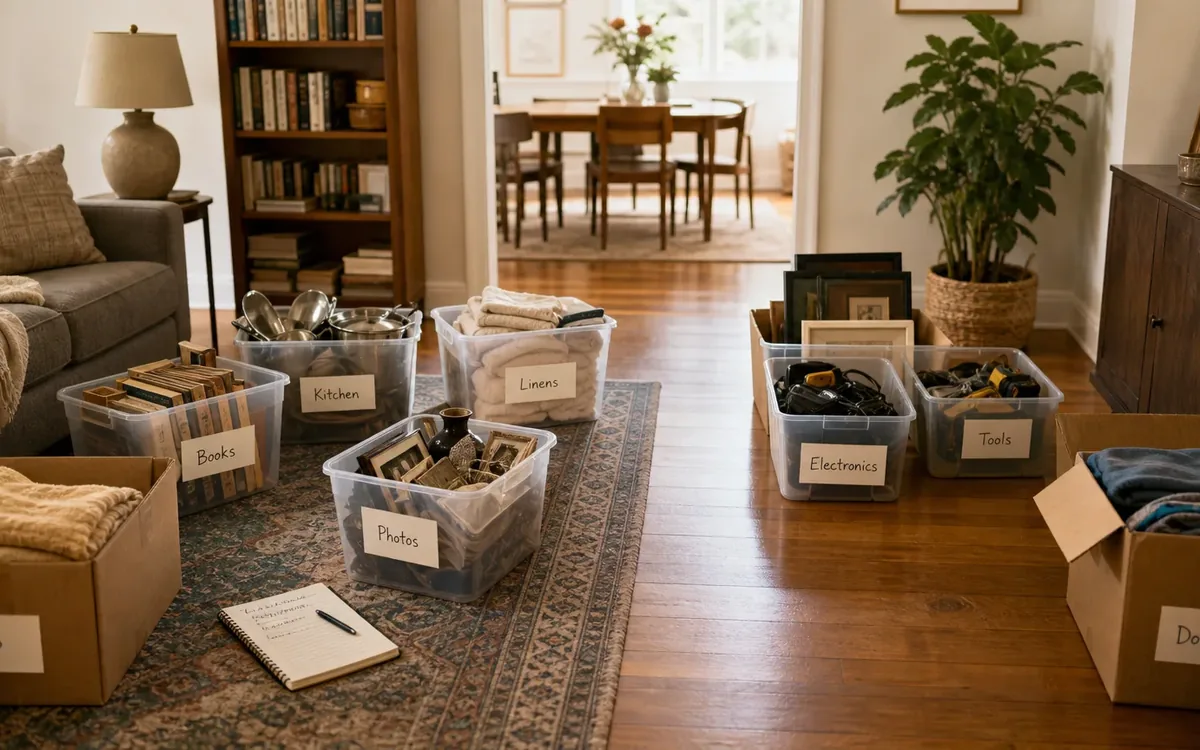
Use a triage process instead of making immediate price assumptions:
- Keep: Remove confirmed family selections before photography.
- Review: Set aside signed, unusual, collectible, historical, or potentially high-value objects.
- Auction candidate: Identify marketable items that can be described and transferred clearly.
- Alternative disposition: Group items better suited to donation, recycling, cleanout, or another method.
A qualified appraiser should provide formal valuation when one is needed for estate administration, insurance, equitable distribution, tax matters, or another official purpose. An auction provider may discuss likely market interest and sale format, but that discussion is not automatically a formal appraisal.
Families considering an online sale can also review Clutter Cleaner of South Carolina’s auctions and estate sales service information when deciding how sale preparation may fit into a broader transition.
What happens when photos and descriptions are incomplete?
Online bidders cannot handle an item before bidding. The listing must carry most of the informational burden. Dark photographs, vague dimensions, hidden damage, and broad claims undermine confidence and can create conflict at pickup.
Useful photographs generally show:
- The full item from more than one angle
- Labels, signatures, model numbers, and maker’s marks
- Damage, repairs, wear, stains, chips, or missing parts
- Interior compartments when relevant
- Scale or dimensions
- Cords, remotes, keys, attachments, and accessories included
- The quantity included in a grouped lot
Descriptions should distinguish observed facts from assumptions. For example, describe a finish as gold-colored unless it has been professionally tested and identified as gold. Avoid calling an object antique, original, rare, sterling, authentic, or functional unless there is adequate support for that statement.
Condition language also needs care. “Powers on” does not establish that an appliance or electronic device works correctly. “Untested” should mean exactly that. If information is unknown, say so rather than filling the gap with a guess.
The household can help by locating receipts, manuals, provenance records, spare parts, and keys. An auction team may discuss photography, grouping, catalog details, and bidder-facing terms. Authentication, formal appraisal, and specialized inspection should remain with qualified professionals when those services are needed.
Avoid building lots for convenience alone
Grouping every similar object into large lots may reduce catalog work, but it can also hide desirable pieces or create loads that ordinary buyers cannot transport. At the other extreme, listing every low-value item separately can make the auction cumbersome and extend pickup.
A practical lot should make sense to a likely buyer. Consider:
- Whether the items share a use, style, or category
- Whether one notable piece deserves its own listing
- Whether the lot can be photographed clearly
- Whether a bidder can safely lift and transport it
- Whether the quantity is manageable
- Whether separating accessories would make the main item incomplete
Do not divide a set without considering the effect on usefulness or demand. Keep matching hardware, shelves, cords, remotes, and documentation with the correct item whenever possible.
Hazardous materials, weapons, alcohol, medications, titled property, certain wildlife products, and other restricted categories may involve platform rules or federal, state, and local requirements. The responsible seller should consult the auction platform, appropriate attorney, agency, licensed dealer, or other qualified authority. A general cleanout team should not decide that a regulated item is lawful to list or transfer.
Why is pickup planning as important as the auction itself?
A winning bid does not remove an item from the house. Poor pickup planning can damage walls, block neighbors, create injury risks, or leave the household with sold property that no one can move.
Before listings go live, review the physical route from each item to the buyer’s vehicle. Note stairs, narrow doors, elevators, soft ground, gated access, limited parking, and large furniture that may require disassembly.
Clear terms should address practical questions such as:
- The pickup date and time window
- Whether appointments are required
- What identification or receipt buyers must present
- Who provides labor, tools, packing materials, and vehicles
- Whether buyers may enter the residence
- How missed pickups are handled under the sale terms
- Whether loading equipment can access the property
- Which areas are off limits
Do not promise help with loading unless that help has been confirmed. Do not allow an unknown buyer to dismantle fixtures or alter the home without clear authorization. Items attached to walls, plumbing, wiring, cabinetry, or the structure may require review by the property owner and an appropriate contractor or inspector before they are offered.
For occupied homes, protect medicine, mail, financial records, keys, devices, photographs, and other private material. Restrict access to rooms that buyers do not need to enter. If the home is under contract or managed by another party, coordinate access with the responsible real-estate professional or property manager.
Treat deadlines as project constraints, not auction guarantees
A scheduled closing, lease end, insurance inspection, or municipal deadline can put pressure on the sale. That deadline does not guarantee that every item will attract a bidder or be removed on time.
Work backward from the date the residence must be ready. Allow time for sorting, research, photography, catalog preparation, bidding, payment, pickup, missed pickups, and final clearing. Build in a buffer instead of placing the final collection window immediately before closing or inspection.
Real-estate agents should advise on listing and closing strategy. Home inspectors and contractors should evaluate property condition. Attorneys should interpret contracts, probate documents, or ownership questions. Government authorities determine compliance requirements and deadlines. A move or cleanout team may discuss workflow, labor, access, and sequencing, but should not replace those professionals.
In South Carolina, statewide projects may involve very different property layouts and local requirements. Rather than assuming one city or county follows another’s procedures, verify disposal, parking, access, and compliance questions with the authority responsible for the specific property.
Do not leave unsold items until the final day
No online auction guarantees that everything will sell. Some lots receive no bids. Buyers may fail to collect purchases. Items may also be excluded because they are restricted, impractical, damaged, or unlikely to attract sufficient interest.
Create an unsold-property plan before the auction starts. The plan might include:
- A secondary sale method, if appropriate
- Family redistribution
- Donation to organizations that accept the item type
- Recycling or specialized disposal
- Removal during an estate cleanout
- Temporary storage approved by the decision-maker
Confirm acceptance before transporting donations. Charities have their own condition standards and may decline furniture, mattresses, chemicals, medical equipment, or large quantities. Tax deductibility and documentation questions should go to a tax professional and the receiving organization.
Keep an inventory showing what sold, what was removed, what remained, and who authorized the next step. If the project is part of an estate, ask the attorney or fiduciary what records must be retained. A practical team can discuss sorting, removal order, and site readiness, but the authorized party must approve final disposition.
Protect records, privacy, and digital access
Paperwork can be more sensitive than furniture. Before bidders or removal crews enter, gather tax records, bank statements, medical papers, correspondence, identification, checkbooks, and documents bearing account numbers.
Electronic devices need equal attention. A computer, phone, tablet, smart television, printer, camera, or storage drive may contain personal data even if it no longer appears to work. Simply deleting visible files may not be sufficient.
The household should decide which records to preserve, subject to advice from its attorney, accountant, executor, trustee, or other responsible professional. A qualified technology provider can advise on secure data backup and erasure. Auction and cleanout personnel should not decide which legal, tax, or estate records may be destroyed.
Also check drawers, books, luggage, clothing pockets, safes, file cabinets, and containers before listing them. Remove family photographs and notes unless their inclusion is intentional and authorized.
Use a written decision sequence
A disciplined sequence reduces rushed judgments and keeps different professional roles clear.
- Confirm authority to access, sort, sell, donate, and discard.
- Remove personal records, medication, digital devices, keys, and obvious keepsakes.
- Invite authorized family members to make selections by a firm deadline.
- Set aside items requiring appraisal, authentication, legal review, or regulated handling.
- Identify auction candidates and create sensible lots.
- Document condition, dimensions, inclusions, and access constraints.
- Establish bidding, payment, and pickup terms.
- Protect the home and private areas during collection.
- Reconcile sold, collected, unpaid, and unsold items.
- Complete approved donation, recycling, or cleanout steps.
This sequence is not a substitute for legal instructions or platform terms. It is a practical way to avoid mixing family decisions, auction work, and professional determinations.
Frequently asked questions
Should every valuable-looking item receive an appraisal?
Not necessarily. The household and auction provider can identify items that appear to merit further review. A qualified appraiser should determine value when a formal opinion is needed. Legal counsel, a fiduciary, or an insurer may specify the type of appraisal required.
Can an auction team decide what the family should keep?
A team may help sort categories and point out items that deserve attention, but authorized household or estate decision-makers should determine what is retained. Disputed property should be held until the appropriate legal or fiduciary guidance is obtained.
What if a buyer does not pick up an item?
Follow the auction platform’s terms and the written sale conditions. Avoid improvising a remedy that conflicts with those rules. If ownership, payment, or disposal becomes disputed, seek guidance from the platform or an attorney.
Can auction proceeds be predicted in advance?
Online bidding depends on demand, presentation, timing, condition, competition, and buyer logistics. Market observations may inform planning, but they should not be treated as a guaranteed result.
Who decides whether the home is ready to list or close?
The owner and responsible real-estate professionals make listing and transaction decisions. Inspectors, contractors, attorneys, lenders, insurers, and public authorities may have separate roles. A cleanout or move team can report that agreed physical tasks are complete, but it does not certify legal compliance or property condition.
Plan the sale around authority, access, and the final handoff
A successful online estate auction is not just a catalog of belongings. It is a controlled transition from authorized selection to accurate listing, secure pickup, and documented disposition of what remains.
The household should establish goals, designate decision-makers, protect keepsakes and records, and approve final outcomes. An auction, cleanout, or move team may discuss practical sequencing, lot preparation, access, removal, and home readiness. Attorneys, appraisers, real-estate professionals, inspectors, contractors, tax advisers, auction platforms, and government authorities remain responsible for decisions within their respective fields.
For an estate transition anywhere in South Carolina, begin by confirming authority and the property deadline. Then build the auction schedule backward, including a realistic pickup window and an unsold-item plan. That preparation prevents the online sale from creating a second round of urgent decisions after bidding ends.



