Estate jewelry records help households in Moncks Corner, SC track pieces without guessing their content. Give each piece an ID, photograph it, and copy visible marks exactly. Keep boxes and receipts with clear links to the item. Leave metal, gemstone, age, and value conclusions to a qualified evaluator.
Quick answer: Write what you can see, then state what remains unknown. Use “yellow-colored metal” instead of “gold” unless qualified evidence supports that claim. Record a stamp as a visible mark, not proof. Keep family accounts separate from verified facts, and preserve the source of every claim.
This guide covers jewelry from South Carolina estates before sale or handoff. The goal is a useful record, not a home appraisal. A clear record helps the household choose what to retain, ask about, or hold for review.
What should estate jewelry records say about an unknown piece?
The auctions and estate sales service page helps frame sale-planning questions. The guide to how estate cleanouts work gives context for the wider handoff.
Start with visible details that another person can check. Record the item type, color, shape, and count. Copy marks without expanding their meaning. Keep each fact tied to a photo or document. If a detail requires testing or expert judgment, label it unknown or pending review rather than filling the gap.
Choose simple item IDs, such as J-001 or J-002. Use the same ID on the record, photo names, and handoff sheet. An ID should identify a piece without describing its worth. Avoid names such as “valuable diamond ring” before evaluation.
A useful entry might read: “J-014: ring with yellow-colored band and one clear stone. Inside mark appears to read ‘14K.’ Content has not been verified.” That wording preserves the observation. It doesn’t claim the ring is gold or the stone is a diamond.
Record uncertainty at the point where it appears. If a mark is hard to read, write “partly legible.” Don’t choose the most likely letters to complete it. If two readings seem possible, save the photo and note both possibilities as uncertain.
Use a small set of fields for each item:
- Assign a unique item ID and repeat it across photos, notes, and handoff records.
- Describe the visible form, color, and stone count without naming unverified materials.
- Copy readable marks exactly, noting any unclear letters, numbers, or symbols.
- Record where the item was found and which person supplied that information.
- Mark metal content, stone identity, age, maker, and value as unknown when unverified.
Keep household stories in a separate field labeled “family account.” A story can guide later research without becoming a sales claim. For example, “A relative recalls a purchase during travel” is useful. “Antique imported sapphire” goes beyond that account.
Avoid combining several pieces under one vague label. “Jewelry in drawer” makes later matching hard. Give each distinct piece its own entry, or describe a clearly defined group. For a group, record its contents and explain why it remains grouped.
How can you photograph stamps without making authenticity claims?
Use the estate cleanout planning guide to place documentation within the household plan. Consult the auctions and estate sales service information when preparing questions about sale descriptions.
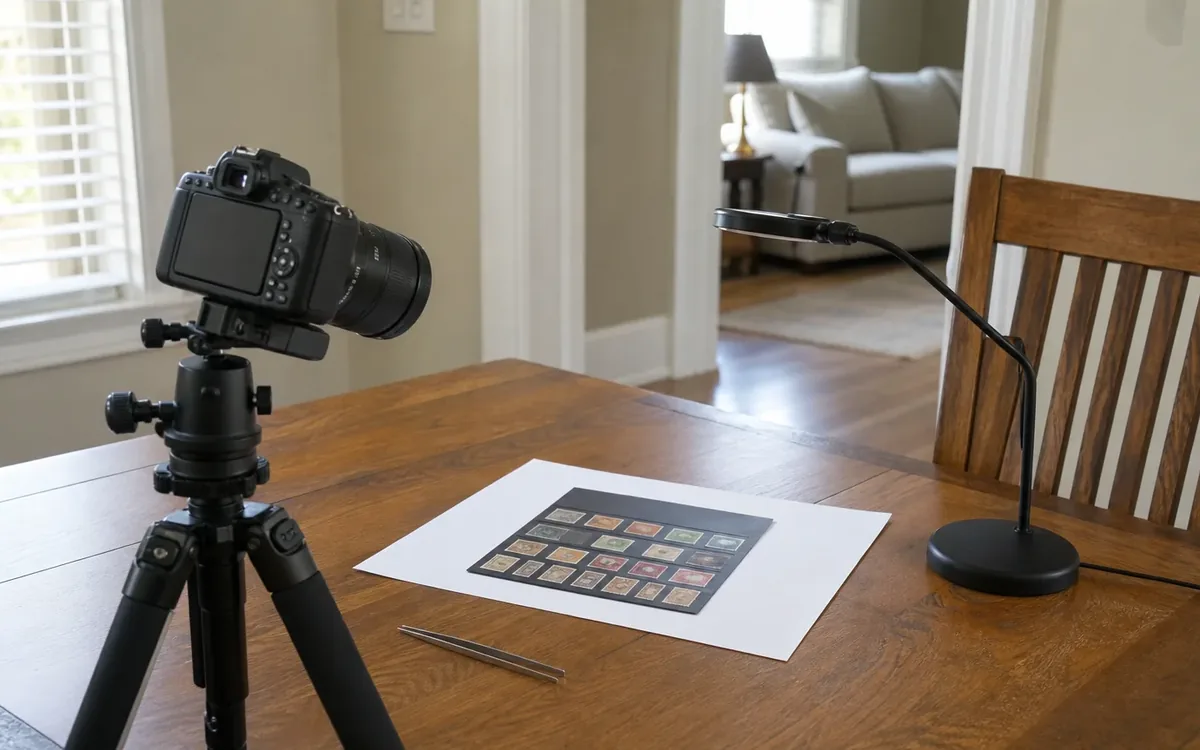
Photograph the whole piece and any visible marks separately. Keep the item ID in the file name or image record. Transcribe only what you can read. A stamped number or name is evidence of a visible mark. It isn’t, by itself, proof of material, maker, date, or authenticity.
Aim for a photo set that helps someone match the record. Include the front, back, and visible sides where practical. Add a close view of the mark and a wider view showing its location. The wider view helps connect the detail to the correct piece.
Keep the original image files. If you crop an image for easier viewing, retain both versions. Name them so the link stays clear, such as “J-014-mark-original” and “J-014-mark-crop.” Don’t edit a photo to add missing letters or hide visible wear.
Describe what the photo shows, not what you hope it means. “Mark visible near clasp” is a sound note. “Designer clasp proves origin” is a conclusion that needs qualified evidence. A familiar symbol can be copied without assigning it to a maker.
Some marks won’t be readable in household photos. That is a valid result. Record “mark present, unreadable in current photo,” then leave the question open. A blurred photo should never lead to a firm transcription.
Set pieces aside for review if getting a view would require force. Don’t pry settings, scrape surfaces, apply chemicals, or make marks clearer by altering them. Ask the chosen evaluator how they want the piece presented. Unknown condition is a reason to pause, not experiment.
One photo may show several items, but it shouldn’t replace item-level records. Group images help show where a set was found. Separate images help prevent mix-ups when pieces follow different paths. Make clear when a pair or set has been split for review.
How should boxes, receipts, and family notes stay connected?
The guide to how estate cleanouts work explains the broader sorting context. The estate cleanout planning guide helps keep records from being lost during that process.
Keep each source document connected to an item ID, while noting how strong that connection is. A matching receipt may support further review. A nearby box may have no proven link. Preserve both without claiming they belong together. Record who made the connection and what evidence supports it.
A branded box can matter, but it doesn’t prove its contents came from that brand. Jewelry may have moved between boxes over time. Record “found inside a box bearing this name” rather than “original maker’s box.” Use the stronger wording only when evidence supports it.
Receipts need the same care. Check whether the document names an item, date, model, or other detail. If the link is uncertain, say so. A receipt found in the same drawer is a lead, not a confirmed match.
Keep source papers apart from copies used for daily planning. Note where each source is kept. Share copies that show the item details people need. Limit who can see private details in those copies. Keep the source intact rather than cutting out or erasing its details.
Use these source notes when sorting paperwork:
- Record the document type, visible date, and item ID beside each saved copy.
- State whether the item link is confirmed by details or based on location alone.
- Preserve family notes as attributed accounts, including the speaker’s name when appropriate.
- Keep unrelated account numbers and personal details out of routine sale-planning copies.
- List boxes, bags, and loose tags separately when their item links remain uncertain.
Old appraisals and reports should keep their dates and full wording. Don’t copy a past figure into a current price field without review. The document may describe a different purpose, condition, or set of items. Let the relevant professional explain what it supports now.
For inherited notes, retain the exact words where possible. Add a plain summary in a separate field if needed. This preserves the difference between the source and your reading of it. That distinction helps later reviewers trace a claim back to its origin.
Build a record that survives sorting and handoff
The auctions and estate sales service page supports questions about item information and sale planning. The guide to how estate cleanouts work helps place that handoff within the broader estate process.
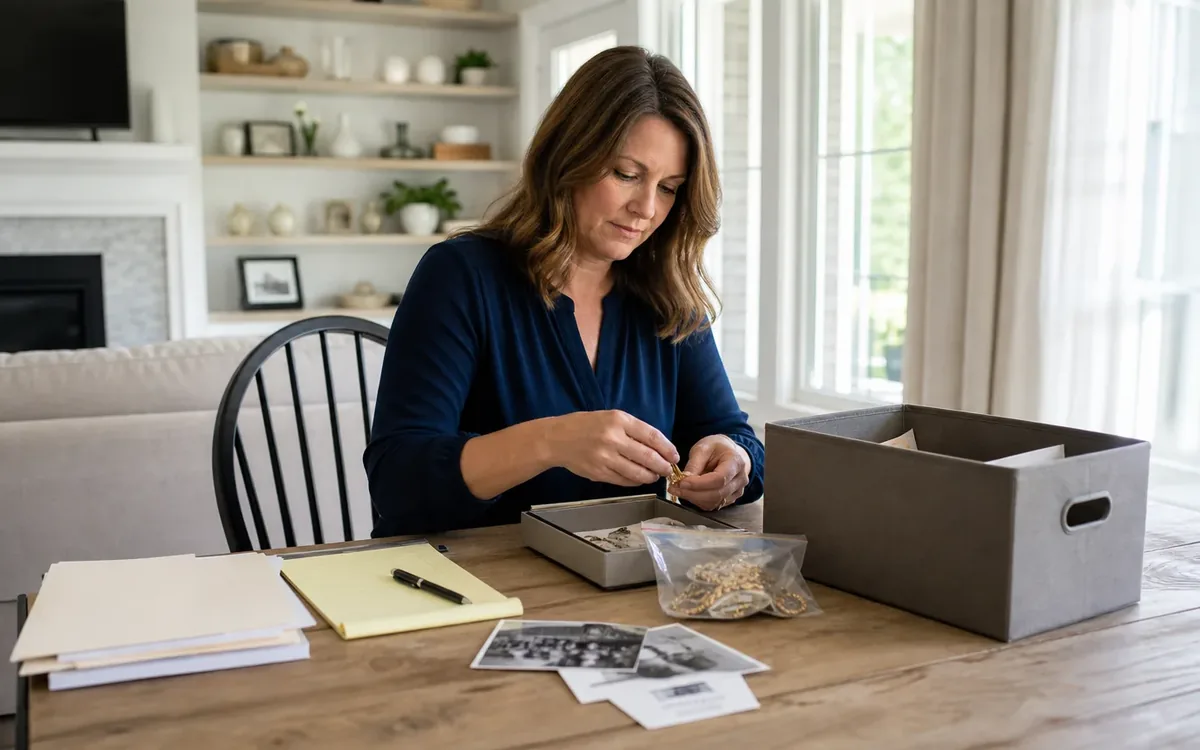
Use one main record to track where each item is. Note its status and the next choice to make. Keep what you see apart from papers, family stories, and expert findings. Update the record when an item changes hands. Keep old notes so readers can trace each claim to its source.
A paper form, spreadsheet, or shared file can work. The best choice is one the authorized household members can maintain. Avoid several competing lists with different names for the same piece. Pick one master record and identify who may update it.
Follow these five steps for a traceable handoff:
- Create an item ID and record its current location before it enters another group.
- Add plain observations, readable stamp text, and photo file names to its entry.
- Link documents and family accounts, noting uncertain matches in a separate field.
- Record the proposed destination, decision status, and person authorized to approve release.
- Confirm the receiving person, item count, and unresolved questions in the handoff record.
Use status labels that show the next task. “Hold for review,” “household decision pending,” and “ready for provider discussion” are clear. “Saleable” can hide several unanswered questions. A practical record should show the missing decision instead.
If a professional later provides findings, add a new dated entry. Identify the source and attach the report if available. Don’t replace the original observation with a stronger claim that lacks its source. This keeps the record useful when readers need to understand a change.
Treat missing items and unmatched paperwork as open issues. Record the gap plainly rather than quietly removing an entry. A note such as “box retained; matching item not located” is useful. It prevents another person from assuming the box confirms an existing piece.
Before any transfer, compare the item IDs against the handoff list. Agree on how the recipient will record receipt. Ask what questions remain and who will resolve them. This is a record check, not a test of jewelry content or condition.
Keep household choices separate from professional conclusions
The auctions and estate sales service information helps shape a provider discussion. The estate cleanout planning guide offers context for coordinating that discussion with other household choices.
The household can choose which facts to gather and pieces to review. A cleanout or sale team may discuss sorting, records, and handoffs. Trained experts assess content and value within their scope. Questions about who owns a piece, estate authority, taxes, or legal rights stay with the proper expert.
Don’t treat possession as proof of the right to sell. If several relatives claim a piece, mark it “hold pending authority decision.” Keep the dispute out of the item’s material description. The estate representative and legal adviser should resolve authority before a sale decision proceeds.
The household can set priorities for review without assigning values. It might flag pieces with unclear paperwork or requested family interest. That priority tells a provider where questions remain. It doesn’t mean the piece is rare, authentic, or worth more.
Discuss the handoff in concrete terms:
- Ask which item details the provider needs before discussing a proposed sale route.
- Identify pieces held for family decisions, qualified evaluation, or unresolved ownership questions.
- Ask who will draft sale descriptions and how supporting evidence will be recorded.
- Confirm which outside provider will address appraisal, storage, transport, or other separate needs.
An appraisal purpose matters. A household may need a sale estimate, insurance advice, or donation valuation. Those are separate questions, so explain the purpose before hiring an evaluator. For donation-related value questions, consult IRS Publication 561 and the appropriate tax or appraisal professional.
Jewelry records don’t settle real-estate, inspection, or code matters elsewhere in the estate. Those stay with the relevant professionals or authority. A cleanout plan can track those tasks without deciding them. Keep each decision tied to the person responsible for it.
Clutter Cleaner of South Carolina is based in Mount Pleasant, SC. Charleston is its primary market, and its service territory covers South Carolina. Households in Moncks Corner, SC can ask about estate cleanouts and sale planning. Confirm the scope of any proposed work rather than assuming appraisal or testing is included.
Frequently asked questions
Does a “14K” stamp prove a piece is gold?
Record it as a visible stamp, not proof of content. Write “mark reads ‘14K’” if it is clear. Add that metal content remains unverified unless you have qualified evidence. A qualified evaluator can explain what the mark and any further findings support. Keep that conclusion linked to its source.
Can I call a clear stone a diamond?
Use “clear stone” until qualified evidence supports a more specific name. Shape, sparkle, and family belief don’t settle gemstone identity. If an old document names a diamond, record that document’s claim separately. Check whether it can be linked to this piece before using it in a sale description.
Should I keep an empty jewelry box?
Keep it when it may help explain an item’s history or paperwork. Give the box its own record or link it cautiously to an item. State where it was found and whether the match is known. A branded box shouldn’t become proof of origin merely because a piece fits inside.
What if a receipt lists several pieces?
Save the full receipt and make a separate link for each possible match. Mark links as uncertain when details don’t identify a specific item. Don’t assign the full purchase amount to one piece. Ask the evaluator or sale provider what further records would help distinguish the items before drawing a conclusion.
Who should approve release to a sale provider?
The person with the right authority should approve release. The household record can name who will receive the pieces. It can list items held back, too. It doesn’t prove legal authority or settle rival claims. If authority is unclear, pause release. Ask the estate’s legal adviser or person in charge for help.
Can these notes replace an appraisal?
No. These notes collect what you see, photos, and source records for review. They don’t prove that a piece is genuine or establish content or value. Tell the trained expert why you need an opinion. Ask what proof they need. Keep their dated report and its purpose. It won’t answer every future question.