
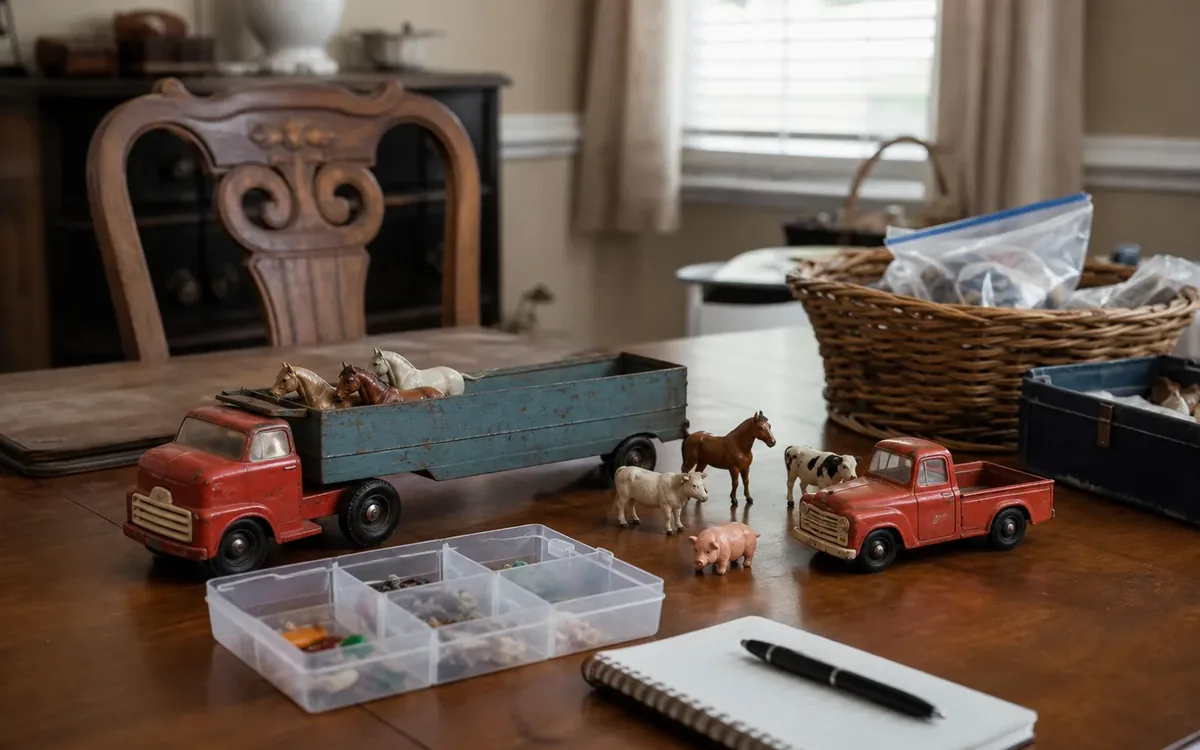
A vintage toy inventory should link each toy, small accessory, and box through one record. For an estate in Goose Creek, SC, start with clear photos and temporary IDs. Keep known matches separate from guesses. This helps an auction provider review the collection without losing details or assuming a toy suits child use.
Quick answer: Give each toy or known set a record ID. Use that same ID for its photos, accessory notes, and packaging record. Mark uncertain matches as unresolved. Keep ownership, value, sale terms, and child-use questions for the right person or provider.
What should a vintage toy inventory record first?
Use the auctions and estate sales service overview to frame the provider discussion. The guide to how estate cleanouts work helps place that review within the wider estate plan.
Start with the toy’s name, where it was found, and known matches. Leave possible value for later review. List nearby parts, and keep visible facts apart from family memories. This helps prevent a family story from becoming a sale claim with no proof.
Choose a simple ID system that can grow. A code such as TOY-001 can cover one toy or one known set. It does not need to reflect a maker, date, or price. Those details may change after review.
Keep IDs on record cards or storage labels, rather than on collectible surfaces. Record any existing labels in your photos. Ask the auction provider about labels and storage supplies before adding materials near fragile finishes or paper.
The first pass should capture these details:
- Record the toy’s ID, plain name, and current room or shelf location.
- Copy visible maker names and model text without guessing missing words.
- List each loose accessory and state why you think it belongs.
- Note boxes, inserts, leaflets, and receipts found with the toy.
- Record who supplied family history and mark that account as unverified.
- Add the photo folder name and the person responsible for the record.
Use plain descriptions when names are unclear. “Blue figure with silver belt” is more useful than an uncertain character name. Put possible names in a separate notes field. The reviewer can then assess them without undoing your whole record.
Keep ownership separate from identity. Finding a toy in an estate does not settle who may sell it. The household can document where it was found. The estate’s authorized decision-maker, with legal advice when needed, must resolve authority and any ownership dispute.
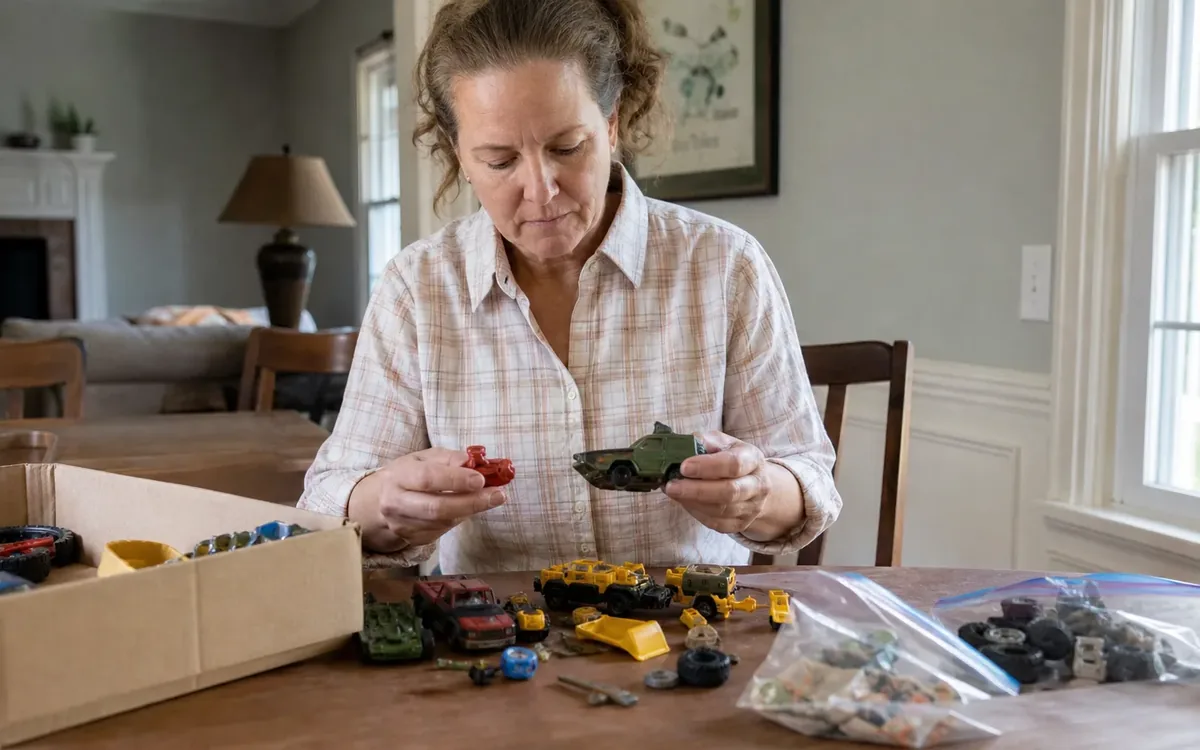
How do you connect small accessories to the right toy?
The estate cleanout planning guide can help you define the sorting scope. Use the auctions and estate sales service page to prepare questions about accessory review and proposed lots.
Link loose parts through records, rather than forcing a match. Give each piece a photo code and note where you found it. Link it to a toy only with a clear reason. If you’re unsure, say so in the notes. Leave that question for the auction provider to review.
A tiny piece may seem obvious within one collection. Similar toys can still have parts that look alike. A nearby helmet, stand, or miniature tool is a clue, not proof. Write “found beside TOY-014” until a qualified reviewer confirms more.
Use these five steps for the first inventory pass:
- Photograph the group as found, with its location noted in the record.
- Assign the main toy an ID and give loose pieces linked photo references.
- Record visible colors, marks, and shapes without fitting parts onto the toy.
- List confirmed associations and uncertain associations in separate record fields.
- Send unresolved matches to the provider with photos and the original location notes.
One record can point to several accessory photos. For example, TOY-014 may link to TOY-014-A and TOY-014-B. That naming system is a tracking aid, not a claim that both pieces belong. State the confidence level beside each proposed match.
Don’t attach loose pieces, open moving parts, or remove parts to check a match. Record powered toys first, too, without trying them. Note the model details and what you see outside. Leave wiring, repairs, setup, and use questions to a qualified provider with proof for that exact model.
Ask the receiving provider how it wants small pieces grouped. Agree on the container labels and transfer record before the collection leaves. A cleanout or move team may discuss pickup order and tracking. The auction provider should decide how uncertain parts affect catalog wording or lot grouping.
How should original boxes and papers be documented?
Review the guide to how estate cleanouts work for the broader handoff process. The auctions and estate sales service overview provides a starting point for questions about packaging and listing review.
Give boxes and papers their own records and links. Note printed names, numbers, and visible wear. Don’t assume they belong to the nearest toy. Original boxes may help name the toys, but their source and match need review. Their effect on value needs review before the sale listing makes those claims.
A box can be present without being the correct box. A family may have reused it for years. Write “box found with toy” when that is all you know. Avoid “original box” unless a qualified reviewer supports that description.
Give each box a packaging ID that links to the toy record. For example, BOX-014 can point to TOY-014 as a proposed match. Keep a field for the reviewer’s later conclusion. That preserves the first observation even if the match changes.
Useful packaging notes include these details:
- Copy printed product names, numbers, and size labels into the record.
- Photograph visible box panels and note any views you could not capture.
- List inserts, instructions, catalogs, and receipts as separate linked items.
- Describe visible tears, stains, missing flaps, or handwritten marks in plain terms.
- Mark packaging matches as confirmed, proposed, or unresolved after provider review.
Do not restore packaging or remove old tape to improve the photos. Avoid claims about hidden surfaces you have not seen. If an item cannot be documented without changing it, mark that view as unavailable. Ask the provider what evidence it needs next.
Receipts may show dates and purchase history. They may also contain private details. Keep full copies in the household’s private record. Ask the provider what information it needs, and prepare a separate listing copy with private details withheld.
Decide on storage apart from making the toy list. The household can choose who keeps the toys until review. Ask a storage or care expert about supplies and storage conditions. Check what’s included in the work. Don’t assume a cleanout includes storage or expert care.
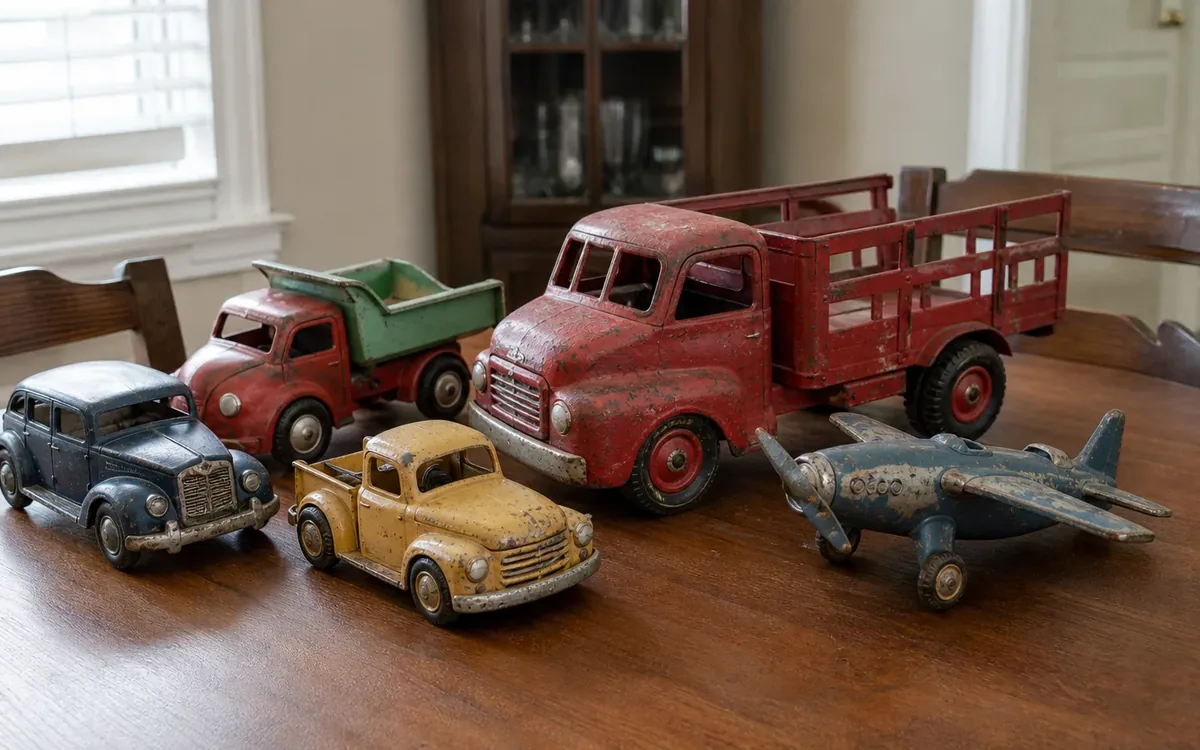
What photos and notes help an auction reviewer?
Use the auctions and estate sales service page to shape your review request. The estate cleanout planning guide helps keep that request tied to the household’s broader decisions.
The reviewer needs clear views, readable IDs, and notes about gaps. Take separate photos of the toy, linked parts, and boxes. Describe what you see without giving a grade or claiming all parts are there. These records help the provider ask clear questions before choosing what goes in a listing.
Start each photo group with its record ID. Keep the ID visible on a separate card, away from the item. Use file names that match the written record. Avoid renaming files midway unless you update all linked records too.
Ask which photos the provider needs before making a large catalog. It may need certain views or file types. Don’t move joints, run powered toys, or open cases for photos. Note each view you couldn’t take and explain why you left it out.
Describe what you see rather than assigning a condition grade. “Paint loss visible on left sleeve” is a clear observation. “Mint,” “complete,” and “all original” are broader claims. Leave those terms for supported review and approved listing language.
Make room for a review status on each record. Simple labels such as “awaiting review” and “provider question received” help track progress. A dated note should show who changed the record. Keep earlier photos rather than replacing the evidence behind a correction.
Do not use an asking price from another listing as an appraisal. An auction estimate, a sale result, and a tax value serve different purposes. The IRS guide to determining the value of donated property addresses donation valuation. It does not establish an auction price for your toy.
The household can choose which toys it wants reviewed for sale. An auction provider can discuss sale groups and listing terms. Ask a qualified appraiser about formal values within the agreed scope. Seek legal and tax advice apart from help with sorting the toys.
Plan a handoff that preserves the record
The guide to how estate cleanouts work can help organize the wider transfer plan. Pair it with the auctions and estate sales service overview when discussing who receives the toy records and unresolved questions.
A good handoff includes both the toys and their records. Agree on the IDs included, unclear matches, and who updates the file. Keep permission to sell apart from plans to move the toys. A team can discuss the move. That doesn’t settle who owns the toys, their value, or safe child use.
Prepare one master inventory and a copy for the receiving provider. Include the photo folder, packaging links, and unresolved questions. Name one household contact for record changes. Several relatives can contribute notes, but one shared file helps avoid conflicting versions.
Before transfer, cover these tasks:
- List each toy ID and every accessory group included in the handoff.
- Name the person who can approve proposed sale groups and exclusions.
- Identify unresolved matches that need review before catalog descriptions are drafted.
- Record who will retain private papers and family items outside the sale.
- Confirm separate arrangements for transport, storage, appraisal, and any later disposal.
Ask how the receiving provider will report missing or unexpected pieces. A shared intake note can record what arrives and what needs follow-up. Keep changes tied to item IDs. Broad messages such as “some figures are missing parts” are hard to resolve.
How a toy looks for sale differs from safe child use. A toy that looks complete may still be unsafe for play. Keep that point clear in your records and sale talks. Don’t run toys or judge risks from small parts while sorting them at home.
Clutter Cleaner of South Carolina lists auctions and estate sales among its services. Its service territory covers all of South Carolina, including Goose Creek, SC. The physical business location is Mount Pleasant, SC. Ask about the scope for your collection and which separate providers need to take part.
Short FAQ
Should every tiny accessory have its own record?
Each loose piece needs a traceable reference, but not a full page. A photo code and short description may be enough. Link that reference to the proposed toy record. Keep uncertain pieces marked as unresolved. Ask the auction provider how it wants shared accessory groups documented before the handoff.
Can I call a set complete if all pictured parts appear present?
Note that the visible parts seem to match the reference photo. Don’t claim the set is complete based on that alone. The photo may leave out parts or show a different version. A qualified reviewer should check the set and support listing claims about missing parts or original pieces.
What if relatives disagree about which toy owned an accessory?
Record both accounts and name their sources in private notes. Keep the accessory’s location and photos available for review. Do not settle the match by fitting the piece onto a toy. If the dispute concerns ownership or permission to sell, refer it to the estate’s authorized decision-maker and legal adviser.
Should I clean toys before taking inventory photos?
Record what you see before making changes to the toys. Cleaning may change the clues a reviewer needs. Ask the auction provider or a qualified care expert before any treatment. Your list can still help when toys have dust or marks. Describe what you see and note text you can’t read.
Does an inventory show that a toy is safe for children?
No. The list tracks toy names, visible wear, and linked parts. It doesn’t prove safe wiring, sound parts, or safe child use. For powered toys, stick to records and handoff plans. Safe-use advice needs proof from a qualified source for the exact model. Interest from collectors cannot replace that review.
Who decides what happens to items that aren’t selected for auction?
The person with household or estate authority decides, within ownership rights and legal duties. A team may discuss sorting and moving within its agreed scope. Giving items away, storing them, discarding them, and seeking formal values are separate choices. Note where each ID goes so parts and boxes stay linked.



