
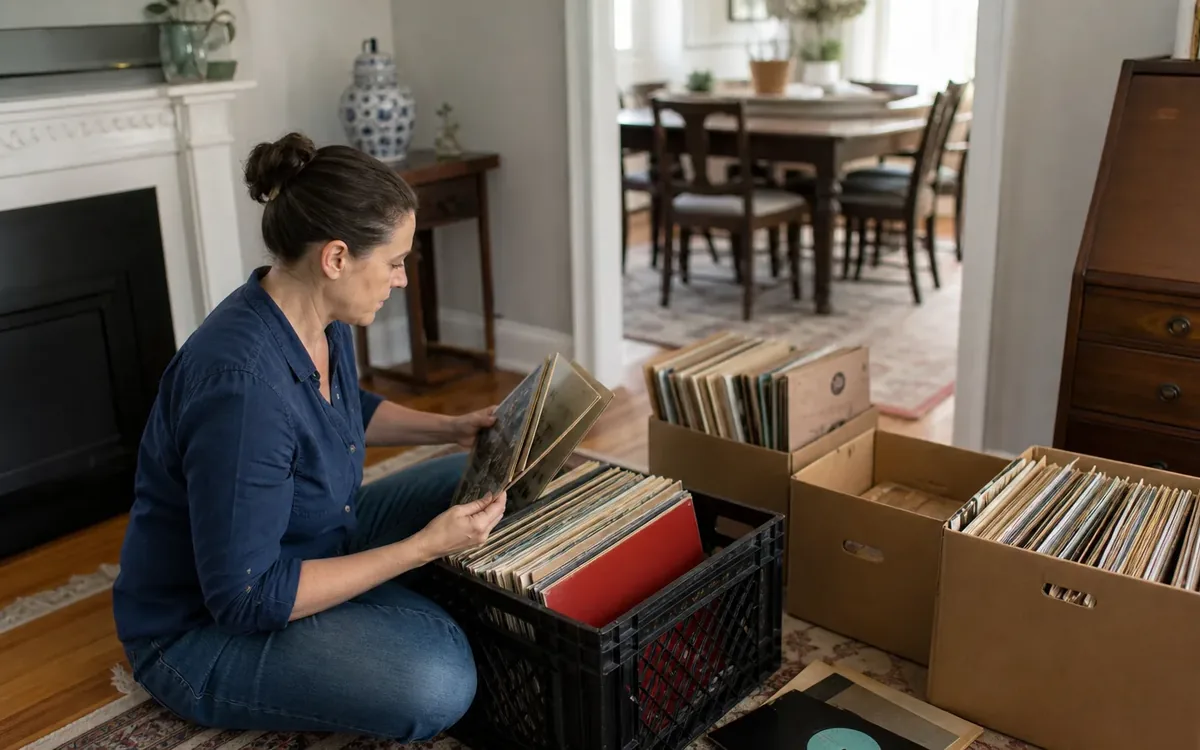
Sort vinyl records before an estate sale by matching discs to sleeves, noting pressing details, and setting incomplete albums apart. For a Charleston, SC household, start with a written inventory. Keep sale choices separate from family claims and value checks. Don’t attempt restoration to make records look ready for sale.
Quick answer: Keep each disc with its likely sleeve until you confirm the match. Record label details, missing parts, and visible sleeve damage. Flag uncertain matches for review. Let the sale provider discuss grouping and sale plans, while qualified experts handle value questions that need formal review.
How should you sort vinyl records and match sleeves?
The auctions and estate sales service and guide to cleaning out an estate can help frame the larger plan. For the records themselves, begin with title, artist, label, and catalog number. A matching cover image alone doesn’t prove that a disc belongs inside that sleeve.
Start with a small group from one shelf or box. Give that group a clear name, such as “hall closet records.” This keeps the original location in your notes. It also helps family members find a set they remember.
Follow these five steps for each album:
- Give the album a unique inventory code, and put that code on a separate note.
- Compare the artist and title on the disc label with the outer sleeve.
- Copy the label name and catalog number exactly, including letters, dashes, and suffixes.
- Check the listed disc count, and note any missing records, sleeves, or inserts.
- Mark the match as confirmed, uncertain, or incomplete without changing the original parts.
Don’t put sticky labels on discs or original sleeves. Keep your sorting notes apart from the item itself. If a disc resists removal, stop that part of the check. Record the limit rather than force a match.
Some albums have plain sleeves, alternate artwork, or replacement covers. Others may contain a record from a different release. Leave those cases marked as uncertain. A confident guess can hide a mismatch from the sale provider.
Keep family requests on a separate list. “Might belong to Aunt June” is an ownership question, not a sleeve match. Don’t move that album into a sale group until the person with authority resolves the claim.

Which pressing details should you record before the sale?
The estate cleanout process guide and auctions and estate sales page provide context for a provider handoff. Record the details you can read, rather than naming a pressing from memory. Clear notes help a record specialist compare releases without relying on the album title or cover alone.
Two copies of the same title may show different labels or numbers. Your job is to capture those differences. You don’t need to decide which copy is scarce, valuable, or worth selling alone.
Use a simple record sheet with fields for artist, title, and format. Add the label name and catalog number from the disc. Copy a printed country or date if present. Say where each detail appears, such as “rear sleeve” or “disc label.”
If runout markings are plainly visible, copy them as written. These are marks near the record’s center, beyond the recorded tracks. Don’t trace, rub, or alter them. If a mark is hard to read, write “unclear” and leave identification open.
Photographs can help explain small differences. Use the inventory code in each image file name. Useful views include the front cover, back cover, and disc label. Add a detail image only when you can capture it without forcing access.
Avoid calling a copy a “first pressing” based on one clue. A printed copyright year isn’t enough to settle that claim. Let a record specialist review the full set of details.
Treat signed sleeves and unusual inserts as review items. Record what you see without claiming that a signature is genuine. Keep certificates or old receipts with the related inventory entry. Their presence alone doesn’t settle value or authenticity.
What should you do with damaged sleeves or incomplete albums?
The guide to cleaning out an estate and estate cleanout process guide help keep uncertain items within the plan. Note visible damage and missing parts without trying to restore them. In South Carolina collections stored in heat and humidity, pay close attention to sleeves and boxes before grouping records for sale.
Look for visible stains, wavy paper, split seams, and stuck sleeves. Describe the location and extent in plain words. “Brown stain across the lower rear cover” is more useful than “bad cover.” Don’t state the cause when you can’t confirm it.
A stained sleeve doesn’t prove the disc inside has damage. A clean sleeve doesn’t prove the disc will play well. Keep those findings separate in your notes. Don’t use a formal condition grade unless a qualified reviewer supplies it.
Use a few clear status groups:
- Keep complete albums together, with each disc and insert linked to one inventory entry.
- Flag mismatched sleeves so the provider knows the cover and disc need review.
- List missing discs by the printed side or disc numbers shown on the set.
- Hold visibly affected items apart from ready groups while the household seeks suitable advice.
For a boxed set, note both the expected and found disc count. Include any booklet or insert listed on the package. If the contents list is unclear, say that the count remains unconfirmed.
Don’t swap parts between copies to create a better-looking set. That can erase useful facts about what the household held. Ask the sale provider how to present separate copies and loose parts.
Don’t attempt stain removal, odor treatment, or flattening. If you suspect mold, avoid further handling and seek advice from a qualified professional. A sorting task doesn’t need to become a restoration project.
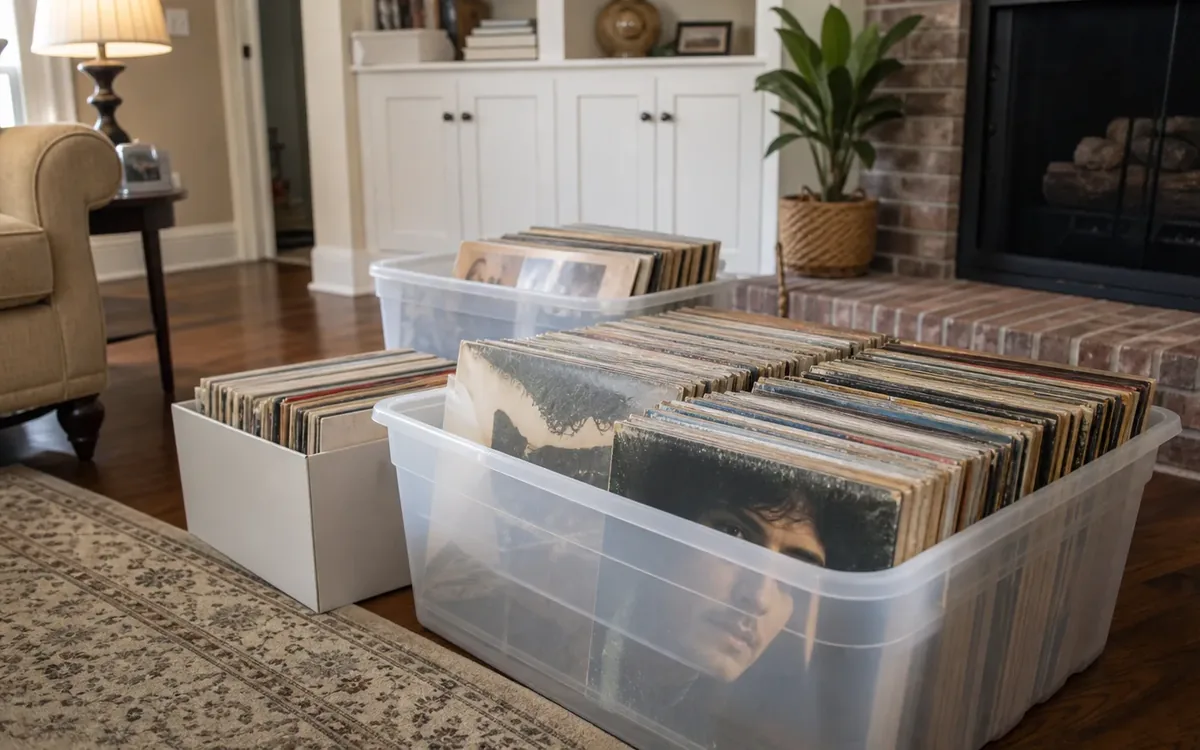
Build an inventory that keeps uncertain albums visible
The auctions and estate sales service and estate cleanout process guide can inform your handoff plan. Build one shared inventory, with a clear status for each entry. The goal is to show what exists, what remains unclear, and who must decide before anything leaves the household.
A spreadsheet works well, but paper can work too. Choose a format the main decision-maker can use. Avoid several private lists that drift apart. Date each update, and name the person who changed a status.
Use one entry per album or boxed set. Give loose discs their own codes when the match is unknown. If you group common titles for review, list the contents. “One box of records” leaves too much room for confusion.
Keep the notes factual and brief. “Disc present; sleeve uncertain; two photos attached” tells the next person what matters. “Rare album in great shape” adds claims without support. It may lead family members to expect a value no one has checked.
Track decisions in fields separate from item details:
- Record the household’s proposed choice, such as keep, sell, or hold for family review.
- Name the person who can approve release, where that authority has been confirmed.
- List any open review need, including pressing checks, signature questions, or formal appraisal.
- Note the proposed destination and provider, while leaving unconfirmed arrangements clearly marked as pending.
Keep private details out of buyer-facing copies. Family disputes, contact details, and estate papers don’t belong in sale notes. Share only the information each provider needs for their task.
Before sharing the inventory, compare its entries with the physical groups. Correct duplicate codes and missing photos. Leave uncertain facts open rather than fill blank fields with guesses. A short, honest record is more useful than a detailed but doubtful one.
Plan the sale-provider handoff without losing the matches
The auctions and estate sales page and guide to cleaning out an estate support the wider transition plan. Bring the provider a list of complete, incomplete, and unresolved albums. Discuss how those groups may be reviewed, offered, or held without treating every record as ready for sale.
A practical cleanout or move team may discuss access, item counts, and pickup groups. The team may ask which items stay and who approves release. It can also discuss how inventory codes will follow the collection. Confirm the agreed scope before work begins.
Ask the sale provider how they prefer to review records. They may want photos, an inventory, or an in-person look. Don’t assume every provider offers pressing research or detailed record grading. Ask what their review includes and what needs a separate specialist.
Discuss complete sets and loose discs as distinct groups. Ask how the provider would describe missing parts to buyers. Keep unclear matches out of a “complete album” group until reviewed. This protects the accuracy of the sale description.
If the collection includes a turntable, receiver, speakers, or record cabinet, inventory them separately. Note visible brand and model details only where readily available. Don’t test powered items or alter furniture for this task. Arrange any needed assessment with a qualified provider for the exact item.
Storage, transport, and disposal are separate choices. Ask who would supply each service and what the plan covers. Don’t assume a sale agreement includes every unsold record. Write down who decides where unsold items go.
Clutter Cleaner of South Carolina serves households across South Carolina. Its physical location is Mount Pleasant, SC; Charleston is its primary market. Ask which approved services fit your estate’s needs and which outside providers may be needed.
Keep household choices separate from expert decisions
The estate cleanout process guide and auctions and estate sales service help frame practical tasks. The household can propose keep and sale groups, but authority must be clear. Value claims, ownership disputes, tax questions, and property decisions belong with the responsible professional or authority, as each issue requires.
An estate sale provider can discuss a sale plan within its scope. That isn’t the same as a formal appraisal. Ask what kind of value review you need before paying for one. Estate reporting, insurance, and donation records may raise different questions.
For donated property, IRS Publication 561 on determining value explains fair market value and appraisal considerations. A tax professional can advise how those rules apply to your case. Don’t turn an asking price or an online listing into a tax value.
Let estate counsel address disputed ownership or unclear authority to sell. Real-estate agents, inspectors, and local authorities retain their own roles in a home transition. Sorting records doesn’t settle those issues. Keep any related hold visible in the inventory until the proper decision is made.
FAQ
Use the guide to cleaning out an estate and auctions and estate sales service to place these record questions within the broader plan. The answers below focus on sorting and handoff. They don’t replace specialist identification, formal appraisal, or advice about who may authorize a sale.
Should I clean records before an estate sale?
Don’t make cleaning part of the sorting task. First record what you have and note visible concerns. Avoid stain removal, sleeve repair, or efforts to change a disc’s shape. Ask a record specialist what review is needed. If work is proposed, confirm who will do it and what it involves before agreeing.
Can I match a loose disc by its title alone?
The title can suggest a match, but it doesn’t confirm one. Compare the artist, label, catalog number, and any stated disc count. Keep conflicting details in your notes. If the sleeve and disc still differ, label the match as uncertain. Let the sale provider or record specialist review it before sale.
Should incomplete boxed sets stay together?
Keep the found parts linked under one inventory code. Note which discs or inserts appear missing, using the package list when available. Don’t fill gaps with parts from other copies on your own. The sale provider can discuss how to offer the set and disclose its missing contents to buyers.
Do old records always need an appraisal?
Age alone doesn’t settle the need for an appraisal. Start with the reason you need a value. A sale discussion differs from a formal report for tax or estate purposes. Ask the responsible adviser what documentation is required. Then choose an appraiser whose scope fits that need, if one is needed.
What should happen to records that don’t sell?
Agree on that choice before the sale starts. The household may consider keeping, donating, storing, or disposing of unsold items through separate arrangements. Confirm that any receiving group accepts records in their present state. Keep unresolved ownership claims on hold, and update the inventory when an approved transfer takes place.



