
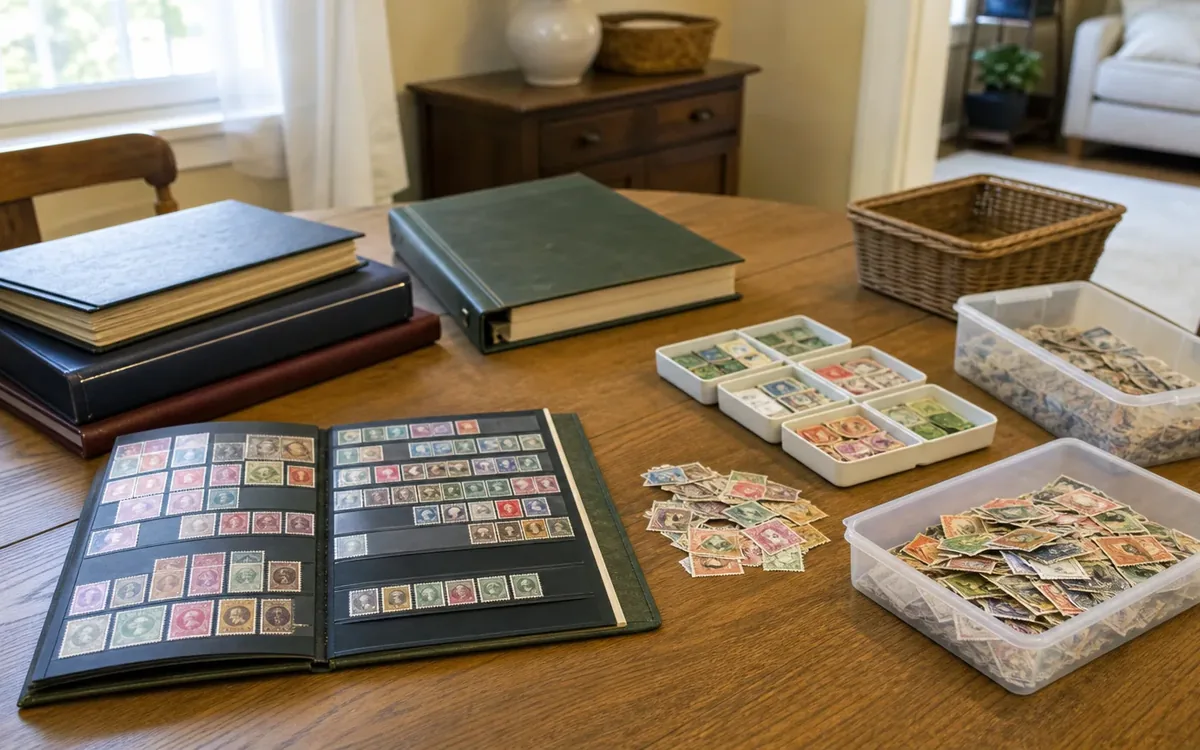
Prepare stamp albums for an estate sale by keeping their order intact. Record loose stamps as separate groups, and save notes about ownership. For a household in North Charleston, SC, damp storage deserves close attention. Leave stuck pages alone, and seek expert review before changing the collection or setting prices.
Quick answer: Keep mounted stamps where they are. Photograph album covers and pages that open freely. Group loose material by its current container, not assumed value. Record signs of dampness without peeling or cleaning anything. Give the sale provider a clear inventory, with ownership questions and review needs marked.
How should you sort stamp albums for an estate sale?
The auctions and estate sales service page can help frame your provider discussion. The guide to how estate cleanouts work offers context for the wider household project.
Keep the stamps in their current order as you start. Give each album a number for your list. Keep its pages, notes, and loose slips together. List loose stamps by the box or envelope they’re in. This helps an expert review the stamps without losing clues about the group.
An album can show more than a list of stamps. Page headings may reveal a country, period, or collecting theme. Empty spaces may explain gaps. Handwritten notes may link stamps to old purchases. Changing that order can erase useful context, even when the new layout looks neater.
Choose inventory labels that describe containers, rather than value. “Album A, blue cover” is clearer than “valuable foreign stamps.” Put the label on the inventory sheet or a separate container tag. Don’t place adhesive labels on stamps, album pages, covers, or old documents.
Start with a general inventory of the collection. Leave precise stamp identification to someone with relevant knowledge. A household member may recognize a country name or date. That doesn’t establish a stamp’s rarity, condition, or current value.
Record these useful details for each group:
- Give each album or loose group a unique inventory code.
- Note the cover title, visible dates, and broad collecting theme.
- Describe loose material by its existing envelope, packet, box, or folder.
- Record missing covers, torn pages, or visible damp marks without changing anything.
- Mark stamps or groups that need a specialist’s review before sale.
Keep a copy of the inventory outside the collection. Use the same codes in photos and provider messages. This makes later questions easier to answer. It also reduces confusion when several relatives help sort the estate.
What should you do with damp or stuck pages?
Use the estate cleanout planning guide to separate this task from general sorting. The auctions and estate sales service page helps define what to discuss before handing over delicate material.
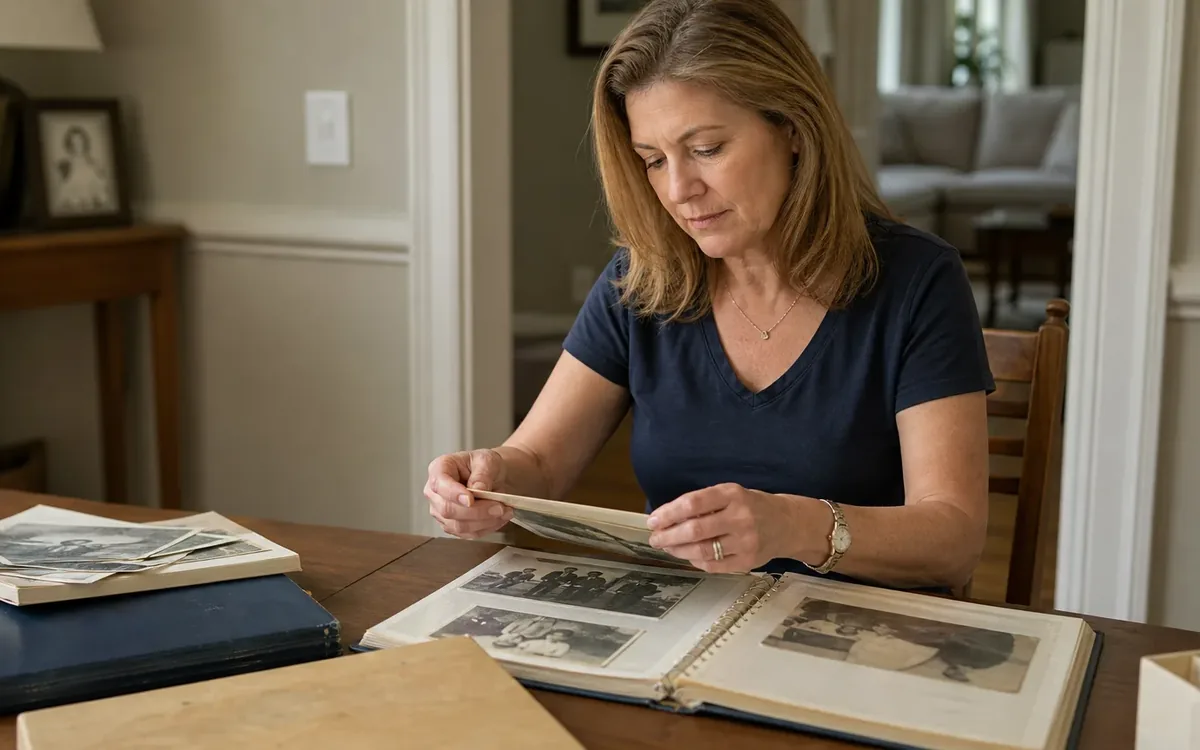
Stop handling stamps when you find damp marks or stuck pages. Don’t peel stamps, pull pages apart, or try home fixes. Note what you can see without forcing pages open. Ask a stamp expert or paper conservator to check them. They should advise on care, packing, and how to handle them next.
For a South Carolina estate collection, ask about past storage conditions. Was the album kept in a closet, garage, or outbuilding? Did the family notice a leak or musty smell? Write down known events as facts. Keep guesses separate, since a stain alone cannot show its cause.
Damp-related damage can affect pages, mounts, stamps, and nearby records. The goal is to preserve evidence of condition. It isn’t to make the collection look better before review. Avoid attempts to flatten, dry, wash, scrape, or separate affected material.
Photograph visible marks only where access is easy. If an album doesn’t open freely, record that limit. Don’t force it open to complete the photo set. A missing interior photo is better than damage caused during inventory.
Flag the following points in your handoff notes:
- Note pages that cling together or resist normal opening.
- Describe visible stains, rippled paper, or marks on nearby containers.
- Record any known leak history without guessing at dates or causes.
- Identify material left unexamined because access would require pulling or peeling.
- Ask who will assess condition before packing, pricing, or sale display.
Tell the team about these concerns before they take the stamps. Ask what help they need from an expert. A cleanout or move team may discuss a separate handoff plan. A trained expert should decide how to treat the stamps. That choice isn’t for a general sorting crew.
Keep ownership history with the collection
The guide to how estate cleanouts work helps place records within the estate process. The estate cleanout planning guide can help households separate sale items from papers that need review.
Keep letters, receipts, and stamp notes linked to the right album. These papers may show where stamps came from or who owned them. They can help an expert’s review, but can’t prove worth on their own. Mark links you’re unsure of, rather than filling gaps with family guesses.
The history of who owned stamps is called provenance. For this inventory, a simple written record is enough. Identify previous owners when that information is known. Record gifts, purchases, or ownership changes that relatives recall. Name each account’s source so reviewers can distinguish memories from documents.
Leave existing inserts in place unless a specialist directs otherwise. Photograph a receipt where it appears without covering private details in public listings. Keep full records for the authorized estate contact. Share only the information needed for a buyer’s review.
Family papers may hold home addresses, bank details, or private letters. The family can flag papers that need a privacy check. The person with power to act for the estate should confirm what can be shared. Don’t throw out a record just because it seems to have no link to stamps.
Use these distinctions in your notes:
- Label a documented purchase separately from a relative’s recalled story.
- Link receipts and letters to an album code when the connection is clear.
- Mark uncertain ownership or disputed gifts for the estate representative’s review.
- Keep personal papers out of sale photos until privacy choices are settled.
A handwritten price reflects the past, not today’s sale value. Prices in older stamp guides have the same limitation. Preserve those records, but don’t use them to establish current prices. A qualified specialist can explain which records help and what information remains missing.
How do you separate loose stamps from mounted material?
Review the auctions and estate sales service page before asking about lot design. The guide to how estate cleanouts work explains the broader handoff between household decisions and project planning.
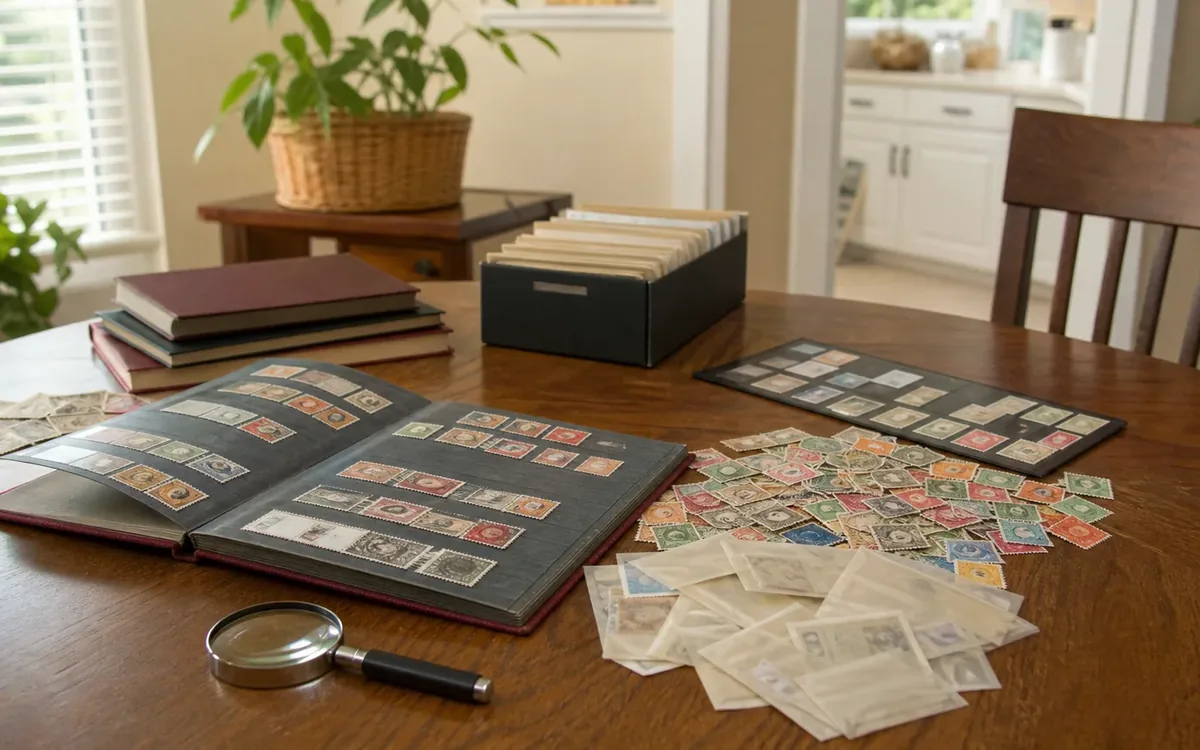
Keep mounted stamps in their albums and list loose stamps apart. Don’t take stamps off hinges, mounts, envelopes, or paper to make sets. Keep the packets and groups as they are. Let a stamp expert advise what belongs together. They should flag items for their own review before the sale team builds lots.
Loose material can include single stamps, packets, stock cards, and sheets. It may also include whole mailed envelopes, often called covers. These forms need different descriptions. Avoid calling everything in a box “loose stamps” if some items remain attached to mail or paper.
A whole envelope can hold clues beyond the stamp itself. Postmarks, addresses, and other marks may matter to a specialist. Don’t cut stamps from envelopes or trim paper around them. Record the item as found and ask for review of the whole piece.
Duplicates don’t always have the same condition or value. Similar-looking stamps can differ in ways a beginner may miss. Don’t combine groups based only on color or picture. Keep the household’s inventory broad enough to avoid false claims.
Existing packets may contain handwritten names or purchase details. Record those labels as found, using quotation marks when useful. A packet marked “rare” should be listed as bearing that note. It shouldn’t become an inventory claim that its contents are rare.
Ask the sale team how they’ll review mixed groups of stamps. One album may stay whole while other items get their own review. Base those choices on expert review, the owner’s consent, and agreed sale terms. The family needn’t decide how to group sale lots on the first pass.
Build a clear provider handoff
Use the estate cleanout planning guide to organize decisions before items leave the home. The auctions and estate sales service page provides a starting point for discussing the proposed sale scope.
A good handoff tells the team what you have and what’s still unclear. Include your list, photos, linked records, and notes on damage. Name the person who can approve next steps. Keep requests for review apart from orders to sell. An open question isn’t consent to change or sell the stamps.
Follow this four-step handoff sequence:
- Share the inventory and photos with the proposed receiving provider.
- Identify albums, loose groups, and records that need specialist review.
- Confirm the authorized contact and list all unresolved ownership questions.
- Record the agreed transfer scope and request acknowledgment of received groups.
Ask who will review the stamps and how they’ll arrange it. A general sale team may need an independent specialist’s help. Don’t assume their services include stamp appraisal or specialist care. Their review may not include checking authenticity. Confirm each person’s responsibilities in writing before approving the work.
A cleanout or move team may discuss access to the stamps. They may plan how to hand over each group. They may discuss which rooms are part of the job. Ask an expert how to pack frail or damp items. Trade work, storage, and waste removal need their own firms and terms.
Record what leaves the home using the same inventory codes. Note any groups held back for family review. Ask how records and photos will follow the collection. This supports a clear transfer without pretending to identify every stamp.
Clutter Cleaner of South Carolina is based in Mount Pleasant, SC. Its approved service territory covers all of South Carolina. A North Charleston household can ask about estate cleanouts and estate sale planning. Confirm the actual scope, outside experts, and household approvals before proceeding.
Keep pricing and estate authority separate
The auctions and estate sales service page supports discussion of sale planning. The guide to how estate cleanouts work offers context for coordinating that work with the estate’s wider needs.
Sorting helps an expert review stamps, but it doesn’t set their worth. The family can record facts and state its goals. A sale team can discuss lots and sale terms. A qualified appraiser gives formal views on value. Leave legal and tax choices to the right experts and the estate’s named agent.
First, explain the purpose of the collection’s valuation. A sale, family division, estate task, or donation may require different work. Tell the specialist how you’ll use the assessment. Confirm the report’s scope before relying on it for another purpose.
For gifts of property, IRS Publication 561 explains fair market value and rules for appraisals. This guide isn’t a stamp price list. It doesn’t settle who owns estate items or give consent to sell them. Ask a tax expert which rules apply to your planned gift.
Make sure consent is clear before a team offers stamps for sale. Having an album doesn’t mean a family member owns it. The person who can act for the estate should seek legal help with disputes. Keep disputed items out of the sale until those questions are settled.
Getting the home ready to sell is a separate job. A real estate agent handles choices about the listing. Inspectors and the right local staff handle checks and code rulings. Taking stamps out of a room doesn’t show that the home meets sale rules or local codes.
The best preparation ends with fewer open questions, not a rushed price. Preserve order, document limits, and assign each decision to the right person. That gives a reviewer useful material while protecting the family’s records and choices.
Frequently asked questions
The auctions and estate sales service page can guide your scope questions. The estate cleanout planning guide helps connect stamp preparation with the wider household plan.
Should I remove stamps from album pages?
Leave mounted stamps in place during household sorting. Removing them can change condition and erase useful context. Record the album and photograph pages that open freely. If a specialist recommends removal, ask who will do it and why. Don’t treat that recommendation as a household handling task.
Can I separate pages that are stuck together?
Don’t pull apart stuck pages or peel stamps from them. Note where access stops and photograph visible condition without forcing the album open. Tell the receiving provider before transfer. A paper conservator or stamp specialist should assess the problem and advise on further handling or treatment.
Do old price notes show what stamps are worth?
Old prices may show the stamps’ history, but not their worth today. Copy the notes as written and keep them with the right group. Ask a trained expert about the stamps’ state and today’s market. Any formal appraisal should fit its stated use and the needs of the estate.
What if relatives want different parts of the collection?
Note each request without splitting albums or deciding who owns them. Link each requested item to its code on your list. The person who can act for the estate should decide who gets what. They should seek legal advice when needed and approve sales. The sale team shouldn’t settle the dispute.
Must every loose stamp be identified before handoff?
No. A broad, accurate inventory can be enough for an initial discussion. Describe existing packets, boxes, cards, and envelopes without guessing at rarity. Mark groups that need review and state what remains unexamined. The receiving provider can explain what detail is needed before accepting the proposed work.



