
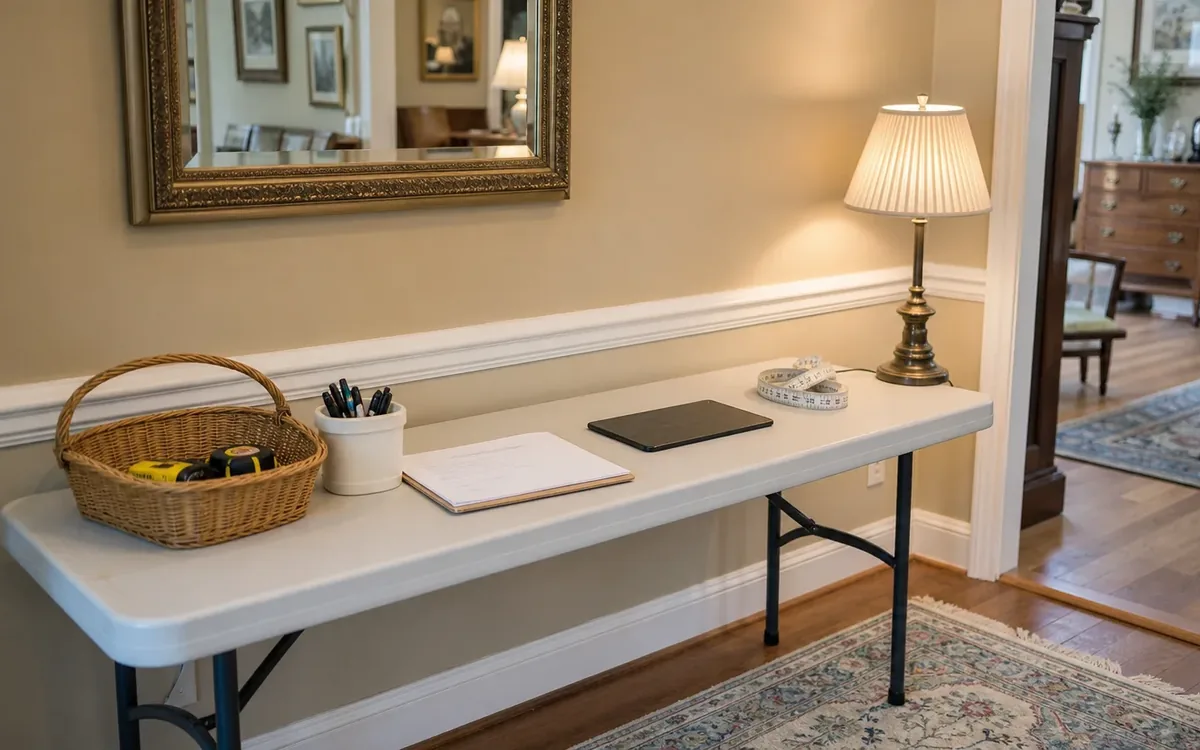
A buyer measuring station helps estate sale shoppers compare listed sizes with their space. For a sale in Greenville, SC, offer readable size cards, paper, and simple measuring tools. Keep fit checks separate from pickup plans. Buyers decide what fits; removal providers assess the work needed to move each purchase.
Quick answer: Set aside a clear spot for size records and buyer notes. Label each record with the item’s sale number. Offer easy-to-read tools without asking shoppers to move furniture. State who handles sales questions, who books pickup, and which questions need a qualified provider.
What belongs at a buyer measuring station?
Use the auctions and estate sales service page to frame sale planning. Read the guide to how estate cleanouts work for the wider process. The station needs clear item records, readable tools, and blank note sheets. It should help buyers ask better questions, without implying that staff have checked removal routes.
Think of this spot as an information desk. It is not a place to test furniture or powered goods. Buyers should find the same item number on the sale tag, size card, and note sheet. That shared number helps prevent mix-ups between similar pieces.
Offer basic supplies that suit a broad range of shoppers. Clear print and plain words matter more than a polished display. Ask people which format helps them read or record details. Some buyers may prefer paper, while others use their phones.
Useful station supplies include these items:
- Provide easy-to-read tape measures for buyers who want to record their own space dimensions.
- Offer large-print note sheets with room for item numbers, listed sizes, and questions.
- Keep pencils and firm writing boards available for shoppers who prefer paper notes.
- Display a simple contact sheet that separates sale questions from pickup questions.
- Include blank cards where staff can flag missing or unverified size details.
Tool access does not mean shoppers have permission to handle every item. State that boundary in plain language. For furniture and powered items, keep the station focused on records and provider handoff. Route requests that involve moving or changing an item to the sale lead.
How should item sizes be recorded?
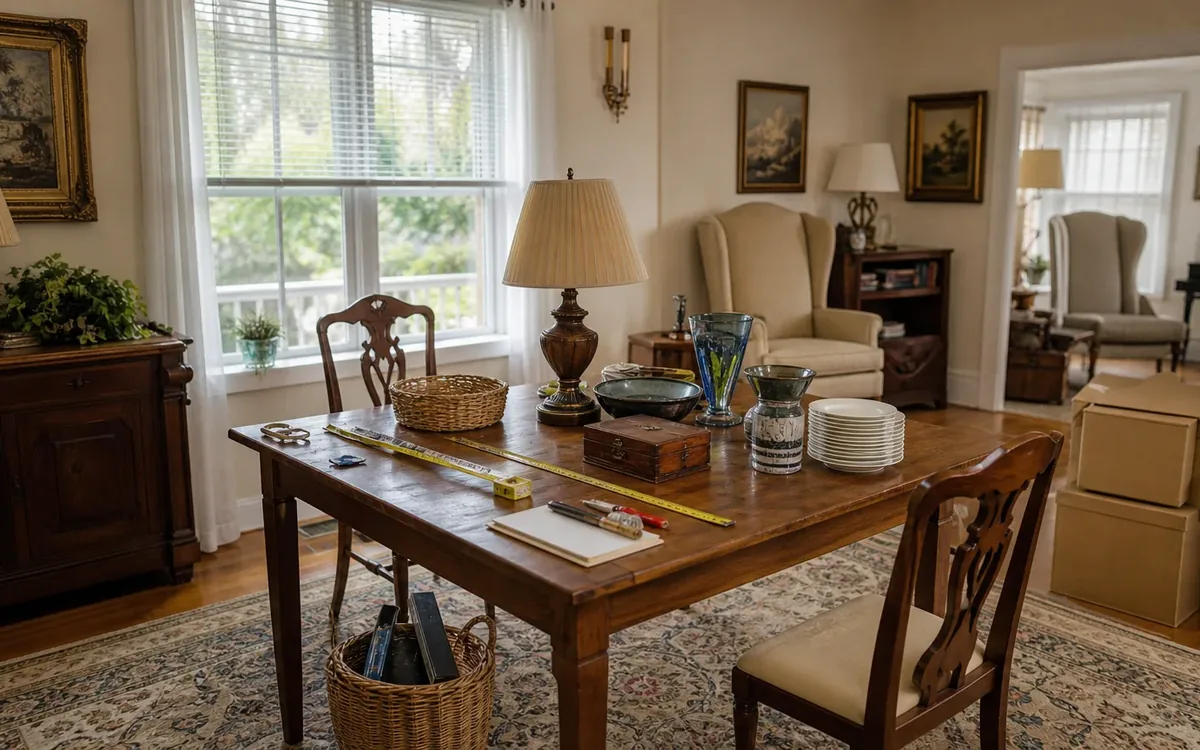
The estate cleanout planning guide can help organize item records. The auctions and estate sales service page offers context for sale discussions. Record sizes under one item number, with a date and source. Mark missing details clearly. A size card supports buyer research; it does not establish access, condition, or suitability.
Use the same units across the sale’s records. Write the unit beside each figure, rather than leaving buyers to guess. Give each size a clear name, such as listed width, depth, or height. Avoid a bare string of numbers with no labels.
For furniture and powered items, use available inventory records or supplied product details. Note where each figure came from. If no reliable size record exists, mark it as unverified. Arrange any further assessment through the sale lead and the right provider.
A model number can help distinguish similar powered items. Record it only when the information is available through approved records. Do not infer size, weight, power needs, or removal steps from appearance. A related model’s details may not match the item for sale.
Keep each record brief enough to scan during a busy sale. Buyers need to see what is known and what remains open. Use a clear correction process if two records conflict. Remove the old version from use so both versions do not keep circulating.
A useful card separates item facts from buyer notes. The first part belongs to the sale inventory. The second part records the buyer’s own room details and questions. Do not combine them into a staff statement that an item will fit.
How can buyers check fit without planning removal?
Share the guide to how estate cleanouts work when discussing the larger project. Use the auctions and estate sales service page for sale planning context. Buyers can compare inventory sizes with their own space records. Keep that choice separate from transport and removal, which need their own review and agreement.
Room fit and removal access are different questions. A buyer may like an item’s size for a room. That does not establish how it can leave the sale property. It also does not show how it will enter the buyer’s home.
The station can collect those open questions without trying to solve them. Give buyers space to note their room limits and provider contacts. Do not have sale staff approve a route based on a sketch or photo. A removal provider needs to assess its own scope.
Use a short form with these fields:
- Record the sale item number so buyer notes match the correct purchase.
- Leave space for the buyer’s own room sizes and source notes.
- Ask buyers to list access questions for their chosen removal provider.
- Record the contact responsible for arranging pickup under the sale’s stated terms.
- Mark unresolved questions without presenting a staff guess as a checked fact.
Photos may help a buyer explain a question to their provider. The sale lead should decide what photography is allowed. Keep personal papers and other private details out of shared records. A photo is context, not proof that a move can proceed.
Do not turn the station into a trial loading area. Keep furniture and powered goods within the inventory and handoff process. No buyer note should imply permission to alter an item or the property. Unresolved removal concerns stay open until the responsible provider reviews them.

Set up clear signs and a simple handoff
Use the estate cleanout planning guide to connect the station with household sorting. Review the guide to how estate cleanouts work for project roles. Clear signs should explain what buyers can find, who answers questions, and what remains unverified. Keep the desk apart from any pickup approval process.
Choose the station’s spot with the sale lead. It should be easy to find without blocking sale traffic. Ask about access needs before settling the layout. Questions about required clear space or site rules belong with the responsible professional or authority.
Use short signs with one purpose each. A heading such as “Item Sizes and Buyer Notes” is clear. Another sign can direct pickup questions to the named contact. Avoid wording such as “fit approved” or “ready to move” on size cards.
Follow this four-step record handoff:
- Match the buyer’s question to the sale item number before sharing any size record.
- Identify the source of the listed sizes and point out any missing details.
- Give the buyer a note sheet for their own comparison and provider questions.
- Send unresolved pickup questions to the sale lead or the buyer’s chosen removal provider.
Use the same process for all shoppers. A buyer should not receive broader promises because staff are busy. If a question cannot be answered from the record, write it down. That is more useful than a rushed guess.
Keep a separate copy of open questions for the sale lead. Mark who needs to respond, rather than inventing a deadline. A buyer’s note sheet should never become an informal hold or purchase agreement. Sale terms need their own clear record.
Keep sale choices separate from provider decisions
The auctions and estate sales service page is a starting point for scope discussions. The estate cleanout planning guide helps place those discussions within a household plan. Households choose what to offer and which questions need review. Each provider remains responsible for accepting and defining its own work.
A household can choose the station supplies and preferred record format. It can name a contact and decide which items remain unavailable pending review. Questions about who has authority to sell estate property need the responsible legal professional. Staff should not settle ownership disputes at the measuring desk.
A practical cleanout or move team may discuss inventory, access questions, and handoff records. It may ask who will book pickup and share buyer contacts. Confirm the actual work in writing with each provider. A discussion alone does not mean a task is included.
Keep these choices distinct:
- The household decides which belongings to offer, subject to any required authority or approval.
- Buyers choose purchases based on their own needs and the sale’s stated terms.
- Removal providers review access questions and define the work they accept.
- Appraisers address value questions within the scope of their own professional work.
- Storage, contractor work, and disposal require separate choices and provider agreements.
- Legal, real estate, inspection, and compliance questions stay with the responsible professional or authority.
A measuring station is not an appraisal desk. Listed dimensions do not establish worth, authenticity, or condition. Do not add value claims to fill an empty card. Seek an appraiser when the household needs that form of advice.
For donation value questions, see IRS Publication 561: Determining the Value of Donated Property. That resource concerns donated property, not buyer fit or pickup approval.
Clutter Cleaner of South Carolina lists statewide service, including Greenville, SC. Its physical business location is Mount Pleasant, SC, and Charleston is its primary market. Discuss estate sale and cleanout scope before assigning any role. Storage, contractor work, and legal advice remain separate arrangements.
Close gaps before the buyer commits
Use the guide to how estate cleanouts work to review handoffs across the project. The auctions and estate sales service page supports a focused scope discussion. Before a purchase proceeds, identify unresolved size questions. Then explain how the sale terms treat them, without promising fit or removal help.
The station should make uncertainty easy to spot. An empty field can look like an oversight. A clear “not verified” note tells buyers that more review may be needed. Keep this wording neutral so it does not imply a defect or a hidden finding.
When buyers ask for a hold, refer them to the sale lead. Do the same for refund and pickup requests. The station can record those questions, but should not create new terms. Use the sale’s written policy rather than a helper’s memory.
At the end of a sale session, check the records for conflicts. Confirm that sold items and remaining items still have distinct numbers. Keep buyer contact details within the agreed sale process. Do not leave private notes on a public desk.
Review what caused confusion before the next session. Perhaps size labels lacked units, or buyers could not find the pickup contact. Fix the record or sign that caused the problem. More tools will not solve an unclear handoff.
For broader household sorting, see AARP’s Smart Guide to Getting Rid of Anything. Keep those choices separate from size records and pickup agreements.
FAQ: Buyer measuring station planning
The estate cleanout planning guide covers the wider sorting process. The auctions and estate sales service page provides a place to start scope discussions. These answers keep the station’s role narrow. It supports clear records and buyer questions, while leaving sales terms and professional decisions with the right people.
Can buyers use their own tape measures?
The sale lead should set the rules for buyer tools. Tool use does not grant permission to move furniture or handle powered items. Offer existing size records first. Send requests that need item handling to the sale lead, who can arrange review with the right provider.
Should the station include doorway sizes?
Keep property access details separate from item size cards. If access records are available, label their source and any known limits. Do not describe them as route approval. Buyers should share open access questions with their removal provider, which must decide what review its work requires.
What if an item has no size record?
Mark the size as unverified rather than filling the gap with a guess. Record the buyer’s question under the item number. The sale lead can arrange further review through an appropriate provider. Follow the sale’s stated terms while that question remains open, including any rules about holds.
Does a size card mean staff will help load?
No. A size card is an inventory record, not a loading agreement. Pickup help needs a separate scope discussion with the provider involved. Give buyers the correct contact and written sale terms. Avoid wording that makes a purchase seem to include removal work that has not been agreed.
Who decides if a large purchase is worth buying?
The buyer decides if an item suits their needs and budget. An appraiser can address value within a separate agreed scope. Sale staff can share documented facts and known gaps. They should not treat listed dimensions as proof of value, sound condition, or suitability for a buyer’s home.



