

To research estate item prices, look for completed sales of genuinely similar items, confirm what buyers actually paid when that information is available, and adjust your comparison for condition, size, selling costs, and pickup requirements. National sales can provide useful evidence, but they do not automatically predict what a South Carolina buyer will pay for an item that must be collected from a home.
Quick answer: Identify the item, gather several credible sold comparisons, separate item price from shipping and fees, and build a realistic range rather than copying the highest result. Use that range to help the household choose a selling route. Seek a qualified appraisal when a formal valuation or a potentially significant item requires professional judgment.
What is the difference between an asking price and a sold price?
An asking price shows what a seller hopes to receive. A sold price provides evidence of a transaction, although the displayed information may not reveal every term. Confusing the two can make ordinary estate belongings appear more valuable than the available evidence supports.
An active listing for a dining table at a high price does not establish market value. It may have remained unsold, included delivery, or come from a dealer offering services that a household seller cannot replicate.
Completed listings need scrutiny too. On some platforms, a listing marked sold may display the original asking price even when the seller accepted a lower offer. An auction result may show the winning bid without the buyer’s premium. A withdrawn or expired listing is not a completed sale.
Label your evidence clearly:
- Active asking price: Useful context, not proof of a sale.
- Confirmed sold price: A stronger comparison when the transaction amount is visible.
- Accepted offer, amount hidden: Evidence of demand, but not a verified price.
- Auction result: Check whether the figure includes buyer charges.
- Unsold or withdrawn listing: Evidence that the offered terms did not produce a documented sale.
For a household considering a coordinated sale, the auctions and estate sales service information provides context for discussing a selling approach. Price research supports that conversation; it does not guarantee proceeds.
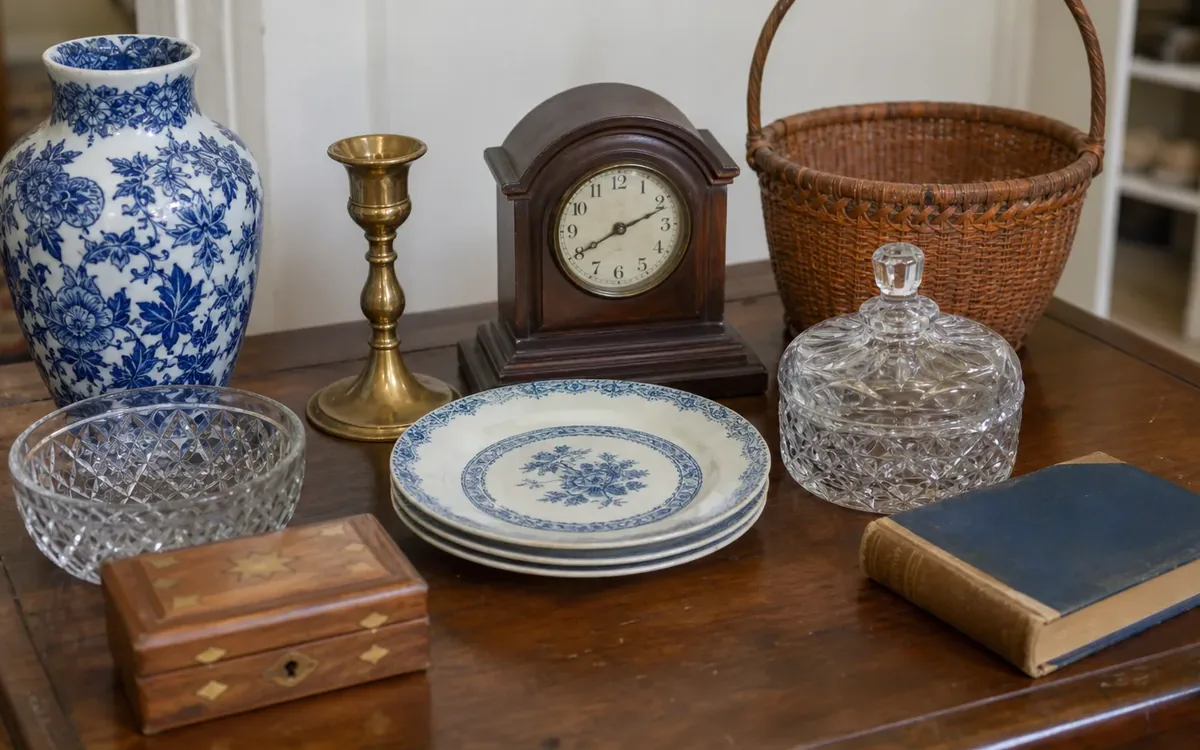
Identify the item before searching for a value
A broad search such as “old cabinet value” produces weak comparisons. Start with observable details, not a family story or a guessed age.
Photograph the whole item and any labels, signatures, serial numbers, construction details, or damage. Record dimensions and materials when you can identify them confidently. Do not remove labels, polish finishes, or attempt repairs just to make photographs look better.
Useful search details include:
- Maker, manufacturer, artist, or brand.
- Model number, pattern name, or product line.
- Dimensions, capacity, or set size.
- Material and construction features.
- Included accessories or original packaging.
- Condition, alterations, and missing parts.
Treat uncertain descriptions as uncertain. “Appears to be walnut” is more defensible than confidently identifying an unfamiliar wood. A printed artist’s name does not establish that an artwork is an original rather than a reproduction.
Keep heirloom history separate from verified provenance. A household recollection can guide further research, but it does not authenticate an item. Specialists should handle authentication questions when those questions materially affect the decision to sell.
Where can you find useful sold comparisons?
Search sources that show completed transactions for the kind of item you have. A marketplace with many household goods may help with a common appliance or collectible. Published auction results may be more useful for identifiable art, antiques, or specialist collections.
Use more than one source when practical. Different selling channels attract different buyers and offer different protections, presentation, and delivery options. A dealer’s retail sale and a household pickup sale are not interchangeable.
Search with the most specific details first, then broaden carefully. If an exact model produces little evidence, try the same maker and product family. Record that the substitute comparison is less exact rather than silently treating it as identical.
For each useful result, save:
- The listing title and source.
- Sale date and displayed currency.
- The confirmed price, or a note that it is hidden.
- Dimensions and condition description.
- Shipping, delivery, or pickup terms.
- Included components and relevant photographs.
Check the actual listing rather than relying on a search preview. A matching photograph can hide a different size, incomplete set, or repaired condition.
If pricing research is part of a larger estate transition, the guide to the best way to clean out an estate helps place selling decisions within the broader household process. Keep the comparison work focused on items whose potential proceeds or significance justify the effort.

Compare condition, completeness, and size before comparing dollars
Two items can share a maker and still be poor price comparisons. Condition, completeness, and dimensions often explain the difference.
For furniture, inspect finish wear, odors, loose joints, upholstery damage, and evidence of repairs. For electronics, distinguish tested working equipment from equipment that merely powers on. For dinnerware, compare the same pattern and count usable pieces, noting chips and missing serving pieces.
Size deserves its own check. A compact cabinet may fit many homes, while a large wall unit requires suitable space and a workable transport plan. A complete service set is not directly comparable to a small mixed group of pieces.
Use plain condition notes:
- “Drawer sticks; visible water ring on top.”
- “Untested; power cord present.”
- “Set includes cups but no matching saucers.”
- “Frame damaged; artwork condition not assessed.”
Avoid assigning an automatic percentage deduction for every flaw. Without supporting transactions, that creates false precision. Instead, prioritize sold items with similar defects or explain why your range remains uncertain.
Separate improvements from valuation research. Restoration, cleaning, or contractor work is a household choice to discuss with an appropriate provider. Its cost may not be recovered in a sale, and unsuitable treatment can reduce an item’s appeal or damage original materials.
How do South Carolina pickup conditions change the comparison?
National sold listings show what happened under particular selling conditions. A South Carolina household must also consider where the item is located and how a buyer will collect it.
A shippable collectible can reach buyers beyond the immediate area. A heavy dining table offered for pickup depends more heavily on buyers who can arrange transport. That distinction applies whether the property is in Charleston or elsewhere in South Carolina.
Do not assume a national audience translates into local demand. Equally, do not assume every large item has little value. Look for comparable transactions with similar collection terms, and acknowledge when local evidence is limited.
Record practical access details alongside the price research:
- Stairs, elevators, and doorway dimensions.
- Whether the item can be safely disassembled.
- Parking and loading access that can actually be offered.
- Property or building rules affecting collection.
- Whether buyers must provide their own transport and lifting help.
A practical cleanout or move team may discuss access, item grouping, sequencing, and what must remain in place until decisions are made. Those discussions do not replace building permissions, safe-handling assessments, or a buyer’s transport arrangements.
Clutter Cleaner of South Carolina is physically located in Mount Pleasant, with Charleston as its primary market and a statewide service territory. Household access and resale questions still need property-specific review rather than assumptions based on a city name.
Build a defensible range instead of chasing the highest sale
Group the strongest comparisons together and set aside outliers until you understand them. An unusually high result might reflect exceptional condition, documented provenance, a rare variant, or a selling channel with specialist buyers.
An unusually low result may involve damage, missing parts, limited exposure, or difficult collection. Neither extreme should control your conclusion without an explanation.
A simple comparison sheet can use these headings:
- Item: Your description and identification confidence.
- Comparable: Source and completed-sale details.
- Match quality: Strong, partial, or weak, with reasons.
- Differences: Condition, size, completeness, and access.
- Price basis: Item price and separately identified charges.
- Working range: Supported estimate for the chosen selling route.
For illustration only, suppose similar completed sales appear at $120, $150, and $190. If the highest-priced example was restored and included delivery, it may be a weak comparison for an unrestored pickup-only item. Those hypothetical figures are not a South Carolina market estimate.
A working range should explain its limits. “Based on comparable pickup sales, with uncertainty because this example is untested” is more useful than an unsupported exact figure.
Do not call an informal research range an appraisal. Its purpose is to support a household decision, not certify value for legal, tax, insurance, or estate-accounting purposes.
Compare likely proceeds, not just the visible sale amount
A headline sale price is different from the amount the household may retain. Different selling routes can involve different expenses and obligations.
Before choosing a route, ask the relevant provider or platform about applicable selling fees, commissions, packing, transport, payment terms, and unsold-item arrangements. Verify the terms rather than assuming they match another sale.
Consider these choices separately:
- Direct household sale with clearly stated collection terms.
- Auction or estate sale arrangements discussed with the provider.
- Specialist consignment for suitable items.
- Storage arranged independently while a decision is pending.
- Donation or disposal through an appropriate organization or provider.
Storage is not automatically a value-preserving strategy. The household should weigh its expense, handling requirements, and the reason for delaying a decision. Likewise, disposal requirements should be checked with the receiving provider or responsible authority, especially for materials that cannot enter ordinary waste streams.
Research can reveal that selling an item is unlikely to meet the household’s goals. That is useful information, not a failed valuation exercise.
Keep authority and professional decisions separate
The household can gather records, describe condition, research sold listings, and express preferences about keeping or selling belongings. Authority to sell estate property is a separate question.
The responsible estate representative and legal adviser should resolve ownership, disputed gifts, estate instructions, and permission to distribute or sell. An informal price spreadsheet cannot settle those issues.
A qualified appraiser or specialist should address formal valuation or authentication needs. Real-estate professionals advise on listing strategy and property presentation. Inspectors, contractors, and the relevant authorities handle their respective inspection, repair, permitting, and compliance determinations.
A cleanout or move discussion can help translate authorized decisions into practical planning. Clearly mark items awaiting legal review, appraisal, or family agreement so that preliminary research is not mistaken for permission to remove them.
Short FAQ
Should I use the highest sold listing as my price?
No. First confirm that it matches your item’s identity, condition, completeness, and selling terms. An exceptional sale is not necessarily representative.
What if I cannot find an exact match?
Use related comparisons cautiously and document the differences. If identity or rarity could materially change the outcome, ask an appropriate specialist rather than forcing a range.
Does a sold comparison replace an appraisal?
No. Sold comparisons can inform an informal household decision. Formal valuation requirements should be addressed with the responsible professional.
Should shipping be included in my comparison?
Record it separately whenever possible. Compare item prices on a consistent basis, then consider the buyer’s total cost and the household’s likely net proceeds.
Good estate-price research ends with a supported range, clear uncertainties, and an authorized next step. The goal is not to prove that every belonging is valuable. It is to give the household reliable enough evidence to choose what to keep, sell, refer for specialist review, or handle through another appropriate route.



