
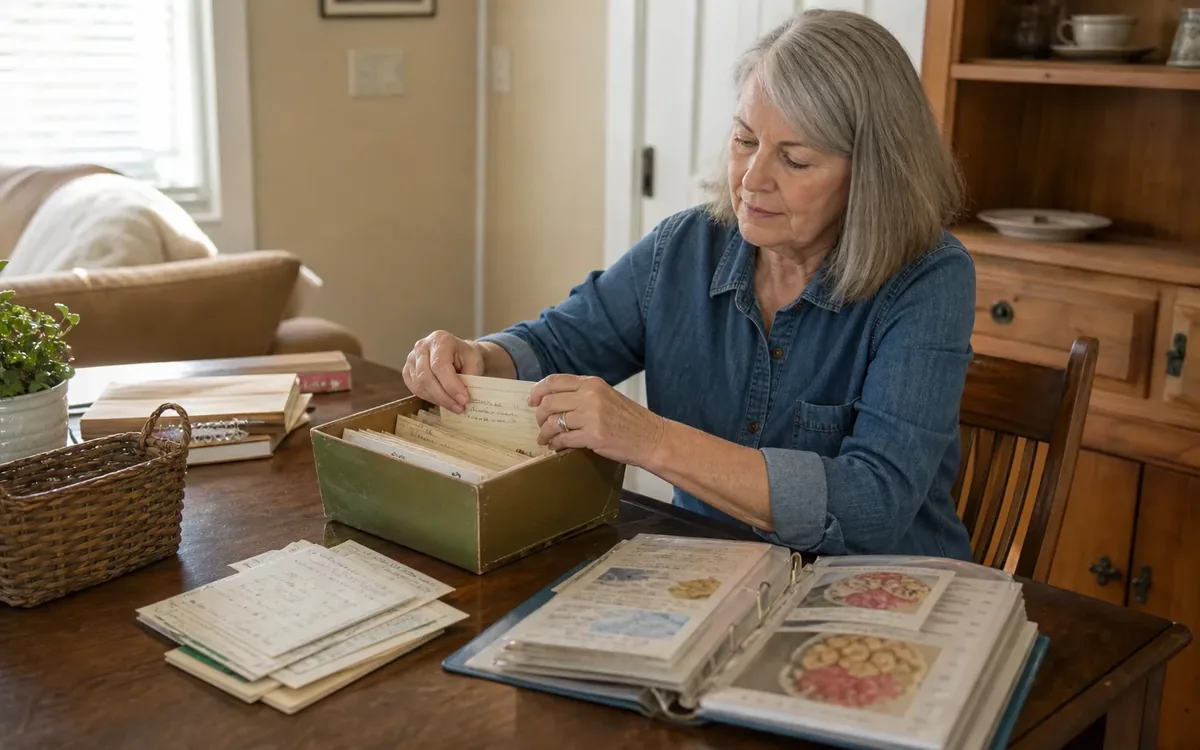
You can preserve family recipes while downsizing by identifying the meaningful originals, scanning fragile materials, recording who contributed each recipe, and creating compact copies for relatives. The goal is not to save every cookbook or clipping. It is to retain the food traditions, handwriting, stories, and family connections that make a smaller collection worth keeping.
Quick answer: Gather all recipe materials before making disposal decisions. Separate unique family items from replaceable publications, scan the most vulnerable pieces, label each file with its source, and ask relatives which originals they value. Keep a small archival set, make a digital backup, and create practical family copies rather than moving the entire collection.
What makes a recipe worth preserving?
A recipe’s importance does not depend on culinary sophistication. A stained index card for a holiday casserole may carry more family meaning than an expensive cookbook. Handwriting, annotations, substitutions, contributor names, and memories of particular gatherings often provide the real value.
Begin by bringing together recipe cards, binders, loose clippings, handwritten notebooks, community cookbooks, and marked-up commercial cookbooks. Check kitchen drawers, file boxes, bookshelves, and folders packed with household paperwork. Gathering first reduces the chance that related pieces will be separated or discarded by mistake.
Sort the material into these five groups:
- Unique family originals: Handwritten cards, notebooks, letters containing recipes, and one-of-a-kind annotations.
- Family-linked publications: Church, school, club, or community cookbooks containing recipes submitted by relatives or friends.
- Useful reference books: Cookbooks still used regularly, regardless of sentimental value.
- Replaceable material: Mass-market books, printed web recipes, duplicate clippings, and unmarked magazines.
- Uncertain items: Anything whose contributor, significance, or ownership needs to be checked with relatives.
Do not interpret heavy use as poor condition alone. Grease spots, faded notes, and taped corners can document how a recipe moved through family life. Preserve those details in a scan even if the physical item cannot remain in regular kitchen use.
For broader help reducing household belongings around a move, review Clutter Cleaner of South Carolina’s downsizing and organizing service. Recipe preservation can remain a focused household project within a larger transition plan.
Which originals should the family keep?
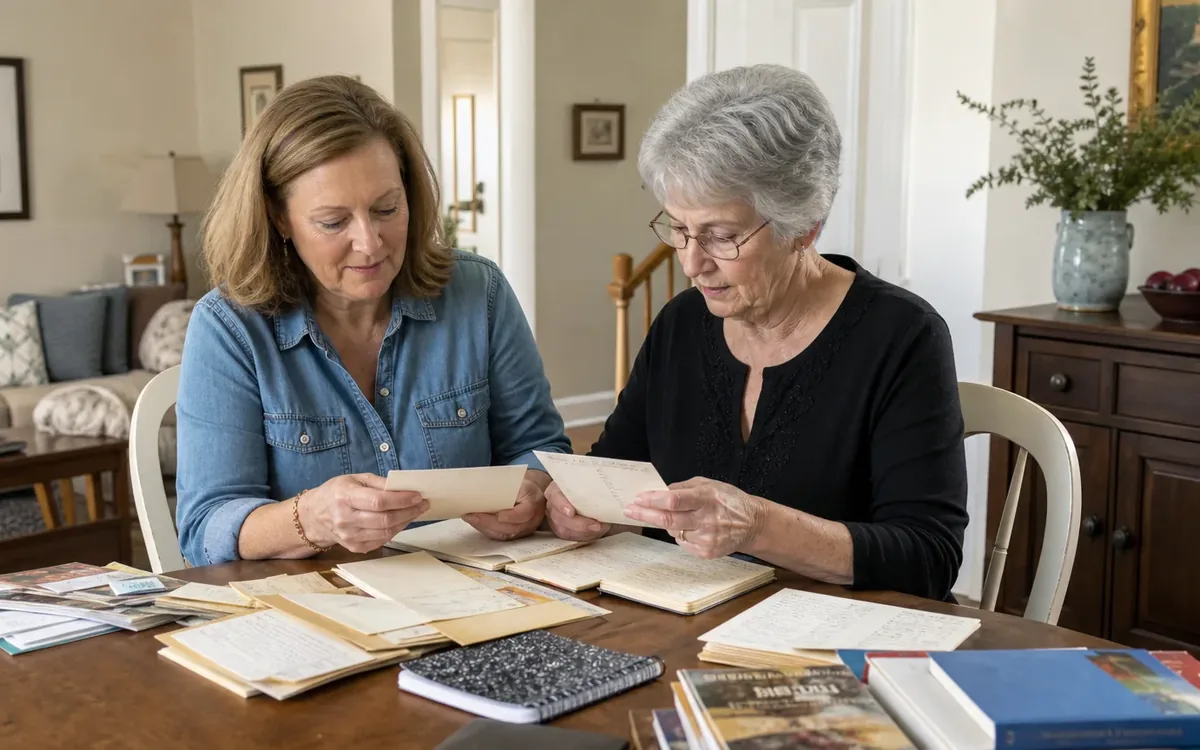
Keep originals when the physical object contributes meaning that a typed copy cannot fully capture. A grandparent’s handwriting, notes added by several generations, an unusual card format, or a cookbook inscription may justify retaining the item after digitization.
Ask these questions during the review:
- Is this recipe handwritten by or clearly linked to a relative?
- Does it include substitutions, comments, dates, or serving notes?
- Is the recipe available anywhere else?
- Does a family member specifically want the original?
- Would seeing the handwriting matter to future relatives?
- Is the item stable enough to handle, or should it be protected?
- Does the cookbook contain family notes that would be lost if only its title were recorded?
A compact original collection might include one recipe box, one notebook, and selected pages or books with strong family associations. That boundary helps distinguish preservation from carrying forward every piece of kitchen paper.
If an estate transition is also involved, the guide to how estate cleanouts work explains the broader process of identifying what stays, what leaves, and who makes decisions. Recipe cards should be pulled aside before general sorting begins because they are easy to overlook among ordinary papers.
Ownership matters. The household or the estate’s authorized decision-maker determines who may keep, copy, or distribute physical materials. A cleanout or move team may discuss careful sorting, packing, and practical sequencing, but it does not decide inheritance, ownership, or who has authority to direct the work. Questions about an estate, disputed property, copyright, or legal authority belong with the appropriate attorney or responsible authority.
How should fragile recipe cards be scanned?
Handle fragile cards as little as possible. Before scanning, remove loose dust gently and place the items in a clear working order. Do not erase marks, apply household tape, laminate originals, or flatten brittle folds by force. A qualified paper conservator can advise on damaged or historically significant material.
Use this six-step scanning workflow:
- Assign an identifier. Give each item a simple code, such as
MORGAN-001, before scanning. - Capture both sides. The reverse may contain baking notes, names, brands, or later corrections.
- Include the full object. Preserve edges, stains, torn corners, and attached scraps in the image.
- Check readability. Zoom in to confirm that faint pencil and small measurements can be read.
- Save a master and a sharing copy. Retain a high-quality master file and make a smaller copy for email or family access.
- Record context immediately. Add the contributor, estimated era if known, dish name, and related memories while the item is still in hand.
A flatbed scanner generally gives even results for cards and loose pages. A camera can be useful for bound cookbooks that should not be pressed flat. Position the book securely, use consistent light, and photograph the cover, title page, relevant recipe, handwritten notes, and any inscription connecting it to the family.
Avoid removing pages from a bound volume until ownership and significance are clear. If the whole book cannot be retained, the household can decide whether photographs provide enough context. A book dealer, appraiser, archivist, or conservator should address questions about market value, rarity, or preservation treatment. A practical cleanout or move team may help isolate books for review, but it should not substitute for an appraisal.
How do you preserve attribution and family stories?
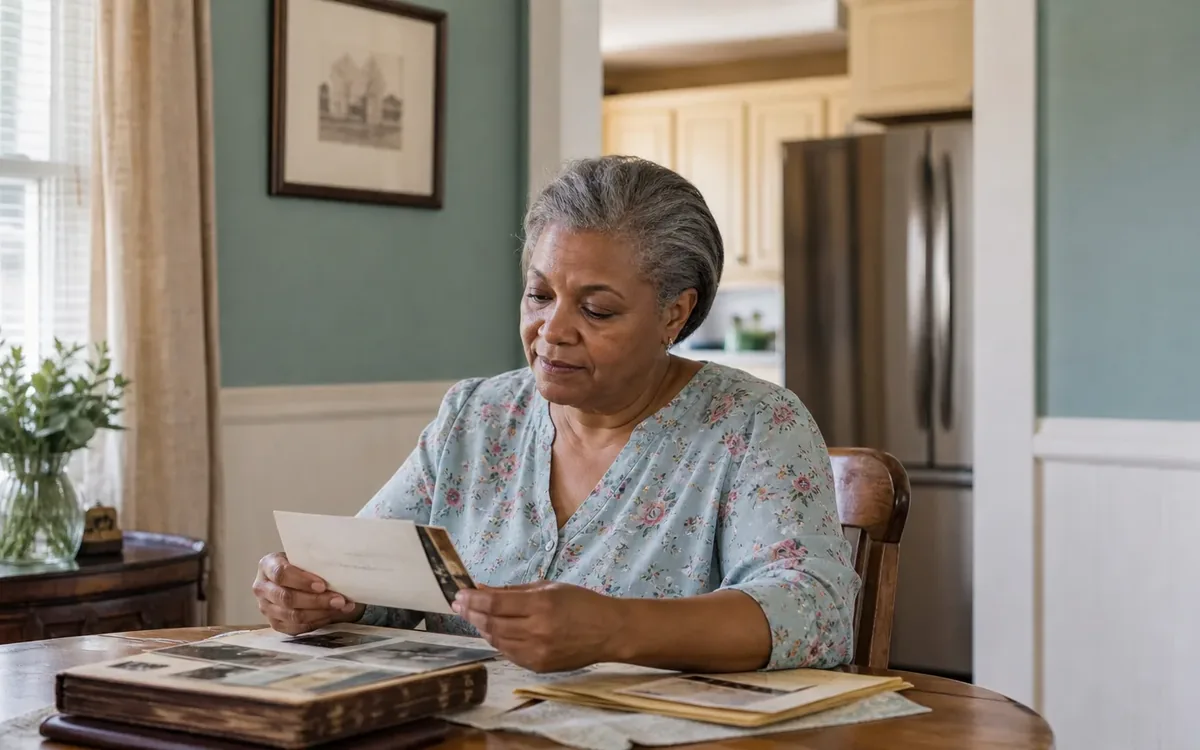
A recipe without attribution can quickly become an anonymous set of instructions. Record both where it came from and how the family used it. Do not guess when facts are uncertain. Labels such as “believed to be from Aunt Rosa” or “contributor unknown” preserve uncertainty honestly.
For each important recipe, capture:
- Recipe title, including alternate family names
- Name written on the original
- Person believed to have created or shared it
- Branch of the family associated with it
- Occasion or season when it was served
- Known substitutions or regional variations
- Source type, such as card, notebook, clipping, or cookbook
- Identifier matching the scan and physical item
- Person who supplied the background information
- Date the context was recorded
Audio can complement the written archive. A relative might explain how dough should feel, why an ingredient changed, or who always brought the dish to a gathering. These practical details may never have appeared on the card.
Keep memory separate from transcription. The recipe file should show what the original says, including unusual wording. Put clarifications and family recollections in a distinct notes field. This prevents a modern edit from being mistaken for the historic text.
What should happen to duplicate cookbooks and clippings?
Treat replaceable publications differently from family originals. First check every book for inscriptions, tucked-in cards, handwritten notes, pressed papers, or recipes marked with a relative’s name. A common cookbook can still be personally significant if the family altered it extensively.
Then choose among several household options:
- Retain books that remain useful or carry meaningful annotations.
- Offer duplicates to relatives who want working copies.
- Photograph marked pages before releasing an otherwise replaceable book.
- Recycle eligible paper according to the receiving program’s rules.
- Donate acceptable books only after confirming the recipient’s current guidelines.
- Refer potentially collectible volumes to a qualified book dealer or appraiser.
Do not assume an old cookbook is valuable because of age, appearance, or a handwritten name. Market value is an appraisal question. Donation acceptance, recycling rules, and disposal requirements are determined by the receiving organization or relevant local authority.
Storage is also a separate household choice. If relatives want off-site storage, they should compare a facility’s environmental conditions, access rules, insurance terms, and prohibited materials. Clutter Cleaner of South Carolina does not need to be presented as the storage provider for the family to make a sound preservation plan.
How can a family create compact copies everyone will use?
The best family copy is often smaller and more usable than a complete digital dump. Select a core group of recipes that represents people, occasions, and everyday traditions. Include images of handwriting alongside typed transcriptions so relatives gain both readability and connection to the original.
Possible formats include:
- A searchable PDF arranged by contributor or meal type
- A small printed booklet for each household
- A shared digital folder containing scans and transcriptions
- A recipe-card set featuring a limited family collection
- A private family archive with audio memories and photographs
Use a consistent file structure. For example, create folders for originals, edited copies, stories, and print-ready pages. File names should be descriptive rather than relying only on scanning dates. MORGAN-001-Peach-Cobbler-front is easier to recognize than a default camera number.
Maintain at least one backup separate from the primary device. Confirm that files open correctly before releasing physical duplicates. If relatives receive editable documents, preserve an unchanged master set so later revisions do not overwrite the record.
For printed copies, distinguish family notes from original text. A brief entry might show a scan, an exact transcription, attribution, and a short memory. This structure keeps the project focused instead of turning it into an exhaustive family history.
Building recipe preservation into a South Carolina downsizing plan
Recipe sorting should happen before books, papers, and kitchen contents are packed for removal. Designate a clearly labeled review area and tell everyone involved that recipe materials require household approval. Loose cards can otherwise travel inside cookbooks, drawers, tins, or envelopes.
The household can decide:
- Which recipes and stories represent the family tradition
- Who receives originals and copies
- What level of digitization is appropriate
- Which replaceable books can leave
- Whether to use household or third-party storage
- How private family information will be shared
A practical downsizing, cleanout, or move team may discuss sorting zones, packing methods, sequencing, and how recipe materials fit into the wider home transition. Any scope should be confirmed directly rather than assumed.
Other decisions stay with specialized professionals. Attorneys or authorized authorities address ownership, estate direction, and disputes. Appraisers evaluate possible market value. Real-estate professionals advise on listing and sale strategy. Inspectors assess property conditions. Contractors determine the method and scope of repair work. Receiving organizations and public authorities set donation, recycling, disposal, and compliance requirements.
Clutter Cleaner of South Carolina is based in Mount Pleasant, with Charleston as its primary market and a statewide South Carolina service territory. Households can call (843) 972-7020 to discuss approved downsizing and organizing needs, while keeping archival, appraisal, legal, storage, and disposal choices with the appropriate decision-makers.
A focused handoff before moving day
Finish by creating one clearly identified recipe archive rather than leaving materials scattered across moving boxes. Keep the selected originals together in protective enclosures suited to their condition, and avoid attics, garages, kitchens, or other places with moisture, heat, pests, or frequent handling.
Prepare a simple handoff note listing:
- What physical originals remain
- Where digital master files are stored
- Who holds the backup
- Which relatives received copies
- What information still needs confirmation
- Which items require professional advice
Label any box or folder with both its contents and the responsible person’s name. Do not mark sentimental papers simply as “kitchen” or “miscellaneous.” Clear labeling helps keep the archive out of routine unpacking and disposal decisions.
Short FAQ
Should every handwritten recipe be kept?
No. Scan first when uncertain, then compare duplicates and significance. The family may keep the clearest, oldest, or most meaningful original while retaining digital copies of the rest.
Is laminating a recipe card a good preservation method?
Lamination can permanently alter a document and may be unsuitable for fragile or important originals. Use a protective enclosure and seek guidance from a qualified paper conservator when condition is a concern.
Can a cookbook be discarded after its marked pages are scanned?
That is the owner’s or authorized decision-maker’s choice. Check for inscriptions, loose cards, legal ownership questions, and possible value first. An appraiser or book specialist should evaluate value rather than a cleanout team.
What if relatives disagree about who gets an original?
Pause the distribution. Digital copies may reduce practical conflict, but ownership and estate disputes should be directed to the authorized representative or an appropriate attorney.
What is the smallest useful family recipe archive?
There is no required size. A carefully chosen recipe box, a searchable digital folder, and a backup can preserve more meaning than shelves of unsorted publications.



