
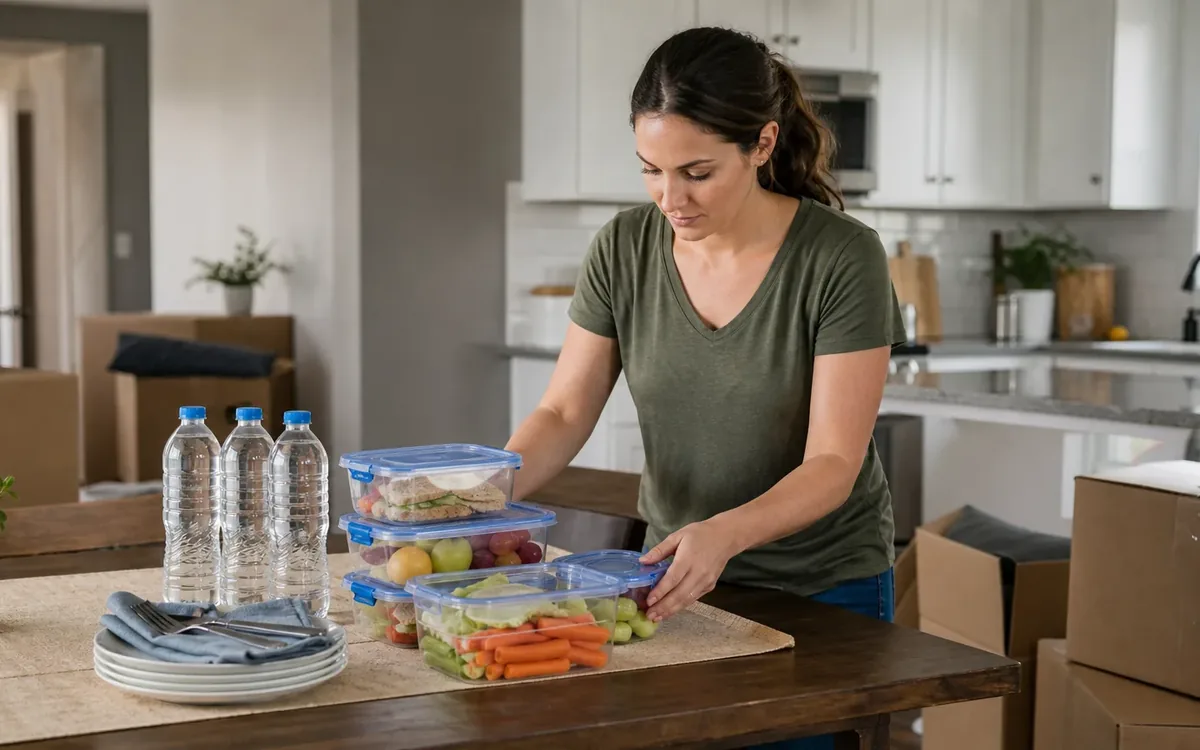
Move-day food, water, and breaks should be treated as part of the logistics plan, not as last-minute errands. Keep refreshments separate from packed kitchen goods, place water where people can reach it without crossing work paths, schedule pauses around the hardest tasks, and assign one household member to monitor coolers, dietary needs, and cleanup. In warm South Carolina conditions, adjust the plan to the weather and follow official heat or storm guidance.
Quick answer: Build a separate move-day refreshment station with drinking water, a food-safe cooler, simple meals, labeled dietary options, hand-cleaning supplies, and trash bags. Put breaks on the working schedule, choose a shaded or cooled rest area, and reassess conditions whenever heat, rain, fatigue, or delays change the day.
Why should meals and breaks be part of the move plan?
A move creates a temporary workplace inside and around the home. People lift, carry, drive, direct traffic, answer questions, and make decisions while rooms are being emptied. If food and rest are not planned, kitchen supplies may already be boxed, water may be buried in a vehicle, and everyone may stop at different times.
That disruption can lead to avoidable confusion. Someone opens sealed boxes looking for cups. A cooler blocks a hallway. Food sits in a warm room while doors remain open. Helpers leave the property at different times to find lunch, slowing decisions and separating the group.
A written refreshment plan supports the larger sequence of the move. Households coordinating packing, placement, or transition tasks can review the move management service overview to understand how move logistics may be organized. Meal choices, dietary information, personal health decisions, and supervision of children or dependent adults remain household responsibilities.
If the move follows an estate cleanout, refreshments also need to stay apart from items being sorted, retained, donated, sold, or discarded. The guide to how estate cleanouts work explains the broader sorting process. Food safety and individual medical needs should still be handled by the household and appropriate health professionals.
What belongs in a move-day refreshment station?
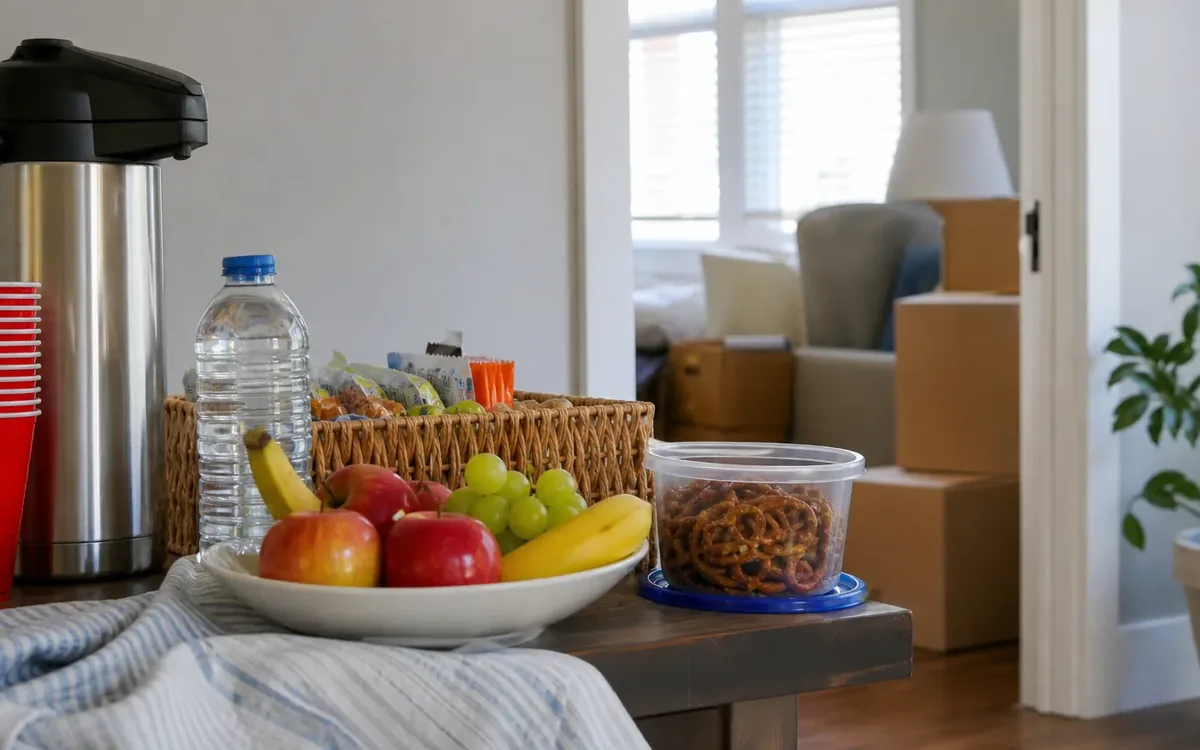
Create one clearly defined station that will not be packed accidentally. A folding table, counter section, or sturdy bin near the rest area can work, provided it does not narrow an exit, hallway, stair landing, loading path, or vehicle route.
Include practical supplies such as:
- Drinking water in easy-to-carry containers
- A clean cooler with cold packs or ice
- Clearly labeled meals and snacks
- Cups or reusable bottles
- Napkins, utensils, and paper towels
- Hand soap or hand-cleaning supplies
- Trash and recycling bags
- A marker and labels
- Any household-approved dietary notes
- A separate bag for used utensils and food waste
Mark the station and its containers DO NOT PACK. Use a bright label that can be read from across the room. If the station must move from the departure home to the destination, assign it to a specific vehicle and person rather than placing it in the general loading area.
Keep medicines separate from communal refreshments. Follow the medication label, pharmacist guidance, or medical instructions for storage and timing. A mover, organizer, or cleanout team should not decide whether medication can be exposed to heat or shared cooler space.
How should coolers and water be positioned?
Convenience matters, but safe movement comes first. The best location is accessible from the active work area without forcing people to step around bottles, loose ice, chairs, or open cooler lids.
Use these placement principles:
- Choose shade or an air-conditioned indoor space when available.
- Keep coolers away from direct sun and hot vehicle interiors.
- Avoid stairs, thresholds, ramps, and narrow corridors.
- Do not place drinks on furniture that is waiting to be carried.
- Keep the station away from cleaning chemicals, fuel, paint, pesticides, and waste.
- Protect floors from condensation and spills.
- Place a second water point near the destination if the primary station will be in transit.
If several vehicles are involved, do not assume the refreshment vehicle will arrive first. Keep a small destination supply accessible to the person entering the new property. Confirm that the water supply, cups, and cleanup materials will not be trapped behind furniture.
South Carolina weather can change the practical setup. Shade may shift, a garage can become uncomfortable, and an outdoor station can be affected by rain. Check current official weather information before work begins and again if conditions change. Government alerts and instructions take priority over the move plan.
How can a household plan food without unpacking the kitchen?
Select food that requires little handling and no reliance on packed appliances. A meal is not convenient if it requires searching for a knife, opening taped cartons, or clearing a counter being used for final packing.
Useful options may include:
- Individually portioned sandwiches or wraps
- Whole fruit that has been washed in advance
- Shelf-stable snacks suitable for the people present
- Chilled items kept under appropriate food-safe conditions
- Clearly labeled vegetarian, allergy-aware, or other dietary selections
- Sealed drinks that are easy to identify
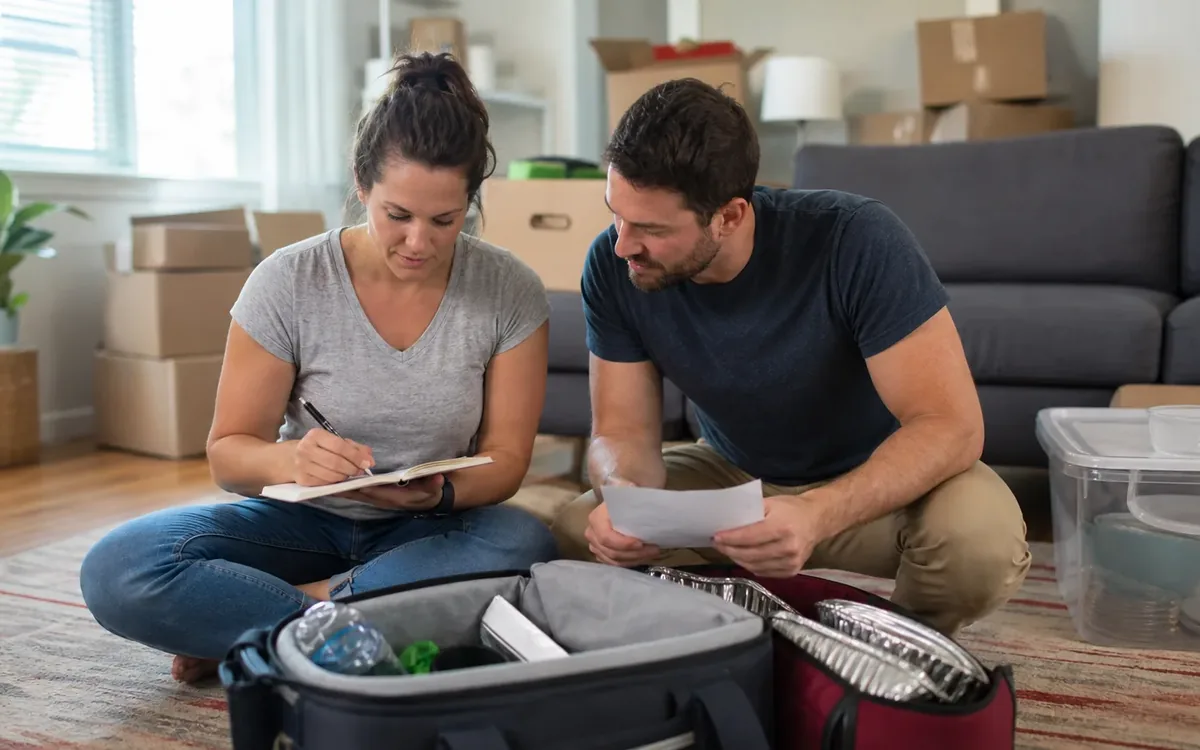
The household should gather dietary needs before choosing food. Ask participants to disclose only the information needed to provide an appropriate option. Do not guess whether an ingredient is safe for someone with an allergy or medical condition. The affected person, caregiver, food provider, or medical professional should make that decision.
Keep raw foods, prepared foods, and beverages appropriately separated. Follow the food label and current government food-safety guidance for temperature control, handling, and disposal. When safe storage cannot be confirmed, the responsible household member should decide whether to replace or discard the item rather than serve it.
Avoid packing every kitchen item. Set aside a small move-day kit containing only what the refreshment plan requires. Place it in a transparent or distinctive container and add it to the household’s personal transport list.
Build breaks into the working sequence
A useful break plan follows the work, rather than interrupting it at random. Review the likely pressure points: loading heavy pieces, clearing stairs, working outdoors, traveling between properties, and placing items at the destination.
Plan the day in five stages:
- Pre-work check: Confirm weather, water, food storage, dietary labels, the rest area, and emergency contacts before loading starts.
- Early work period: Make water accessible immediately instead of waiting for someone to ask where it is.
- Heavy or exposed work: Pause as conditions, exertion, or individual needs require, especially when work moves into sun or poorly cooled spaces.
- Meal transition: Stop work in a coordinated way so food does not enter active carrying routes and decisions are not made while key people are absent.
- Destination reset: Re-establish water and a safe rest area before the next concentrated period of unloading and placement.
This is a logistics framework, not medical advice. People vary in age, conditioning, health status, medication use, and heat tolerance. Individuals should follow their own professional medical guidance and communicate when they need to stop. If anyone shows concerning symptoms, stop work and seek appropriate medical or emergency help.
Do not tie breaks solely to finishing a room or emptying a truck. Unexpected delays can extend a task, while weather can make an otherwise straightforward activity more demanding. The schedule should permit extra pauses and changes in task order.
What changes during a warm South Carolina move?
Warm or humid conditions make access to water, shade, and cooling more important, but the household should not rely on a single rule for every day. Check the actual forecast and official advisories for the property locations and travel route.
Before work begins, consider:
- Which areas are shaded or air-conditioned
- Whether exterior doors will remain open
- Where sun exposure is strongest
- Whether rain could make surfaces slippery
- How refreshments will stay cool during travel
- Whether anyone has health-related limits or professional instructions
- How the plan will change if an official weather warning is issued
A rest area should be separate from lifting and vehicle movement. Seating should be stable. People should not rest on stacked boxes, truck ramps, curbs near moving vehicles, or furniture awaiting transport.
Clothing, sun protection, and personal protective equipment are individual or employer decisions. A practical move team may discuss access, staging, traffic flow, and when work needs to pause because conditions have changed. It should not diagnose heat illness, prescribe hydration amounts, override medical advice, or interpret public safety orders.
If lightning, severe weather, flooding, or another hazard develops, follow the responsible authority’s instructions. Protecting a schedule is not more important than responding to an official warning.
Keep refreshments separate from packed and sorted goods
Visual separation prevents mistakes. Food cartons can resemble pantry boxes, donation containers, or supplies intended for the destination. Establish categories before activity begins and use different labels or container colors.
A focused staging scheme might include:
- Move-day food: Items intended to be eaten during the move
- Destination pantry: Sealed food being transported to the new home
- Cooler: Temperature-controlled refreshments
- Personal transport: Medicines and essential individual items
- Food disposal: Spoiled, opened, or unwanted items awaiting a household decision
- Cleanup: Bags, towels, soap, and related supplies
Do not combine disposal decisions with the refreshment station. If pantry items are part of an estate, sale, donation, or property transfer, the owner, personal representative, buyer, donation recipient, or other responsible party must determine what may be removed or transferred. Legal questions belong with a qualified attorney or relevant authority.
Likewise, appraisers decide valuation matters, real-estate professionals advise within their role on sale preparation, inspectors assess conditions within their scope, and government authorities determine code or compliance requirements. A cleanout or move team may discuss physical sorting, access, sequencing, and placement, but should not substitute for those decisions.
Assign ownership of the food-and-break plan
One person should coordinate the refreshment station, even if several people contribute supplies. That coordinator does not need to manage the whole move. The role simply prevents assumptions.
The coordinator can:
- Confirm dietary responses with participants
- Label food and coolers
- Keep the station out of work paths
- Check that water remains accessible
- Announce coordinated meal pauses
- Move the station to its assigned vehicle
- Reset it at the destination
- Remove food waste and spills
The household decides what to serve, who receives dietary information, and how personal health needs are handled. A practical cleanout or move team may discuss when the work sequence offers a sensible stopping point, where a station will interfere least, and how to keep personal supplies separate from packed goods.
Contractor responsibilities should be confirmed directly with each contractor or employer. Do not assume one provider supplies food, water, coolers, shade structures, or medical support for another provider’s workers. Put agreed responsibilities in the relevant work documents when appropriate.
Plan the final cleanup before the first meal
Refreshment waste can become mixed with moving materials unless there is a clear exit plan. Set out labeled bags and decide who will remove them. Wipe spills promptly so floors do not become slippery and boxes are not damaged.
At the departure property, check the refrigerator, freezer, pantry, cooler area, and rest space before the last person leaves. At the destination, remove perishable food from vehicles before attention shifts entirely to furniture placement.
Disposal remains a separate household or provider choice. Local rules, property requirements, food-donation acceptance policies, and waste-provider instructions may affect what can be discarded or donated. Confirm those requirements with the responsible organization or authority rather than assuming all unopened food is accepted.
Storage decisions are also separate. If a household chooses temporary storage, ask the storage provider what food, liquids, medicines, and temperature-sensitive items are prohibited. A move or cleanout plan should not treat a storage unit as a safe place for refreshments without confirmation.
Short FAQ
Should the cooler travel on the moving truck?
Usually, accessibility matters more than consolidation. The household should check the mover’s rules and food-safety needs, then assign the cooler to a suitable vehicle where it will remain reachable and appropriately stored. Do not place it where leaks could affect household goods.
Who should decide how often someone takes a break?
Each person must respond to personal needs and applicable workplace policies. The household can schedule shared pauses, while contractors manage their own personnel. Medical professionals and official safety authorities provide health or hazard guidance.
What if the kitchen is already fully packed?
Use the separate move-day kit and choose food requiring minimal preparation. Do not reopen multiple boxes unless an essential item cannot be replaced or safely managed another way.
Can unwanted pantry food be donated?
Possibly, but the receiving organization decides what it accepts. Check its current policies before transporting food, and keep donation items separate from move-day meals.
What should happen if weather disrupts the plan?
Pause and reassess the route, work areas, food storage, and official alerts. Follow government warnings or emergency instructions. Reschedule or reorder tasks when safe conditions cannot be maintained.
A practical final review
Before loading begins, verify that refreshments are labeled, cold items are handled safely, water is accessible, dietary needs have been addressed, and the rest area is outside the work path. Confirm who will transport the station and clean both properties.
Clutter Cleaner of South Carolina is physically located in Mount Pleasant and provides its listed services across South Carolina, with Charleston as its primary market. For move-management questions, households can call (843) 972-7020. Any discussion should distinguish logistical support from medical, legal, appraisal, real-estate, inspection, contractor, storage, disposal, or compliance decisions reserved for the responsible professional, provider, household member, or authority.



