
To move an aquarium, plan household tasks around a separate expert plan. Choose a possible room, record access limits, and agree on who handles each task. Leave fish care, water chemistry, tank lifting, and transport methods to the assigned experts. Keep their choices separate from routine packing.
The EPA’s home reuse and recycling tips explain ways to reduce household waste. Keep useful items in good shape, and check where they can be reused before you discard them.
Who should make decisions when you move an aquarium?
Give one household contact control of room choices and shared move details. Let the aquarium expert direct fish care and tank handling. Use move management to coordinate home tasks and downsizing and organizing to settle space conflicts before packing begins. Each person should know where their role ends.
An aquarium can involve roles for several people. Packing books does not give someone a role in handling the tank. A mover’s agreement to carry furniture does not show that they will transport aquarium gear or live animals. Ask each team to state what their agreed work includes.
Keep a short written record of those boundaries. Name the household lead contact, the expert contact, and the person who can grant entry at each home. Record unanswered questions beside the person in charge of answering them. This makes a gap visible before it becomes a move day dispute.
For a South Carolina move, use full addresses for both homes. A move from Charleston, SC to Mount Pleasant needs clear entry details at each end. Match each address to its room notes.
How do you choose a room for the aquarium?
Choose a room that fits the home layout and remains open for expert review. Planning the home move can help align room assignments, while organizing for a smaller home can address other furniture. Treat the room choice as pending until the right experts assess the tank, support, and setup needs.
Start with how people will use the room. A tank may occupy the same wall as a desk, bookcase, or family chair. Draw those items on a simple room sketch. Mark doors and the space people need to pass through. Leave tank setup details to the expert.
Separate your wishes from questions that need expert answers. You can choose which room you would like to use. You cannot show floor capacity, stand safety, or electrical safety from a photo or a tape measure. Refer structural and electrical questions to the right experts.
Record any limits on use of the room as questions for the owner or manager. In a rental or shared building, ask what consent or review applies to the planned spot. Seek legal advice if responsibility under a lease or sale agreement is unclear.
What access details should you record?
Record the route between each entrance and the planned room, including doors, turns, stairs, and shared spaces. Coordinating move details keeps that information with the home plan. Sorting nearby belongings helps find clutter along the route. Leave judgments about carrying clearance and lifting methods to the transport team.
Photos should show the route as it exists. Include the turn into the room, the full doorway, and any fixed obstacle. A close photo of one door can hide a narrow hall beside it. Label each image with the home and room so teams can distinguish the two properties.
Measurements are information for review, not proof that a move will work. Note what you measured and where. The expert or transport team must assess the full route and their handling needs. Avoid promising that a tank will fit based on one doorway width.
Useful access notes answer clear questions:
- State which entrance leads to the planned room and who can open it.
- Note stairs, sharp turns, fixed shelves, and doors along that route.
- Record any access conditions that still need an answer from the property contact.
- Note where packed boxes could block the route during loading or delivery.
Access varies by property across South Carolina. Use the home’s details rather than guesses about its neighborhood or building type. If a team needs an inspection, settle that request before treating the route as agreed. Keep photos current when furniture moves or rooms change.
What should stay separate from ordinary packing?
Separate aquarium gear and supplies from ordinary home packing until the expert gives clear handling instructions. Home sorting support can organize unrelated items, while move planning can mark task boundaries. Do not let an unlabeled cabinet or nearby shelf cause needed items to enter the wrong packing stream.
Create a written inventory of aquarium items you can see without taking the setup apart. Describe each item in plain terms and record its current room. If you cannot name an item, use a photo and ask the expert. Guessing a name can lead someone else to make the wrong choice.
Who owns each item and who can discard it are separate questions. An item may belong to the aquarium owner even when it sits in a shared cupboard. Confirm ownership before choosing to sell, donate, or discard it. Ask for an appraisal if value needs expert review.
Use home labels to flag items that await review. A label such as “Aquarium items: handling plan pending” tells packers why they should pause. It does not need to include a homemade care or transport instruction.
For example, a cabinet might hold tank supplies beside board games and serving dishes. The games and dishes can follow the usual home plan. Aquarium supplies remain with their agreed handler. This keeps ordinary packing moving without asking packers to judge gear, care needs, or technical instructions.
How do you choose the order of household tasks?
Choose the home sequence from agreed expert needs and the readiness of both homes. Move management planning can connect those choices, while downsizing choices can free the planned room. Agree on what must happen first, then place tasks on the calendar. Avoid setting aquarium deadlines from a general moving checklist.
Some tasks depend on other work being done first. The planned room may need a furniture choice before the expert can assess it. Access may need an answer before a transport team takes on the route. These are household planning issues, not estimates of fish care time.
Use this ordered sequence for the home work:
- Name the home contact and record the expert’s agreed scope.
- Select a planned room and identify questions requiring professional review.
- Share the route details and check who controls entry at both properties.
- Resolve furniture conflicts and separate items awaiting expert instructions.
- Agree on the home schedule once the expert’s needs are clear.
Compare approaches by what is agreed, rather than by a fixed number of days.
| Home approach | When it may fit | Decision needed first |
|---|---|---|
| Clear the planned room before other rooms. | Furniture there prevents a useful review. | Where displaced furniture will go. |
| Coordinate home delivery around expert work. | Both plans need access to the same area. | Which tasks each team takes on. |
| Keep the home schedule open. | Room review or expert transport is pending. | Who will settle the open question. |
The aquarium expert sets any care or technical sequence. Add their agreed needs to the home calendar without rewriting them.
What if the aquarium is part of an estate cleanout?
Check who can make choices about the aquarium before you sort nearby items. Estate cleanout services cover the home transition, while how estate cleanouts work explains the wider plan. Keep fish and tank gear out of the sale or removal list until the people in charge agree on what to do.
A live tank needs its own plan. The fish are not furniture. A choice to clear a room does not settle who will care for them or where they will go. Write down the tank, stand, gear, and nearby items as separate parts of the room record.
Ask the person in charge of the estate who can approve each choice. If that role is unclear, seek legal advice. Do not use a family vote to fill a gap in authority. Keep the name of the person who can approve a sale or removal beside the item in your notes.
The room list should show which choices are still open. Use plain labels such as “Hold for review.” Add the fish care contact and the person who can decide what stays. A note should state what you know, rather than guess who will take the tank.
Keep sale plans separate from care plans. An item may still be needed even if it looks spare. Ask the expert before putting tank gear in a sale. Use an appraiser for value questions. A photo or a label on a box cannot settle either issue.
This leaves the home team with a clear limit. They can sort the agreed items around the tank while the right people settle the rest. Check that the room record reaches each team before work starts.
What happens if the planned room or access changes?
Reopen the aquarium plan when a room choice, entrance, or access condition changes. Home move planning can update affected assignments, while room sorting and organizing can address new furniture conflicts. The aquarium expert must review changes that affect their work before you treat the revised plan as settled.
A change can look small on a floor plan but alter the agreed arrangement. A dresser delivered to the planned wall may displace the aquarium location. A locked entrance may change the route. Tell the affected team what changed, using new photos or a marked room sketch.
Useful reasons to pause the affected task include:
- The planned room becomes closed off or contains furniture that has no agreed destination.
- The entrance or route differs from the information sent to the team.
- A team’s agreed scope does not cover a task you expected them to handle.
- An expert requests further review before their work can proceed.
Ask the assigned expert to set a backup plan for the aquarium. The household contact can manage entry, furniture choices, and shared updates. They should not invent temporary animal housing or tank transport plans to keep the schedule moving. Update only the affected home tasks once the revised needs are agreed.
What should you ask before hiring help with the move?
Ask how move support will handle room choices, sorting, and shared tasks around a separate aquarium expert. Review the move management service and the approach to downsizing and organizing to frame that conversation. Get the agreed scope in writing so help with the move is not mistaken for aquarium care or expert transport.
Mention the aquarium early when asking for help with the home. Share the planned room, access questions, and expert contact when you have one. Ask which home tasks the team can accept and which remain with you or another team.
The business has its physical base in Mount Pleasant, SC. Charleston, SC is its primary market, and its service territory covers all South Carolina. Check the requested work for your home directly. Service territory alone does not show aquarium expertise.
Bring the conversation back to concrete choices: who coordinates entry, which room awaits review, and who can approve home changes. A useful scope states what happens next and who owns each unanswered question. You can then choose support based on the tasks you need.
Questions families ask about moving with an aquarium
A home move and a tank move need clear roles. Understanding move management explains help with the home. Estate cleanout planning guidance covers choices about items left behind. Use these answers to plan the home tasks, then ask the fish care and transport experts about their own work.
Can a move manager handle the fish?
Ask what the move manager has agreed to do. Help with a home move does not show skill in fish care or consent to take on live animals. Give that work to a fish care expert who has accepted it. Keep their name and contact details in the home plan so each question goes to the right person.
Does a clear room mean the aquarium location is suitable?
A clear room means that other items have been moved aside. It does not prove that a floor, stand, outlet, or tank setup is safe. Have the right experts check those needs. You can share room notes and keep the space free while they review the planned spot. Leave their tests and setup choices to them.
Should the aquarium go on the regular mover’s inventory?
Tell the mover about the tank. Ask how they will note it and which parts, if any, they have agreed to carry. A line on a list is not consent to move fish or lift a tank. Write down the scope for the mover, fish care expert, and home packing team so no one has to guess.
Can aquarium supplies go into an estate sale?
First check who owns the gear and who can approve its sale. Ask the fish care expert what is still needed. Keep items with open questions out of the sale plan. Seek an appraisal if you need help with value. Do not assume that a spare part can go just because no one has used it lately.
What if no expert has accepted the aquarium work?
Keep the tank tasks open until the right expert agrees to take them on. You can still sort books, clothes, or other home items if that work leaves the tank plan undisturbed. Tell each home team which tasks must wait. A packing date is not a reason to invent a plan for fish care, tank lifting, or transport.
Photo credits
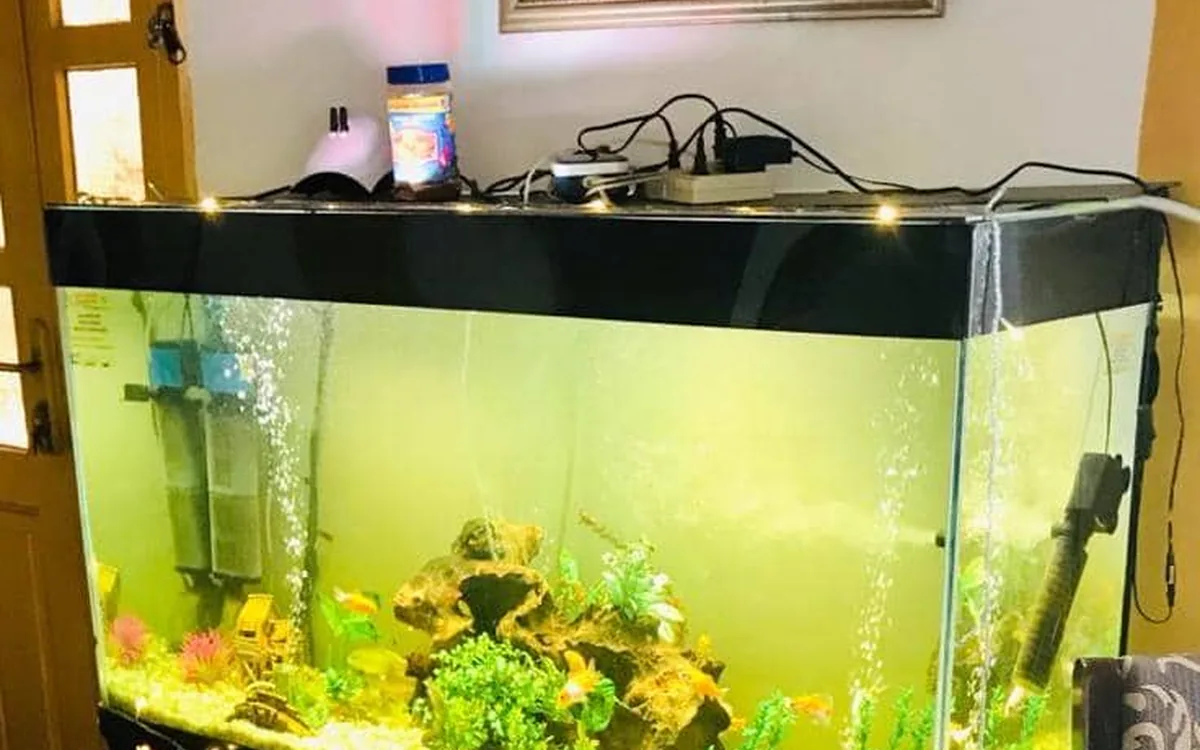
- A planted glass aquarium on a stand inside a room: Lydia Borkai Ainoo. Original photograph, CC BY-SA 4.0. Cropped and resized.
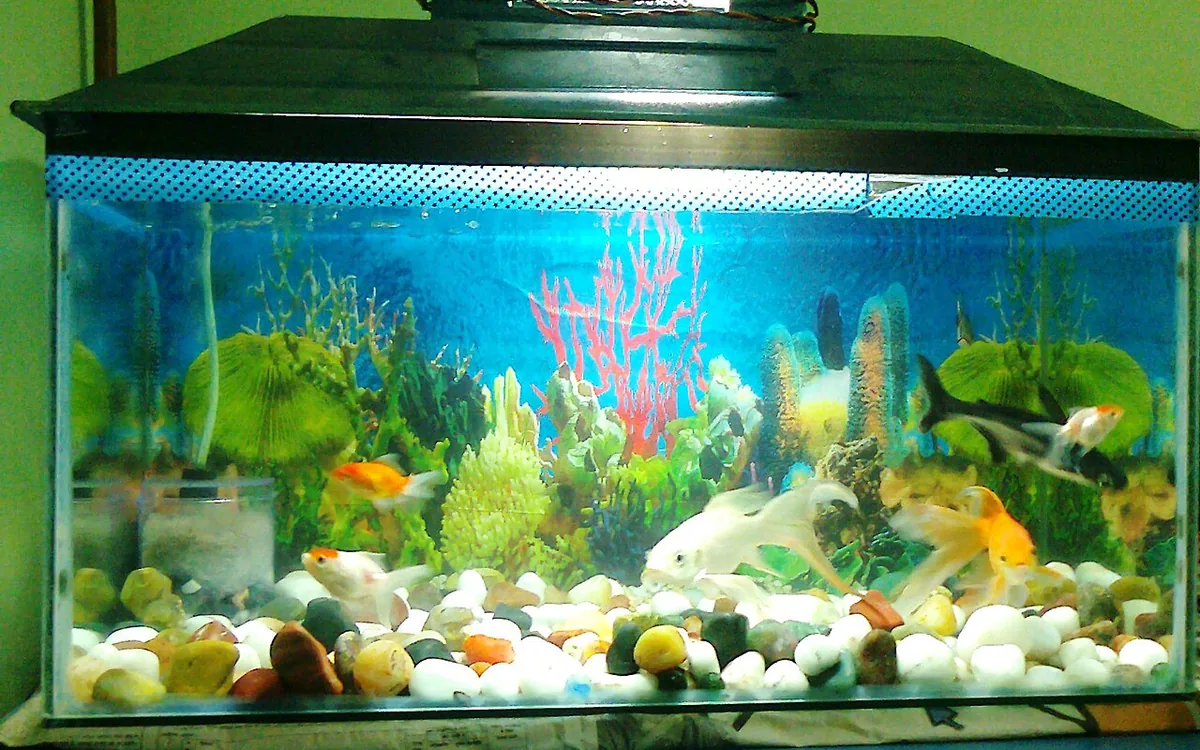
- Goldfish Aquarium With Multicolored Pebbles: Ashu0203. Original photograph, CC BY-SA 3.0. Cropped and resized.
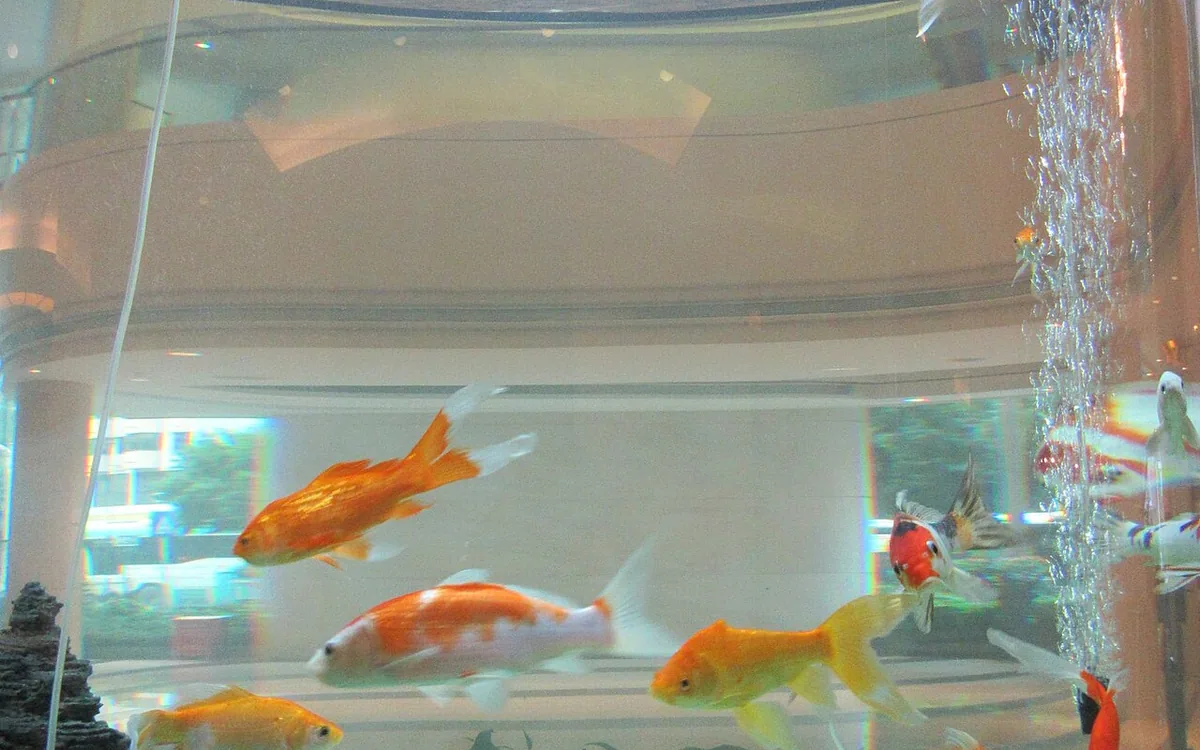
- Small fish swim beside bubbles inside a glass aquarium: Lauwrenmingra. Original photograph, CC BY-SA 4.0. Cropped and resized.






