
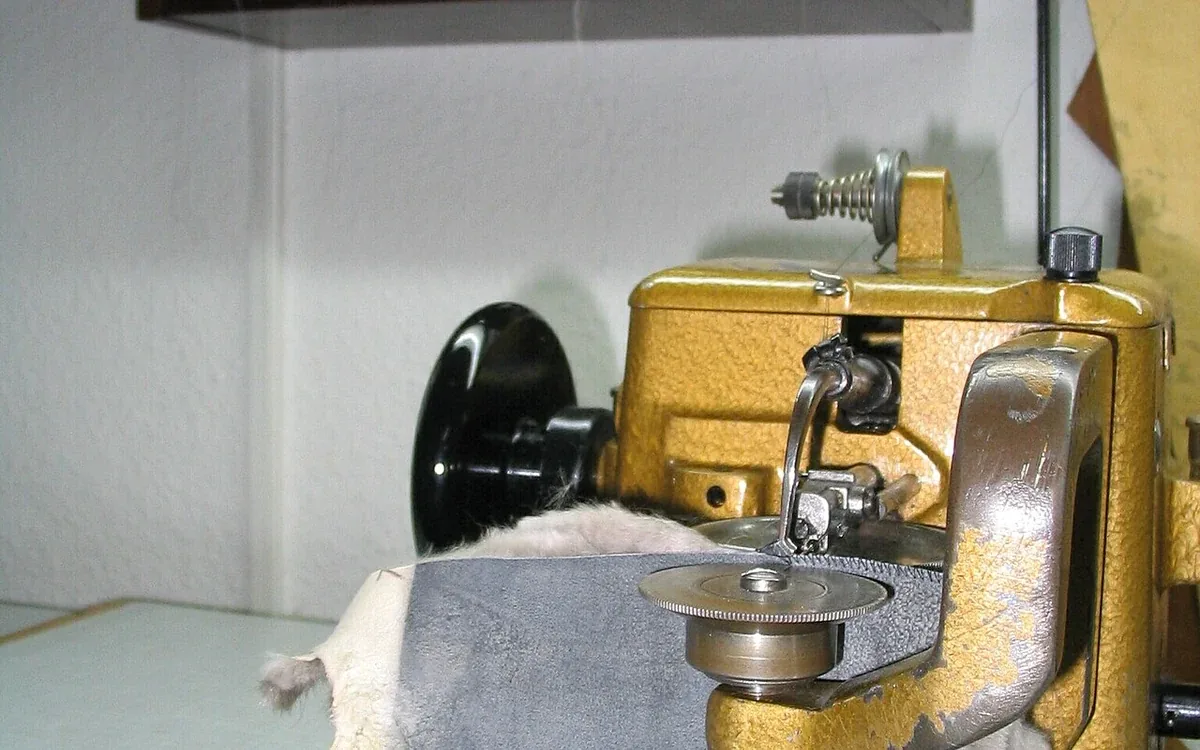
Pack a sewing machine for moving by following its model’s transport instructions, unplugging it, securing or removing vulnerable parts as directed, and cushioning it in suitable packaging. Keep the pedal, cords, and accessories labeled together but protected from the machine. A carrying case needs checking too: its lid, handle, and internal supports must be suitable for the intended move.
Quick answer: Identify the exact model before packing. Use sound original packaging when available, or arrange a sturdy carton with cushioning that supports the machine’s base without pressing on controls. Follow the manual for the needle, presser foot, spool pins, and embroidery attachments. Label the package, keep it upright as directed, and agree on handling with whoever will transport it.
What should you check before wrapping the machine?
Find the brand and model number on the machine’s identification label. Save a photograph of that label and locate the matching manual.
Look for sections covering transport, storage, attachments, and packing. If the instructions are missing or unclear, ask the manufacturer or a sewing-machine technician about your exact model. Avoid using another machine’s setup as a substitute.
Take clear photographs before disconnecting anything:
- The machine’s overall condition and existing marks.
- Cord connections and the matching foot controller.
- Removable tables, trays, or embroidery attachments.
- The contents of accessory compartments.
These photographs help with reassembly and provide a condition record. They do not establish an appraisal value or replace a carrier’s documentation requirements.
For a household coordinating several belongings, move management for a South Carolina home transition is a useful starting point for discussing organization and handoffs. Confirm separately who will pack, carry, transport, and unpack this particular machine.
Prepare vulnerable parts without guessing their positions
Switch the machine off and unplug it before handling parts around the needle or disconnecting accessories. Remove fabric and unfinished work so nothing pulls against the sewing mechanism during packing.
Follow the manual’s instructions for removing thread, the needle, bobbins, and detachable pieces. If needle removal is directed, place the needle in a protective container. Do not leave it loose in a pouch where someone could reach for a cord.
Spool pins, thread guides, presser feet, and needle assemblies need model-specific treatment. Retract, remove, or position them only as instructed. There is no single needle or presser-foot position that should be assumed correct for every machine.
Keep track of anything removed. A small labeled container can hold permitted removable screws or fittings, but leave structural hardware in place unless the manufacturer’s instructions say otherwise.
Packing is not a reason to add oil, open the housing, or attempt an adjustment. If a part feels stuck, stop and ask a technician rather than forcing it into a position that seems easier to wrap.
Is the original case enough for a household move?
Original packaging can be useful when its inserts fit the machine and remain sound. Check the carton, base support, and cushioning for damage before relying on them. Missing inserts can leave the machine unsupported even when the outer box looks intact.
A carrying case serves a different purpose from protective shipping packaging. A soft bag may help organize belongings but offers limited protection against another item pressing against it. A hard cover may simply lift off the base rather than support the machine’s weight.
Before choosing a case, examine:
- Whether the machine sits securely on its supported base.
- Whether latches and hinges close properly.
- Whether the handle is intended to carry the loaded case.
- Whether accessories can shift into controls or painted surfaces.
- Whether extra outer packaging is needed for the planned transport.
Never lift a machine by a loose cover. Use only the lifting points intended for that model, and arrange help if you cannot handle its weight safely.
An inherited machine may arrive with a case from a different model. Check the fit instead of assuming that being found together makes them compatible.
Cushion the base and protect protruding controls
Choose a carton and cushioning suited to the machine’s weight and shape. A worn box, collapsing bottom, or oversized carton filled loosely with household items is a poor match for concentrated weight.
Place cushioning beneath the base and around supported areas of the body. Protect exposed knobs, screens, thread guides, and other protrusions without making them bear the packing pressure. Keep tape on packaging rather than directly on the machine’s finish.
Separate wrapping materials from surfaces where they might rub. Do not wedge padding into the needle mechanism, vents, or moving joints.
Before sealing, inspect the fit. The machine should not slide freely, and closing the box should not push down on a screen or control. If either happens, revise the packaging rather than pulling the carton tighter with tape.
For a machine being transferred from an estate, establish its destination before labeling the box. The guide How do estate cleanouts work? provides broader context for that household process. The packing decision here is narrower: keep this machine and its matching parts together for the authorized recipient.
Keep the pedal and accessories identifiable
A protected machine is difficult to use if its controller disappears into an unrelated box. Group accessories by machine, especially when the household owns a sewing machine, serger, and embroidery machine with similar-looking cords.
Disconnect removable cords as instructed and coil them loosely without sharp bends. Label the foot controller with the machine’s model. Avoid assuming that a controller from another unit is interchangeable because its plug appears to fit.
Use separate pouches or containers for:
- Power cords and the matching foot controller.
- Presser feet, bobbins, and permitted removable fittings.
- Detachable trays or extension tables.
- Manuals and notes explaining where parts belong.
Protect heavy or pointed accessories so they cannot strike the machine. Use an original accessory compartment only when it securely retains the contents for transport.
Keep needles and other sharp sewing tools in closed protective containers. Pack liquids separately according to the transporter’s requirements, rather than leaving a bottle inside the machine case.
Put a brief inventory inside the accessory package and identify its matching machine on the outside. If accessories travel in a separate carton, give both packages a shared label such as “sewing machine and matching accessories.”
How do embroidery machines and cabinet models differ?
An embroidery unit may have a moving carriage, connector, or attachment that requires its own transport preparation. Check whether the manufacturer directs removal, use of a transport lock, or separate packaging. Use only the lock or restraint specified for that unit.
Pack hoops and detachable embroidery parts so their weight does not rest on the carriage or connector.
For a computerized machine, follow the manual for saving settings or handling removable media. Keep any storage device labeled and protected.
A cabinet-mounted machine presents another problem: the furniture and sewing mechanism may need different handling. Do not assume the head can remain folded inside the cabinet during transport.
Ask a technician about the mounting arrangement if instructions are unavailable. A qualified mover can assess lifting and access needs; furniture disassembly or contractor work should be separately discussed with the appropriate provider. Neither should be improvised by removing unfamiliar bolts.
Agree on the transport plan before pickup
Tell the transporter what the package contains and identify any handling instructions taken from the manual. A “fragile” label helps communicate care, but it does not compensate for loose packing or unsuitable placement.
Discuss where the package will ride, how it will be secured, and whether other belongings could press against it. Keep it away from shifting furniture, unsecured tools, and areas where it could get wet.
If you plan to carry it yourself, choose a supported position where the package cannot slide or tip during travel. Do not leave it loose on a seat or balance it on top of other boxes.
Storage is a separate household decision. Ask the storage provider about conditions and handling, then compare those answers with the manufacturer’s requirements. Avoid sealing a damp machine or damp cushioning inside packaging.
For a South Carolina move, the useful local planning questions concern the actual property: stairs, doorway clearance, loading access, and any building rules the household must confirm. Do not assume that a Charleston address establishes specific access restrictions.
Decide who owns the next step
The household can choose the destination, identify matching accessories, and decide whether to request specialist help. A practical cleanout or move team may discuss labeling, access, packing responsibilities, and the order in which belongings leave the home.
Ownership questions need resolution before an inherited machine is given away or sold. The authorized estate representative or responsible legal professional handles disputed ownership and estate obligations. Packing a box does not establish authority to transfer its contents.
If value affects a sale or estate decision, consult an appropriate appraiser. A move team should not be treated as providing an appraisal merely because it helps organize the item.
Real-estate advice remains with the responsible real-estate professional. Inspection findings and compliance decisions remain with the relevant professional or authority. Disposal acceptance belongs to the selected facility or provider, and repair belongs with a sewing-machine technician.
Clutter Cleaner of South Carolina offers move management across South Carolina. Its physical business location is Mount Pleasant, SC, and Charleston is its primary market. Call (843) 972-7020 to discuss your home transition and confirm the scope of assistance for your machine.
Unpack before reconnecting the machine
Place the package on a stable surface and open it without letting a blade reach the contents. Remove cushioning carefully, then compare the machine and accessories with your photographs and inventory.
Check for visible damage, bent parts, loose connections, or moisture before plugging it in. Follow the manual for reattaching accessories and returning the machine to its operating setup.
If the machine arrives cold or damp, consult the manufacturer’s guidance before applying power.
Keep packaging and condition photographs if something appears damaged, and follow the transporter’s reporting process. Stop if the machine binds, sounds unusual, or behaves differently when used according to its instructions. A technician should assess the problem before further sewing.
Short FAQ
Can I wrap the machine in a blanket?
A blanket may protect some surfaces, but it does not provide a fitted base or prevent movement by itself. Check the model’s instructions and the transporter’s packaging requirements.
Should the foot pedal go inside the case?
Only if the case has a suitable compartment that holds it securely. Otherwise, protect it separately and label it to match the machine.
Should I remove the sewing-machine needle?
Follow the exact model’s transport instructions. If removal is directed, unplug the machine first and place the needle in a protective container.
Photo credits
- Gold-colored sewing machine on a work surface: –Kürschner (talk) 14:12, 1 August 2009 (UTC). Original photograph, Public domain. Cropped and resized.
- Five wooden thread spools in different colors: W.carter. Original photograph, CC BY-SA 4.0. Cropped and resized.
- Lower row of dark and gray thread spools: W.carter. Original photograph, CC BY-SA 4.0. Cropped and resized.






