
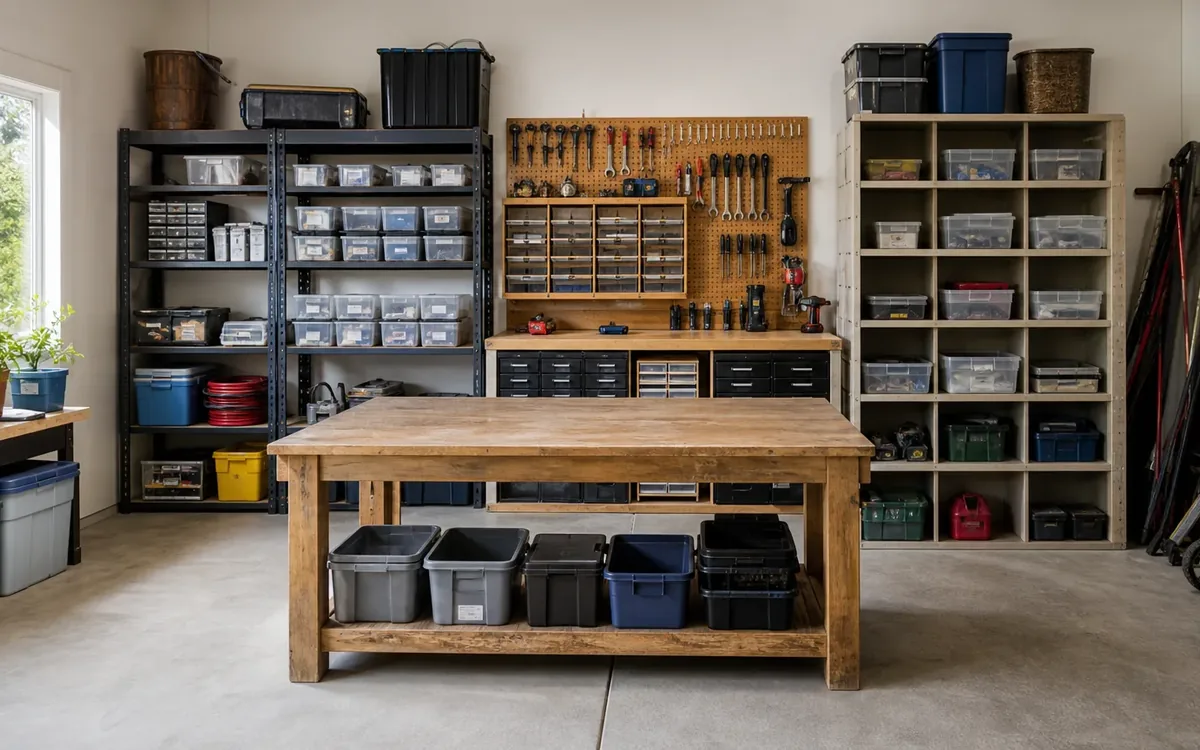
Keep spare parts only when you can connect them to an appliance, fixture, or piece of furniture that still needs them. Before downsizing, identify what will move with you, what will stay with the house, and what will leave the household. Then organize the useful parts around those ownership decisions, rather than preserving every miscellaneous piece in a drawer.
Quick answer: Give each retained item a named parts container. Label it with the item, model when available, owner or destination, and the part’s purpose. Separate unknown pieces for review, and keep them only when you can establish a practical use. Verify electrical compatibility and disposal requirements with the appropriate manufacturer, professional, or receiving facility.
For South Carolina households preparing for a smaller home, this approach prevents a common mismatch: moving a box of attachments for appliances you no longer own while leaving behind the hardware needed for furniture you are keeping.
Start with ownership, not the junk drawer
A drawer labeled “spares” hides the most important question: spares for what? Sorting by material alone creates tidy piles of plastic, screws, and cables without establishing whether anything is useful.
Begin with the items themselves. Walk through the home and identify appliances, furniture, electronics, and fixtures whose parts are scattered elsewhere. Check nearby cabinets, utility shelves, and original packaging before opening every miscellaneous bin.
Assign each main item one destination:
- Moving: The household will continue using it in the next home.
- Staying: It is intended to remain with the property, subject to the relevant sale arrangements.
- Transferring: Another person or organization has agreed to receive it.
- Leaving use: It will be sold, donated, recycled, or otherwise handled through a separately chosen outlet.
- Undecided: Its destination genuinely remains unresolved.
The household can decide which belongings it wants to retain. Whether a fixture must remain under a purchase agreement is a question for the real-estate professional or legal adviser responsible for that transaction.
If the larger challenge is deciding what fits the next home, downsizing and organizing support provides a relevant starting point. Parts sorting works best when those broader keep-or-transfer decisions are already taking shape.
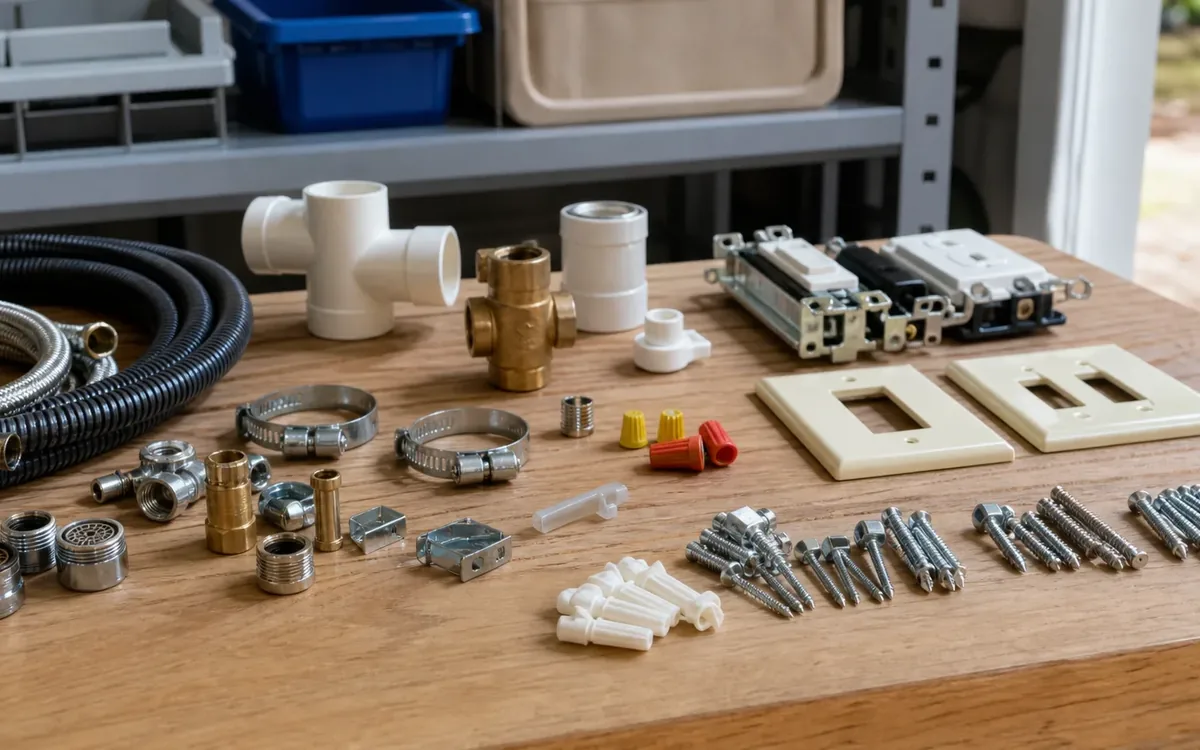
Which spare parts are actually worth keeping?
A part earns space by supporting a specific retained item, not simply because it looks useful. Its value may be practical even when it has little resale value: the correct shelf clips can make a cabinet usable, while a random bag of similar clips may not help at all.
Use these questions to make a retention decision:
- Can you name the appliance, fixture, or furniture piece it belongs to?
- Will that item remain in use, either with you or its next owner?
- Is the part compatible according to a model label, manual, or manufacturer information?
- Is it clean, intact, and appropriate to keep?
- Is it an intended replacement, seasonal attachment, or necessary installation component?
- Does another identical part already cover the same need?
Keep a necessary bracket even if you rarely use it. Question a pile of worn filters merely because they came out of an appliance you still own. Replacement parts and removed, exhausted parts are not the same category.
Do not test unfamiliar electrical components by trial and error. A connector fitting into a socket does not establish that its voltage, polarity, or other specifications are correct.
Build a parts passport for each retained item
A parts passport is a simple label or note that connects accessories to their parent item. It can be attached to a pouch, stored in a household inventory, or kept with the manual. No special software is necessary.
Record only information that will help someone use or transfer the parts:
- Item name, such as “hallway bookcase” or “upright vacuum.”
- Brand and model, when identifiable.
- Part description and purpose.
- Destination or intended recipient.
- Storage location if the part cannot stay with the item.
- Any unresolved compatibility question.
For example, “bookcase shelf supports, moving to study, stored in furniture hardware box” is more useful than “extra metal pieces.” Photographing the item and its matching parts can make the connection easier to recognize later.
An estate household may need additional ownership review before distributing belongings. The guide What Is the Best Way to Clean Out an Estate? offers broader context for that situation. A parts label records a proposed destination; it does not establish legal ownership or authority to transfer property.
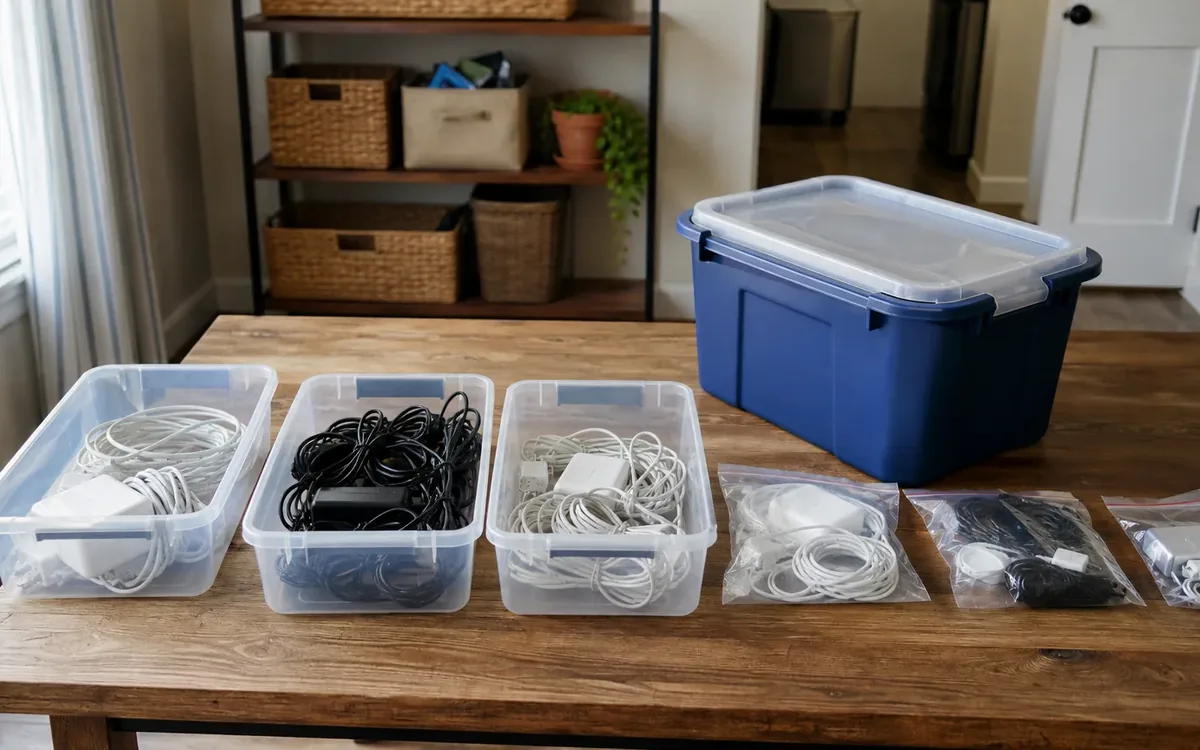
How should you sort cords, chargers, and adapters?
Treat cords as equipment accessories rather than a single universal category. Gather the devices that are staying in use, then match their cables and power supplies before deciding what is surplus.
Start with markings on the device, adapter, and manufacturer documentation. Preserve readable specification labels. If compatibility remains uncertain, ask the manufacturer or a qualified repair professional rather than relying on appearance.
Create separate groups for:
- Power supplies matched to named devices.
- Data or connection cables with a known household use.
- Accessories transferring with departing equipment.
- Unidentified cords awaiting a specific verification step.
- Damaged items needing an appropriate disposal decision.
Label each matched cord near an end without covering important markings. Coil it loosely and secure it with a reusable tie. Keep small adapters in the same pouch as their device’s other accessories.
Do not save a frayed cord as an emergency backup. Stop using questionable equipment and seek qualified guidance where needed. The household chooses what to retain, but a practical organizing team is not a substitute for electrical diagnosis or safety approval.
Keep fasteners with the furniture they support
Loose screws often lose their identity during disassembly. Before removing hardware, photograph the connection and note which pieces belong together. Consult assembly instructions when available.
Use a labeled pouch for each furniture item. Within it, separate hardware for different sections if mixing would make reassembly confusing. Write “dining table legs” rather than “bolts,” and include the intended destination.
Avoid attaching bags where adhesive could damage a finish or where the bag could tear during handling. A dedicated moving hardware box can work well if its inventory names every item represented inside.
Keep unmatched general-purpose fasteners separate from furniture-specific hardware. A modest household repair assortment is a personal choice, but it should not become a reason to retain every bent screw, rusty nail, or unidentified bracket.
Furniture stability, wall anchoring, and structural installation questions belong with the manufacturer or an appropriate installer. Sorting the pieces does not verify that a furniture item is safe to assemble or use.
Match filters and fixture parts to the next home
Filters deserve especially clear labels because similar-looking products may serve different systems. Match unopened replacements to the exact appliance or system they support using manufacturer information.
For a South Carolina household moving between homes, the destination matters more than the fact that a filter was useful at the old address. The next home may have different equipment, sizes, or maintenance requirements.
Use distinct groups:
- Filters for appliances you are taking.
- Filters for systems staying at the current property.
- Parts whose compatibility needs confirmation.
- Used or unsuitable pieces requiring a disposal decision.
Apply the same logic to faucet cartridges, cabinet hinges, light-fixture components, and shelving clips. Label pieces intended to remain with the property and keep them apart from your moving boxes.
Ask the real-estate professional how retained property accessories should be documented or handed over. A contractor can address technical suitability or installation. An inspector or responsible authority handles applicable inspection and compliance determinations, not the organizing label.
What should you do with parts you cannot identify?
An unidentified part needs an investigation path, not permanent residency in an “important stuff” container. Place it in a review tray with a note stating where it was found and what it might belong to.
Look for useful evidence:
- A stamped model or part number.
- A matching diagram in an existing manual.
- Original packaging that identifies the intended item.
- A photograph showing the piece installed.
- Confirmation from the person who bought or maintained the equipment.
Location is a clue, not proof. A bracket found beside a refrigerator may belong to a shelving unit previously stored there.
Choose a review point connected to an actual decision, such as finalizing the appliance inventory or packing the workshop. If the part remains unidentified, decide whether there is a credible reason to seek professional identification. Otherwise, choose an appropriate outlet rather than moving the uncertainty into the next home.
Unfamiliar batteries, sharp components, leaking items, and unidentified substances require separate handling decisions. Ask the relevant local program or receiving facility what it accepts before placing them in a disposal load.
Store useful parts so they can be found again
Once ownership and compatibility are clear, choose containers that fit the retained collection. Buying organizers first can make it easier to store unnecessary pieces instead of reducing them.
Use transparent pouches or divided containers for small parts, with labels visible from the normal viewing position. Keep manuals and flat accessories protected from bending. Follow manufacturer storage guidance for items sensitive to moisture, heat, or other conditions.
Organize around retrieval:
- Everyday accessories stay near the item they serve.
- Furniture hardware travels in a clearly inventoried moving box.
- Property-specific spares remain in a separate handover container.
- Transfer items stay with their accepted accessories.
- Unresolved parts remain outside the finished system.
If off-site storage is being considered, treat it as a separate household and provider choice. Decide whether the main item is worth storing before paying to preserve its accessories. A well-labeled box is not, by itself, a reason to keep it.
Set clear boundaries for cleanout or move support
A practical cleanout or move team may discuss grouping accessories, labeling destinations, packing matched parts, and keeping property handover items separate. Confirm the actual scope before assuming that testing, disassembly, hauling, or another task is included.
Clutter Cleaner of South Carolina offers downsizing and organizing, estate cleanouts, and move management across South Carolina. Its physical business location is Mount Pleasant, and Charleston is its primary market. Households can call (843) 972-7020 to discuss their situation and the support available.
Keep specialist decisions separate. Appraisers address valuation when needed. Real-estate professionals and legal advisers address transaction obligations and ownership questions. Qualified contractors handle appropriate installation or repair work. Disposal providers determine acceptance requirements, and responsible authorities make applicable compliance decisions.
The household’s role is to communicate preferences and authorize decisions within its authority. The organizing goal is a reliable connection between each retained part and the item it supports, not a guarantee that every piece has been technically evaluated.
Short FAQ
Should I keep original packaging for spare parts?
Keep packaging when it identifies compatibility, protects the part, or contains needed instructions. Otherwise, transfer that information to a label before choosing a smaller container.
Can useful parts go with a donated appliance?
Ask the receiving organization whether it accepts the appliance and accessories. Keep verified matching pieces together, but do not assume an outlet accepts loose parts or damaged equipment.
What if two household members disagree about keeping a part?
Identify its parent item and proposed use first. Give unresolved ownership or retention questions a separate review space instead of mixing them into the finished collection.
When is the system complete?
When every retained part has a known purpose, a destination, and a findable location. The aim is not an empty drawer. It is a collection that supports the belongings you actually intend to use.



