
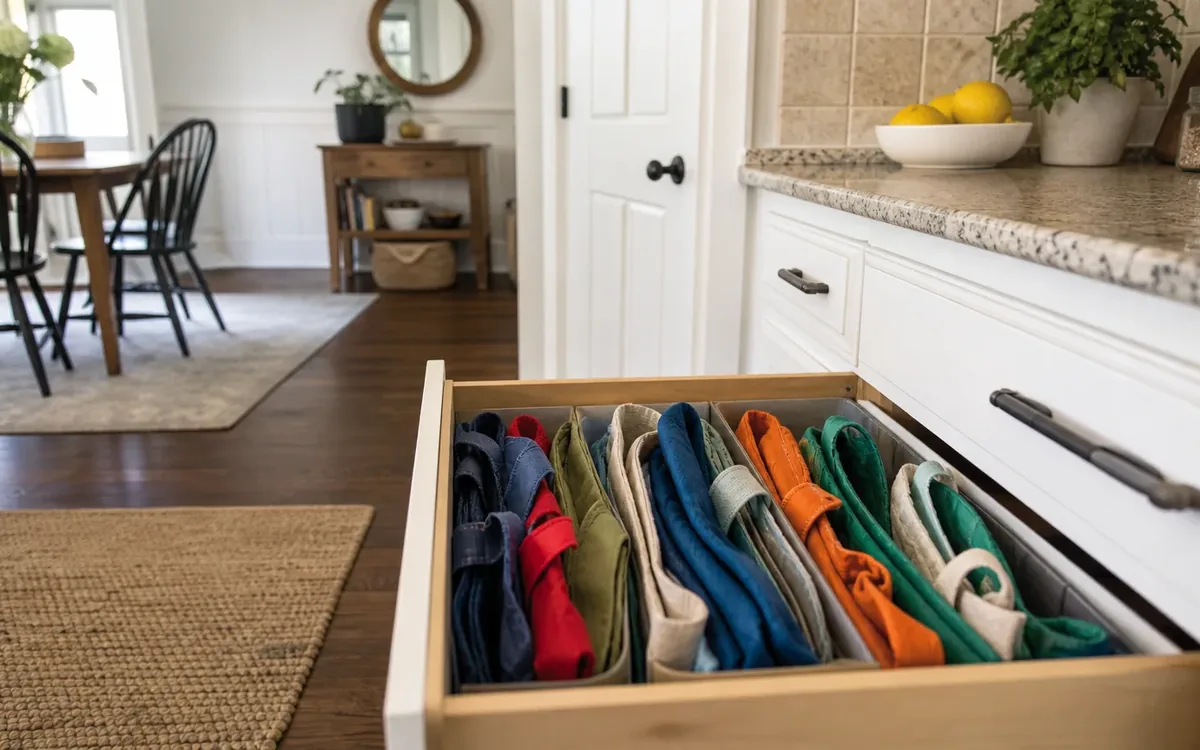
Organize reusable shopping bags by keeping enough for your normal grocery trip, choosing one storage spot, and returning clean, dry bags after each use. Keep insulated bags separate and bring them indoors rather than leaving heat-sensitive materials in a hot vehicle. The downsizing and organizing service can help frame this as a small household storage decision, while the home-transition resource library offers context if bag clutter is part of a larger project.
Quick answer
- Use a normal grocery trip to set your bag limit.
- Keep the bags that fit your groceries and are comfortable to carry.
- Give ordinary bags one compact container or hook.
- Store insulated bags indoors, clean and fully dry.
- Return ordinary bags to the car when you next leave home.
- Put insulated bags by your departure point when you plan a shopping trip.
- Decline new bags unless they replace a worn bag or fill a real need.
The goal is a dependable supply, not a collection. A bag earns its space when it has a clear job and gets used.
How many reusable shopping bags should you keep?
Start with the bags you actually use, rather than every bag you own. The downsizing and organizing service is relevant when you need help defining storage limits, and the guide to how estate cleanouts work provides broader context when bags are mixed with belongings from a household transition.
Base your limit on a normal grocery trip. An unusually large holiday shop should not decide how many bags live in your kitchen all year. Think about the groceries you bring home most often, including bulky items that may not need a bag.
Gather bags from the pantry, closets, trunk, coat hooks, and spare rooms. Separate ordinary shopping bags from insulated bags. Count folding pocket bags and large totes too. Hidden duplicates make a collection seem smaller than it is.
Then review a recent routine trip:
- Which bags carried the main grocery load?
- Which held heavy cans or jars comfortably?
- Did you need a separate bag for fragile items?
- Which bags stayed folded and unused?
- Did another household shopper need a separate supply?
Keep the useful trip set, then add a modest reserve for a specific purpose. A spare that replaces a wet bag has a job. A stack kept for every possible future errand does not.
Write your household limit on the storage bin if that helps. The limit can change when shopping habits change, but adding a new bag should prompt a review rather than automatic expansion.
For shared households, decide whether everyone draws from one supply or keeps a small personal set. Either can work. What causes clutter is having both systems without knowing which bags belong where.
Which bags deserve space, and which should leave?
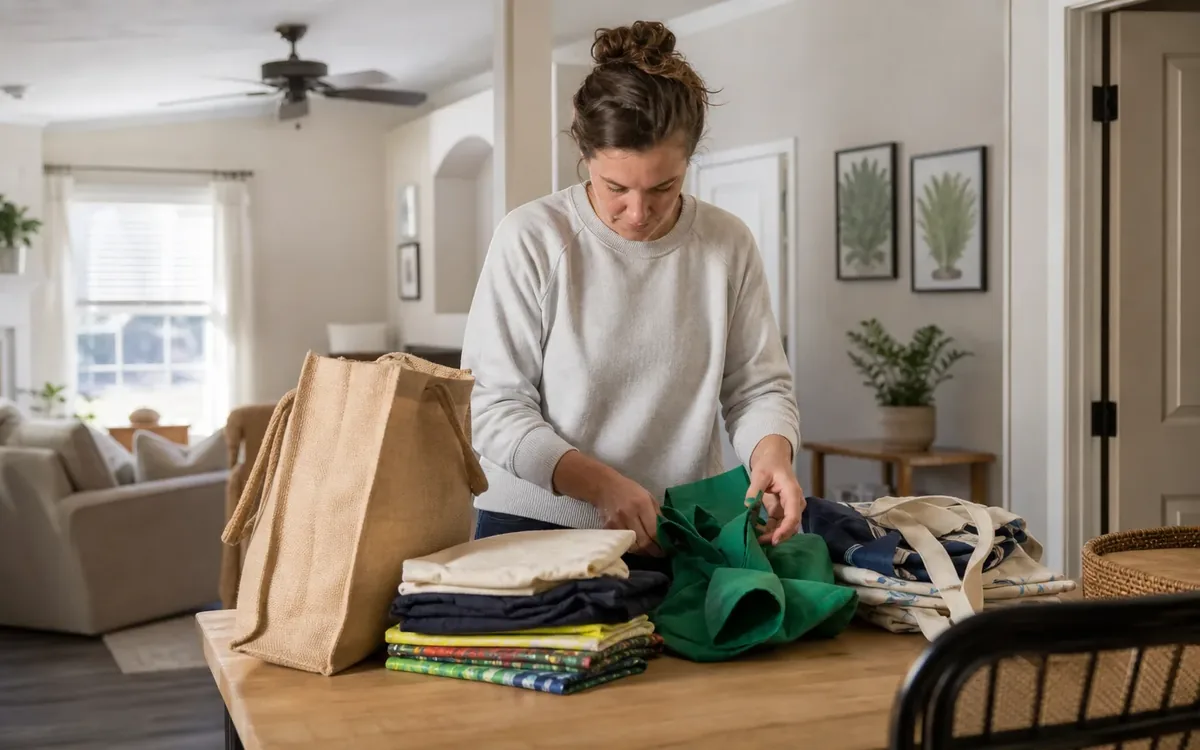
Judge bags by usefulness, condition, and fit. The downsizing and organizing service connects this small sorting task to household space planning, while the guide to the best way to clean out an estate helps place keep-or-release choices within a larger cleanout.
Choose your favorites before deciding what to remove. That makes the comparison concrete. A sturdy bag with comfortable handles may be worth more space than several thin bags that twist, tear, or tip over.
Keep bags that:
- Stand or open well enough for easy packing.
- Fit the groceries you usually buy.
- Have sound seams and comfortable handles.
- Can be cleaned according to their care instructions.
- Fold to fit your chosen storage spot.
Set aside bags with torn straps, damaged seams, persistent odors, or surfaces you cannot clean properly. Check the maker’s directions before washing. Different fabrics, coatings, and insulated linings need different care.
Separate personal meaning from shopping use. A tote from a special event may be a keepsake, but it should not inflate your grocery supply. If you keep it, give it a place with other personal items rather than leaving it in the daily bag pile.
Avoid turning every extra into a new storage project. Assigning surplus bags to laundry, craft supplies, and donation sorting can spread the clutter through the house. Repurpose a bag only when that task already needs a container.
For usable extras, ask a potential recipient before dropping them off. Donation groups and collection programs set their own acceptance rules. Check local guidance for damaged bags, since a reusable tote is not automatically accepted with plastic-film recycling. Disposal and donation arrangements remain household choices or separate provider decisions.
Where should everyday bags and insulated bags live?
Choose storage around the way groceries enter your home. The downsizing and organizing service is useful for connecting bag storage to available space, and the home-transition resource library can help you consider related entryway and household organizing needs without treating every cupboard as a separate project.
Use one home base for ordinary bags. A slim bin near the exit, a pantry basket, or a sturdy hook may work. Pick the spot you pass when leaving for groceries, not a hidden shelf chosen only because it is empty.
The container should hold the limit you have already chosen. Buying a large bin first can make excess bags seem reasonable. If your trip set will not fit, check the folding method and container shape before increasing capacity.
Keep folding simple:
- Flatten the bag.
- Tuck in its sides if needed.
- Fold it enough to fit the bin.
- Place it upright so you can see and remove it.
Avoid tight knots or elaborate folds that make packing a chore. One large bag can hold the rest, but it should open easily and stay within your quantity limit.
Insulated bags need a separate indoor spot. In South Carolina, a vehicle parked in the sun can become hot. Do not use the trunk as long-term storage for a bag whose lining, coating, or care instructions call for protection from heat. Follow the maker’s guidance rather than assuming all insulated bags tolerate the same conditions.
After shopping, empty insulated bags and check for spills. Clean them as directed, then let them dry fully before closing or folding them. A nearby open shelf or hook may work better than a sealed bin.
Keep ice packs wherever their instructions require. They do not need to stay inside the bag. On shopping day, gather the insulated bag and any cooling supplies as part of your departure routine.
How can you build a return-to-car routine that lasts?
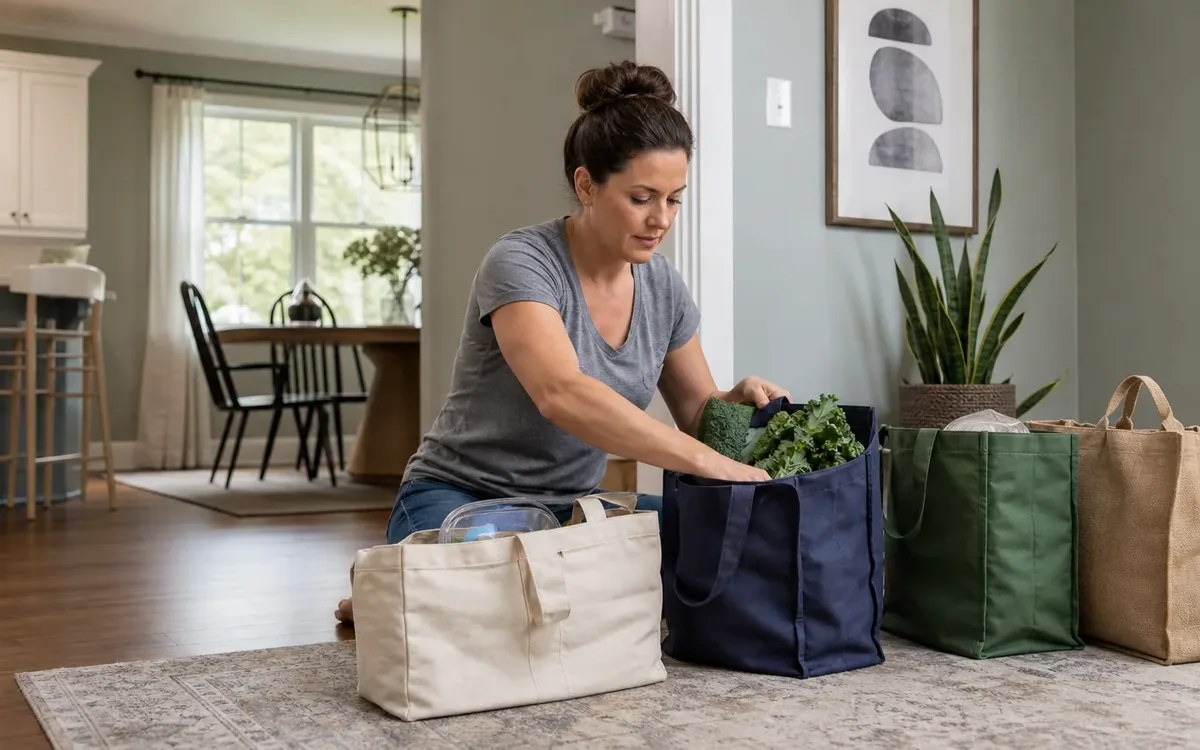
Make the reset part of unpacking groceries, not an extra organizing session. The downsizing and organizing service relates to this kind of practical household routine, while the guide to how estate cleanouts work offers context when a move or cleanout changes where household items need to go.
Give the routine a clear start and finish. After groceries are put away, inspect the bags, place those needing care in a designated spot, and fold the clean, dry ones. Put ordinary bags at the exit for the next trip to the car.
The return cue should match something you already do. Carry bags out when you take your keys, leave for work, or head out for another errand. A vague plan to return them later tends to leave them on a chair.
Use a simple sequence:
- Unpack groceries completely.
- Check bags for spills, damage, and moisture.
- Fold clean, dry ordinary bags.
- Place them in the departure spot.
- Return them to their designated car location on your next outing.
- Leave insulated bags indoors until the next planned shopping trip.
If you store ordinary bags in the car, check their care directions too. Keep them secure and away from vehicle controls. Do not let a bag pile interfere with passenger space or access to items you need.
For insulated bags, use a reminder tied to your shopping list. Write “cold bags” at the top of a paper list or add a reminder to the list on your phone. The reminder replaces the risky habit of leaving heat-sensitive bags in the vehicle.
Decide who completes the reset when several people unpack. One person can inspect and fold while another returns bags. The task matters more than who owns it, but an agreed handoff prevents everyone from assuming someone else has done it.
What if you shop with different cars or without a car?
Build the bag plan around your actual travel pattern. The downsizing and organizing service is relevant to adapting storage to daily habits, and the home-transition resource library provides a place to explore broader changes when your transport or living arrangement shifts.
A return-to-car routine is useful only if you usually take the same vehicle. If you switch cars often, a ready-to-go bag set near the door may work better than supplies scattered across trunks.
For a household with several drivers, choose between a shared departure set and separate basic sets. Consider who shops independently and whether each set gets used. Do not stock every vehicle for the largest possible trip unless that reflects a real need.
If you walk, ride transit, or get a lift, comfort and carrying capacity matter more than total bag count. Test handles with a realistic load at home. A bag that works from a cart to a trunk may be awkward to carry farther.
Match the set to the trip:
- A compact folding bag for an unplanned small purchase.
- Comfortable handled bags for walking with groceries.
- A stable tote for items that tip easily.
- An insulated bag brought from indoors for the planned cold-food shop.
Delivery and pickup households should review what accumulates too. Keep only bags you can use within your storage limit. Ask the retailer about any return option rather than assuming it takes bags back.
A change in travel habits is a good reason to revise the limit. Keeping an old supply for a former routine adds clutter without improving the current one.
When should you review the system or ask for help?
Review the setup when bags stop returning to their place. The downsizing and organizing service is relevant if bag clutter reflects wider storage problems, while the guide to the best way to clean out an estate helps frame decisions when you are sorting another household’s belongings.
Look for the cause before changing the container. An overflowing bin may mean the limit is too high, new bags keep arriving, or folding is too difficult. Bags left on the floor may signal that the storage spot is inconvenient.
Try a small adjustment. Move the bin closer to the exit, remove unused duplicates, or simplify the fold. Avoid buying more storage before checking whether the current supply still matches a normal trip.
The household decides which bags to keep, who uses them, and which reminders fit daily life. A practical cleanout or move team may discuss sorting groups, access to storage, packing preferences, and where the retained set should go. Do not assume that storage rental, washing, donation transport, or disposal is included without discussing scope.
If bag sorting sits within an estate or home-sale project, keep professional boundaries clear. Questions about ownership or estate authority belong with the responsible legal professional or authority. Appraisals, property advice, inspections, contractor work, and compliance determinations belong with the appropriate professionals. Choosing grocery bags does not settle those issues.
Clutter Cleaner of South Carolina is based in Mount Pleasant, serves all of South Carolina, and has Charleston as its primary market. To discuss downsizing and organizing within a larger household transition, call (843) 972-7020.
FAQ
Should I keep every free reusable bag?
No. Keep a new bag if it replaces a worn one or fills a specific need. Otherwise, decline it when you can.
Can insulated bags stay in the car?
Keep heat-sensitive insulated bags indoors and follow their care instructions. Bring them out for planned shopping trips, then clean and dry them before storage.
What if my bag bin overflows again?
Compare the contents with your normal trip set. Remove unused extras and check whether new bags are entering faster than old ones leave.
Do I need a special organizer?
Usually, a suitable bin, basket, or hook is enough. Choose it after setting your quantity limit so the container supports the limit rather than expanding it.



