
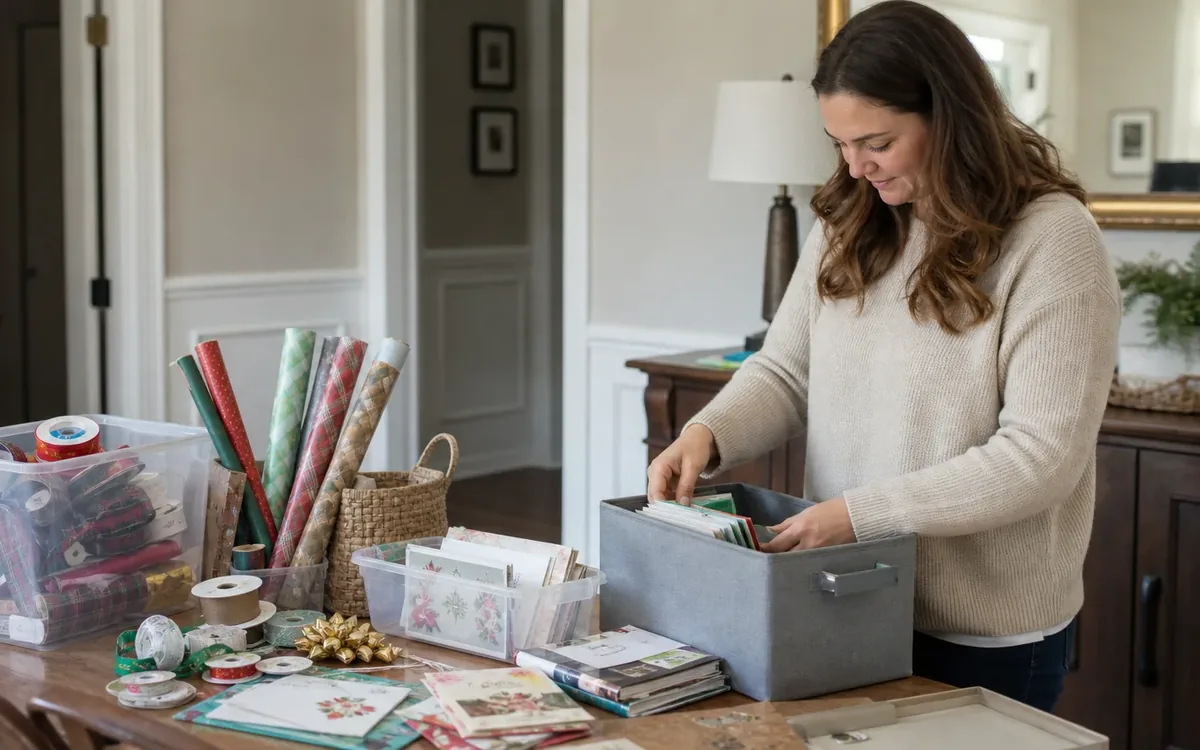
Gift wrap downsizing starts with your actual gift habits and available storage. For a household in Florence, SC, keep usable supplies within one clear limit. Choose a dry indoor location for paper, ribbon, and cards. Confirm that a recipient accepts the extras before arranging a handoff.
Quick answer: Set your wrapping space first. Keep supplies that fit your gift habits and remain in good shape. Match cards with envelopes. Keep ribbon you can use. Store dry paper in a dry indoor spot. Confirm a home for extras before setting them aside for pickup.
How much should Gift wrap downsizing leave you with?
Use downsizing and organizing help to frame your space plan. Browse the home-transition resource guides for related planning needs.
Keep enough wrap for your real gift habits within the space you can spare. A small set of plain paper, useful bags, ribbon, and cards may serve you better than many themed choices. Your limit should reflect the new home, your needs, and how often you give gifts.
Review the occasions when you gave gifts during the past year. Include birthdays, holidays, family visits, and packages mailed to friends. You don’t need a detailed record of every purchase. You need a reasonable picture of your usual wrapping needs.
Someone who gives books needs different supplies than someone who gives food jars. A household that mails gifts may favor plain paper over bulky bows. Your wrapping kit should serve those habits, rather than every event you might attend.
Choose a storage boundary before selecting your favorite supplies. Your available space might include a shelf, container, or drawer and roll holder. Treat that boundary as the limit for the entire collection. Don’t create another storage location for overflow.
Test your choices against a few real gifts in your mind. Would the paper suit them? Are the bags the right size? Would you use those cards without buying more?
Leave room to see and reach each group. A packed bin can hide useful stock and lead to duplicate buys. If supplies don’t fit, choose among them rather than expanding the storage plan.
A gift count helps, but it shouldn’t become a strict buying rule. Keep a little range in sizes and styles. Plain wrap can suit several events, which reduces the need for separate holiday sets.

Which paper, ribbon, and cards are worth keeping?
The downsizing and organizing service overview can help frame the sort. The guide to cleaning out an estate covers broader decisions when supplies belong to a family collection.
Keep materials that are dry, useful, and suited to gifts you expect to give. Judge paper by its usable area, not its roll size. Match cards with envelopes and check their messages. Keep ribbon you enjoy using, rather than lengths that need work before they serve a purpose.
Separate supplies into small groups so you can review their condition. Keep personal correspondence apart from blank cards. Cards that appear unused may contain names, dates, or handwritten messages. Set those aside for private review before selecting supplies for your kit.
For each group, ask what remains usable:
- Keep paper with enough clean, intact space for gifts you commonly give.
- Keep gift bags with usable handles and a shape that suits your gifts.
- Pair blank cards with envelopes that fit before adding them to your kit.
- Keep ribbon lengths that suit your wrapping style and preferred gift sizes.
- Set aside damp, musty, stained, or pest-marked supplies for a separate decision.
Avoid turning worn supplies into a long craft project by default. Saving scraps makes sense if you already use them. It adds clutter when the hoped-for project has no clear place in your life.
A favorite design can still earn a place. You don’t have to keep only plain stock. Keep a few patterns you love, then let them compete for space with the rest.
Old paper and cards can have personal or market value. Don’t assume every vintage piece is valuable. Set aside items with a clear reason for review. An appraiser, rather than a cleanout team, should assess market value when that matters.
How can you protect paper from damp conditions?
Review downsizing and organizing planning for storage choices. Use the home-transition resource library to keep those choices aligned with your larger move.
Choose a dry indoor location and store only dry supplies. Keep paper away from known leaks, wet floors, and recurring dampness. A storage container won’t resolve a moisture problem. Water damage or persistent dampness requires advice from an appropriate building professional.
South Carolina’s damp conditions make location worth thought. Don’t assume a garage, shed, or porch will suit paper storage. Look at the conditions in your own home. A place that has wet patches or a musty smell needs review before you commit supplies to it.
A lidded container can help keep supplies together and shield them from spills. It can’t make damp contents dry. Avoid packing wet paper with sound stock. Keep questionable supplies out of the compact kit while you decide what to do.
Choose a container based on the shapes you keep. Short rolls may need less space than long rolls. Flat cards need room without sharp bends. Ribbon needs a place where you can see the colors without digging through paper.
Use simple storage habits:
- Place dry paper and cards in a dry indoor storage spot.
- Keep the kit away from known leaks and damp surfaces.
- Group cards, ribbon, and paper so each type stays easy to find.
- Label the container with its contents instead of a vague storage name.
- Leave questionable materials outside the keeper group until their fate is clear.
If you already own a shelf or cabinet, note its size for planning. A move team can discuss inventory and placement needs. Furniture condition and installation questions belong with the qualified provider. Moisture repairs and building concerns remain separate contractor or inspection choices.
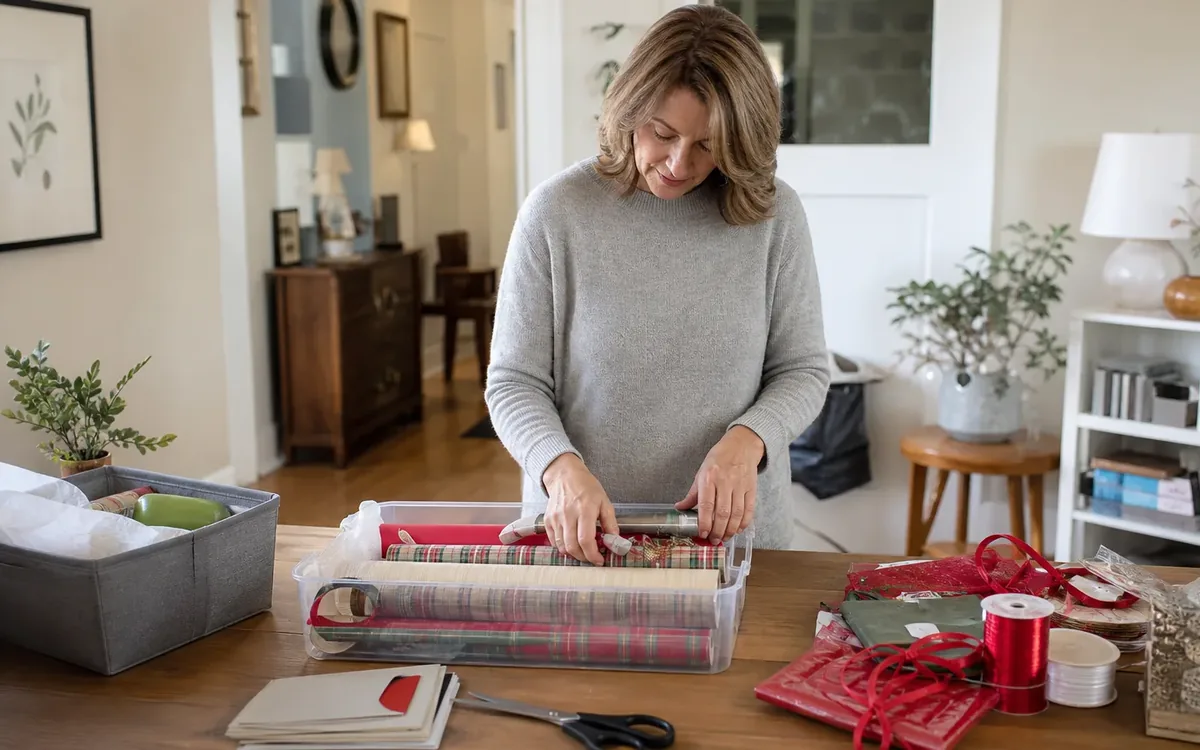
Set a compact wrapping capacity before you pack
Start with the downsizing and organizing service page for the household plan. Read how estate cleanouts work when several people share decisions about the supplies.
A compact kit needs a clear boundary and a repeatable way to choose. Set the available space, group usable stock, and rank what serves your habits. Then pack within that limit. The goal is a kit you can find and use, without a second stash taking over another room.
Use these five steps to turn the sorted pile into a working kit:
- Choose one storage boundary based on the space available in your next home.
- Group usable paper, bags, ribbon, and blank cards before choosing individual favorites.
- Select the most useful items first, including styles that suit several occasions.
- Add a small group of special favorites only if space remains within your boundary.
- Label the packed kit and name a clear destination for each leftover group.
Keep the tools separate in your count, but include their space. Scissors, tape, and tags can fill a drawer on their own. Decide which ones you use and where they belong. Don’t let spare tools push paper into a second storage spot.
A small scrap folder can work for tags or tiny gifts. Give it a firm limit too. If you rarely reach for scraps, you may not need that folder at all.
Consider how you shop after the move. Before buying more wrap, look in the kit. Add a new roll when it meets a real need and fits. Buying large packs because they seem useful can rebuild the pile you just reduced.
Keep your packing label plain. “Gift wrap and blank cards” is clearer than “holiday stuff.” Put keepsake cards in a separate, named group. That prevents someone from treating family notes as spare supplies during the move.
Give usable extras a clear next home
The estate cleanout planning guide can help with shared household stock. The downsizing and organizing service overview helps frame decisions about what stays and what leaves.
Usable extras need a willing recipient and a confirmed destination. Ask about their needs before offering a mixed collection of supplies. Share a clear description and arrange the handoff. The AARP guide to getting rid of anything offers broader decluttering context. Receiving programs or providers determine recycling and disposal acceptance.
Friends, relatives, craft groups, or teachers may want some supplies. Treat these as possible recipients, not confirmed outlets. Ask first. A large bag of random scraps may create work for someone who wanted clean sheets or blank cards.
Make offers specific. “Plain gift bags and matched blank cards” gives a better picture than “craft stuff.” Photos can help the recipient judge the group. Don’t include private notes or addresses in those photos.
Sort leftovers by their next decision:
- Offer clean, usable stock only after a recipient agrees to accept it.
- Keep personal cards and notes apart from supplies meant for sharing.
- Check local recycling rules for coated paper, glitter, ribbon, and mixed materials.
- Ask a disposal provider about materials that don’t fit an accepted reuse or recycling route.
Avoid treating all wrapping paper as the same recycling material. Coatings and attached decorations can affect acceptance. The EPA’s reuse and recycling guidance provides general planning information. Check local rules before arranging collection. A cleanout team may discuss sorting, but the receiving program decides acceptance.
Set a household cutoff for unresolved offers that fits your move plan. This is your choice, not a service turnaround promise. If no one accepts the supplies, pick another route instead of carrying an unnamed donation pile into the new home.
Plan the handoff without losing family keepsakes
Use how estate cleanouts work to understand a shared sort. Use downsizing and organizing support to discuss the wrapping kit within the full household plan.
Clear handoff instructions identify keepers, family review items, and confirmed destinations. Keep personal cards separate from unused supplies. Identify the person authorized to approve each decision. A team may discuss inventory, packing groups, access needs, and provider handoffs. Those discussions should remain within the agreed service scope.
Cards can carry more feeling than the rest of the wrapping box. Save notes because of their meaning, not because every card must stay. You might keep cards from a loved one or those linked to a major event. The household sets that rule.
When several relatives have an interest, a mixed container doesn’t establish consent. Label items that require review and identify the responsible decision-maker. Photographs may help a relative review individual cards. Avoid sharing private correspondence beyond the people involved in that decision.
Keep ownership questions separate from sorting. An executor, attorney, or other responsible person should resolve disputed rights. A team shouldn’t infer permission from who is present in the home. Legal decisions stay with the responsible professional or authority.
For a move, record the wrapping kit’s intended storage location. If you’ll use a cabinet, include it separately in the inventory. Discuss furniture handling requirements with the appropriate provider. Keep repairs and assembly separate from decisions about paper supplies.
If the home is being sold, ask the real-estate professional about presentation needs. Damp areas may need a contractor or inspector. Code questions belong with the responsible authority. These are separate decisions from reducing paper supplies.
Clutter Cleaner of South Carolina serves the statewide territory, including Florence, SC. Its physical location is Mount Pleasant, SC. Ask about the scope that fits your downsizing plan, rather than assuming storage, appraisal, or disposal work is included.
Short FAQ
Find planning context in downsizing and organizing services and the home-transition guide library.
The best wrapping kit fits your habits, space, and usable stock. These common questions address the choices that often stall a sort. Keep family meaning separate from blank supplies. Confirm storage conditions and receiving rules before making a handoff. Ask the right professional when an issue falls outside household sorting.
Should I keep every partly used roll?
No. Keep rolls with enough sound paper for gifts you give. A large cardboard core can make a small amount seem worth saving. If the remaining paper serves no likely gift, let it leave the keeper group. A few useful rolls beat many awkward remnants.
Can I keep wrapping supplies in the garage?
Base that choice on the actual conditions, not spare space alone. Paper needs a dry spot. If the garage has damp patches, leaks, or recurring musty smells, choose another location while the issue gets reviewed. A container won’t solve the source of moisture or restore damaged paper.
What should I do with cards missing envelopes?
Keep them only if you have a clear use. Some may work as hand-delivered notes or tags. Others may need envelopes you don’t own. Don’t create a new shopping task for every card. Match what you can, then choose a small group that fits your habits.
Should greeting cards with messages stay in the kit?
Keep written cards separate from blank stock. Review them as personal papers or keepsakes. You may choose a few with special meaning rather than saving every card. If they belong to someone else, ask before removing them. Keep private names, addresses, and messages out of donation groups.
Is all gift wrap suitable for recycling?
Don’t assume it is. Local programs set their own acceptance rules. Check the rules for the exact material, especially paper with coatings, glitter, foil, or attached ribbon. Keep mixed materials separate while you confirm the route. A receiving program, rather than a sorting helper, decides what it accepts.
Can a downsizing team decide what to discard?
The household or authorized decision-maker should set the choices and consent. A team may help discuss groups, space limits, labels, and handoffs within its scope. Appraisals, ownership disputes, moisture repairs, and disposal acceptance need separate review. Clear notes help prevent valued cards from leaving with blank supplies.



