
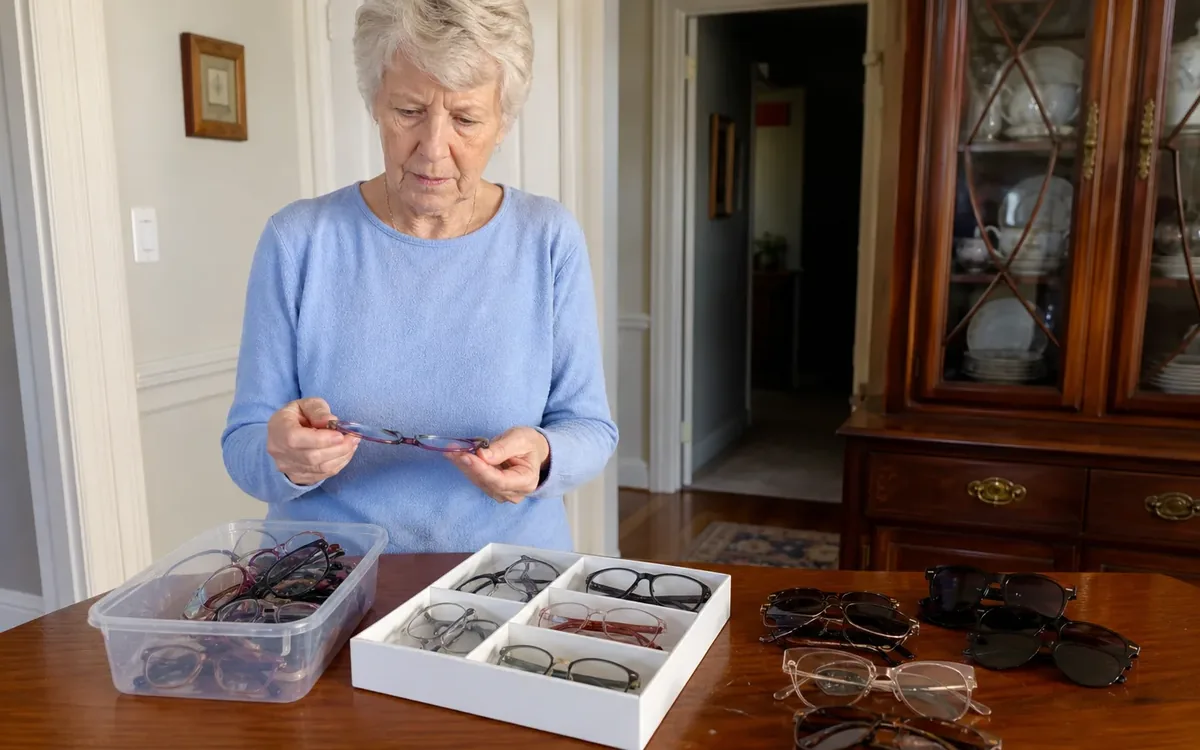
To Sort Spare Eyeglasses before downsizing in North Augusta, SC, separate current pairs, useful backups, and pairs that need review. Keep each pair tied to its owner and purpose. Ask an eye care professional about uncertain prescriptions. Check donation rules before setting aside glasses for a program.
Quick answer: Keep glasses you use and backups with a clear role. Hold unknown pairs for review. Label donation candidates, then confirm current acceptance rules. Don’t assume old glasses share the same purpose or that every collection site accepts them.
Sort Spare Eyeglasses by owner and purpose
The downsizing and organizing service page can help frame the household sort. The guide to cleaning out an estate adds context when glasses belong to someone else. Start with ownership and daily need, rather than age, style, or the number of pairs in a drawer.
Gather glasses from places already included in your move plan. Look in bedside drawers, bags, desk trays, coat pockets, and travel cases. Don’t clear someone else’s daily pair without asking. A pair on a kitchen shelf may still have a regular job.
Use these five steps to build a useful first inventory:
- Group each person’s glasses together, keeping known cases and labels with their matching pairs.
- Mark each pair as prescription, reading, sun, or unknown, using only facts you know.
- Note its current role, such as daily wear, desk use, outdoor use, or backup.
- Record visible concerns without trying to repair the pair or judge its prescription.
- Assign a next step, such as keep, ask the owner, seek advice, or check donation rules.
A plain sheet of paper works well. Give each pair a short code if several look alike. That code can link a case, a note, and a photo without long labels.
Don’t sort by price or brand first. A plain pair may serve a clear need. A costly pair may have no present role. Keep value questions separate from the choice about daily use.
If you find a single lens or an empty case, list it separately. Don’t assume it belongs to the nearest frame. An honest “unknown” is more useful than a guessed match.
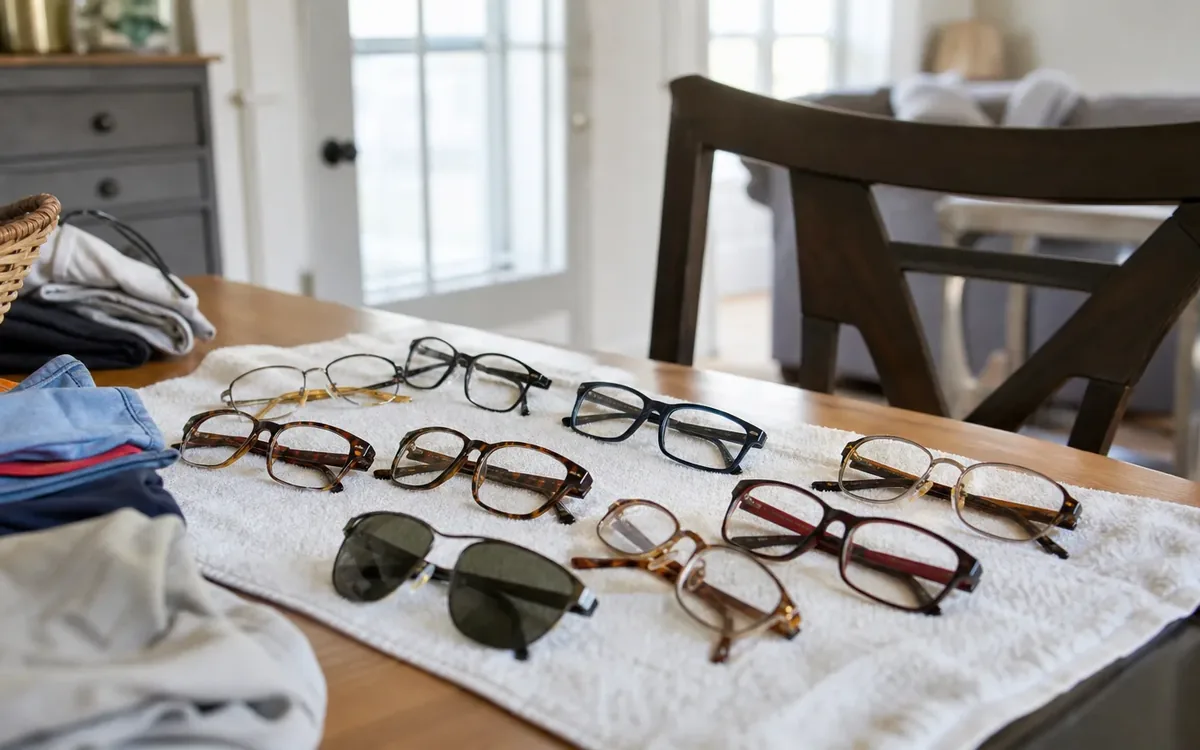
Which glasses belong in the current-use group?
Use the downsizing and organizing overview to plan the keep group, and the home-transition resource library for wider planning topics. Current-use glasses have a known owner and a clear present role. When the prescription or intended use is unclear, leave that decision with an eye care professional.
The current-use group should reflect real habits. Someone may have separate pairs for reading, desk work, and outdoor use. Those roles differ, so a small total isn’t the goal. The goal is a clear set of glasses the person knows and uses.
Ask the owner to name each pair’s job. Write their answer in plain words, such as “my current reading pair.” Don’t turn that note into a medical claim. A household label records what someone reports, not what a professional has checked.
- Keep daily glasses in the owner’s personal carry group, outside the general cleanout pile.
- Mark known prescription sunglasses separately from sunglasses with no known prescription.
- Place uncertain pairs in a review group with a short note about the missing facts.
- Keep prescription records private and separate from bags intended for donation or removal.
A date on a receipt can help trace a purchase. It doesn’t prove that a prescription remains right for the wearer. An old case can also hold a newer pair. Match records with care and ask for help when details conflict.
Avoid making a keep decision based on how the lenses look. Two pairs may seem alike but serve different needs. Family members shouldn’t share or reassign prescription pairs based on appearance.
Once the current-use group is clear, leave it easy to find. During a move, the owner should know where those glasses are without opening mixed boxes.
How many backup pairs should you keep?
The downsizing and organizing service details support a role-based keep plan. The estate cleanout process guide helps explain how household choices shape a handoff. Keep backups for a named need, rather than a fixed count. Ask an eye care professional about any doubt over an older prescription.
There is no single household count that fits everyone. Start by asking what each spare would replace. A useful backup has a known owner and a clear reason to stay. “It might help someday” needs a closer look before it earns space.
A pair may have a role at a second home or in a regular travel bag. The owner can decide if that role is real. A spare with no known use can stay on hold while its details are checked.
Separate personal preference from professional advice. The household can choose how much space to set aside. An eye care professional can address questions about prescriptions and vision needs. A cleanout team should not decide which lenses someone ought to wear.
Keep sentimental pairs in their own category. Glasses worn by a loved one may matter as a keepsake. That is a valid reason to retain them, but it differs from a backup role. Labeling that choice keeps future sorts from starting the same debate.
If several family members want a keepsake, record the agreed recipient. Estate ownership and authority questions may need legal guidance. Don’t treat a handwritten sorting note as proof of the right to give property away.
At the end of this stage, each retained pair should have a reason. The reason can be practical or personal. It should be clear enough that another household member won’t mistake the pair for an unwanted duplicate.
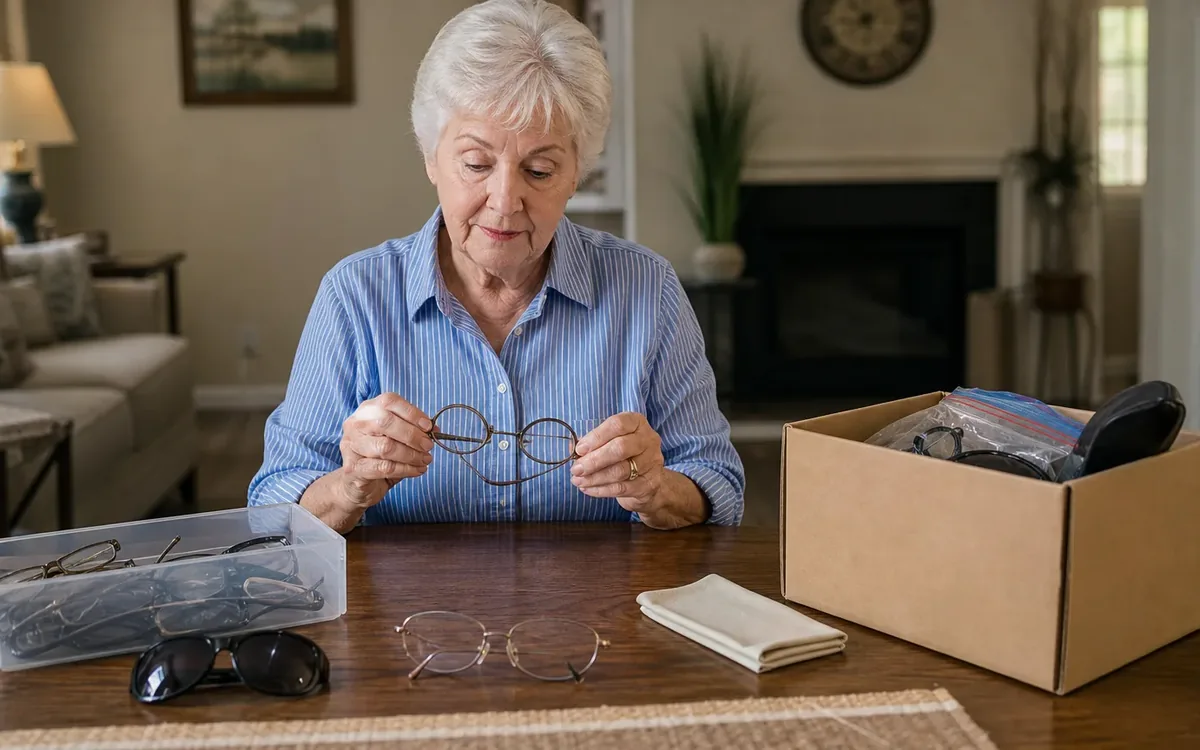
Can old glasses and sunglasses be donated?
The guide to cleaning out an estate helps separate giving decisions from removal plans. The downsizing and organizing service page offers broader planning context. Old glasses may be donation candidates, but acceptance depends on the receiving program. Confirm its current rules before you travel, ship, or arrange a handoff.
For a household in North Augusta, SC, a South Carolina program still needs a direct policy check. A statewide name doesn’t mean every site takes every type of eyewear. A collection point may also have rules that differ from another location.
Use the program’s current contact channel. Ask about the exact items you have, rather than asking only if it takes glasses. Describe prescription pairs, readers, sunglasses, empty cases, and any visible damage as separate groups.
- Ask which eyewear types the program currently accepts and which items it excludes.
- Confirm the collection site’s address and hours before making a special trip.
- Ask how the program wants pairs identified, grouped, and presented for handoff.
- Check its policy for damaged pairs, loose lenses, empty cases, and unknown prescriptions.
- Record the reply and contact date so the household can follow the same plan.
Don’t place a program’s name on a bag until acceptance is clear. Use “donation candidate” while you wait for a reply. That label helps prevent an unconfirmed bag from leaving with the wrong load.
If a program declines some pairs, keep those items out of its donation group. Ask the relevant local waste or recycling provider about remaining options. The EPA’s waste reduction guidance supports reducing waste and reuse, but it doesn’t establish local eyewear acceptance.
Donation also doesn’t settle value. If tax treatment matters, seek advice from the responsible tax professional. Ask the receiving group what records it can provide, without assuming a receipt proves a deduction amount.
Give the move or cleanout team a clear handoff
Review the estate cleanout process guide for the broader handoff process. Use the downsizing and organizing overview to frame sorting needs. Give the team clear item groups and approved next steps. Keep medical, ownership, value, and donation-policy decisions with the household or the responsible professional.
Glasses are small enough to vanish inside a large move plan. A short written handoff helps them stay visible. It should say which groups stay with the owner, which await review, and which have an approved destination.
Clutter Cleaner of South Carolina serves all of South Carolina. Its physical location is Mount Pleasant, and Charleston is its primary market. A North Augusta household can discuss its downsizing needs without assuming every outside task forms part of the service scope.
A practical team may discuss labels, inventory notes, packing groups, and the agreed scope. It may also ask who can approve release of items. Donation delivery, specialist shipping, storage, and disposal need their own clear arrangements. Confirm who is responsible before treating any task as assigned.
- Identify the household contact who can answer questions about glasses and personal records.
- Mark current-use pairs as staying with the owner, rather than leaving with general contents.
- List confirmed destinations beside the relevant groups, with any receiving instructions attached.
- Keep unresolved items on hold until the person with authority approves their next step.
If the move involves an estate, an executor or other authorized person may need to direct the work. A cleanout team doesn’t settle inheritance disputes or interpret legal rights. Refer those questions to the responsible legal professional.
For signed or collectible frames, the household can seek a qualified appraisal. A sort label isn’t an appraisal. Keep potential value questions separate from donation or disposal approval until the household has chosen how to proceed.
Close the sort without losing useful records
The estate sorting guide can help place this small task within a larger clear-out. The home-transition blog offers related planning resources. Close the eyewear sort with a brief final record. Show what stayed, what left, and what still needs a decision from its owner.
Use the same pair codes from the first inventory. Add the final outcome beside each code. “Kept by owner” or “accepted by named program” is clearer than “done.” For a pending pair, name the open question and who will resolve it.
Keep personal eye care records with the owner’s private papers. Donation bags don’t need copies of prescriptions or patient details unless the receiving program has a stated need. Ask about any such request before sharing private records.
A photo can preserve the look of a sentimental pair. It may help someone release an object they don’t want to keep. That remains a personal choice, with no need to push for a smaller total.
Before the final handoff, compare the labeled groups with the written plan. Check names and destinations, rather than reopening every keep decision. A mismatch calls for a pause and a question to the household contact.
Once items leave, save any relevant receipt with the household’s records. Don’t describe an item as donated until that handoff has happened. If a destination changes, update the note so relatives don’t rely on an old plan.
The finished sort should make the next move easier. Current pairs stay findable, backups have a purpose, and uncertain items have an owner for the next decision.
Frequently asked questions
For broader planning, see the downsizing and organizing service and the estate cleanout process guide. These questions address common eyewear sorting gaps. Household choices guide what stays or leaves. Prescription advice, donation acceptance, and legal authority remain separate checks, even when the physical sort is simple.
Should I keep glasses if I don’t know the prescription?
Keep them in the review group until you have enough facts. Note the likely owner and any matching records. Don’t mark them as a useful backup based on looks alone. Ask an eye care professional about the prescription question, then let the owner choose the next step.
Can sunglasses go in the same donation bag?
Only after the receiving program confirms it accepts them. Ask separately about prescription and nonprescription sunglasses. Its rules may differ by type or condition. Keep unconfirmed pairs apart so they don’t travel with accepted items by mistake, and follow the program’s current handoff instructions.
What should I do with broken frames?
Mark the visible concern and keep the pair out of the ready-to-donate group. Don’t assume a program accepts damaged items for parts. Ask the program directly. If it declines them, check disposal options with the relevant local provider rather than guessing which recycling stream applies.
Can a cleanout team choose which pairs to discard?
The household or authorized representative should approve those choices. A team may help record groups and follow an agreed removal plan. It shouldn’t judge prescriptions or settle ownership disputes. Leave unclear pairs on hold, with a named person responsible for making the decision before release.
Do I need a value for donated eyeglasses?
That depends on your record needs and tax situation. Don’t assign a value from the frame’s original price alone. Ask a qualified tax professional what documentation applies. If an appraisal is needed, arrange that separately before the handoff, and ask the receiving group about its receipt process.



