
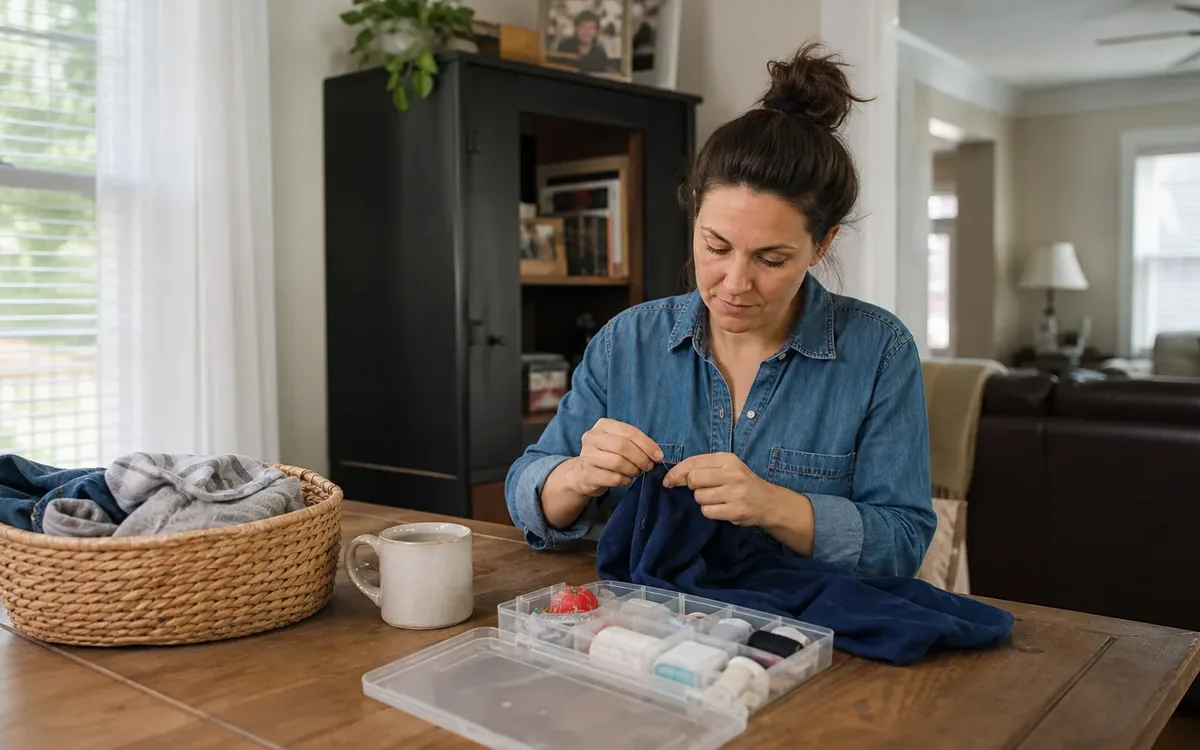
Clothing repairs need a clear next step and a decision date. In a North Charleston, SC household, keep only projects you still want to wear. Give each garment a named task, a place, and a review date. If the repair stalls, choose another path instead of extending the date without cause.
Quick answer: Use one small repair bin. Label each garment with its repair, owner, and decision date. Confirm outside repair options before keeping those projects. At each review, finish the task, book confirmed help, or release the item through a suitable route.
Why do clothing repairs turn into permanent clutter?
The downsizing and organizing service can help frame a smaller-home plan. The household transition guides offer more planning context. Repair piles grow when a small task hides a larger choice. A missing button may seem simple, yet fit, comfort, cost, and interest still need answers. Without those answers, the garment stays in limbo.
An unfinished hem often carries a promise: “I’ll wear this soon.” That promise can outlast the need for the garment. Your work, size, taste, or daily routine may have changed. Fixing the hem won’t solve those changes.
For a South Carolina household downsizing to a smaller home, space becomes more precious. A bag of repairs may compete with clothes worn each week. Moving that bag preserves every old choice. It doesn’t bring any project closer to completion.
Separate the repair from the reason to keep the item. Ask what you would use it for after the work. Name a real need, such as work trousers or a school uniform. A vague hope of future use deserves a closer look.
Sentiment can make the task harder. A parent’s jacket may matter even if nobody will wear it. Treat that as a keepsake choice, rather than a repair project. The household can choose a small memory space without planning needless work.
The aim is to stop using repairs as a holding label. Each item needs a clear reason to stay. That reason should still make sense in the next home.
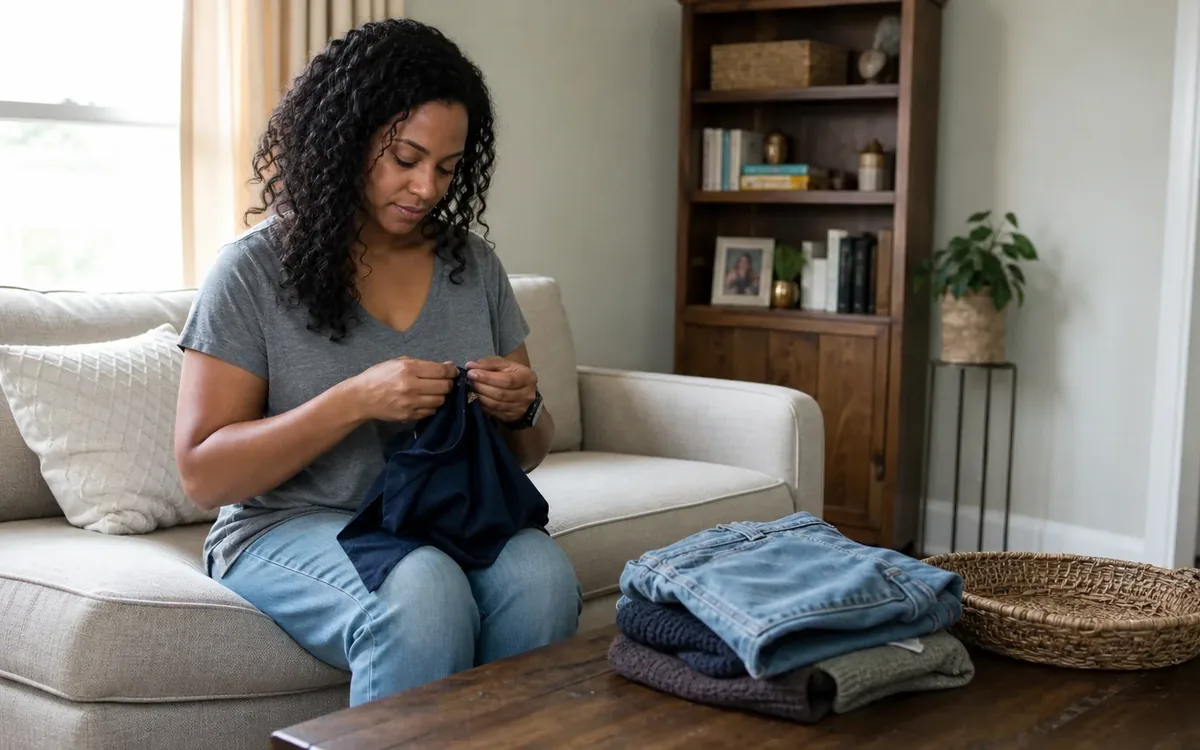
How do you set a useful repair decision date?
Use the downsizing and organizing service overview to plan household choices. The guide to how estate cleanouts work explains a broader transition. A useful decision date fits your actual schedule and space. Choose a date you can review, then define what must happen by that date. Don’t treat it as a vague goal.
Start with the next known household event. That may be a packing session, closet move, or planned donation trip. Work back from that event. Leave room for the repair provider’s stated schedule, rather than assuming a quick return.
A decision date is different from a repair deadline. The first tells you when to choose a path. The second comes from the person doing the work. Keep both on the label when outside help is involved.
Use these four steps to give each project a real plan:
- Write the exact repair on a tag, such as replacing the missing cuff button.
- Name the person who will do the work or contact a repair provider.
- Choose a review date that falls before the garment needs packing or use.
- Record the next choice if the repair cannot move forward by that date.
Make the fallback specific. “Review later” leaves the same open loop. Better choices include keeping it as a named keepsake or asking about textile collection. Another choice may be letting it go through an accepted disposal route.
A date may change for a clear reason. A tailor might need a fitting before quoting the work. Write that reason and the new step. Repeated delays with no action are a sign to rethink the project.
Which garments deserve a place in the repair bin?
The downsizing and organizing service supports planning around household space. The guide to cleaning out an estate offers context for inherited belongings. Keep a repair project when the garment fits your life after the work. Check comfort, use, and the scope of the repair before reserving space for it.
Try on each garment if that’s safe and practical. Look beyond the torn seam or missing button. Check the waist, shoulders, length, and fabric condition. A small repair can hide several larger problems.
Don’t assume a skilled person can fix every issue. Ask a tailor or repair provider about the fabric and fit. They should assess what work is possible. The household then decides if that work serves a real need.
Use a few plain tests before an item enters the bin:
- Confirm that you would wear the garment if the stated repair were complete.
- Check that the fabric has no other damage that changes your repair choice.
- Name a real use for the item in your current or next home.
- Find the needed button or part, or ask a provider about a replacement.
- Compare the repair effort with a useful garment you already own and wear.
Set aside clothes that need a value review. An inherited garment may need an appraiser’s view before major changes. A cleanout or move team shouldn’t decide its value from appearance alone. The owner or authorized decision-maker chooses how to proceed.
Keep ordinary repair choices separate from ownership disputes. If family members disagree about an item, label it as unresolved. Don’t let someone alter or release it to clear the bin. Any estate authority question belongs with the responsible legal professional.

Build one repair station with clear limits
The downsizing and organizing service page can help you consider space needs. The home-transition resource library offers related planning guides. A repair station should make unfinished work easy to see. Use one container that fits your available space. Give each item a label, and keep active work apart from unresolved choices.
Choose the container before gathering the projects. A small shelf box may suit a household with basic mending tasks. A hanging section may work better for coats awaiting fittings. The container is a space limit, not a reason to buy more storage.
Keep repair tools apart from the garments. Loose needles, pins, and scissors need secure storage. Keep them away from children and pets. Check pockets before any item leaves the house.
A simple label prevents repeat sorting. Use paper tags or a shared note tied to item numbers. Include the garment’s owner so nobody decides for someone else. Avoid labels that rely on memory, such as “ask about this.”
The label should hold the key facts:
- Describe the garment clearly enough that another household member can find it.
- State the repair task without hiding fit problems behind the word “fix.”
- Name the person responsible for the next call, fitting, or home repair.
- Record the decision date and any confirmed provider pickup or collection details.
- Note the fallback choice, subject to the owner’s consent and recipient acceptance.
Don’t let completed repairs return to the project bin. Put them with the clothes ready to wear. If an item remains unworn after repair, reassess its place. Finishing the work doesn’t create a lasting reason to keep it.
Check repair and donation options before choosing a route
The downsizing and organizing service overview helps frame the household’s role. The estate cleanout process guide explains larger clear-out planning. Treat repair, donation, textile collection, and disposal as separate choices. Confirm each provider’s current terms before moving garments. An open bag of damaged clothes isn’t yet a donation plan.
For a North Charleston household, local checking should happen before packing. This guide has no verified local tailor or donation site to name. Call your chosen provider directly. Confirm its address, current intake rules, and the work or items it accepts.
For repairs, describe the fabric and damage clearly. Ask if a fitting is needed. Ask how estimates, approval, and collection work. The repair provider should explain the scope and its own terms.
For donations, name the flaw instead of saying “used clothing.” A group may accept clean wearable clothes but decline damaged items. Another recipient may have a separate textile route. Don’t assume those routes share the same rules.
Confirm the current rules with the recipient before setting clothes aside for donation. Keep that choice separate from deciding whether a garment is worth repairing.
The EPA’s guidance on reducing waste and reuse provides wider waste-reduction context. Local collection rules still need a separate check. Ask the relevant provider or authority about items with mold or other hazards. Don’t place them in a donation bag without approval.
Record the answer beside the garment’s decision date. Include any conditions, such as cleaning or bagging rules. If no suitable route is confirmed, keep the choice open briefly. Don’t rename the item “donation” and leave it untouched.
Keep repair choices separate from the move plan
The downsizing and organizing service relates directly to household space choices. The guide to cleaning out an estate can help when inherited clothes are involved. A move plan should reflect settled repair choices. It shouldn’t hide unfinished decisions in sealed boxes. Discuss access, labels, and ownership before the clothes move.
In a downsizing scenario, the household may choose a smaller repair zone. Decide where that zone will sit in the next home. If no space is reserved, don’t pack a large repair backlog by default. Review those items before boxes close.
A practical cleanout or move team may discuss sorting zones and labels. It may ask which items must stay accessible. Scope, handling, and transport details need agreement. Don’t assume garment repair or donation delivery is included.
Clutter Cleaner of South Carolina serves all of South Carolina. Its physical business location is Mount Pleasant, SC. Charleston is its primary market. North Charleston households can discuss downsizing needs within that statewide scope.
The household chooses which clothes to keep, subject to any ownership limits. Tailors assess repair work. Appraisers assess value when needed. Legal questions stay with the responsible professional or authority.
Storage rental, disposal, and contractor work are separate provider or household choices. Home-sale, inspection, and compliance decisions belong with the relevant professional or authority. A clothing plan doesn’t replace those decisions. It simply keeps repair piles from blocking the move.
FAQ: Clothing repair decisions during downsizing
The downsizing and organizing service page explains the relevant service area. The household planning guides offer further reading. These answers focus on unfinished garment projects. Keep ownership, repair scope, and recipient rules clear. Each choice should reduce open decisions, rather than move the same pile elsewhere.
What if I miss a repair decision date?
Review the reason without blaming yourself. If there was a clear barrier, name the next step. Set a new date only when that step is realistic. If nothing changed, use the fallback choice. Repeated postponement suggests the garment no longer earns its place in the repair bin.
Should I buy more bins for unfinished repairs?
Start by reviewing the projects already in your bin. Extra storage can hide work you no longer want. Keep more space only for a clear reason, such as a large coat awaiting a confirmed fitting. Storage is a household choice, not evidence that the repair plan is working.
Can I donate clothes with missing buttons?
Ask the intended recipient before packing them. Describe the missing button and any other damage. Acceptance rules vary, and wearable clothing rules may differ from textile collection rules. Keep the item out of a donation load until you have a clear answer. Then follow the recipient’s stated preparation steps.
What should I do with a sentimental repair project?
Decide if you want to wear it or preserve it. Those are different goals. A keepsake may need no repair at all. If changes could affect its value or meaning, seek suitable professional advice first. Give it a named memory space rather than leaving it in the active repair bin.
Can a move team decide which repairs are worth doing?
A team may help you sort projects and record decisions. The household decides what it wants to keep, within its authority. A tailor assesses repair options, and an appraiser handles value questions. Confirm any team’s agreed scope before asking it to handle garments, contact providers, or arrange their release.
How do I stop the repair pile from returning?
Give new projects the same label and space limit. Don’t place clothes in the bin without a task and date. Check the bin during a routine you already follow. Close each project when the garment returns to use or leaves through an accepted route. Keep the process small enough to maintain.



