
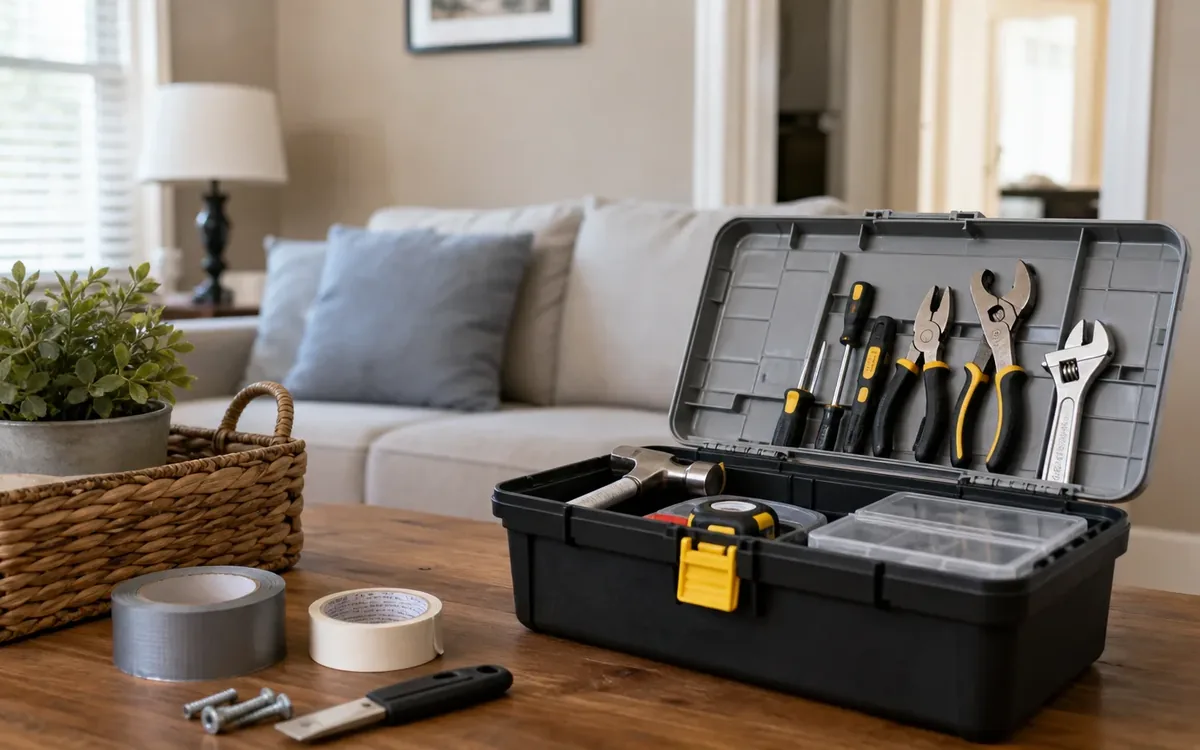
A small repair kit should fit your new home’s needs, not your old workshop. After downsizing in Summerville, SC, keep a portable set for minor tasks you’re allowed to handle. First, confirm who handles upkeep. Then choose supplies, record their purpose, and leave specialist work with the right provider.
Quick answer: Start with your lease, ownership records, or community rules. List household tasks that fall to you. Keep a small group of clearly named supplies for those tasks. Set aside duplicate tools, unknown parts, and project leftovers. Keep repair work separate from sorting and move planning.
The goal is a useful kit with a clear boundary. It’s fine if that kit stays quite small. Some homes place most upkeep with a landlord or other provider. Others leave more choices with the owner.
What belongs in a small repair kit after downsizing?
The downsizing and organizing service can help frame your sorting plan. The guide to how estate cleanouts work offers context for a larger household handoff. For your kit, keep items tied to known needs. Don’t save a full workshop for an unclear future project.
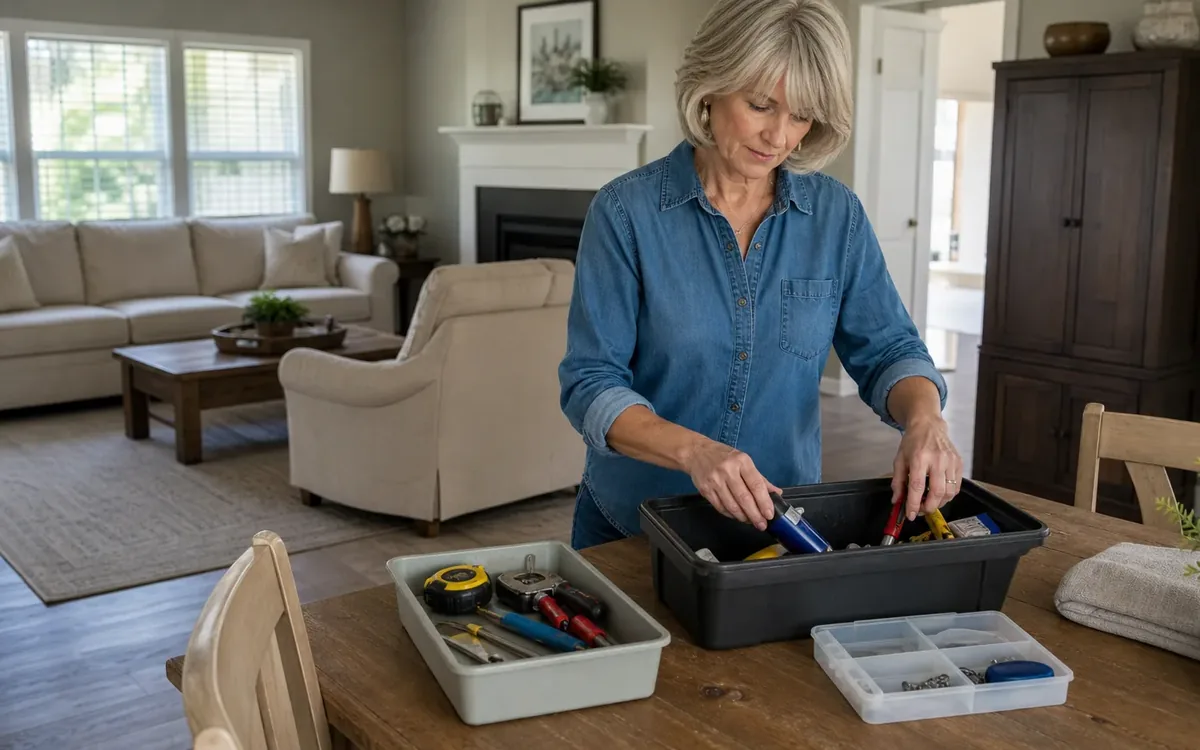
Start with a paper inventory before buying a new container. Name each item and the household task linked to it. An item without a clear purpose belongs on a review list. That doesn’t mean it must leave right away.
Your list might include a tape measure, pencils, and labels. It may include a few hand tools with known purposes. Keep product details where they help identify the right item. A tool’s presence doesn’t establish that a repair suits your home.
Use these questions when sorting the old workshop:
- Keep an item when you can name its purpose at the new home.
- Review duplicates when one item meets the same planned household need.
- Separate unknown parts until someone can identify their intended purpose.
- Record specialty tools as a separate group for later review.
- Save relevant product records with the item they describe.
Avoid filling space simply because a tool looks useful. A smaller kit is easier to list and review. It also makes missing records easier to spot.
Power tools deserve their own inventory, outside this basic kit plan. Record the brand, exact model, and included parts. A qualified provider should address any missing details before future use. This guide doesn’t cover operation, repair, or assembly.
How do your new home’s upkeep rules shape the kit?
Use downsizing and organizing planning to connect your belongings with your new space. The estate cleanout planning guide can help frame decisions about older supplies. Your kit should follow your actual upkeep duties, rather than habits from a past home or workshop.
For a renter, the lease is the starting point. Ask the landlord which tasks require a maintenance request. Keep that answer with your move records. Don’t assume a small change is allowed because it seems easy.
For an owner, review any shared-property or community rules. Ask which parts of the home fall under shared upkeep. Rules may treat fixtures and common areas in different ways. The party responsible for those rules should explain them.
Use this five-step review before choosing the kit’s contents:
- Gather the lease, ownership papers, and any written community upkeep rules.
- List the household tasks you expect at the new residence.
- Ask the responsible party which tasks need prior approval or outside help.
- Match your proposed supplies to the tasks that fall to you.
- Save unresolved questions for the landlord, property manager, or qualified professional.
Your household can decide what it wants to keep. That choice doesn’t settle legal duties or approval needs. Legal questions stay with a qualified legal professional. Code decisions stay with the responsible authority.
An inspection professional can assess concerns within their scope. A cleanout or move team may discuss sorting and handoff details. Neither role replaces the other.
Plan one portable home for the kit
The downsizing and organizing service page describes the wider service category for this transition. The Clutter Cleaner resource library provides more home-transition reading. Plan a single place for your selected items, plus a written list. Keep storage choices separate from decisions about repair work.
Choose the kit’s contents before choosing its container. Otherwise, a large box can invite more saved clutter. Write down the space available at the new residence. Consider access needs, household routines, and who will manage the inventory.
A portable set should suit the person who will carry it. You can compare container size and listed product details. Exact carrying limits and storage conditions belong with product guidance. Ask a qualified provider about items with special requirements.
Divide the inventory into clear groups. Paperwork can stay in a slim folder beside the kit. Small loose parts need names and a known purpose. Unidentified parts should stay out of the working inventory.
There may be items that don’t belong in this container. Chemicals, sharp items, and battery products have separate storage concerns. Follow the supplied product guidance for each exact item. Don’t use this organizing plan as a substitute for that guidance.
Keep an inventory copy with your move papers. Note which box holds the kit. This gives the move team a clear label to follow. It doesn’t ask them to assess tools or plan repairs.
A household member can own the list without doing the work. Their role can be tracking supplies and provider contacts. That division helps keep the plan clear.
Separate useful supplies from workshop leftovers
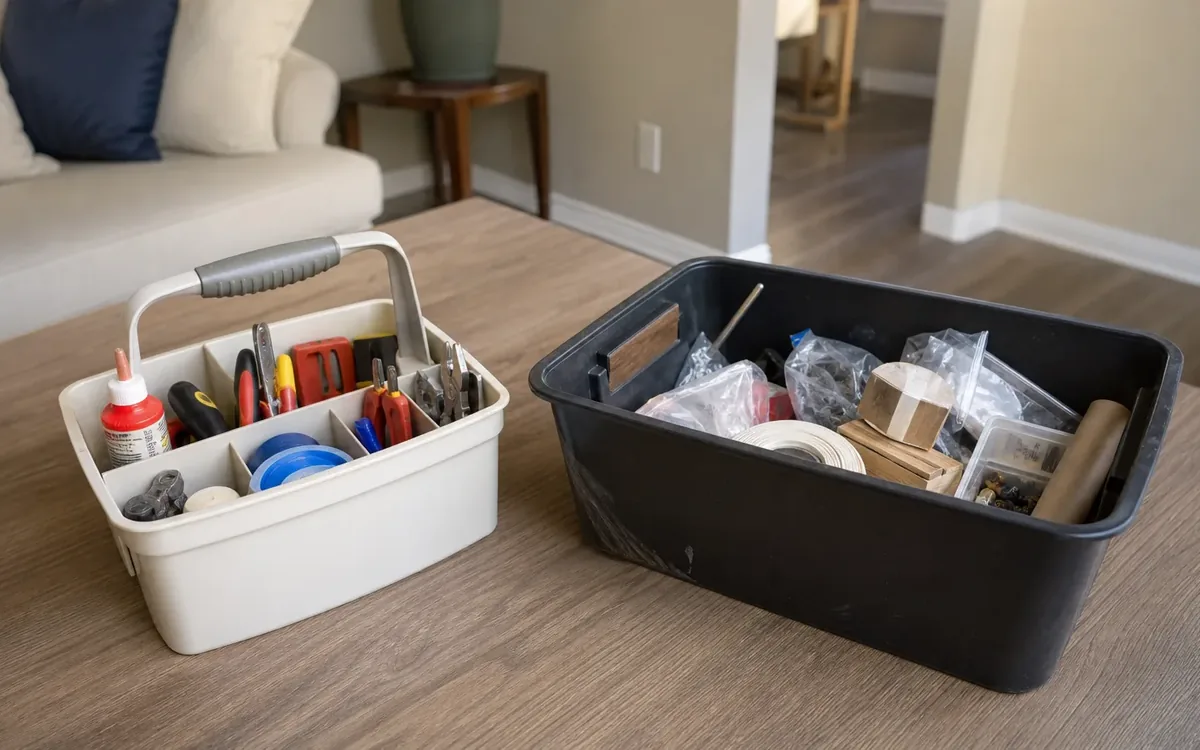
The guide to the best way to clean out an estate offers a broader starting point for sorting. The downsizing and organizing service is relevant when many belongings compete for space. Treat old workshop stock as its own category. Don’t fold it all into your new kit.
Leftover parts often carry a story from an old project. A labeled bag may still belong to furniture you’ve given away. Other pieces may have no known purpose. Keep the history clear before making a choice.
Sort supplies by their status, rather than their size:
- Retain supplies linked to a current, named household need.
- Review spare parts tied to items leaving the household.
- Hold items with unclear ownership until the owner is confirmed.
- Seek an appraisal when value concerns could change the decision.
- Ask a receiving provider which items they will accept.
- Route disposal questions through the provider responsible for that waste type.
Furniture hardware needs a link to the exact furniture item. Record it for a provider handoff, rather than planning installation. Keep power-tool parts tied to exact model details. Don’t combine unknown parts into a general spare-parts bag.
An appraiser decides value within their field. An auction or sale provider sets its own intake terms. A household’s keep-or-release choice is separate from both. Ask for those answers before assigning a final destination.
The EPA’s guidance on reducing waste supports planning for reuse and less waste. It doesn’t establish local acceptance for a specific item. Confirm each destination’s rules before sending anything there.
When should you hand a task to a provider?
Use the guide to how estate cleanouts work to understand broader sorting and handoff planning. The downsizing and organizing service can help you frame space and inventory goals. Hand off questions when duties, item details, or required skills are unclear. A small kit doesn’t replace qualified advice.
Some boundaries should be clear from the start. Electrical and structural work sit outside this kit plan. So do furniture assembly, anchoring, and stability questions. Exact-model qualified evidence is needed before giving instructions for powered items or furniture.
Make a short provider note for each open question. Include the item name and exact model when known. Add a photo of its label if available. State what you need clarified without proposing a repair method.
A practical cleanout or move team may discuss inventory labels. It may discuss which belongings need a separate provider handoff. Ask what falls within the agreed scope. Don’t assume sorting includes repairs, installation, or disposal of every material.
Contractor work is a separate choice and agreement. Storage is another separate choice, with its own terms. Appraisals and disposal may require different providers. Each party should confirm what it accepts and handles.
For sale-related questions, consult the responsible real-estate professional. For inspection findings, return to the inspection professional. Legal and compliance decisions stay with the responsible professional or authority. Keep their answers with the move file.
The household still has a key role. It can choose priorities, retain records, and approve sorting choices. Those decisions make the handoff clearer without crossing professional boundaries.
Keep the kit tied to the home you have now
The downsizing and organizing service page can support planning around changed household needs. The Clutter Cleaner home-transition guides offer related reading as those needs change. Review the kit when the home’s duties change. Don’t let each new purchase create another layer of old workshop stock.
A useful review starts with the inventory, not the box. Ask which listed tasks still belong to the household. Remove items from the proposed kit when their purpose ends. Then decide separately where those items should go.
Make notes when a provider handles a household issue. Their advice may change what you need to retain. Keep exact product records for any replacement item. Avoid saving unrelated parts based on appearance alone.
A good plan can include choosing not to own a tool. You may prefer a provider for rare tasks. That choice can reduce storage needs without shifting your upkeep duties. Confirm the provider’s scope before relying on that plan.
For households in Summerville, SC, the residence’s rules remain the starting point. A city name alone doesn’t define who handles upkeep. Your lease, property documents, and responsible parties supply that detail. Keep those records close to the kit inventory.
Clutter Cleaner of South Carolina is based in Mount Pleasant, SC. Its service territory covers all of South Carolina. Downsizing and organizing is among its listed services. Contact the business to discuss your sorting needs and proposed scope.
The best result is a kit with a clear reason to exist. Every retained item has a known place in the plan. Every open question has a named next contact. The old workshop no longer sets the size of your new household.
Small repair kit FAQ
The downsizing and organizing service is relevant to choices about what stays after a move. The estate cleanout process guide offers related context for provider handoffs. These answers focus on keeping the kit small. They don’t provide repair instructions or settle property rules.
Should I buy a ready-made tool kit?
Compare its contents with your task list before buying. A ready-made set may include items you won’t need. It may also lack product details needed for a specific task. Keep the choice tied to your home’s duties and storage space. Ask a qualified provider about any unclear item.
Can I keep tools from my old workshop?
Yes, keeping them is a household choice when ownership is clear. Review each item’s purpose at the new home. Separate specialty tools from the small kit. For powered items, record exact models and known parts. Leave use, repair, and condition questions with a qualified provider.
What if my landlord handles most upkeep?
Your kit may focus on records, labels, and simple measuring supplies. Confirm duties through the lease and the landlord’s written guidance. Don’t assume ownership of tools gives permission to change fixtures. Keep maintenance contact details with your household records so questions reach the right person.
Should spare furniture parts go in the kit?
Keep them linked to the exact furniture item instead. Record the item name, model when known, and parts received. This helps a qualified provider understand the handoff. It doesn’t establish that parts fit or that assembly is appropriate. Set unidentified pieces aside for review before deciding their destination.
Who decides where unwanted supplies should go?
The household chooses a preferred destination once ownership is clear. Receiving providers decide what they accept. An appraiser handles value questions within their scope. Disposal providers confirm their own intake rules. A cleanout plan can track these choices, but it doesn’t replace those separate decisions or agreements.
How can I stop the kit from growing again?
Keep a list of its contents and intended purposes. Review that list when your home or upkeep duties change. Before adding an item, name the need it meets. Consider outside help for rare work. That keeps the kit tied to current needs, rather than possible future projects.



