

Online estate auction sellers generally should use local pickup for furniture, fragile collections, bulky goods, and lower-value household items, while reserving shipping for smaller pieces that can be packed safely and economically. The right choice depends on the item, buyer terms, packing responsibility, property access, and the estate’s broader cleanout plan. Decide these details before bidding opens so buyers understand exactly how purchases will reach them.
Quick answer: Local pickup usually suits items that are large, delicate, difficult to box, or costly to ship. Shipping can expand the bidder pool for compact, durable, and desirable items. A mixed auction may use both, but every lot should clearly state its fulfillment method, fees, deadlines, and buyer responsibilities. The auction provider should explain its process, while the household or authorized estate representative approves terms and qualified professionals address legal, appraisal, property, and compliance questions.
What is the practical difference between pickup and shipping?
Local pickup keeps the item near the estate until the buyer or the buyer’s designated mover collects it. The auction listing or bidder terms should explain the pickup location, access procedure, collection window, identification requirements, and any limits on assistance.
Shipping adds several steps after the sale. Someone must confirm the address, choose suitable packing materials, protect the item, select a carrier or separate shipping provider, calculate charges, and manage tracking or insurance options. Those responsibilities may belong to the auction provider, buyer, seller, or an independent pack-and-ship business, depending on the published terms.
The choice affects more than convenience. It can influence:
- Which bidders are willing to participate
- How much handling an item receives
- Whether specialized packing is needed
- When sold property leaves the home
- How much space must remain available for staging and collection
- Whether movers, carriers, or third-party shippers need access
- When the remaining cleanout can proceed safely
For households considering an online sale, Clutter Cleaner of South Carolina’s auctions and estate sales service overview provides context on how auction decisions fit into a broader household transition. Specific fulfillment terms still need to be confirmed for the particular sale.

Which estate auction items are better for local pickup?
Pickup is often the more practical choice when an object is hard to package, expensive to transport relative to its sale value, or likely to be damaged through ordinary parcel handling.
Common pickup candidates include:
- Sofas, dining tables, bed frames, and large cabinets
- Appliances and exercise equipment
- Oversized mirrors, framed art, and lamps
- Stone, glass, or marble-topped furniture
- Large sets of books, dishes, tools, or cookware
- Garden equipment and outdoor furniture
- Delicate collections that need careful, in-person transfer
- Items with uncertain dimensions, weight, or disassembly requirements
Local pickup does not automatically mean easy pickup. A heavy dresser on an upper floor may require capable labor, moving equipment, and a safe route through the property. A buyer arriving alone or in a small vehicle may be unable to remove it.
Auction terms should therefore state whether buyers must bring:
- Enough people to lift and carry their purchases
- Dollies, hand trucks, straps, blankets, or tools
- Boxes and wrapping for loose items
- A vehicle large enough for the lot
- A professional mover for unusually heavy or specialized objects
The household can decide whether it is comfortable allowing buyers into particular parts of the property, subject to the auction arrangement and any property restrictions. The auction provider may discuss staging, traffic flow, pickup scheduling, and how sold lots will be identified. A qualified mover should determine how to handle objects requiring specialized labor or equipment.
Which items may be reasonable to ship?
Shipping tends to work best for items that are compact, structurally sound, easy to describe accurately, and valuable enough to justify packing and transportation costs.
Potential shipping candidates include:
- Jewelry and watches
- Coins, stamps, and other small collectibles
- Small decorative objects
- Compact textiles or clothing
- Books or paper ephemera in manageable quantities
- Small electronics with appropriate protective packing
- Durable kitchen collectibles
- Small artwork that can be protected adequately
Suitability is item-specific. A small porcelain figure occupies little space but may still need double boxing and careful cushioning. A framed work may require protection for its glazing, corners, surface, and frame. Batteries, liquids, aerosols, chemicals, firearms, and other regulated or restricted items can present carrier, legal, or safety issues.
An auction provider or independent shipping company may discuss packing options and carrier rules. The responsible carrier or compliance authority determines what it will accept. Questions about ownership, transfer restrictions, permits, estate authority, or regulated property belong with the appropriate attorney, agency, licensed dealer, or other responsible professional.
Before treating any item as shippable, confirm:
- Its packed dimensions and weight can be established
- Suitable packing materials and expertise are available
- The proposed carrier accepts that item category
- The buyer understands all shipping and handling charges
- The terms address tracking, declared value, insurance options, and claims
- Someone is responsible for address verification and dispatch
For related planning beyond auction fulfillment, the guide on how estate cleanouts work explains how sorting, removal decisions, and property preparation can connect.
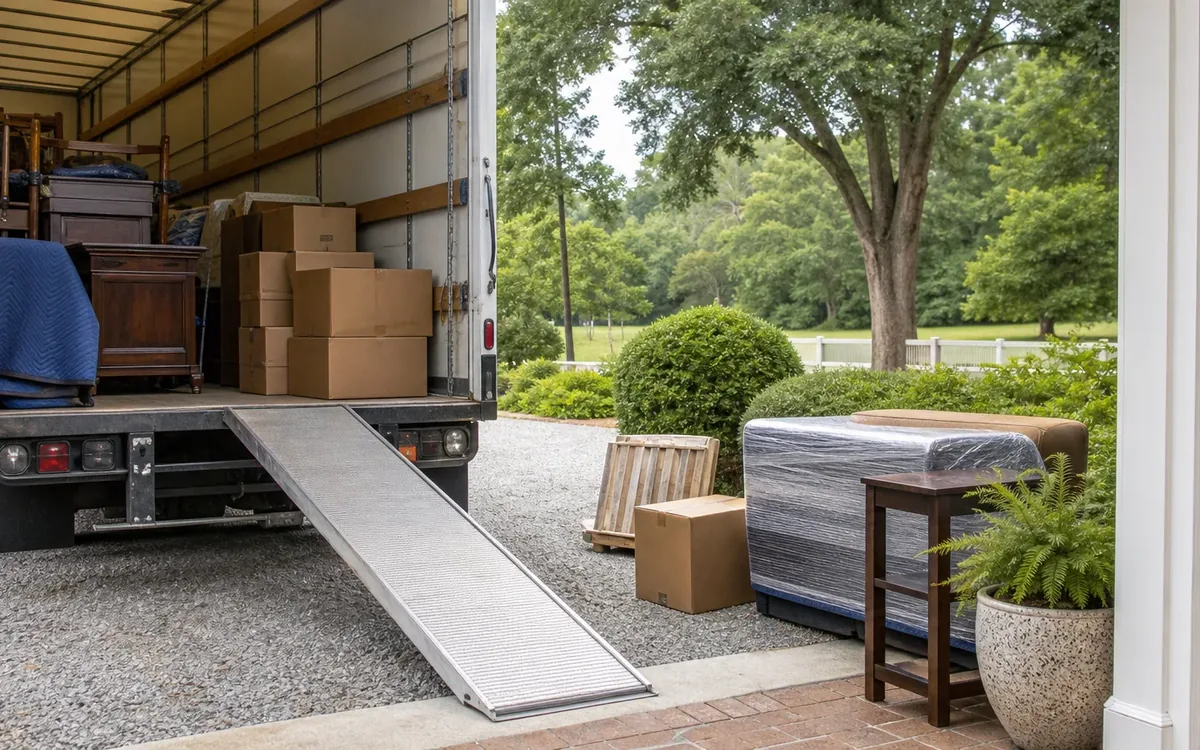
What should you ask an auction provider about fulfillment?
A clear conversation before the catalog is published can prevent confusion after bidding ends. Ask these seven questions:
-
Which lots will be pickup-only, shippable, or buyer-arranged freight? Each listing should match the actual fulfillment plan.
-
Who packs shippable items? Clarify whether packing is performed by the auction provider, an independent shipper, or the buyer’s chosen company.
-
Who pays each charge? Buyers should be able to distinguish purchase price, buyer premiums if applicable, taxes, packing fees, carrier charges, insurance selections, and third-party costs.
-
How are pickup appointments handled? Ask how buyers receive instructions, whether appointments are required, and what happens if a buyer misses the published collection period.
-
Is removal help included? Never assume staff will lift, disassemble, pack, load, or provide tools. The terms should say what buyers must supply.
-
How are damage and shipping claims handled? Identify who buys postage, selects coverage, files a claim, retains packaging, and communicates with the carrier.
-
What happens to uncollected purchases? The written terms should address missed pickup, storage, rebooking, abandonment, resale, or disposal without relying on informal assumptions.
Request answers in the bidder terms, not only in a phone conversation. Written terms let bidders evaluate the full obligation before placing bids.
A practical cleanout or move team may also discuss how pickup traffic interacts with sorting zones, removal work, and access to the home. It should not rewrite an auction company’s contract, interpret estate documents, or decide ownership disputes.
How does fulfillment affect the cleanout timeline?
Sold items are not necessarily removed as soon as bidding ends. Pickup-only pieces may remain in place until their buyers arrive. Shippable goods may need to stay organized while payments clear, addresses are verified, packaging is obtained, and carrier arrangements are completed.
That means the cleanout sequence should be built around control of sold inventory. Removing unsold contents too early can create several problems:
- Sold and unsold property may become mixed
- Lot labels can be separated from objects
- Packing areas may be blocked
- Movers may accidentally handle auction merchandise
- Buyers may lack a safe route to large purchases
- Cleaning or repair work may expose items to dust or damage
A useful sequence is to identify which spaces remain dedicated to the auction, which paths must remain open, and which areas can be cleaned without disturbing sold lots. This is coordination, not a promise that every transition follows the same schedule.
Avoid setting a property closing, contractor visit, final cleaning, or key transfer based only on an expected auction date. Confirm the actual pickup and shipping responsibilities first. Real-estate professionals determine listing and closing strategy, contractors control their work, inspectors make inspection decisions, and the responsible authority addresses code or compliance requirements.
How should a local pickup be organized?
Pickup should protect people, property, and lot accountability. Before buyers arrive, consider these six practical steps:
-
Separate sold lots clearly. Keep lot numbers visible and avoid combining purchases unless the auction provider’s records support it.
-
Create a controlled route. Remove trip hazards where appropriate and identify doors, stairs, gates, elevators, parking restrictions, or narrow turns buyers need to know about.
-
Protect off-limits areas. Close or mark rooms containing personal papers, medications, valuables, retained belongings, or unrelated work.
-
Confirm removal expectations. Remind buyers whether they must bring labor, tools, packing materials, and suitable vehicles.
-
Plan for large-item movement. Heavy, built-in, or awkward items may call for a qualified mover or contractor. Do not assume a general cleanout crew or auction staff will disconnect, dismantle, or modify property.
-
Document release. The auction provider should explain its payment verification and item-release procedure.
Condominiums, managed communities, storage facilities, and secured buildings may impose their own access or move rules. The property owner or authorized representative should obtain requirements from the relevant manager or authority rather than assuming auction terms override them.
Who decides shipping, value, legality, and property access?
Clear role boundaries help keep an auction organized.
The household or authorized estate representative can decide:
- Which eligible items to offer, retain, donate, or otherwise address
- Whether broader shipping access aligns with its goals
- What property areas may be used for staging and pickup
- Whether to hire separate movers, packers, storage providers, or contractors
- Whether proposed auction terms are acceptable before approval
An auction provider may discuss:
- Lot grouping and catalog presentation
- Pickup-only versus shipping-eligible designations
- Bidder instructions and published sale terms
- Payment confirmation and release procedures
- Packing arrangements it actually offers or coordinates
Other professionals or authorities decide matters within their roles:
- A qualified appraiser provides formal appraisal opinions
- An attorney interprets wills, probate authority, contracts, title, or ownership disputes
- A real-estate professional advises on listing and transaction strategy
- An inspector evaluates property conditions within the inspection scope
- A contractor determines construction, disconnection, repair, or specialty removal methods
- A carrier or shipper controls acceptance, packaging standards, claims, and transport rules
- Government agencies or other responsible authorities determine legal and compliance requirements
Storage is also a separate household choice. If pickup cannot occur before another property milestone, the authorized decision-maker may explore storage with an appropriate provider. Moving goods into storage can create additional handling, access, documentation, and cost considerations, so it should not be treated as an automatic cleanout step.
Building a mixed pickup and shipping plan
An online estate auction does not have to use one fulfillment method for every lot. A mixed approach can keep bulky household goods local while making selected small pieces available to distant bidders.
Create three working categories:
- Pickup only: Furniture, large equipment, bulk lots, and difficult-to-pack objects
- Shipping eligible: Compact items approved under the auction and carrier process
- Special handling: Art, regulated goods, unusually fragile pieces, freight items, or objects requiring professional review
Then compare those categories with the property plan. Identify which items block hallways, occupy rooms needed for cleaning, or require specialized removal. If a large pickup-only item remains in a room scheduled for contractor work, the household may need to adjust access or ask the responsible providers to coordinate.
Do not select shipping merely to make a listing look more accessible. If packing responsibility is vague or the item cannot withstand transport, broader bidder reach may create more disputes than value. Likewise, do not make every lot pickup-only without considering whether compact, appealing pieces could reasonably use an established shipping process.
Short FAQ
Can a winning bidder send someone else to collect an item?
Possibly, but the auction terms should explain authorization, identification, payment verification, and release requirements. Buyers should obtain approval before sending a mover or representative.
Who is responsible for packing a pickup-only lot?
Usually the published terms control. If the lot is pickup-only and no packing help is promised, the buyer should expect to bring suitable materials and labor. Confirm rather than assume.
Should furniture be disassembled before pickup?
Only if the owner or authorized representative permits it and the work can be done safely. Specialized, attached, or complicated pieces may require a qualified mover or contractor. The auction listing should identify known removal concerns.
Can auction items stay in the home after other cleanout work begins?
They can, if sold goods remain protected, identifiable, and accessible. Coordinate work zones so cleanout activity does not mix, discard, block, or damage auction lots.
Who decides whether an item needs an appraisal?
The household or authorized representative decides whether to seek one, often with guidance from an attorney, fiduciary, or other relevant adviser. A qualified appraiser provides the appraisal opinion. Auction estimates and sale results should not automatically be treated as formal appraisals.
Where does Clutter Cleaner of South Carolina fit?
Clutter Cleaner of South Carolina, physically based in Mount Pleasant and serving households across South Carolina, may discuss auctions and estate sales alongside estate cleanouts, downsizing and organizing, move management, home sale preparation, and code compliance support. Exact responsibilities should be confirmed for the project. Legal advice, formal appraisals, real-estate representation, inspections, shipping, storage, and contractor work remain with the household’s chosen qualified providers or responsible authorities.



