
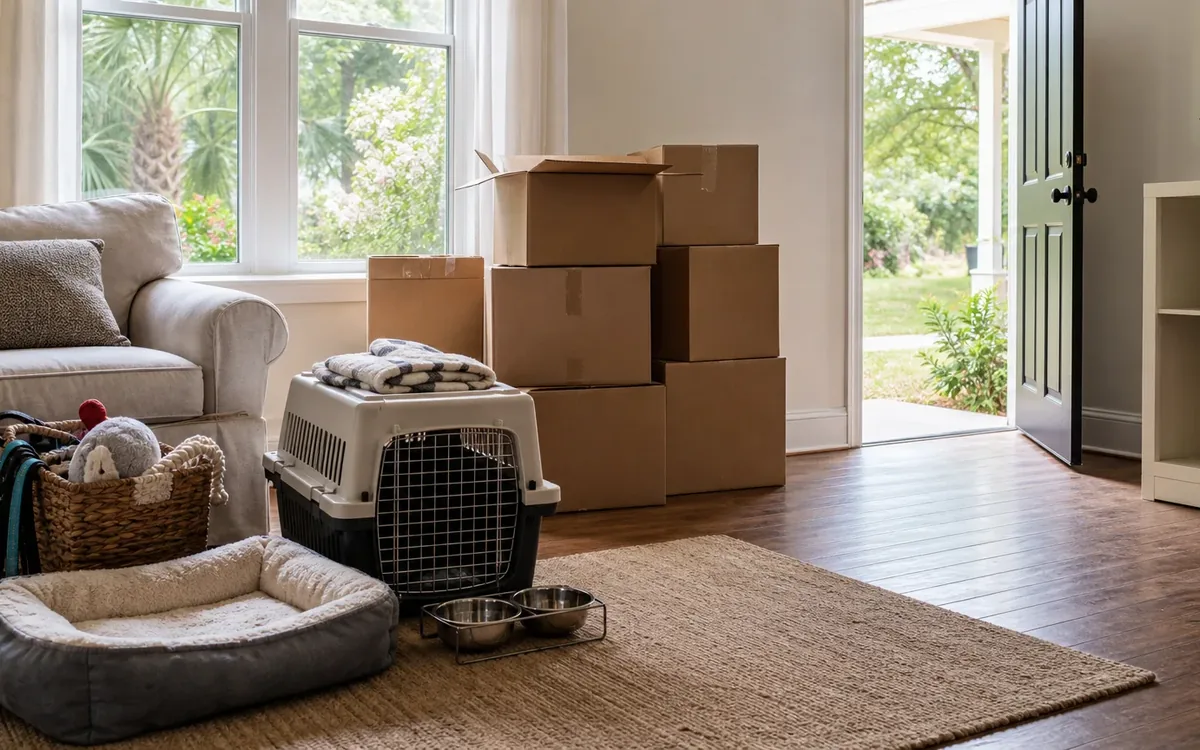
Moving day is safer and calmer for pets when the household keeps them away from open doors and active work areas, assigns one person to oversee them, prepares secure transportation, and sets up their essentials first at the new home. In South Carolina, heat and humidity add another concern: pets should not be left in parked vehicles, garages, porches, or other spaces where temperature and ventilation may become unsafe.
Quick answer: Choose either a closed quiet room or an off-site caregiver for your pet. Pack food, water, medication, records, identification, bedding, and cleanup supplies separately. Confirm that the destination is secure before arrival, transport the pet under direct household supervision, and introduce the new home gradually.
Why does a South Carolina move require a pet-specific plan?
A move changes several things at once. Doors stay open, unfamiliar people carry large objects, furniture moves out of place, and the pet’s normal feeding or walking routine may be disrupted. A dog or cat that is ordinarily relaxed may hide, bolt, bark, scratch, refuse food, or become difficult to handle.
South Carolina weather can make improvised arrangements especially risky. A screened porch, garage, vehicle, or unconditioned room may seem convenient, but heat, humidity, direct sun, limited airflow, and water access can change quickly. The household should select a controlled environment rather than assuming any closed space is suitable.
Pet planning belongs beside the household’s packing and transportation plan, not at the end of it. Families coordinating a larger transition can review move management services in South Carolina to understand how household belongings may be organized around the move. Pet handling, veterinary guidance, boarding, and animal transportation should still be arranged with the appropriate caregiver or provider.
Should your pet stay in a quiet room or leave the property?
The right choice depends on the pet’s temperament, health, escape risk, and comfort with other people or places. The household makes this decision and remains responsible for selecting and supervising any sitter, boarding provider, or transport arrangement.
A quiet room may work when the pet settles well at home and the room can remain securely closed. Choose a climate-controlled room that workers do not need to enter. Remove furniture or boxes scheduled for loading so nobody has a reason to open the door.
Post a clear note on both sides of the door stating that a pet is inside and the door must remain closed. Tell everyone involved, including household members, movers, cleaners, and contractors. A sign alone is not enough if people have not been briefed.
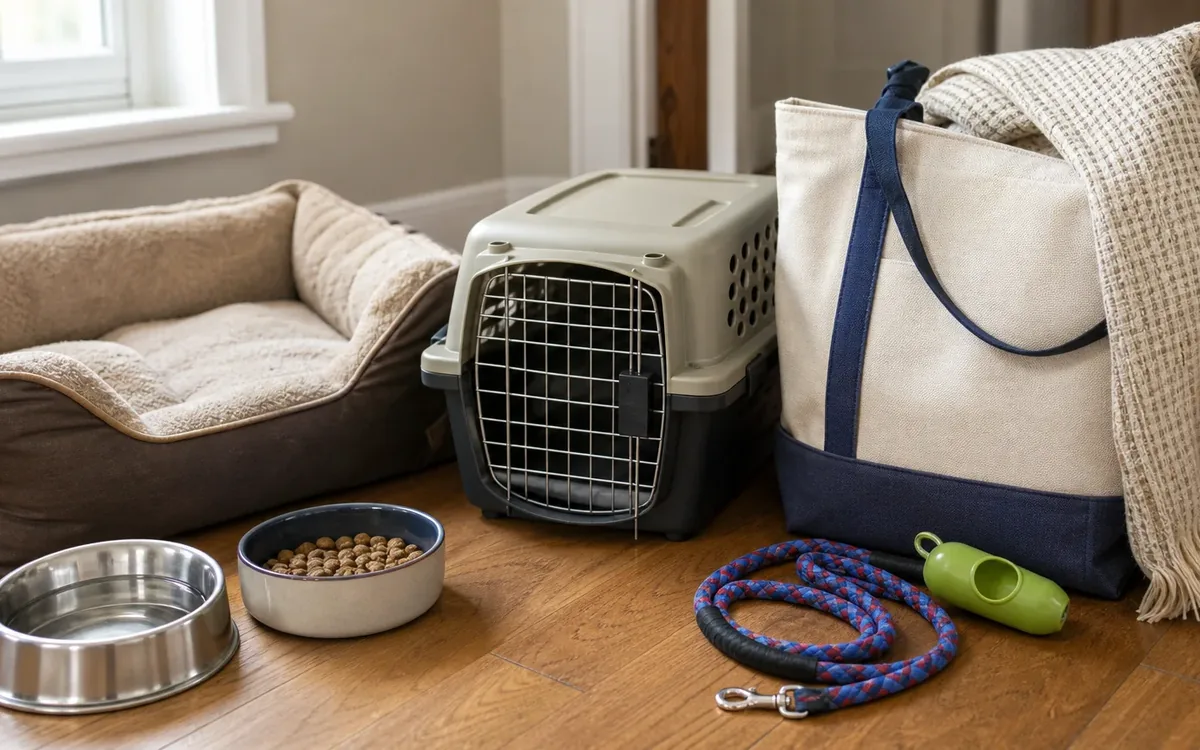
Equip the room with items appropriate to the animal:
- Fresh water in a stable container
- Food if the normal schedule requires it
- A bed, blanket, crate, or familiar hiding place
- A litter box or planned toilet breaks
- Prescribed medication and written instructions
- A leash, harness, carrier, or other secure restraint
- Comfortable temperature and ventilation
- Quiet background sound if that normally helps
An off-site plan may be better for a pet that is highly reactive, likely to escape, distressed by noise, or medically vulnerable. Possible arrangements include a trusted friend, a pet sitter, a veterinarian-approved option, or a boarding provider selected by the household. Confirm policies, vaccination requirements, drop-off arrangements, supervision, and emergency contacts directly with that provider.
Do not place a pet in a yard simply because the indoor space is busy. Gates can be opened, fences may have gaps, and unfamiliar activity can encourage climbing or digging. Outdoor containment also does not resolve South Carolina heat and humidity concerns.
Build a pet plan into the packing sequence
The pet’s supplies should travel with the household, not disappear into the general load. Mark one bag or bin for immediate access and keep it out of loading zones.
Include:
- Food and familiar treats
- Bottled or household water if a sudden water change causes problems
- Bowls
- Medication in its original labeled container
- Veterinary contact information
- Vaccination and medical records when relevant
- Leash, harness, carrier, and waste bags
- Litter, a small litter box, and scoop for cats
- Bedding or an unwashed familiar-smelling item
- Cleaning towels and pet-safe cleanup supplies
- Current photographs of the pet
- Written feeding, medication, and behavior notes
Avoid packing all pet items together if some must remain available until departure. Keep the carrier, leash, water, and medication under the control of the person responsible for the animal.
For a home with many rooms or years of accumulated belongings, organizing the move may overlap with downsizing or cleanout work. The guide to how estate cleanouts work explains how sorting and removal decisions can be separated. This helps prevent pet supplies, records, crates, or sentimental items from entering a discard or donation stream by mistake.
Use visible labels on anything that must remain with the household. A simple category such as “PET: DO NOT LOAD” is easier to follow than a vague personal shorthand.
How can you reduce escape risks while doors are open?
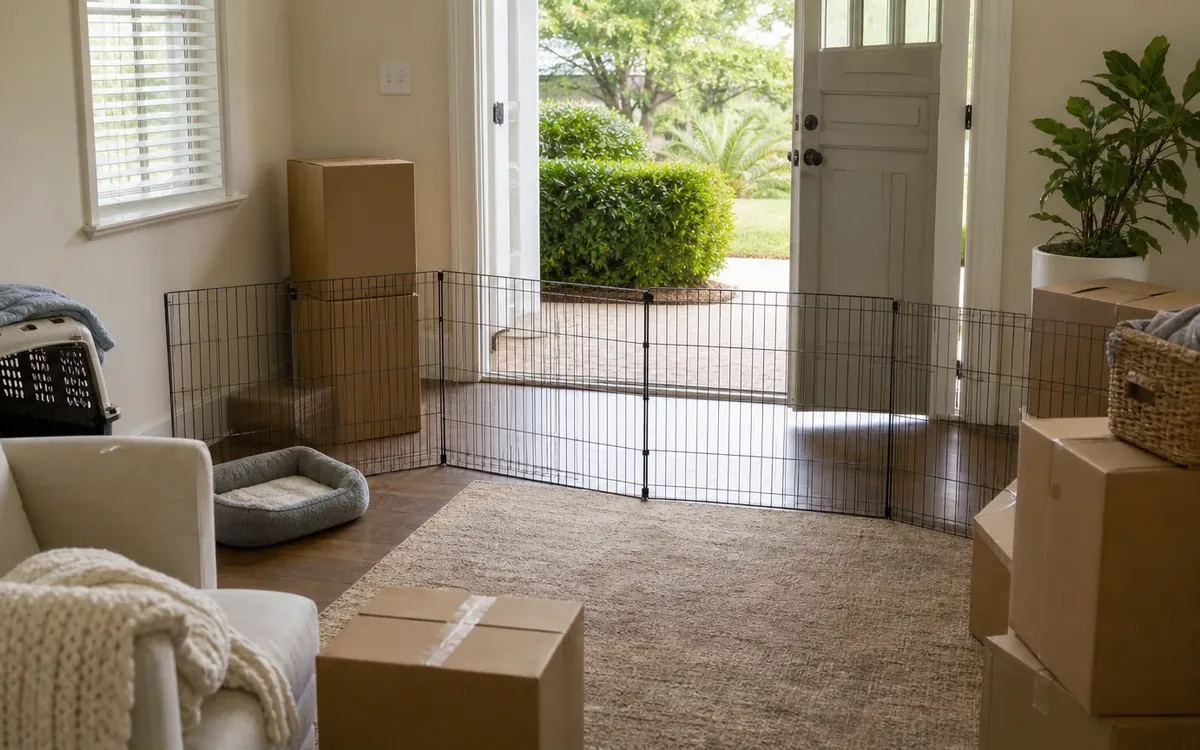
Treat every exterior door and gate as a potential escape route. Even pets that normally stay near their owners can react unpredictably to equipment, noise, strangers, and an emptied home.
Create three layers of protection:
- Primary containment: Place the pet in a locked or firmly latched room, a properly secured carrier, or an approved off-site setting.
- Clear communication: Identify the restricted room and tell every person on the property why it must remain closed.
- Current identification: Check that collar tags are legible and confirm that microchip contact details are current with the relevant registry.
Inspect carriers, crates, harnesses, and leashes before moving day. A carrier with a damaged latch or a loose harness can fail when the surroundings are most distracting. Choose equipment based on the animal’s species, size, health, and behavior. A veterinarian or qualified trainer can advise on fit, handling, or anxiety concerns.
Do not tether a pet near a driveway, loading ramp, equipment path, or stacked belongings. Tethering does not prevent contact with vehicles or falling objects, and it may increase panic.
If the pet remains on-site, assign one adult to know where the animal is at all times. That responsibility should not shift casually among several people. The designated person should also hold the carrier, leash, medication, and emergency contacts.
Plan transportation around the animal, not the boxes
A pet should not ride in a moving truck’s cargo area or travel loose among furniture and boxes. The household should arrange suitable passenger transportation and use species-appropriate restraint or containment.
Before departure, clear a safe place in the vehicle. Secure carriers so they cannot slide or tip during braking. Keep leashes attached only when safe and appropriate, and avoid opening a carrier beside an open vehicle door or in an unsecured parking area.
Climate control matters throughout loading, travel, and arrival. Never leave a pet unattended in a parked vehicle while completing a final walkthrough, signing paperwork, collecting keys, or directing unloading. A separate supervising adult can remain with the pet if a stop is unavoidable.
For longer or medically complicated travel, ask the pet’s veterinarian about feeding, hydration, motion sickness, medication, and rest stops. Sedatives or calming medications are veterinary decisions. Do not introduce medication or change a dose based only on general moving advice.
The household should also confirm destination rules. Rental agreements, community policies, hotel restrictions, airline requirements, and interstate animal documentation are determined by the relevant property manager, carrier, veterinarian, or authority. A practical move team may ask about access and sequencing, but it does not decide those requirements.
What should be ready before the pet enters the new home?
Inspect the destination before bringing the pet inside. Workers may still be unloading, doors may be propped open, and fencing may not be as secure as it appeared during an earlier visit.
Complete these checks first:
- Close and latch exterior doors, windows, and gates.
- Look for damaged screens, fence gaps, loose boards, and accessible crawl spaces.
- Remove exposed cleaners, pest products, medications, sharp objects, and packing debris.
- Check rooms for open vents, holes, dangling cords, and small spaces where a pet could become trapped.
- Confirm that indoor temperature and ventilation are suitable.
- Decide which room will be the pet’s initial settling area.
Set up that room with water, bedding, food as appropriate, a litter box or toilet plan, and familiar items. Keep the environment simple. Too much access at once can make it harder to monitor hiding, chewing, scratching, marking, or attempts to escape.
Bring the pet inside only after the route from vehicle to room is secure. For a dog, that may mean checking gates and using a properly fitted leash or harness. For a cat or small animal, keep the carrier closed until it is inside the designated room with the door shut.
Allow exploration according to the pet’s behavior and veterinary needs. Some animals adjust readily, while others benefit from gradual access. Questions about prolonged refusal to eat, breathing changes, severe distress, vomiting, injury, or medication belong with a veterinarian.
Coordinate the people without confusing their roles
Pet safety improves when responsibilities are explicit. The household should decide:
- Whether the pet stays on-site or goes elsewhere
- Who supervises the pet and transports it
- Which veterinarian, sitter, or boarding provider is involved
- What equipment, food, records, and medication travel with the pet
- When the destination is secure enough for arrival
- Who updates identification and emergency contacts
A practical cleanout or move team may discuss work zones, loading order, rooms that must remain closed, items that should not be packed, and the point at which a destination room can be set up. It may also coordinate household belongings so the pet kit and familiar bedding remain accessible.
Other decisions stay with the appropriate party:
- Veterinary matters: A veterinarian advises on health, medication, sedation, vaccines, and travel fitness.
- Legal or property rules: An attorney, landlord, association, carrier, or relevant authority interprets applicable requirements.
- Home condition: A qualified inspector or contractor evaluates fencing, electrical hazards, HVAC concerns, repairs, or structural conditions.
- Valuation: An appraiser or qualified market professional determines value when belongings or property require appraisal.
- Real estate matters: The responsible real estate professional addresses transaction and property-access questions.
- Disposal and compliance: The household and appropriate provider or authority determine disposal restrictions and regulatory requirements.
Storage, contractor work, appraisal, animal care, and disposal are separate household or provider choices. They should not be assumed to be included in move coordination.
Create a fallback plan for disruptions
Moves can change because of access issues, weather, delayed keys, unfinished repairs, or a pet becoming distressed. Prepare an alternative before loading begins.
Identify a climate-controlled place where the pet can safely wait under supervision. Keep the caregiver’s contact information available outside a packed phone or computer. If the destination cannot be secured, use the fallback rather than holding the animal in a vehicle, open garage, or active work zone.
Keep essential pet supplies with the supervising person until the animal is settled. Do not send medication, food, or containment equipment ahead unless equivalent supplies remain available.
Severe weather may also affect the plan. Follow official instructions from the appropriate authorities and make evacuation or shelter choices based on current conditions. A move organizer can adjust the belongings sequence, but emergency directives come from public authorities and animal health guidance comes from veterinary professionals.
Short FAQ
Should pets be present while movers load the home?
They can be on the property only if they are securely separated from doors, equipment, and work areas, with a designated adult overseeing them. An off-site caregiver may be the safer choice for pets that are anxious or likely to escape.
Can a pet wait in the garage during a South Carolina move?
A garage may have unsafe heat, humidity, ventilation, chemicals, tools, or vehicle traffic. Choose a climate-controlled, secure room or an appropriate off-site arrangement instead.
Who should carry the pet’s medication?
The household’s designated pet supervisor should keep medication accessible, labeled, and separate from packed belongings. Questions about storage conditions, missed doses, or schedule changes should go to the prescribing veterinarian or pharmacist.
When should the pet arrive at the new home?
Bring the pet in after exterior openings are secure, hazards have been checked, and a quiet room is ready. Avoid arrival while doors are continuously open for unloading if a safe alternative is available.
What if the pet becomes ill or extremely distressed?
Contact a veterinarian or emergency veterinary provider for guidance. A mover, organizer, cleaner, sitter, or real estate professional should not make medical decisions.
A pet-safe moving day depends on containment, direct supervision, climate control, secure transportation, and a prepared destination. Decide who owns each responsibility before activity begins, keep the pet kit outside the general load, and leave medical, legal, inspection, appraisal, real-estate, and compliance judgments to the responsible professionals or authorities.



