
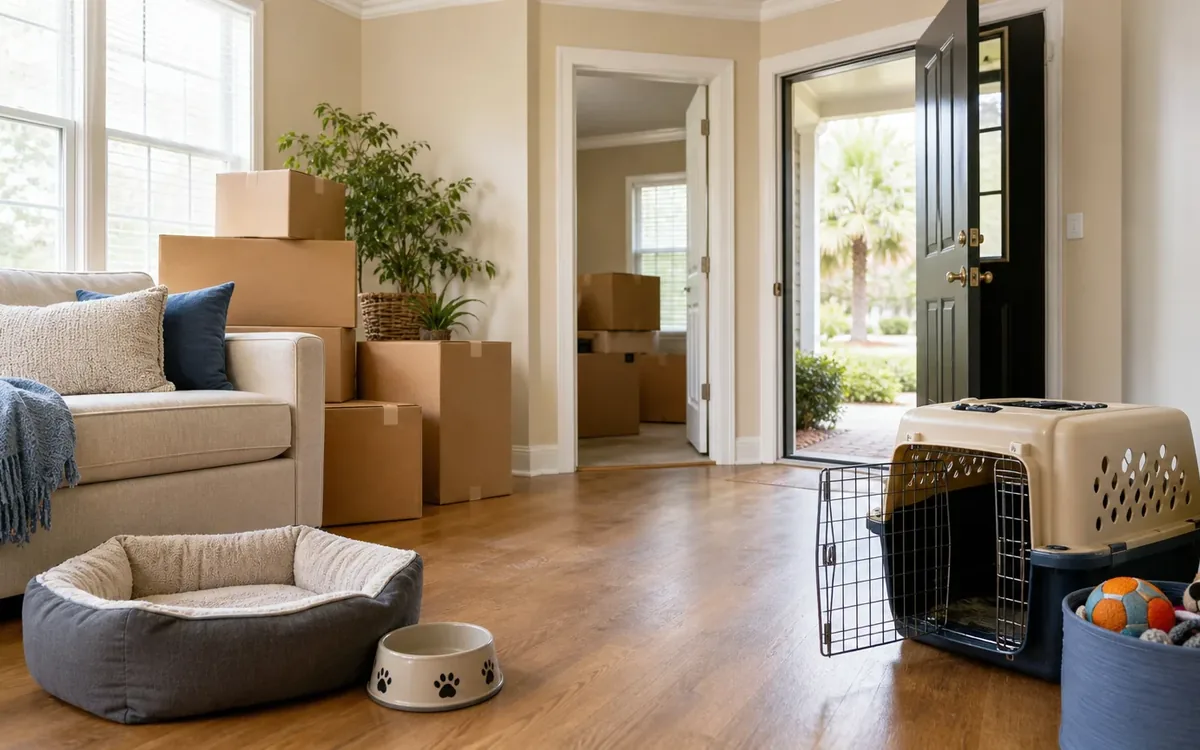
Keeping pet routines organized during a household move starts with assigning one responsible caregiver, packing pet essentials separately, and protecting a familiar daily routine from the movement of boxes and furniture. For South Carolina households, the plan should also account for travel distance, open exterior doors, and changing indoor conditions at both homes. Treat pet care as its own coordinated part of the move, not as something to fit in after loading begins.
Quick answer: Create a written care sheet, a clearly labeled pet essentials kit, and a secure pet area that stays outside the moving crew’s work route. Decide who handles each care task and who receives the pet at the destination. Keep food, water supplies, prescribed medication, carriers, and cleanup items accessible rather than packed with household inventory. Ask a veterinarian about health or travel concerns; a move team can discuss household logistics, not veterinary decisions.
What should stay familiar when everything else is moving?
A move changes the household’s sounds, smells, layout, and availability. You cannot keep every detail unchanged, but you can preserve the cues that make ordinary care predictable: the usual caregiver, familiar supplies, established feeding arrangements, and a recognizable resting place.
Write down the routine you actually follow, rather than an ideal version nobody uses. Include feeding instructions, the location of supplies, normal opportunities for toileting or litter access, and the words or signals caregivers use. If several people share care, agree on one set of instructions.
Keep the routine sheet specific enough that another trusted adult can use it without searching through packed boxes:
- Food name, serving instructions, and where measuring tools are kept.
- Water bowl location and who checks it.
- Walking, toileting, or litter arrangements appropriate to the pet.
- Prescribed medication instructions supplied by the veterinarian.
- Carrier, leash, harness, or enclosure locations.
- Household and veterinary contact details.
The household decides which familiar items travel with the pet and which routines need protection. Questions about changing food, medication, activity, or care belong with the veterinarian. Avoid making those changes simply because a different setup seems easier for the move.
Assign the caregiver before assigning the boxes
The most useful pet-moving decision is naming the person responsible for the animal while household work is underway. That person should not simultaneously be the only person answering mover questions, directing furniture placement, and dealing with access to the property.
Choose a primary caregiver and a backup. Agree on the point at which responsibility transfers, such as when the caregiver leaves the old home or arrives at the new one. A handoff is complete only when the receiving person has the pet, necessary supplies, and care instructions.
For an older adult downsizing or a family handling an estate transition, clarify who has authority to make household arrangements. Ownership disputes or questions about legal responsibility for an animal should go to the appropriate legal professional or authority, not the moving crew.
Clutter Cleaner of South Carolina’s move management service is a relevant starting point for discussing household coordination. A practical move team may discuss loading order, access routes, room labels, and who should receive questions. Pet transport, boarding, or hands-on animal care should be treated as separate household or provider arrangements unless specifically confirmed.
Keep the contact plan simple. Everyone needs to know whom to call if a door must open near the pet area, the caregiver leaves unexpectedly, or destination access changes.
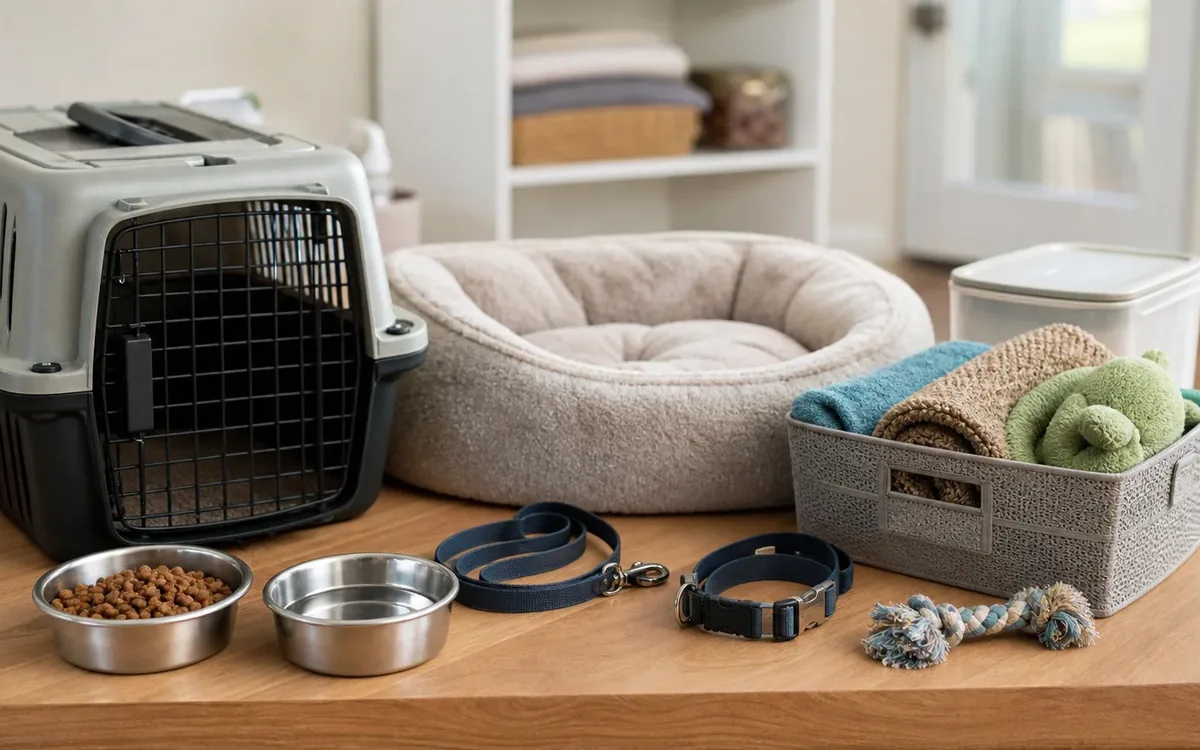
Build a pet essentials kit that never joins general packing
An essentials kit keeps daily care from depending on the location of a moving box. Use a container that is easy to identify, easy to carry, and suitable for its contents. Label it with the pet’s name and caregiver contact, without displaying unnecessary private information.
Separate items needed during travel from items needed immediately after arrival. A bulky supply container can stay with the caregiver’s other belongings, while a smaller accessible bag holds what might be needed en route. Do not put either into the general loading stream.
Useful contents may include:
- Familiar food and its measuring utensil.
- Bowls and water supplies suited to the journey.
- Prescribed medication in its labeled packaging.
- Leash, harness, carrier, or other appropriate containment equipment.
- Litter or toileting supplies and cleanup bags.
- Familiar bedding or a regularly used comfort item.
- Care instructions and relevant records.
- Towels and cleaning supplies appropriate for the surfaces involved.
Check where these items will go in the vehicle before loading starts. Accessibility matters more than fitting them into the smallest possible space. Keep records available to the caregiver rather than buried in a document box.
An estate cleanout can make it harder to distinguish essential care items from belongings being sorted. The guide How Do Estate Cleanouts Work? provides broader context for that separate household process. Set aside current pet supplies before any keep, donate, sell, or discard decisions begin.
How do you protect a pet area while doors are open?
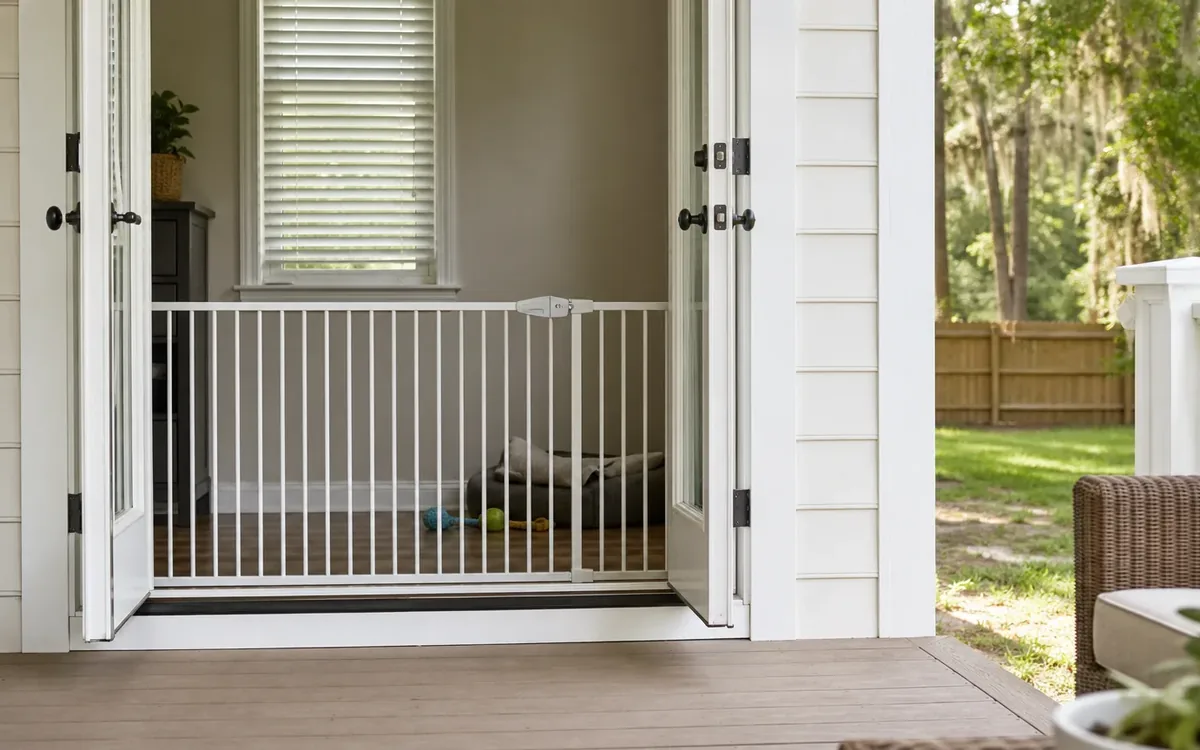
Choose a pet area based on actual access and activity, not simply on which room is empty. A room may be unsuitable if movers need to remove furniture from it, contractors need entry, or the exterior door nearby will be used repeatedly.
The household should confirm that the space can be secured and that food, water, toileting arrangements, and resting space remain available as appropriate. Do not use a room as a substitute for a containment setup that does not suit the animal.
Agree on a clear boundary with everyone entering the home:
- Identify the pet area during the initial household walkthrough.
- Keep its door closed and clearly mark that entry requires caregiver approval.
- Route boxes, tools, and furniture elsewhere.
- Tell visitors and workers who controls access.
- Assign someone to check the area when household activity changes.
Changing indoor conditions matter during a South Carolina move. Exterior doors may remain open for loading, and a room that felt comfortable earlier may feel different as the house empties. The caregiver should check conditions rather than assume the heating or cooling system is maintaining the same environment everywhere.
If no workable room remains, the household can consider a trusted caregiver, boarding provider, or another suitable arrangement. Availability, animal acceptance rules, and care requirements must be confirmed with that provider. A move team should not be expected to supervise the pet while carrying household goods.
Match the travel plan to the actual route
A nearby move and a longer trip across South Carolina create different logistical demands. Plan around the route you will use, who is driving, where supplies will sit, and whether the destination will be accessible when you arrive. Avoid basing the pet plan solely on the moving truck’s schedule.
The household should arrange appropriate transport and confirm that any separate provider accepts the animal and its equipment. Ask the veterinarian about health-related travel concerns, medication questions, or whether special precautions are needed. This guide does not recommend sedation or other medical measures.
Before departure, verify:
- The caregiver has the correct destination address and access instructions.
- The pet travels with suitable containment or restraint.
- Essential supplies are accessible without unloading household furniture.
- Any planned stops permit the intended pet access.
- Someone can receive the caregiver at the destination, if needed.
- A backup contact can help if access or travel plans change.
Keep the caregiver informed of loading changes that affect departure, but do not make the animal’s care dependent on truck arrival. If household goods arrive separately, the pet still needs a usable care setup.
Never assume that a closed vehicle, garage, or unattended staging area is an acceptable waiting place. Discuss uncertain travel or environmental safety questions with the appropriate professional before the move.
What needs to be ready at the new home first?
The first pet-related task at the destination is creating a controlled arrival space, not unpacking every pet possession. Decide where the animal will enter, who will be present, and which room or suitable area can remain separate from active unloading.
Before bringing the pet inside, the responsible adult should check the intended area. Look for open doors or windows, accessible packing materials, cleaning products, exposed work areas, and items left by previous occupants. This is a household check, not a substitute for a professional inspection.
Set out the familiar basics:
- The regular bowls and feeding supplies.
- Bedding or another familiar resting item.
- Appropriate toileting or litter arrangements.
- Containment equipment and caregiver instructions.
Tell the move team which area should remain undisturbed and where pet-related boxes belong. A clear label such as “Pet supplies: caregiver receives” is more useful than a vague room name when unloading decisions happen quickly.
If contractor work, painting, repairs, or cleaning will continue after arrival, the household needs a separate access and pet-care plan. Contractors determine their work requirements, and relevant professionals address hazards or suitability concerns. Do not assume an unfinished area is ready because furniture can be placed there.
Keep household decisions separate from professional decisions
Good coordination depends on clear boundaries. The household can choose caregivers, organize supplies, select familiar belongings, and decide where care items should be placed. A practical cleanout or move team may discuss sorting, packing arrangements, access, and the sequence of household work within its confirmed scope.
Other decisions remain separate:
- Veterinary care: A veterinarian addresses medication, health, travel suitability, and clinical concerns.
- Storage: The household chooses a storage provider and checks access and storage conditions. Daily care essentials should remain available.
- Disposal: The household confirms what can leave the home. Relevant providers or authorities determine requirements for medication or other restricted materials.
- Appraisals and estate matters: Qualified appraisers handle valuations, while responsible legal professionals address ownership and estate authority.
- Real estate and property conditions: Real-estate professionals, inspectors, contractors, and relevant authorities handle their respective requirements.
For example, moving a pet enclosure into another room is a placement decision. Determining whether damaged flooring, electrical work, or a ventilation issue is safe requires the appropriate professional. Code compliance support does not replace an inspection or an authority’s determination.
Clutter Cleaner of South Carolina is physically based in Mount Pleasant, serves all of South Carolina, and has Charleston as its primary market. When discussing a move, explain the pet-care boundaries alongside the household work so responsibilities are clear before packing begins.
Short FAQ
Should pet supplies go on the moving truck?
Bulk or nonessential supplies may be packed according to the household plan. Keep everything needed for travel and immediate care with the responsible caregiver, especially prescribed medication and containment equipment.
Can a move team take responsibility for the pet?
Do not assume so. Discuss household logistics with the team, but assign pet supervision, transport, and care to a household caregiver or separately confirmed provider.
What if the new home is not ready for the pet?
Use the backup arrangement chosen by the household. Confirm the caregiver or provider can meet the animal’s needs, and keep supplies and instructions with the pet rather than with delayed household goods.
What is the simplest way to prevent missed care?
Use one written routine sheet and one clearly identified caregiver at a time. Confirm each handoff directly so everyone knows who is responsible for the next care task.



