
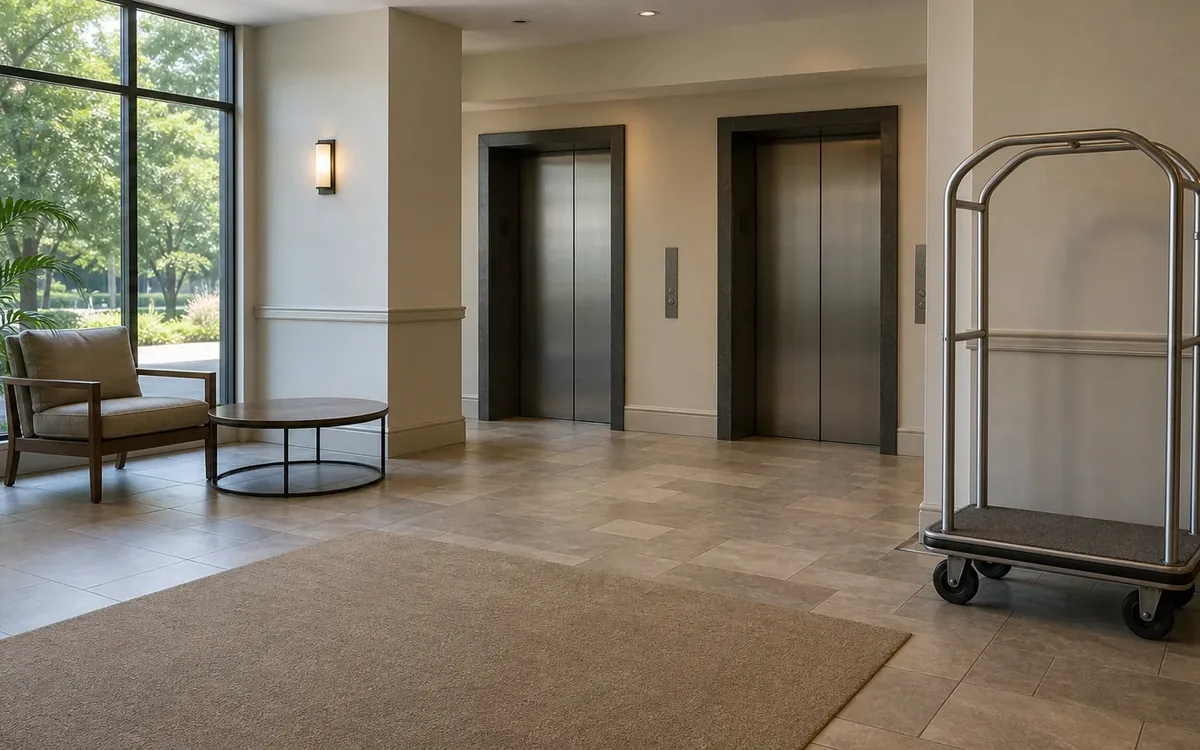
Reserve elevator access with management at both buildings before finalizing your move plan. Confirm the approved moving window, loading location, protective requirements, and who can authorize changes. For Charleston and Mount Pleasant condo residents, elevator coordination should connect the household, building management, and move team without assuming either property follows the same rules.
Quick answer: Get written confirmation for each building, share its access instructions with the move team, and check that departure and arrival reservations work together. Ask who installs elevator protection, how crews enter, where vehicles may load, and what happens if access is interrupted. A reservation does not automatically authorize parking, door propping, or exclusive elevator use.
Why elevator coordination needs its own move plan
A shared-building move depends on more than having boxes ready. The elevator, loading area, hallways, and entry doors may serve residents, visitors, deliveries, and maintenance staff throughout the move.
An available elevator is not necessarily an approved moving elevator. Management may designate a particular car, require protective coverings, or limit which entrance crews can use. These conditions need to reach the people doing the work, not remain buried in a resident’s email.
Treat elevator access as a separate part of the move plan, with its own confirmations and contacts. Clutter Cleaner of South Carolina provides statewide move management services. When discussing your move, explain that shared-building access needs coordination and ask which planning responsibilities the team can take on.
The household still decides what moves, what remains, and which providers to engage. Building management controls its access approvals. A practical move team can discuss sequencing and handling needs, but cannot override building rules or guarantee access controlled by another party.

What should you ask building management before reserving?
Contact management at the departure and destination properties separately. Even when both homes are condos, their reservation procedures may differ.
Ask for the current written move instructions and clarify anything that affects crew access. A useful inquiry covers:
- Which elevator is approved for moving household goods.
- Whether a reservation provides exclusive use or shared access.
- Permitted moving windows and any restricted dates.
- Whether management requires a reservation form, deposit, or other payment.
- What insurance documentation, if any, the building requires.
- Who supplies and installs elevator pads or other protection.
- The approved loading entrance and vehicle location.
- How crews obtain entry credentials and reach the unit.
- Who is available to resolve access questions during the reservation.
Do not assume an insurance document automatically satisfies the building’s requirements. Give the exact request to the relevant provider and have management confirm whether the submitted documentation is acceptable. Coverage questions belong with the insurer or qualified insurance professional.
If you are renting, clarify whether the owner, resident, or property manager must submit the reservation. If a lease or association rule is disputed, seek clarification from the responsible management body and appropriate legal guidance rather than asking the move crew to interpret it.
Connect the departure and arrival reservations
The two reservations must function as one plan. A departure slot that works on its own may still create an arrival problem if the destination has a narrow loading window or requires staff to unlock a service entrance.
Before confirming the arrangements, give the move team both sets of building instructions. Ask it to review whether the proposed sequence is workable based on the belongings, access route, travel conditions, and loading constraints. Avoid turning that discussion into a promised completion time.
Create a shared access summary with:
- Property addresses, unit numbers, and designated entrances.
- Confirmed reservation windows at each end.
- Management contacts and the approved escalation contact.
- Loading locations and vehicle restrictions.
- Elevator access procedures and protection requirements.
- Any conditions that must be satisfied before entry.
Mark unresolved items clearly. For example, “destination elevator requested, not confirmed” is more useful than simply listing a proposed window. Written confirmation helps everyone distinguish permission from a preference.
If both properties cannot accommodate the original plan, discuss alternatives before moving begins. A revised date, a different sequence, or separately arranged storage may be household choices. Storage requires its own provider, access arrangements, and terms; it should not be assumed to be included in move management.

Reduce elevator demand before moving day
Elevator coordination becomes easier when the move inventory is settled. Furniture that is still awaiting a decision can consume loading space and create unnecessary trips through shared areas.
Sort belongings by destination before the crew arrives: the new home, another household, a separately arranged sale or donation, or a disposal provider. Keep undecided items distinct rather than mixing them into packed moving boxes.
For a transition that also involves inherited belongings, the guide to the best way to clean out an estate can help frame sorting decisions before elevator-dependent work begins. An estate-related move should not treat every item as automatically available for removal.
Ownership and authority questions belong with the authorized decision-maker and, where needed, legal counsel. The household or authorized representative determines what may move. Appraisal questions belong with an appropriate appraiser, not the elevator scheduler or loading crew.
Once the inventory is settled, tell the move team about large, fragile, or unusually shaped pieces. Measurements, weight information when available, and photographs can support planning. Do not assume an item fits merely because it once entered the building; the approved route or elevator arrangement may have changed.
How do you plan protection without blocking shared access?
Ask management to identify required protection for the elevator and the entire approved route. That may include vulnerable doorframes, hallway corners, flooring, or lobby surfaces. Confirm who provides each material and who is authorized to install it.
Protective materials can create their own problems if they slip, obstruct doors, or interfere with building equipment. Their placement should follow building instructions and applicable safety requirements, not an improvised plan that inconveniences other residents.
Discuss these practical details with management and the move team:
- Whether elevator pads must be installed by building personnel.
- Which floor coverings are permitted along the route.
- How doorframes and corners should be protected.
- Where carts may wait without blocking circulation.
- Whether adhesives or fastening methods are restricted.
- How protection will be removed and shared areas checked afterward.
Do not prop open fire-rated doors, interfere with elevator controls, or obstruct exits to speed up loading. Building safety personnel and the responsible authorities determine applicable requirements. Any elevator malfunction should be reported to management rather than handled by the household or move crew.
If oversized furniture appears to require door removal, alterations, or other contractor work, pause and obtain the appropriate approval. Contractor work is a separate arrangement, and building approval does not replace any required professional assessment or permit.
Separate loading permission from elevator permission
A confirmed elevator reservation does not necessarily provide a place for a moving vehicle. Check the route from the vehicle to the elevator at both properties.
Ask management where loading is allowed, whether another reservation is needed, and whether the vehicle must meet height or size limits. Share those limits with the team before it chooses its approach. Note gates, covered entrances, ramps, and doors that require credentials.
Where loading involves a public street or regulated parking area, confirm requirements with the relevant property manager or public authority. Do not assume that cones, hazard lights, or an elevator booking authorize occupying a restricted space.
The household can gather access instructions and communicate preferences. The vehicle operator remains responsible for safe operation, and the applicable authority controls public parking permissions. If the approved loading location is unavailable, contact the designated decision-maker instead of improvising an unauthorized alternative.
Also confirm whether the crew may stage belongings in a lobby or corridor. “Keep the elevator moving” is not a reason to create a pile in a shared passageway.
Who should be responsible for move-day communication?
Choose one household contact to coordinate questions and one backup who understands the plan. Give management and the move team those names, along with a clear way to reach them during the reserved window.
The household contact should have the written confirmations available and know which decisions can be made without further approval. This reduces conflicting instructions from relatives, residents, or other people helping with the move.
Keep responsibilities explicit:
- Household: Confirms belongings, destination rooms, and household preferences.
- Building management: Authorizes access, elevator use, protection, and building procedures.
- Move team: Discusses handling, crew coordination, and the practical loading sequence.
- Separate professionals: Address legal, appraisal, contractor, real-estate, inspection, or compliance questions within their roles.
For example, a real-estate professional may help align possession arrangements with the move, but management still confirms elevator access. An inspector may identify a concern, while the responsible professional or authority determines the required response. Move coordination does not replace either function.
Before loading begins, check that the approved route is accessible, required protection is in place, and destination access remains confirmed. If a requirement is missing, resolve it with the person authorized to decide.
Build a contingency plan for interrupted access
Shared elevators can become unavailable, and a reservation may not eliminate every competing demand. Ask management how interruptions are handled and whether an approved alternative exists.
The contingency plan should identify who can authorize a change, not merely state that the crew will “work around it.” Using another elevator, changing entrances, extending a reservation, or carrying furniture by stairs may require separate approval and a fresh safety assessment.
Agree on how updates will reach the destination building if departure is delayed. Ask the move team what operational changes would need discussion, and confirm any contractual implications with the relevant provider rather than assuming a change is included.
If arrival access cannot be secured, the household may need to consider rescheduling or separately arranged storage. Obtain the provider’s terms before authorizing an alternative. Do not send belongings toward a building on the assumption that someone will make an exception.
After the move, follow management’s procedure for returning credentials, removing protection, and reporting concerns. Document any observed damage clearly and use the appropriate building or provider reporting process without assigning responsibility before review.
Short FAQ
Can I reserve only the destination elevator?
Not if the departure building also requires approval. Confirm requirements at both ends, including loading access, even when one property appears easier to navigate.
Does a reservation mean other residents cannot use the elevator?
Only if management explicitly confirms exclusive use. Ask how shared access works and communicate that arrangement to the move team.
What if my furniture will not fit?
Have the team review dimensions and the approved route before attempting the move. Any alternate method, contractor involvement, or building alteration needs separate discussion and appropriate authorization.
Can move management override a condo’s rules?
No. A move-management provider can discuss coordination and practical options, but building approvals remain with management or the responsible authority.
For a South Carolina move involving shared-building access, contact Clutter Cleaner of South Carolina at (843) 972-7020 to discuss move management. The business is physically located in Mount Pleasant, with Charleston as its primary market and a statewide service territory. Have both buildings’ access instructions ready so the conversation can focus on your actual constraints.



