
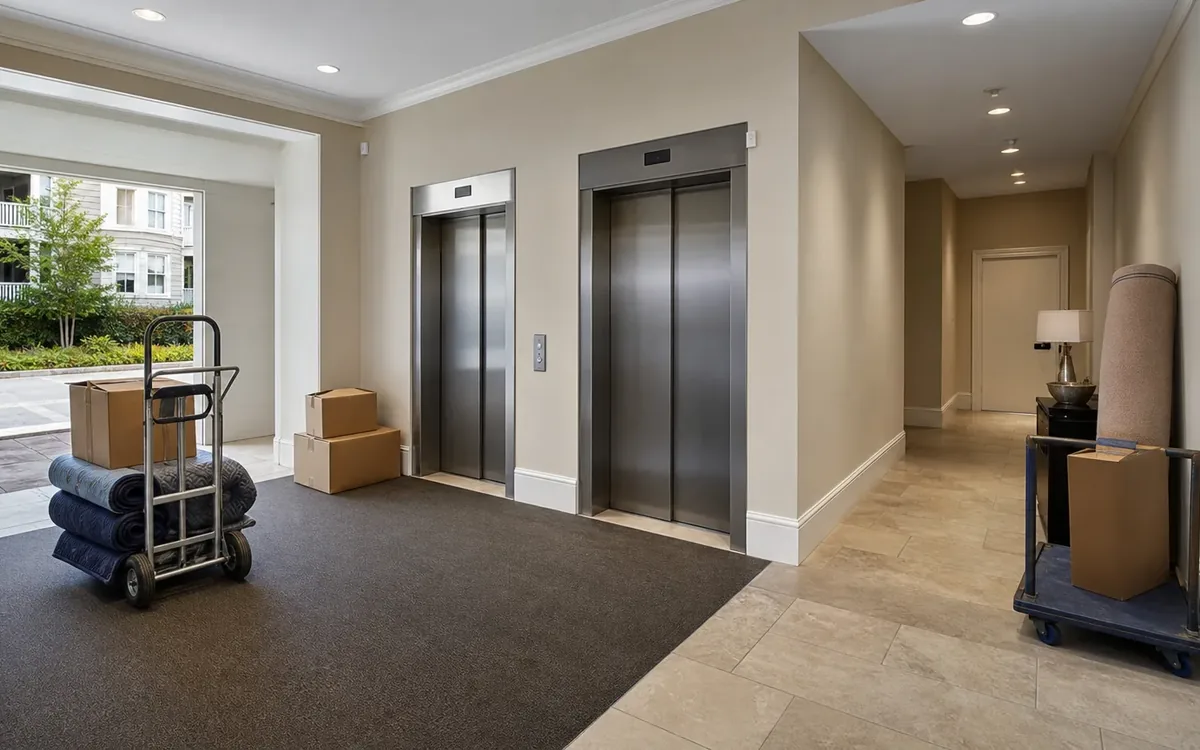
To coordinate a condo move, confirm your building’s moving procedures with management before committing to a moving appointment. Reserve the required elevator and loading access, share the approved arrangements with everyone handling the move, and identify who can resolve access problems on moving day. Charleston and Mount Pleasant residents should verify their own building’s rules rather than assume neighboring properties operate the same way.
Quick answer: Get written confirmation of the permitted moving window, elevator arrangements, truck loading location, access route, and required paperwork. Give the move team one consistent access plan, and ask management what happens if the elevator, loading area, or entrance becomes unavailable. A reservation should not be treated as permission to use public streets, sidewalks, or another property.
What should you ask condo management before booking the move?
Start with the person or office responsible for building operations. That may be a property manager, association representative, or designated building contact. Ask who has authority to approve moving access and whether the owner or resident must submit the request personally.
Request the current moving policy, not just a verbal summary. Written procedures help distinguish a confirmed reservation from a request still awaiting approval. They also give the household and move team a shared reference if instructions change.
Useful questions include:
- Are moves limited to particular days or access windows?
- Is an elevator reservation required, and which elevator is assigned?
- Does the building require a loading-area reservation separately?
- What paperwork must be accepted before access is confirmed?
- Who arranges elevator padding or other building protection?
- Are carts permitted through the lobby, or must another entrance be used?
- Who should receive notice of a cancellation or change?
Ask whether move-in and move-out procedures differ. If you are moving between two condos, obtain instructions from both buildings before choosing an appointment. The workable plan must accommodate the departure building and the destination, not just the more restrictive-looking policy.
For help organizing the household side of that plan, review Clutter Cleaner of South Carolina’s move management service. Building approval remains separate from coordination assistance.

Keep elevator and loading reservations connected
An elevator reservation and a loading reservation solve different problems. The elevator controls vertical access inside the building. The loading arrangement determines where the vehicle can stop and how belongings reach the approved entrance.
Confirm both before treating the move as ready to proceed. A reserved elevator is not useful if the truck cannot access the loading location, and a loading bay does not guarantee elevator availability.
Create a compact reservation record containing:
- Building name, address, and unit identification.
- Approved moving date and access window.
- Assigned elevator and permitted entrance.
- Approved loading location and vehicle restrictions.
- Reservation reference or written approval, if provided.
- Building contact and access-problem contact.
- Conditions that must be satisfied before arrival.
Ask management how the elevator reservation works in practice. It may involve restricted access, staff assistance, or a procedure for sharing the elevator with residents. Do not assume a reservation means exclusive use unless management confirms that arrangement.
Also clarify whether setup and removal of required protection must occur within the reserved window. The move team needs to know what access conditions apply before belongings begin moving, not discover them at the entrance.
Where can the moving vehicle load without creating an access problem?
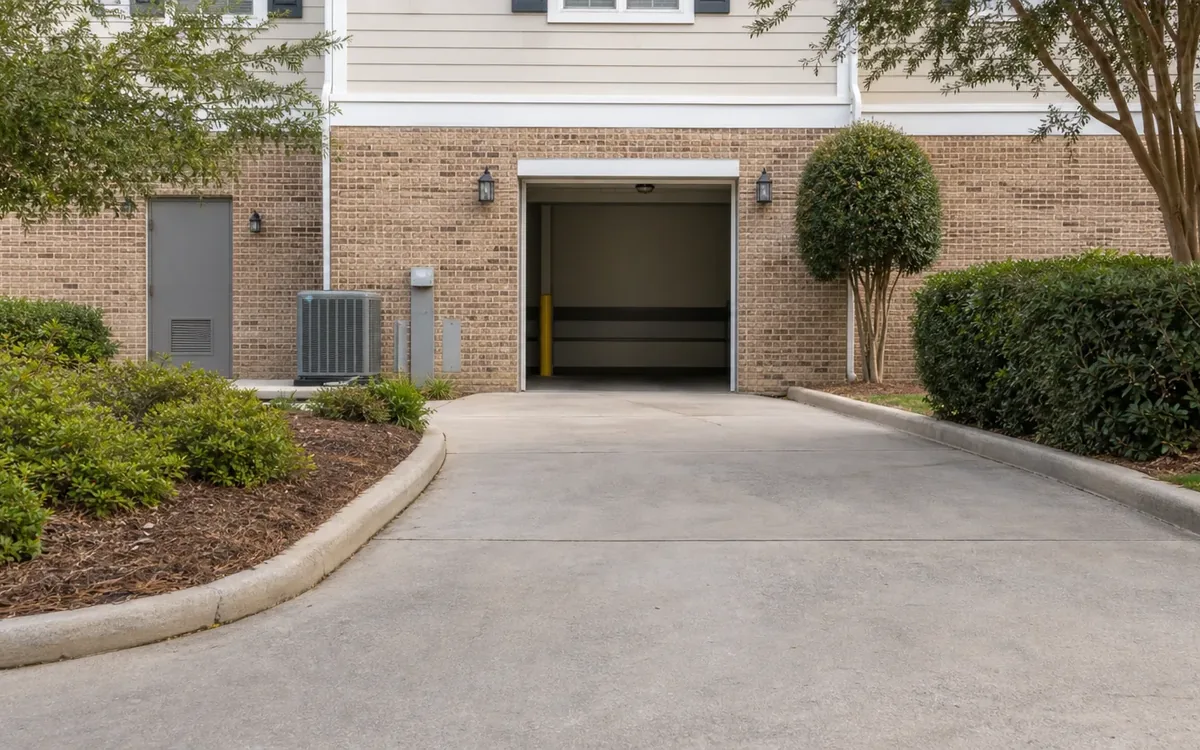
Ask management to identify the approved loading location precisely. “Near the service entrance” can leave too much room for interpretation, especially when several driveways, doors, or parking areas look plausible.
Request a written description or a management-provided site diagram if available. Share that information with the transport provider and ask the provider to confirm whether the location works for its planned vehicle.
Clarify these practical details:
- Whether the loading space is private property or public right-of-way.
- Whether gates, overhead structures, or turning space affect access.
- Whether the vehicle may remain there while belongings are carried inside.
- Whether the driver must stay with the vehicle.
- Whether another delivery or move shares the space.
- Which route keeps emergency access and pedestrian passage clear.
Building management can explain its property rules, but public parking or street-use permission belongs to the responsible authority. If a permit or other authorization may be necessary, establish who will verify the requirement and obtain approval. Do not assume the household, management, or transport provider has already handled it.
Avoid planning around an unofficial fallback such as a sidewalk, fire access lane, neighboring lot, or resident parking space. A backup location is only useful when the appropriate party has authorized its use and the provider can safely work from it.
Resolve outgoing belongings before reserving scarce access
Elevator and loading coordination becomes harder when the household has not decided what is actually leaving. A move, donation pickup, cleanout, and delivery can create separate access needs, even when they are part of the same transition.
The household should identify which belongings are moving to the next home, staying in the condo, or awaiting another decision. Items intended for sale, storage, donation, or disposal should have their own plan rather than automatically joining the moving load.
If the condo transition also involves an estate, the guide to how estate cleanouts work can help separate estate-cleanout planning from the building-access arrangements covered here.
Keep those decisions connected but distinct:
- The household decides what it wants to retain, subject to any applicable ownership restrictions.
- A storage provider confirms storage arrangements and acceptance conditions.
- Donation or disposal providers confirm what they can accept and how collection works.
- An appraiser addresses valuation questions when professional appraisal is needed.
- The responsible legal professional advises on disputed ownership or estate authority.
Do not use a reserved moving window to force unresolved ownership or valuation decisions. If an item cannot yet be released, make that limitation clear to the team and keep it outside the approved moving scope.
Give every participant the same access instructions
A clear reservation can still fail operationally when different people receive different directions. The household, move coordinator, transport provider, and building contact should work from the same current access information.
Choose one household contact to collect confirmations and distribute updates. This does not give that person authority over building rules; it simply reduces conflicting messages.
Share a short access brief rather than forwarding a long chain of emails without explanation. Include the confirmed arrangements, unresolved questions, and the person responsible for each remaining answer.
The brief should cover:
- Where the vehicle should arrive and whom the driver should contact.
- How workers enter and receive any required access credentials.
- Which elevator and interior route are approved.
- Who arranges required protection of common areas.
- Where belongings may wait, if staging is permitted.
- What the team must do if access is interrupted.
Treat entry codes and credentials as sensitive information. Ask management how temporary access should be shared, and provide it only to participants who need it.
When management changes an instruction, update the brief and notify the affected participants directly. A revised loading entrance matters to the driver; a changed elevator procedure matters to everyone carrying belongings. Ask recipients to acknowledge important changes rather than relying on an unread message.
Who is responsible for approvals, paperwork, and building protection?
Separate coordination from authorization. The household can select providers, make permitted scheduling choices, submit requests, and decide which belongings move. Management or the association establishes building procedures and approves access according to its rules.
A practical move team may discuss arrival sequencing, the approved route, staging limits, protection requirements, and communication between participants. That discussion does not replace a building approval or guarantee that a particular elevator or loading space will remain available.
If management requires insurance documentation, deposits, acknowledgments, or other forms, ask exactly what is required and who must provide it. The relevant provider should answer questions about its own insurance documents. Management should confirm whether submitted paperwork meets the building’s requirements.
Assign responsibility for common-area protection explicitly. Ask who supplies, installs, approves, and removes any required coverings or padding. Do not assume these tasks are included in a service agreement simply because the building requires them.
Other professional boundaries remain important:
- Legal interpretation of association documents or disputed obligations belongs with the appropriate legal professional.
- Contractor work is arranged separately and must follow applicable approval requirements.
- Real-estate advice about possession, closing conditions, or property marketing stays with the responsible real-estate professional.
- Inspection findings and compliance approvals stay with the qualified professional or authority responsible for them.
Clutter Cleaner of South Carolina offers move management throughout South Carolina. Its physical business location is Mount Pleasant, and Charleston is its primary market. Any requested coordination should be discussed alongside the building’s requirements and the scope agreed with each provider.
What should happen if the reserved access becomes unavailable?
Ask this question while planning, not only when a truck arrives. An elevator can become unavailable, another vehicle can occupy a loading space, or the building can restrict an entrance unexpectedly.
Get management’s procedure for reporting the problem and identifying an authorized alternative. The household and providers should understand who can approve a changed route or loading arrangement.
Agree on practical decision points:
- Who contacts management when the approved space is blocked?
- Where can the vehicle wait legally while instructions are clarified?
- Must movement of belongings pause if the elevator is unavailable?
- Can management authorize another elevator or entrance?
- Who contacts the destination building if departure is disrupted?
Do not improvise around safety restrictions. Stair use, unsecured staging, or a different entrance may create risks or violate building rules. The transport provider should evaluate handling concerns, while management confirms permitted building access.
Keep belongings under an agreed custody plan during an interruption. Ask whether anything may wait in a common area and who remains responsible for it. A hallway or lobby should not become temporary storage merely because the original plan stopped working.
Confirm access closure after the move
The reservation ends with more than the last item entering the unit. Confirm the building’s expectations for clearing the loading area, returning access devices, and removing required protection.
Ask whether management expects a common-area review or a completion notice. If a concern is reported, document the location and communicate it to the appropriate parties without assuming responsibility or assigning blame before the facts are established.
The household should also confirm that no belongings, carts, packaging, or provider equipment remain in an unauthorized area. Packaging removal and disposal arrangements are separate choices that should be agreed in advance, not presumed to be included.
Save the reservation confirmation and relevant completion correspondence. They provide a useful record of what was approved and what issues, if any, still need attention.
Short FAQ
Can I reserve the elevator before choosing a moving provider?
Ask management whether a provisional reservation is allowed. Confirm what provider information or paperwork is needed before the reservation becomes final, and share those conditions with prospective providers.
Does a loading reservation allow street parking?
Not automatically. Determine whether the space is on building property or public right-of-way. Permission for public street use must come from the responsible authority when required.
Should separate pickups use the same reservation?
Only if management permits that arrangement and the providers can coordinate within the approved conditions. Donation pickups, deliveries, and moving vehicles may need separate access arrangements.
Who should I call about organizing the household’s move?
Contact Clutter Cleaner of South Carolina at (843) 972-7020 to discuss move management needs. Keep building reservations, transport arrangements, and any required professional approvals clearly assigned.



