
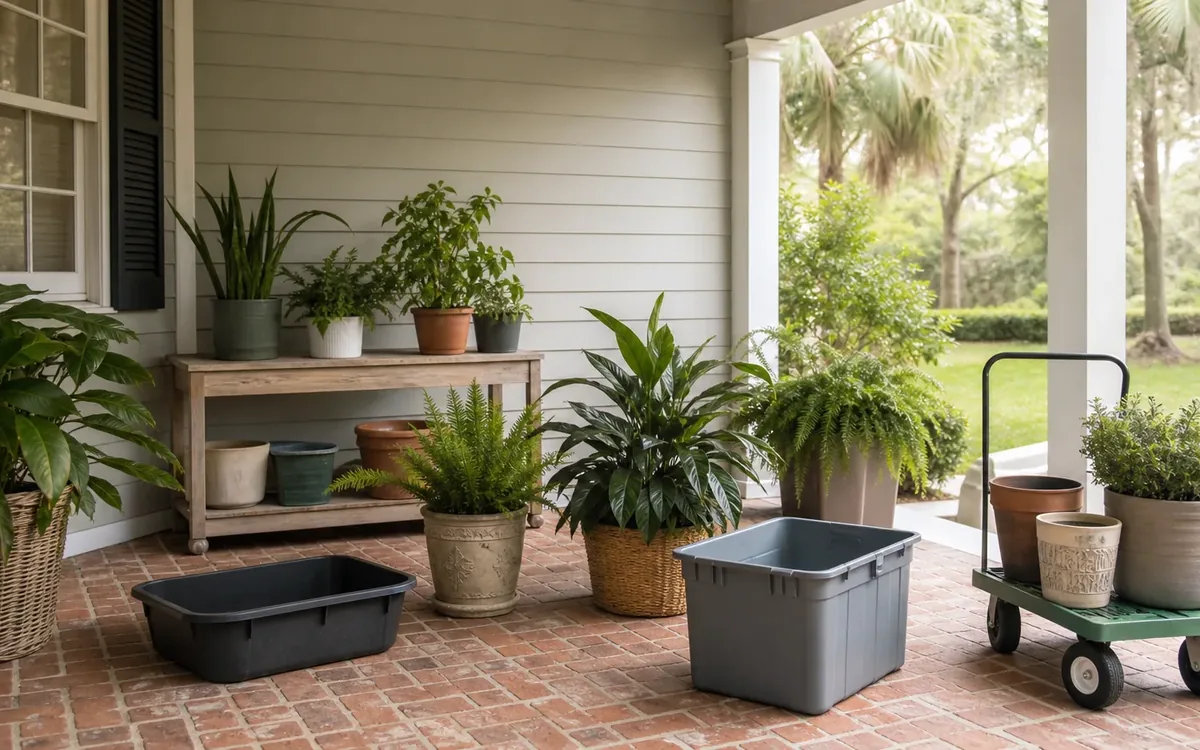
Moving plants within South Carolina requires a separate plan from moving furniture. Decide which plants are healthy and worth taking, stabilize each container, and transport sensitive plants in a climate-controlled passenger vehicle when practical. Summer heat can build quickly inside a parked vehicle or enclosed truck, so plants should not be packed early, left in direct sun, or treated like ordinary boxes.
Quick answer: Sort plants into take, rehome, and leave-with-property groups. Check the new property’s light and space, reduce spill and breakage risks, and move plants separately from household goods when possible. Keep them shaded, upright, ventilated, and away from direct air-conditioning. Let the appropriate professionals decide questions involving plant health, pesticide rules, property agreements, vehicle limits, and regulated disposal.
This guide focuses on decisions specific to houseplants and planted garden containers during an in-state move. For broader coordination of belongings and move-day priorities, review the move management service in South Carolina. If plants are only one part of clearing a residence, the guide to how estate cleanouts work explains the larger sorting and removal process.
Which plants should move to the new home?
Start with the destination, not the current plant collection. A plant may be thriving now but poorly suited to the new home’s light, layout, outdoor exposure, or household routine.
The household can decide which plants have sentimental value, which fit the destination, and how much space can reasonably be devoted to them. Consider:
- Whether the new home has suitable window orientation and indoor light
- Whether a patio, balcony, porch, or yard has enough room
- Whether community, lease, or property rules restrict outdoor containers
- Whether children or pets will have access to toxic or irritating plants
- Whether anyone can lift and maintain large containers after the move
- Whether a plant is healthy enough to tolerate transport
- Whether the planter is more valuable or meaningful than the plant itself
Create three groups: plants to move, plants to rehome, and plants that may remain only if the property agreement allows it. Do not assume a planted container transfers with a home sale or tenancy. The seller, buyer, landlord, tenant, or real-estate professionals should clarify what is included in the property transaction.
Sentiment does not always require moving the entire plant. A household might preserve a cutting, division, seed, or small offset instead. Ask a qualified nursery or horticultural professional whether propagation is appropriate for the species and season. A cleanout or move team may discuss sorting and handling logistics, but it should not diagnose disease or guarantee that a cutting will survive.
Avoid donating visibly diseased or pest-infested plants. A recipient should know what is being offered, including the plant’s size, container weight, and any known pest issue.
Why should plants be separated from the main moving load?
An enclosed moving truck is designed for household goods, not living material. During hot South Carolina weather, the cargo area may become dangerously warm, especially when the vehicle is parked or loading is delayed. Plants also release moisture, shed soil, and require upright positioning that ordinary boxes do not.
Transporting plants separately gives the household more control over:
- Temperature and ventilation
- Direct sunlight through vehicle windows
- Water leaks and loose potting mix
- Crushing by boxes or furniture
- Access during stops
- Placement immediately upon arrival
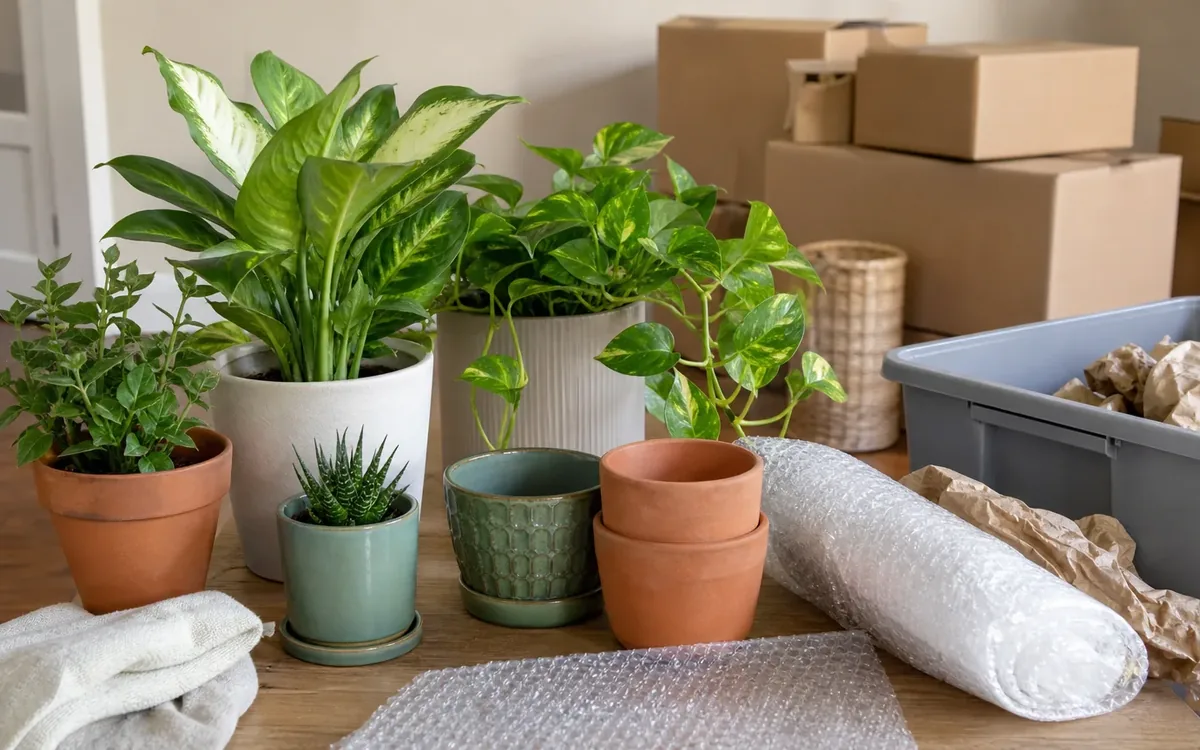
When practical, use a passenger vehicle with functioning climate control. Protect the interior with waterproof liners, shallow trays, or sturdy bins, while keeping enough ventilation around foliage. Secure containers so they cannot slide into doors, tip during turns, or become hazards during sudden braking.
Do not place plants where they block mirrors, interfere with controls, obscure the driver’s view, or create an unstable load. The driver and vehicle owner decide what can be transported safely. Professional movers decide what they will accept under their own contracts and policies. Ask before move day rather than assuming plants can enter the truck.
If separate plant transport is not possible, discuss alternatives with the mover, nursery, or another appropriate provider. Never conceal plants inside sealed boxes or load them without the carrier’s knowledge.
How should pots and plants be prepared?
Preparation should reduce spilled soil, broken stems, cracked pottery, and unstable weight without depriving plants of air. Use materials that can be removed promptly after arrival.
A practical four-part process is:
- Inspect each plant. Look for insects, webbing, sticky residue, mold, damaged stems, or declining leaves. Isolate questionable plants. A nursery or qualified plant professional should identify pests or disease and recommend treatment.
- Prune only when appropriate. Remove clearly dead material, but avoid major pruning merely to make a plant fit. Species-specific pruning questions belong with a horticultural professional.
- Contain the surface. Cover loose potting mix with breathable paper or another suitable temporary barrier secured around the pot, without sealing the plant’s stem or trapping excessive moisture.
- Stabilize the container. Place each pot in a snug box, crate, or bin. Cushion the pot with paper, towels, or other nonabrasive material so it stays upright without pressure on foliage.
Avoid watering heavily immediately before loading. Saturated soil adds weight and is more likely to leak. At the same time, do not intentionally dehydrate a plant without species-specific guidance. Base watering on the plant’s needs, current soil moisture, weather, and travel conditions.
Label containers with the plant name if known, the intended room, and handling notes such as “upright” or “fragile ceramic.” Labels are especially useful when foliage conceals the pot or several people are unloading.
Keep plant-care supplies together in a separate kit. Useful items include:
- Towels for spills
- Breathable paper and painter’s tape
- Shallow waterproof trays
- Lightweight cushioning
- Clean pruning tools, if needed
- Gloves
- Labels and a marker
- A small amount of water for appropriate use after arrival
Do not pack pesticides, fertilizers, or garden chemicals with plants unless the carrier permits them and they can be transported in compliance with product labels and applicable requirements. Disposal questions should go to the relevant local waste authority or another responsible authority.
What should you do with large garden containers?
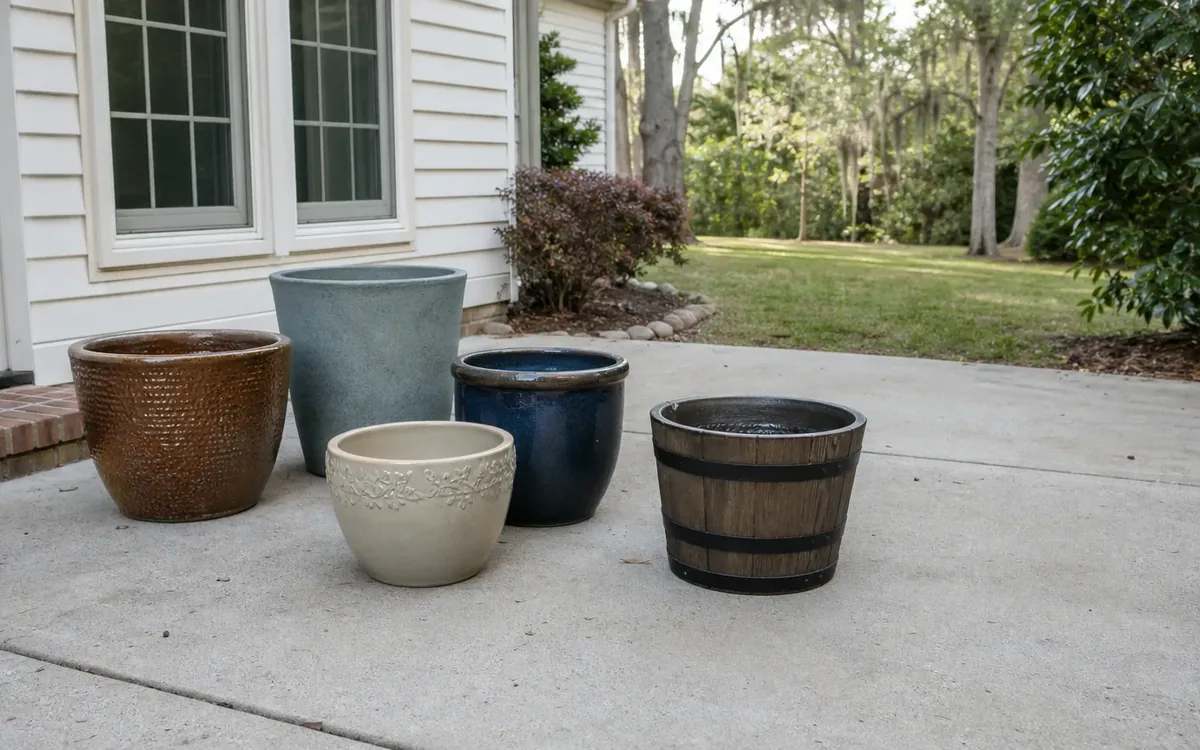
Large planters require a different decision from portable houseplants. Soil, moisture, dense materials, and mature root systems can make a container impractical or unsafe to lift. Ceramic, concrete, and weathered pots may also crack when tilted or strapped.
First decide what matters most: the plant, the container, or both. Then consider these separate options:
- Leave the planted container if the property agreement permits it
- Rehome the complete container to someone able to collect it safely
- Have an appropriate plant professional evaluate transplanting or dividing the plant
- Move the empty container after the plant and soil are addressed separately
- Replace an ordinary heavy pot at the destination rather than moving it
Do not drag a heavy pot across flooring, paving, or decking without considering damage. Avoid lifting by the rim, branches, trellis, or decorative handles unless the manufacturer identifies them as load-bearing.
The household may choose whether an item is worth retaining. A move team may discuss access, staging, packing, and coordination. The mover or specialty carrier determines whether its equipment and crew can safely handle the load. A nursery or horticultural provider addresses plant removal and transplanting. A contractor should evaluate built-in planters, irrigation connections, masonry features, or containers attached to structures.
Before any planted feature is removed, confirm that it is personal property and not part of the real estate. A real-estate professional or attorney should interpret the transaction documents when ownership is unclear.
How can heat exposure be reduced during a South Carolina move?
Heat planning should shape the order of work. Plants should generally be among the last items loaded and the first unloaded, subject to safe access and the household’s transportation plan. This minimizes time spent sitting in a vehicle.
Use these practical precautions:
- Cool the passenger compartment before loading when feasible
- Keep plants out of direct sun while they wait
- Avoid placing foliage against hot glass
- Maintain airflow without directing an intense cold vent at delicate leaves
- Park in shade when a safe shaded space is available
- Never leave plants in a parked vehicle during an extended stop
- Unload into a sheltered area rather than placing everything on hot pavement
Sun through vehicle glass can scorch foliage even when the air conditioning is running. Use light, breathable screening where needed, but do not enclose plants in dark plastic or create a sealed pocket of hot air.
Weather can also introduce heavy rain and wind. Prepare a covered loading route when possible, but do not wrap wet foliage tightly for travel. Water on leaves, trapped humidity, and low airflow can create additional stress.
If severe weather, extreme heat, or a vehicle problem makes the plan unsafe, the household and transportation providers should reassess. A move coordinator can help reorganize the loading sequence, but transportation safety remains with the driver and carrier.
How should plants be placed in the new home?
Choose a temporary recovery area before the plants arrive. It should be sheltered from harsh sun, active work zones, open exterior doors, and contractor traffic. Use floor protection beneath pots, especially when saucers may contain residual water.
Resist the urge to repot, fertilize, prune, and relocate every plant immediately. Moving already changes light, humidity, airflow, and temperature. Additional changes can make it harder to identify the source of stress.
Instead:
- Remove transport coverings that restrict airflow
- Check pots for cracks and leaks
- Return tipped soil without burying stems more deeply
- Place plants in light conditions reasonably similar to their previous setting
- Keep pest-suspect plants apart from the rest
- Watch for wilting, scorch, dropping leaves, or waterlogging
A plant may need a different permanent location once the household observes the new home’s natural light. An appraisal is generally unnecessary for ordinary plants and containers, but a qualified appraiser may be appropriate for rare, collectible, antique, or potentially valuable items. The household decides whether to seek an appraisal before sale, donation, or disposal. A cleanout or move team should not assign value unless separately qualified to do so.
If renovation or repair work is continuing, coordinate plant placement with the contractor. Dust, paint, sealants, foot traffic, and blocked exits can all affect where plants may safely remain. The contractor controls its work zone and site requirements.
What belongs in the household’s plant-moving plan?
Keep the plant plan distinct from the general inventory. A short plant register can record each plant, container material, approximate size, destination room, and special concern. Photos can help document condition and identify which saucer, stand, or trellis belongs with each pot.
The household can make decisions about:
- What to keep, gift, sell, or discard
- Which sentimental plants receive priority
- Who will drive the plant vehicle
- Where plants will wait before loading
- Where they will recover after unloading
- Whether specialty advice is worth obtaining
A practical cleanout or move team may discuss:
- Sorting plants alongside other household belongings
- Creating clear staging groups
- Sequencing plant loading around the wider move
- Protecting pathways during household transitions
- Coordinating with movers or other providers selected by the household
Other decisions remain with the responsible professional or authority:
- A horticultural professional handles diagnosis, treatment, pruning, and transplant advice
- A carrier determines accepted cargo and transportation requirements
- A contractor evaluates attached planters or related property work
- An appraiser determines value within the appraiser’s scope
- A real-estate professional or attorney addresses sale documents and ownership questions
- An inspector or compliance authority interprets applicable property or disposal requirements
- Local waste authorities direct disposal of chemicals, diseased material, or restricted waste
Clutter Cleaner of South Carolina is physically located in Mount Pleasant, serves Charleston as its primary market, and has a statewide South Carolina service territory. Specific move-management needs, availability, and scope should be confirmed directly rather than assumed.
Short FAQ
Can plants travel in sealed moving boxes?
Plants need airflow and upright support. A box may help stabilize a pot if the top remains appropriately open, but fully sealing living plants can trap heat and moisture. Ask the carrier about its packing rules.
Should soil be removed before moving a large pot?
Removing soil can reduce weight, but it can also disturb roots and create a disposal issue. Ask a nursery or horticultural professional about the plant, and confirm acceptable soil or plant-waste disposal with the relevant local authority.
Can outdoor plants go directly into full sun at the new home?
Not automatically. The new exposure may be stronger than the previous one, and transport itself can cause stress. A plant professional can advise on gradual light adjustment for the species.
Who decides whether a garden container stays with a sold home?
The parties to the transaction should rely on their agreement and guidance from their real-estate professionals or attorney. A move or cleanout team should not interpret the contract.
What if a favorite pot is too heavy to move safely?
Consider preserving the plant separately, rehoming the complete planter, or replacing the container. Let the mover or specialty carrier assess handling feasibility, and use a plant professional if roots or transplanting are involved.



