
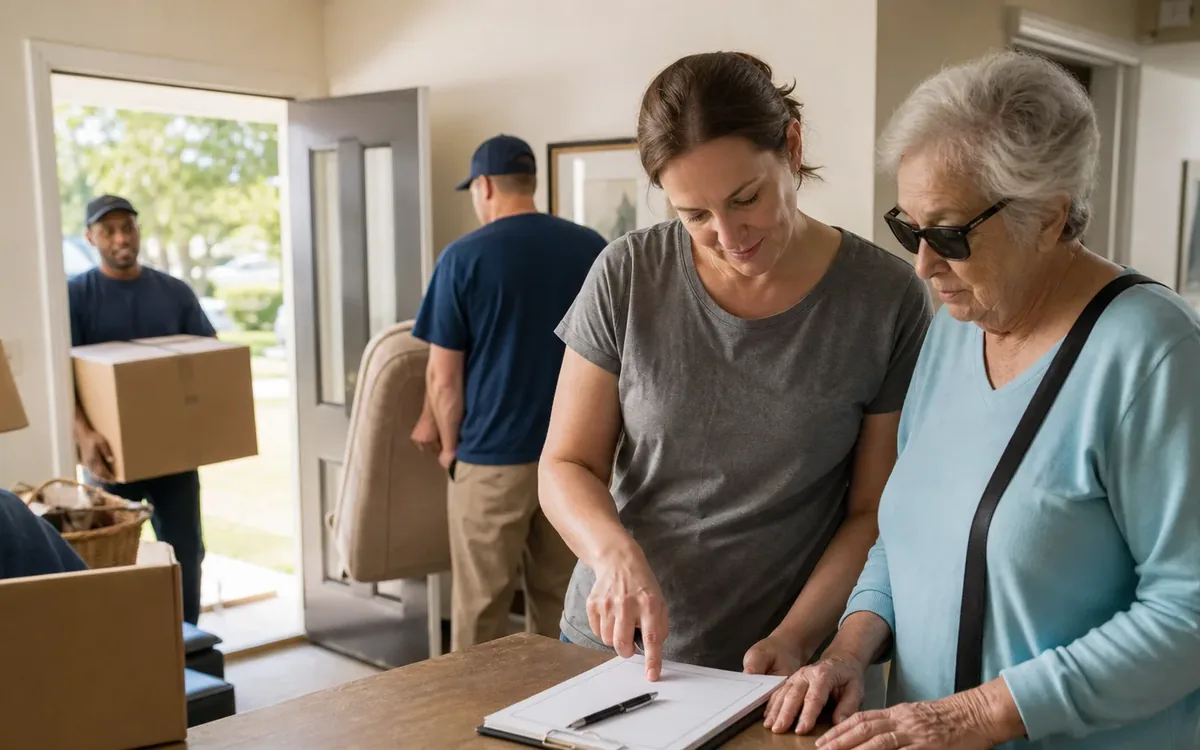
Moving day for someone with hearing or vision needs should be built around a clear communication method, a predictable path through both homes, accessible labels, and one designated support person. Before anyone lifts a box, confirm how the person wants to receive updates, navigate unfamiliar rooms, identify belongings, and respond to alarms or changing conditions.
Quick answer: Choose one communication lead, document the preferred communication format, map safe walking routes, create labels the resident can use, and complete a guided orientation before unpacking begins. Keep mobility aids, hearing devices, medications, keys, and essential personal items with the resident or a trusted support person. Movers and move-management teams can discuss logistics, but accessibility, medical, legal, inspection, and building-compliance decisions remain with the appropriate person or professional.
What should you ask before planning the move?
Begin with the person who is moving. Hearing loss and vision loss vary widely, and a method that works for one person may create difficulty for another. Do not assume that speaking louder, using larger print, or offering an arm is automatically helpful.
Ask about practical preferences:
- What is the easiest way to share instructions: speech, text, writing, sign language, tactile cues, or a combination?
- Does the person use hearing aids, cochlear implant equipment, glasses, a white cane, a magnifier, or another device?
- Are there lighting levels, background noises, or visual patterns that make communication harder?
- How should someone announce that they have entered or left a room?
- Does the person want a sighted guide or another support person for specific parts of the move?
- Which possessions must remain in a consistent, immediately identifiable place?
- What should happen if a severe weather warning, fire alarm, or building announcement occurs?
Record the answers in a short move-day access plan. Give it to the household, the communication lead, and any participating team after obtaining the resident’s permission. Avoid distributing medical details that workers do not need.
A household considering coordinated moving support can review the statewide move-management service to understand the types of logistics that may be discussed. Confirm the actual scope, accessibility needs, and responsibilities directly before the move.
Create one communication system for a noisy moving environment
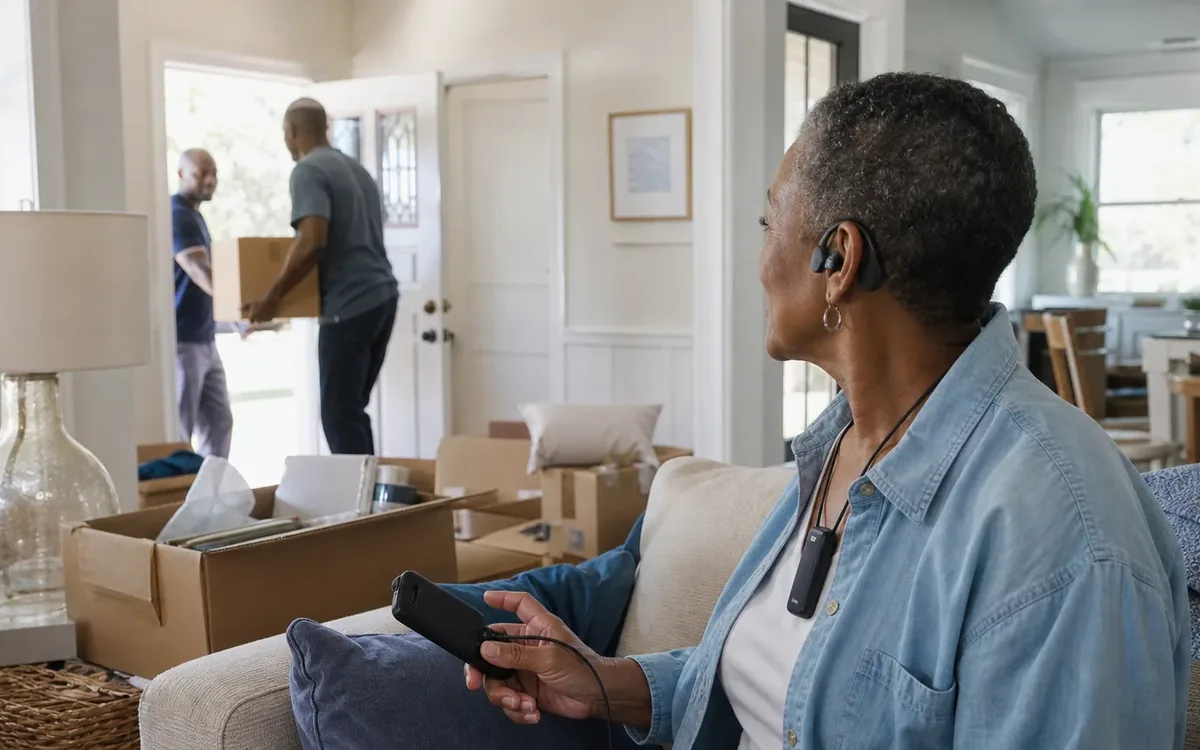
A moving site can include vehicle noise, packing sounds, several simultaneous conversations, and workers entering different rooms. These conditions can obscure speech, prevent lip-reading, and make it difficult to identify who is talking.
Assign one communication lead. That person should provide major updates and receive questions for the resident. This avoids conflicting instructions and reduces the number of people trying to get the resident’s attention.
Build the system around these four elements:
- A preferred contact method. Use the resident’s chosen method, such as face-to-face speech, text messages, a writing board, or communication through a qualified interpreter arranged by the responsible party.
- A clear attention signal. Agree on a respectful signal before moving day. Do not grab, shout at, or startle the person.
- Visible status updates. Keep a written or accessible digital list showing which rooms are packed, in transit, or ready for orientation.
- A backup method. Prepare an alternative if a phone battery fails, power is interrupted, glare makes a screen unreadable, or noise blocks speech.
When speaking with someone who relies on lip-reading or facial cues, face the person, keep your mouth visible, and avoid talking while walking away. Bright South Carolina sun behind the speaker can place the face in shadow, so change position or move to even lighting.
A practical move team may discuss how workers receive instructions, how box destinations are communicated, and where questions should go. The household decides the resident’s communication preferences. Decisions about interpreters, assistive technology, or disability accommodations should be made by the responsible party in consultation with the relevant qualified provider, property representative, or authority.
How can you make routes safer for someone with limited vision?
Plan and protect a continuous route at the old residence, the new residence, and the loading area. An unfamiliar South Carolina home may have changes in floor level, exterior steps, narrow passages, porches, or doors that open into a walking path.
Before moving starts, inspect the intended route for:
- Loose rugs, cords, packing material, and low boxes
- Open cabinet doors and partially opened interior doors
- Furniture projecting into the path
- Wet flooring or slick exterior surfaces
- Uneven thresholds and unexpected steps
- Low branches or objects near an exterior walkway
- Strong glare and abrupt changes between bright and dim areas
- Pets, dollies, ramps, and equipment crossing the route
Keep the route consistent whenever possible. If workers must place an object in or near it, the communication lead should tell the resident before the change occurs. A verbal warning such as “watch out” is not specific enough. Describe the obstacle and its location using the orientation language the resident prefers.
Do not move a white cane, mobility aid, guide-dog equipment, glasses, or assistive device as ordinary household cargo. Ask where each item must remain. Never distract, feed, guide, or separate a service animal without the handler’s direction.
The household can choose furniture placement and preferred routes. A move team may discuss clear staging areas and box placement. A qualified contractor, inspector, property manager, accessibility professional, or public authority must address questions about structural modifications, required clearances, ramps, rails, electrical work, or code compliance.
Use labels the resident can identify independently
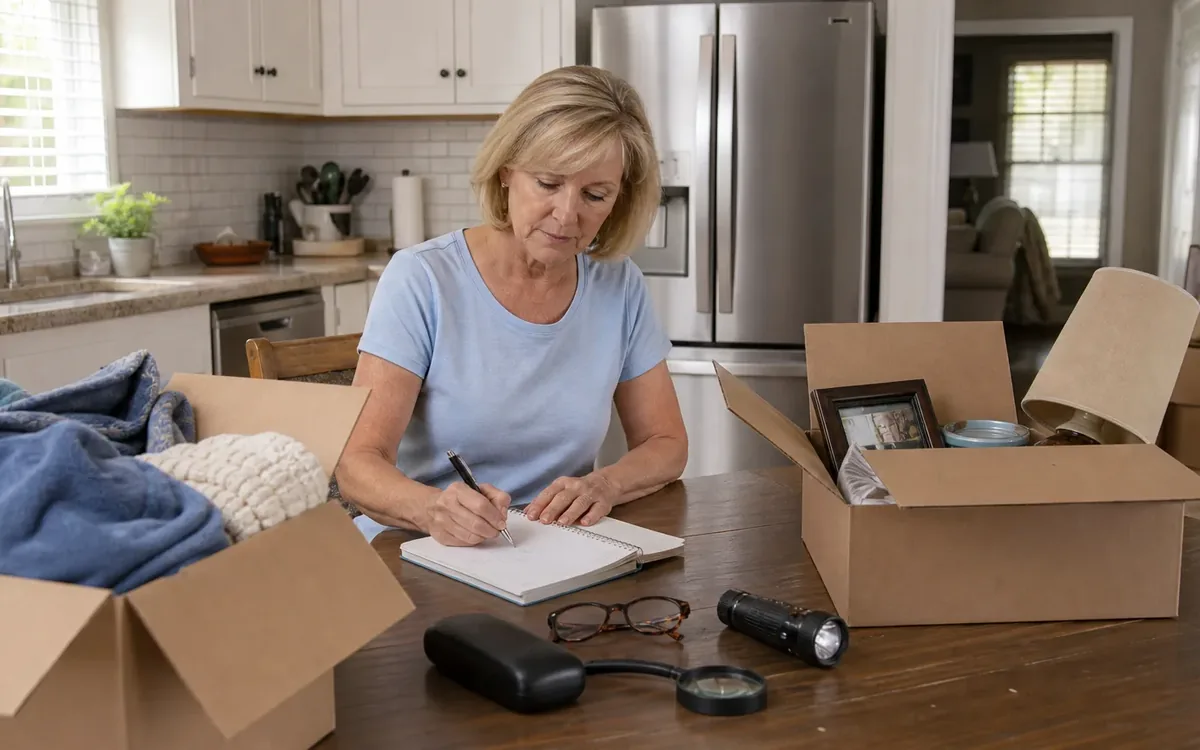
Standard handwritten box labels may not be useful to someone with low vision or blindness. Choose a labeling system with the resident instead of creating one on their behalf.
Possible formats include:
- Large, high-contrast print
- Tactile markers with distinct shapes or textures
- Braille labels prepared for a Braille reader
- Color combined with text, not color alone
- Numbered boxes matched to an accessible inventory
- Audio notes or accessible digital records
- A consistent marker placed on the same corner of every box
Labels should identify both the destination and the broad contents. Keep sensitive information off the exterior. “Bedroom 1, daily clothing” is more useful than “miscellaneous,” while private financial or medical descriptions belong in a secure inventory rather than on the carton.
Use the same room names everywhere. If one list says “front bedroom,” another says “guest room,” and workers call it “Room 2,” items can be misplaced. Post a simple room key near the entrance if it is accessible to the resident and useful to workers.
For a move connected to an inherited property, belongings may also need sorting before labels are assigned. The guide on how estate cleanouts work explains the broader sorting and removal process. Ownership, estate authority, appraisal, sale, donation, and disposal choices should be resolved separately rather than treated as routine moving decisions.
Pack an accessible essentials kit that stays with the person
The resident or a trusted support person should keep essential items outside the moving truck. Pack them in a distinct bag or container that can be identified through the resident’s chosen visual, tactile, or digital method.
Consider including:
- Hearing devices, glasses, magnifiers, and their protective cases
- Batteries, charging equipment, and extension leads approved for the devices
- Phone, accessible contact list, and portable power source
- White cane or other mobility aid
- Medications and instructions managed by the resident or caregiver
- Keys, identification, wallet, and necessary documents
- Water, food, and personal-care items appropriate to the individual
- A writing board, thick marker, flashlight, or other backup communication tool
- Weather-appropriate clothing
- A familiar item that helps the person identify the correct resting area
Keep this kit in an agreed location and tell the communication lead who controls it. Do not place medication, documents, or assistive devices into general packing or storage.
Storage is a separate household choice. If items will go into a storage facility, the household should confirm access procedures, environmental conditions, insurance questions, and accessibility directly with the storage provider. A move team may help keep destination labels organized if that is within the agreed scope, but it should not make storage-contract decisions for the resident.
How should the new residence be oriented before unpacking?
Complete a guided orientation while the rooms and routes are still relatively clear. Ask whether the resident wants verbal descriptions, independent exploration, a sighted guide, tactile reference points, or another method.
Cover five practical areas:
- Primary entrance and exit. Identify locks, thresholds, steps, door direction, and the route to an exterior meeting location.
- Essential rooms. Establish the routes to the bathroom, bedroom, kitchen, and a quiet sitting area.
- Controls and alerts. Locate light switches, thermostats, appliance controls, alarm devices, intercoms, and building communication systems.
- Fixed hazards. Explain stairways, low ceilings, glass doors, level changes, and other features that cannot be removed.
- Emergency information. Review how the resident will receive warnings and contact the appropriate person if help is needed.
Furniture should not be repositioned repeatedly after orientation without telling the resident. Place chairs fully under tables, close doors consistently according to the agreed system, and avoid leaving boxes as temporary landmarks unless the resident specifically requests them.
If the home needs grab bars, lighting changes, alerting equipment, electrical work, or structural alterations, keep that work separate from moving logistics. The household selects contractors and approves changes. Contractors determine their work scope, while inspectors, property representatives, or authorities decide whether permits, approvals, or compliance measures apply.
Plan for bright sun, storms, and building alerts
South Carolina conditions can change the accessibility of a move. Bright sun may produce glare, wash out phone screens, and make facial communication difficult. Rain can obscure visual contrast and create slick routes. Thunder, equipment, and wind can make auditory cues unreliable.
Before moving day, decide where important conversations will happen if outdoor conditions interfere. A shaded, evenly lit location can make faces and written instructions easier to see. Keep printed information protected from rain and ensure digital instructions remain available if connectivity is disrupted.
The household should also identify how the resident receives severe weather and emergency alerts. This may involve accessible phone settings, visual alerts, vibration, a trusted contact, or a building system. Test personal devices according to manufacturer guidance rather than waiting for an emergency.
In a condominium, apartment, or managed community, contact the responsible property representative about loading access, elevator procedures, parking rules, alarm systems, and emergency communications. The property representative or relevant authority decides building requirements. A moving or cleanout team can follow confirmed instructions but should not interpret building rules or certify accessibility.
Separate household choices from professional decisions
An accessible move works better when responsibility is explicit. The household can decide:
- Preferred communication and guidance methods
- Which support person speaks for the resident when requested
- Furniture locations and room names
- What to keep, sell, donate, store, or discard when the household has authority
- Which belongings stay with the resident
- Whether to hire interpreters, appraisers, contractors, inspectors, or other providers
A practical cleanout or move-management team may discuss packing order, labeling, staging, destination lists, clear work zones, and coordination within an agreed service scope. It can also ask how workers should communicate with the resident.
Other decisions belong elsewhere. An appraiser determines valuation within an appraisal engagement. A real-estate professional advises on listing and transaction matters. Inspectors evaluate conditions within their qualifications. Contractors define repair or modification work. Attorneys, personal representatives, courts, property managers, and public authorities address legal authority, estate disputes, permits, building rules, and compliance requirements.
Do not let moving-day urgency blur these boundaries. If authority over an item or property is unclear, pause that decision and place the item in a clearly marked hold area if secure space is available.
Moving-day roles that prevent confusion
Assign each participant a narrow role and share the list in the resident’s preferred format:
- Resident: Directs personal preferences and decisions to the extent they choose.
- Communication lead: Provides updates and confirms changes with the resident.
- Route monitor: Keeps agreed pathways clear and reports new obstacles.
- Inventory lead: Maintains box numbers, room destinations, and hold items.
- Essentials custodian: Keeps the accessible essentials kit secure and available.
- Property contact: Handles confirmed access, elevator, parking, and building instructions.
One person may hold more than one role, but everyone should know who has final responsibility for each task. Workers should route questions through the designated lead instead of surrounding the resident with overlapping conversations.
Short FAQ
Should movers guide a person who is blind or has low vision?
Only if the person requests guidance and explains their preferred method. Do not pull, push, or take hold without consent. If specialized mobility instruction is needed, consult an appropriately qualified professional.
Is large print enough for accessible box labels?
Not always. Contrast, lighting, print size, viewing distance, tactile access, and the resident’s usable vision all matter. Ask the resident which format works and provide a backup inventory when appropriate.
Who decides whether the new home needs accessibility modifications?
The household chooses whether to explore modifications. Qualified contractors or accessibility professionals can assess options, while property owners, managers, inspectors, permitting offices, or other authorities determine applicable approvals and requirements.
Can Clutter Cleaner of South Carolina coordinate a move outside Charleston?
Clutter Cleaner of South Carolina is physically located in Mount Pleasant, serves Charleston as its primary market, and has an approved service territory covering South Carolina. Contact the company at (843) 972-7020 to discuss location, needs, scope, and scheduling rather than assuming availability or a particular service arrangement.
What is the most important final check?
Confirm that the resident can locate essential devices and personal items, follow a clear route to key rooms and an exit, receive alerts, and reach the designated support person. Resolve misplaced essentials before general unpacking continues.



