
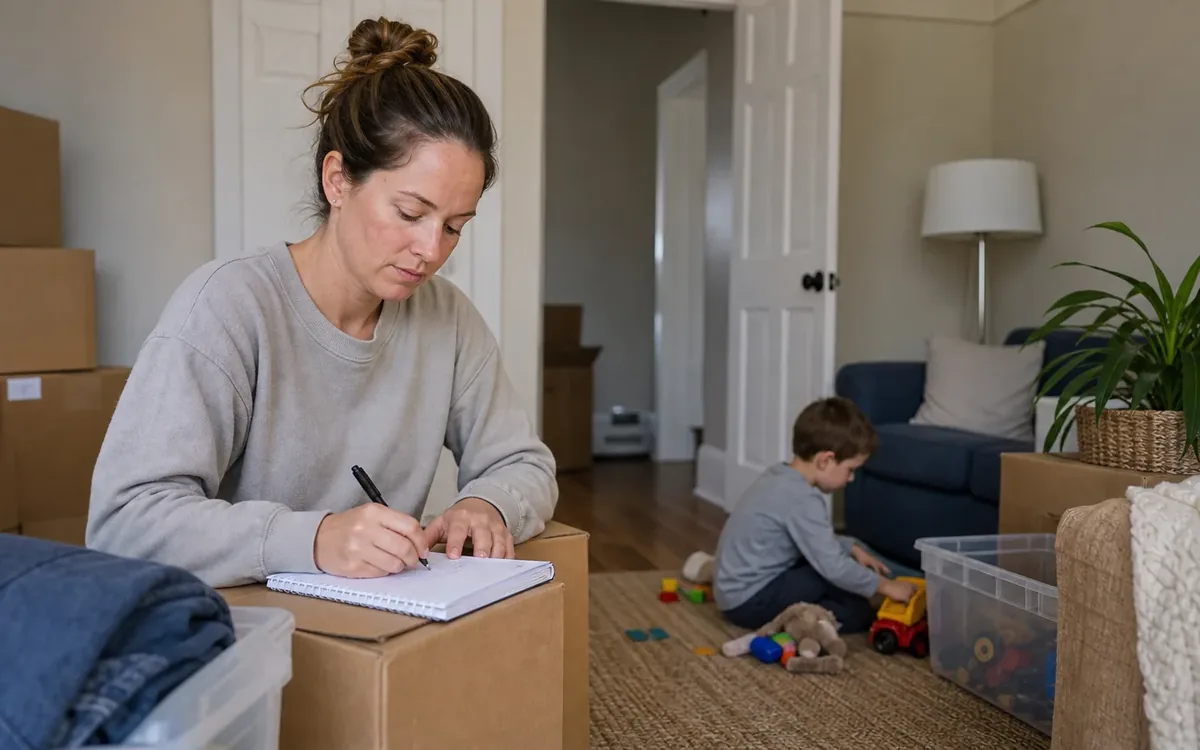
Moving-day childcare works best when one named adult is responsible for each child, transportation and handoff locations are settled in advance, and essentials travel with the caregiver rather than in the moving truck. The household should also prepare backup contacts and a clear reunification plan. This keeps children away from open doors, heavy lifting, unfamiliar equipment, traffic, and rooms being emptied.
Quick answer: Choose a primary caregiver and a backup, select a safe location away from move activity, pack a child-specific essentials bag, authorize transportation and pickup, exchange contact details, and agree on exactly when and where the child will return. Account for South Carolina heat, school schedules, and travel time when making the plan.
This is not simply a babysitting decision. It is a coordinated handoff plan covering who has authority, where the child will be, what the caregiver needs, and how everyone will respond if the move changes unexpectedly.
Why does moving day need a separate childcare plan?
A move creates conditions that are difficult to combine with active childcare. Exterior doors may remain open. Furniture, boxes, tools, and packing materials can obstruct familiar paths. Adults may be focused on instructions, inventories, keys, paperwork, or last-minute decisions.
Children can also react strongly to seeing their room dismantled or belongings carried away. A familiar caregiver and predictable routine may offer more stability than staying in the home throughout the work.
The goal is not to remove children from every part of the transition. It is to separate them from the busiest physical work while preserving familiar meals, rest, medication, comfort items, and communication.
A household using professional move management support can discuss sequencing, packing coordination, access, and the household’s moving priorities with the practical move team. Childcare selection, custody permissions, medical authorization, and caregiver screening remain decisions for the parent, guardian, or other legally responsible person.

Who should be responsible for each child?
Assign one primary caregiver by name rather than telling several relatives to “keep an eye on the kids.” Shared assumptions can leave gaps, especially when adults are loading cars, answering calls, or traveling between properties.
Choose a caregiver who:
- Knows the child’s routine, allergies, and comfort needs
- Can remain focused on childcare rather than move tasks
- Has reliable transportation if driving is required
- Understands who may pick up or receive the child
- Can communicate with the parent or guardian throughout the day
- Is prepared to follow medication and emergency instructions
- Can manage siblings together, if that is the plan
Name a backup caregiver too. The backup should receive the same instructions and know when responsibility transfers to them. Do not rely on a backup who is also essential to packing, directing movers, handling a property closing, or supervising contractor work.
For multiple children, decide whether one caregiver can realistically manage all ages and needs. An infant, a child who needs close supervision, and an older child following a school schedule may require different arrangements. The household makes that judgment based on the children and caregivers involved.
If custody orders, guardianship terms, school release rules, or medical consent questions apply, consult the appropriate attorney, school official, healthcare provider, or responsible authority. A cleanout or move team should not interpret those requirements.
Where should children spend moving day?
The safest practical choice is often a familiar place away from loading areas and household traffic. Possibilities include a relative’s home, a trusted caregiver’s home, school, childcare, or another setting already approved by the parent or guardian.
Evaluate each option for:
- Safe indoor space and working climate control
- Familiar sleeping or quiet areas
- Secure exterior doors and gates
- Suitable food preparation and bathroom access
- Distance from the old and new homes
- Pickup restrictions or identification requirements
- The caregiver’s ability to stay there for the full agreed period
- A practical shelter plan during severe weather
South Carolina heat deserves specific attention. A parked vehicle, garage, driveway, screened porch, or unconditioned room should not become the default childcare space while adults work. Keep children, medications, snacks, and temperature-sensitive supplies in an appropriate indoor setting.
Travel time also matters, particularly when the caregiver, school, old home, and new home are in different directions. Consider likely traffic, school dismissal, parking, and whether a route passes through areas affected by the move. Build the handoff around realistic travel conditions rather than assuming every adult can arrive simultaneously.
If the destination home is still undergoing repairs, cleaning, inspection, or contractor work, confirm whether children should enter at all. Contractors control their work practices, and inspectors or compliance authorities determine relevant requirements. The household should ask the appropriate provider or authority about hazards and access instead of treating the childcare room as automatically safe.
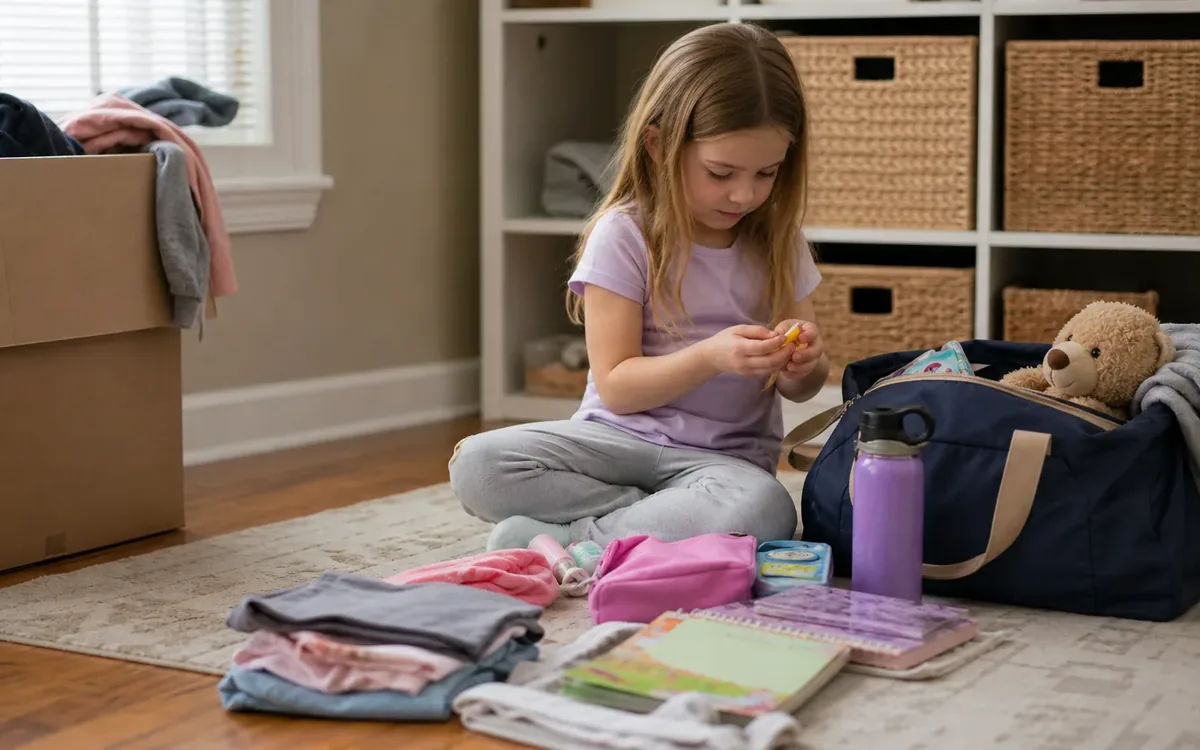
What belongs in the child’s moving-day essentials bag?
Pack a separate bag that stays with the caregiver. It should never be placed in a box marked for the truck, donation, disposal, storage, auction, or estate sale review.
Include items appropriate to the child’s age and needs:
- Change of clothes and weather-appropriate layers
- Diapers, wipes, and changing supplies
- Food, bottles, snacks, and water
- Required medication in its original labeled container
- Written medication instructions
- Comfort object, books, or quiet activities
- Sun protection for planned outdoor transitions
- Phone charger or child communication device
- Basic hygiene supplies
- School materials or activity equipment needed that day
- Copies of necessary contact and authorization information
The caregiver should know what is in the bag and where urgent items are located. Tell them about allergies, food restrictions, toileting routines, sensory concerns, nap patterns, and calming strategies. A packing label such as “CHILD ESSENTIALS: DO NOT LOAD” can reduce confusion.
Keep irreplaceable documents under adult control. The household decides whether the caregiver needs copies or access instructions. Original birth certificates, passports, custody records, and similar papers generally belong in a secure document plan, not loose in a child’s bag.
Medication handling and medical consent should follow instructions from the child’s healthcare provider and applicable legal requirements. A moving or cleanout team can help identify items that should remain accessible, but it should not provide medical or legal direction.
If the move is part of a larger household transition, the guide on how estate cleanouts work can help adults understand sorting and access decisions without involving children in active removal areas.
How should transportation and handoffs work?
Treat every transfer as a specific appointment, even when family members know one another well. State who transports the child, which vehicle they will use, where the handoff occurs, and who confirms completion.
A practical handoff plan has five parts:
- Departure: Name the adult who takes responsibility and the exact pickup location.
- Transport: Confirm the driver, destination, child restraint needs, and items traveling with the child.
- Arrival: Require a text or call confirming that the child and essentials arrived safely.
- Return: Name the approved receiving adult and select a location away from trucks, equipment, and unsecured doors.
- Closure: Confirm that medication, school items, comfort objects, and documents return with the child.
Avoid curbside exchanges next to loading vehicles. A stationary, clearly identified indoor location is usually easier to manage. If the old home is congested, use a separate approved meeting point where the caregiver can park safely and wait without entering the work zone.
For school-day moves, review the school’s dismissal and pickup procedures. Confirm whether an alternate adult must be listed or present identification. The school determines its own release requirements, so contact the school directly instead of assuming a written note is enough.
A move team may discuss household access, loading sequence, expected arrival coordination, and which entrances need to remain clear. The parent or guardian remains responsible for choosing drivers, installing suitable child restraints, approving pickup adults, and complying with school or childcare rules.
Build a simple communication and reunification plan
Every responsible adult should receive one concise plan. A shared message or printed sheet can work if it is current and easy to find.
Record:
- Each child’s full name and relevant needs
- Primary caregiver and backup caregiver
- Parent or guardian contacts
- An emergency contact outside the immediate move activity
- Pickup and return locations
- School or childcare contact information
- Approved pickup adults
- Allergy and medication notes
- The new address, if appropriate to share
- A fallback meeting location
- The phrase or method used to confirm a changed handoff
Reunification means more than “bring the children to the new house.” Define a trigger, such as confirmation from a named adult that the selected room is accessible, exterior doors are secured, major lifting has stopped, and essential sleeping or feeding items are available.
Select one adult to send that confirmation. Conflicting messages from several family members can result in a caregiver arriving while vehicles are still maneuvering or entrances remain blocked.
Keep children out of storage units, disposal staging zones, contractor areas, and rooms containing unstable stacks. Storage choices belong to the household and the storage provider. Disposal acceptance belongs to the receiving facility or waste provider. Contractor safety belongs with the contractor. The practical move team may discuss sequencing and separation of areas but cannot replace those providers’ rules.
Prepare for heat, storms, delays, and changed plans
A useful contingency plan assumes the original schedule might shift. Weather, school changes, vehicle trouble, key delays, property access issues, or unfinished work can affect reunification.
Prepare alternatives for these situations:
- Heat exposure: Identify an air-conditioned indoor location and keep water accessible.
- Severe weather: Choose a shelter location and decide who will communicate any change.
- School interruption: Confirm who can retrieve the child and where they will go.
- Caregiver cancellation: Activate the named backup rather than improvising among busy helpers.
- Transportation problem: Identify another approved driver with the correct child restraint setup.
- Delayed access: Keep the child at the approved care location until the receiving adult confirms entry.
- Lost phone service: Establish a secondary contact and a fixed fallback meeting location.
- Medical concern: Follow the child’s provider instructions and contact emergency services when appropriate.
Do not make the new home the automatic backup if utilities, cooling, secure access, or required inspections are unresolved. Utility providers, inspectors, real-estate professionals, property managers, and public authorities decide matters within their roles.
Similarly, an appraisal, closing, or property walkthrough should not be treated as childcare. The appraiser or real-estate professional handles their assigned property task. The household must still provide a responsible caregiver and a safe location for children.
Coordinate childcare without handing it to the move crew
Childcare planning and move management should connect, but they are not the same responsibility. Share enough information for the physical work to be sequenced safely without expecting the crew to supervise children.
The household can decide:
- Who provides care and who serves as backup
- Which adults may transport or receive each child
- What personal information is shared
- Which possessions remain with the caregiver
- When the child may enter the new home
- Whether children participate in a calm goodbye or settling-in activity
A practical cleanout or move team may discuss:
- Entrances and rooms affected by moving activity
- Separation of child essentials from packed property
- The planned sequence for accessible rooms
- Placement of clearly labeled personal bags
- Household contact points for move decisions
- When the team has completed its assigned physical work
Other decisions stay with the appropriate professional or authority. Attorneys address custody, guardianship, contracts, and legal authorization. Healthcare professionals direct medical care. Schools and childcare providers control release procedures. Appraisers determine valuation matters. Real-estate professionals handle transactions within their professional role. Inspectors, contractors, property managers, disposal providers, and compliance authorities determine requirements related to their work.
This division prevents a logistical conversation from being mistaken for legal, medical, educational, or safety approval.
Help children reconnect with the new home
Reunification should be calm and deliberate. Before children arrive, place a few familiar essentials in an accessible room. These might include bedding, a favorite cup, pajamas, a book, a night-light, or supplies for the next school day.
Tell the child what to expect in simple terms. For example, explain which rooms are ready, where they will sleep, and which boxes are still closed. Avoid promising that everything will look finished.
Consider giving older children a limited settling-in choice, such as selecting which familiar item to unpack first. Keep them away from cutting tools, tall stacks, unsecured furniture, packing straps, and active unloading.
If belongings are moving into off-site storage, identify the child’s essential items before storage decisions are finalized. The household selects the storage arrangement, and the storage provider defines access and facility terms. A move team may help organize categories if that work is within the agreed scope, but it should not guarantee storage conditions or immediate access.
Short FAQ
Should children visit the old home before leaving?
That is a household choice based on age, temperament, and safety. A brief goodbye may be helpful if it occurs before active loading or after the physical work ends. Keep the child with their caregiver and away from equipment, vehicles, and unstable items.
Can the caregiver stay at the new home?
Possibly, if the home has a truly separate, secure, climate-controlled area and the responsible adults approve it. Do not assume a closed bedroom is isolated from moving traffic. Consider entrances, bathrooms, noise, tools, utilities, and access by contractors.
Who should hold medication on moving day?
The responsible caregiver should have necessary medication and clear instructions consistent with the healthcare provider’s direction and applicable requirements. Medication should not go into general packing, storage, donation, or disposal streams.
What if the child must attend school that day?
Confirm transportation, dismissal authorization, the approved pickup adult, and where the child goes after school. Contact the school for its requirements and notify the caregiver of schedule changes.
When should children return to the home?
Use conditions rather than an assumed clock time. A designated adult should confirm that the handoff location is accessible, major moving activity has stopped there, and the child’s immediate food, sleep, medication, and hygiene needs can be met.
A strong moving-day childcare plan gives every adult a defined role and every child a safe destination. Set the caregiver, essentials bag, transportation, communication, backup, and reunification terms before physical moving work begins. Clutter Cleaner of South Carolina is based in Mount Pleasant, serves households statewide, and can be reached at (843) 972-7020 to discuss move management needs and how household logistics may fit around a separately arranged childcare plan.



