
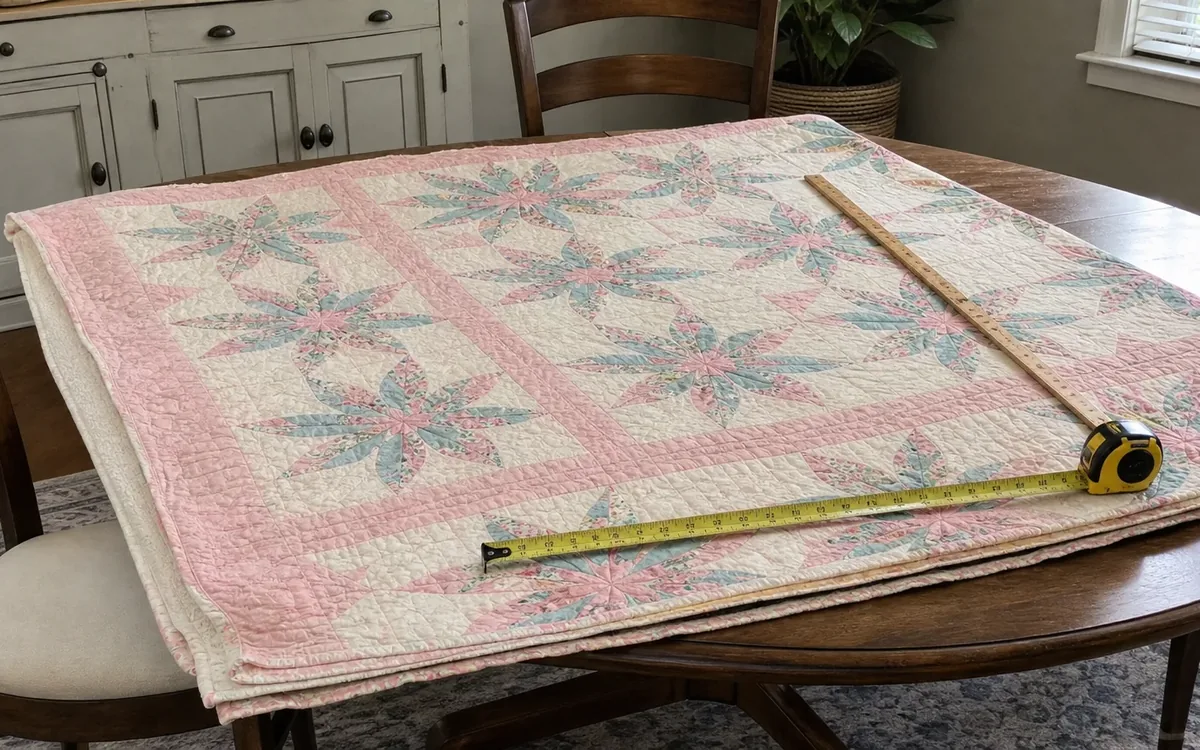
A vintage textile sale in Hanahan, SC, starts with clear records, not fresh washing. Measure each quilt or textile, record its visible details, and copy existing labels. Describe flaws without guessing age or worth. Keep family stories separate from proof, and refer fragile pieces to a qualified textile specialist before treatment.
Quick answer: Give each item an ID, record its dimensions, and take clear photos. Note labels, wear, and storage history. Don’t launder fragile textiles for better pictures. Ask the sale provider which details buyers need, and leave age, value, and treatment questions to the right specialist.
This guide covers quilts, coverlets, table linens, runners, and similar household textiles. Its aim is a useful sale record that follows each piece. It isn’t a guide to washing, repair, or textile conservation.
How do you measure textiles for a vintage textile sale?
Use the auctions and estate sales service page to frame your sale planning, and the guide to how estate cleanouts work for the wider household process. Record dimensions in inches, state what you measured, and note any limits. A useful size record is clear enough for someone else to understand.
Start with an item ID before you measure. A simple code, such as Q-01, can connect notes and photos. Put that code on a separate card beside the item. Don’t attach a sale tag through old fabric.
Choose a clean work area large enough for the piece. Keep food, drinks, and pets away from the session. If the textile is too fragile to spread out, pause. Record that full dimensions aren’t yet known rather than forcing a measurement.
Follow these five steps for a piece that can be laid out without strain:
- Place the textile on a clean surface with its edges fully supported and visible.
- Measure the longest side in inches without pulling the fabric to make it straight.
- Measure across the other side, then write both figures in the same order.
- Record fringe, tassels, or trim separately so buyers know what the main size includes.
- Note uneven edges or folds that make the dimensions approximate rather than exact.
Write “approximately 72 by 84 inches, excluding fringe” instead of “large bed quilt.” Use the same unit across the inventory. If a sale platform needs another unit, label that figure clearly.
A quilt may have uneven sides or a border that wanders. Don’t stretch it into a neat rectangle for a better number. If two edges differ, record that fact with the measurements.
For a set, measure each piece or each distinct size. Six napkins may look alike but differ in size. Mark the count as confirmed, and identify any pieces still awaiting review.
What details should you record without guessing age?
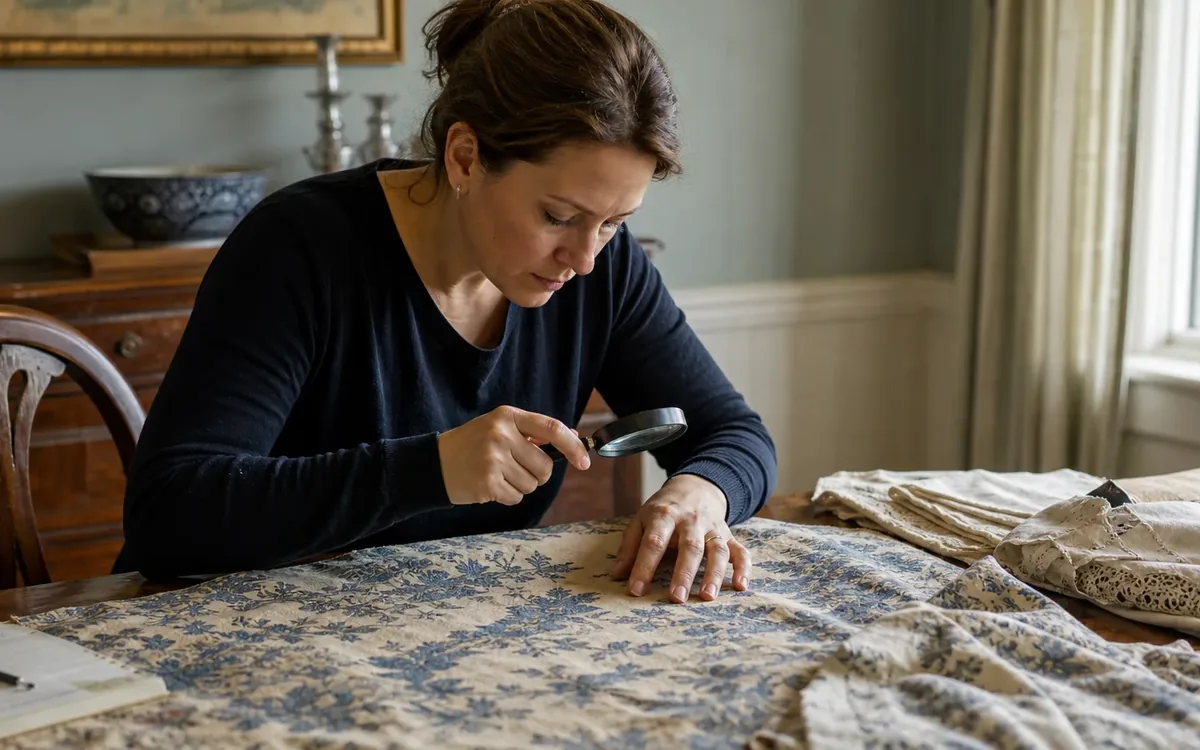
Pair the guide to cleaning out an estate with the auctions and estate sales service page when planning records. Describe what you can see, then separate it from what you’ve been told. Labels, stitching, pattern, and wear help buyers. They don’t, by themselves, prove a date, maker, or value.
Start with a plain object name. “Patchwork quilt with blue and cream blocks” is more useful than “rare antique treasure.” Add the size, item ID, and count before any history. Those details help prevent mix-ups during sale preparation.
Visible construction details can make a listing more useful. Note a pieced top, stitched lines, bound edges, or a separate backing. Say “stitching visible in close-up photos” if you’re unsure how it was made. Don’t identify handwork from a distant image.
Use these points to build a clear item record:
- Copy label text exactly, including names, dates, fiber wording, and care wording that remains readable.
- Describe visible colors and patterns without assigning a named design you haven’t confirmed.
- Note holes, tears, worn edges, fading, stains, and missing trim in plain words.
- Keep family accounts in a separate field marked as history reported by the household.
- List receipts, letters, or photos that may support the history, with their current location.
A sewn date might refer to a gift, event, or later repair. A label may describe one part rather than the whole textile. Preserve the wording, but don’t expand its meaning without review.
Avoid claims such as “Civil War quilt” based on a family guess. A better note is “Family recalls this belonged to a great-grandparent; date not verified.” That keeps the story without presenting it as proof.
The household can supply records and choose what personal details to share. A qualified appraiser or textile specialist can assess claims within their field. The sale provider can discuss listing language and flag facts that need review.
How should you handle signs of humidity exposure?
The estate cleanout process guide can help place textile review within a larger project, while the estate cleanout planning guide supports household sorting. Ask about storage conditions before preparing sale photos. Record dampness, musty odor, stains, or suspected growth, and pause work on pieces that need specialist review.
For textiles from South Carolina storage spaces, ask about humidity exposure. Don’t assume every stored quilt has damage. Instead, note where it was kept and what the household knows. Useful facts include a past leak, a damp container, or an unknown storage history.
A dark mark isn’t enough to identify mold. A musty smell doesn’t establish the cause or the right treatment. Describe what you observe, without making a health or condition diagnosis. Note when and where the observation was made.
Don’t wash, bleach, spray, steam, or deodorize a fragile textile for sale. Avoid attempts to hide odors or stains before review. Leave treatment choices to a qualified textile conservator or other suitable specialist. Buyers need an honest record of the item offered.
If dampness or suspected growth is present, pause routine handling. Keep the item out of the normal photo and sale workflow. Ask a qualified professional about assessment, handling, and any storage needs. Don’t describe the piece as clean or ready for household use.
The household can decide whether to seek review or withdraw the item. A sale provider may discuss whether it fits the planned sale. A separate storage provider may discuss suitable storage terms. None of those choices should be assumed to include textile treatment.
Record the decision beside the item ID. For example, write “Sale preparation paused pending textile review.” That prevents a later helper from mistaking an unresolved issue for a finished task.
Present the textile with photos and plain sale notes
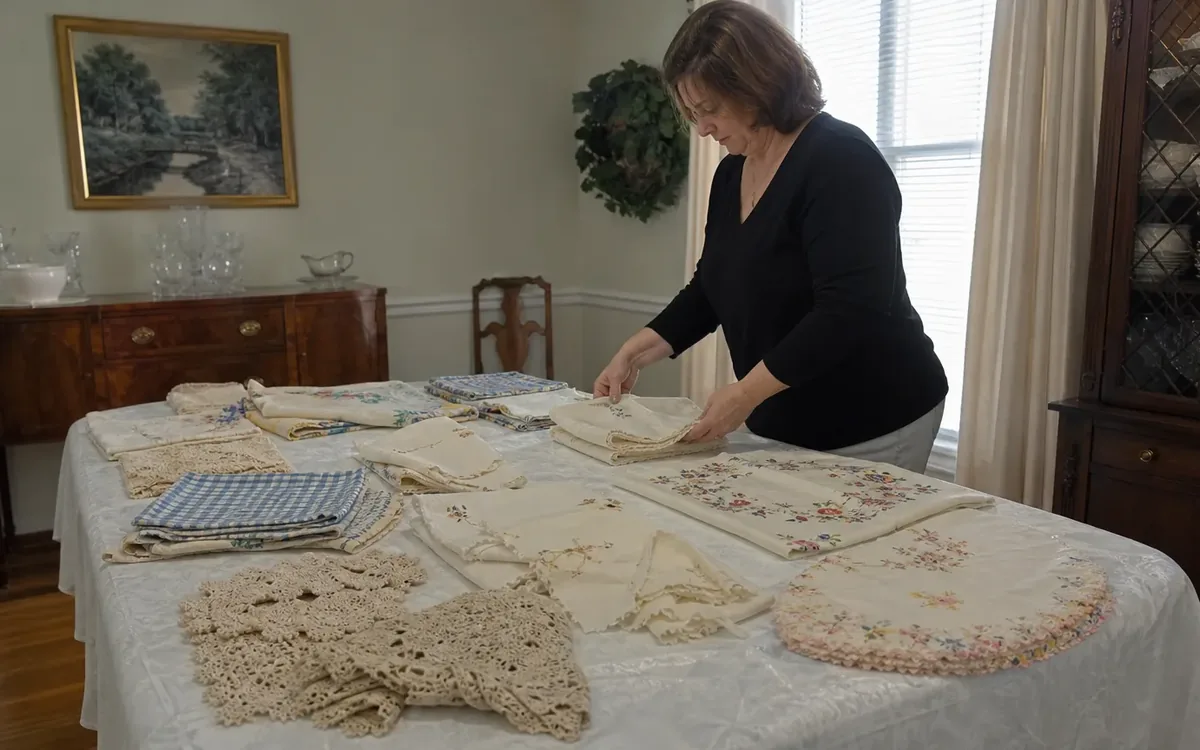
Use the auctions and estate sales service page for sale planning and the estate cleanout process guide for project handoffs. Photos should show the whole piece and the details behind its description. Keep the setting plain, connect every image to an item ID, and show visible flaws rather than cropping them away.
A useful photo set answers basic buyer questions. What is included? What do the front and back look like? Where are the flaws? Can the label be read? Take extra views only when they add facts.
Don’t drape a fragile quilt for a more dramatic display. If a full view would strain the textile, record that limit. A specialist can advise on presentation when the item’s condition is uncertain. The photo plan should follow the piece’s needs, not the room’s style.
Keep these views together under the same item ID:
- Show the whole front when its condition allows a clear, fully supported view.
- Include a back view when it can be obtained without stressing the textile.
- Photograph readable labels and any stitched names or dates without editing their wording.
- Show worn areas and stains in close views, plus wider views that reveal their location.
- Photograph all parts of a set together so buyers can see the confirmed count.
Keep original image files as well as any cropped copies. Avoid color filters that change the fabric’s look. If lighting affects the color, say so in the notes. Don’t treat a photo as proof of fiber content.
A plain draft listing might read: “Patchwork quilt, approximately 72 by 84 inches. Blue and cream top with plain backing. Edge wear and brown marks shown in photos. No maker label found. Age and fiber content not verified.”
Review photos for private details before sharing them. Family letters, addresses, and names may need separate handling. Discuss any edits with the sale provider so useful evidence isn’t lost.
Build a clear household and provider handoff
Connect the estate cleanout planning guide with the auctions and estate sales service page before handing over textiles. The household chooses its goals and shares known facts. A practical team may discuss inventory, photos, grouping, and sale plans. Ownership, appraisals, treatment, and legal questions remain with the responsible person or professional.
Give the provider one record per item or matched set. Each record should carry the same ID as the photos. Include dimensions, condition notes, label text, and the current location. Mark any unresolved questions where they are easy to see.
The household should settle keep-or-sell choices before sale preparation moves ahead. Ask relatives about claimed keepsakes without promising them disputed property. If ownership or estate authority is unclear, seek advice from the responsible legal professional. A cleanout team doesn’t decide those rights.
A practical handoff can cover these tasks:
- Confirm which textiles are approved for sale and which must remain outside the sale group.
- Ask which photos, measurements, and condition notes the sale provider needs for each listing.
- Identify pieces that need appraisal or textile review before anyone makes age or value claims.
- Agree who will arrange any separate storage, transport, treatment, donation, or disposal choices.
- Record who may approve listing changes and how unresolved questions will be returned for review.
An appraisal is a separate choice from sale planning. Ask a qualified appraiser about scope and intended use. Don’t use an asking price as proof of formal value. The IRS Publication 561 on donated property value addresses donation valuation, not a price promise for an estate sale.
Clutter Cleaner of South Carolina lists auctions and estate sales among its services. Its service territory covers all of South Carolina, including Hanahan. Its physical business location is Mount Pleasant, SC, with Charleston as its primary market.
Contact the team at (843) 972-7020 to discuss your project and textile inventory. Confirm the proposed scope before making plans with other providers.
FAQ: Measuring and presenting estate textiles
Keep the auctions and estate sales service page and the guide to cleaning out an estate handy while reviewing these questions. The answers focus on records and sale preparation. They don’t replace an appraisal, textile treatment plan, or legal advice about estate property.
Should I wash a quilt before photographing it?
Don’t launder a fragile quilt to improve its sale photos. Record its current condition, including stains and odors, without trying to hide them. If treatment seems needed, ask a qualified textile specialist first. The sale provider can discuss presentation, but treatment needs its own review and scope.
What if the quilt won’t lie flat?
Don’t pull it into shape for a neat measurement. Record approximate dimensions and explain that folds or uneven edges affect the result. If spreading it out could strain the fabric, stop and mark the size as unconfirmed. A qualified textile specialist can help assess what handling is suitable.
Can I call an unlabeled quilt antique?
Avoid an age claim you can’t support. Describe the visible pattern, size, stitching, and condition instead. You can include a family account if it’s clearly marked as unverified. Ask a qualified appraiser or textile specialist to assess age when that claim matters to the sale description.
Should matching linens be sold as a set?
First confirm the count, sizes, labels, and condition of each piece. Similar colors don’t prove that items began as one set. The household can choose its preferred grouping, then discuss sale options with the provider. Keep notes on differences so a group listing doesn’t hide wear or missing parts.
Who decides what a textile is worth?
The household can set its goals and discuss asking prices with the sale provider. A qualified appraiser handles a formal value opinion within an agreed scope. Keep that work separate from listing preparation. A family story, online asking price, or sewn date doesn’t establish value on its own.
What should stay with the quilt after sale preparation?
Keep its item ID, dimensions, condition notes, label photos, and approved history together. Preserve original documents separately, with a note linking them to the textile. Discuss which records may go to a buyer and which contain private information. This helps the next person understand the piece without relying on memory.



