
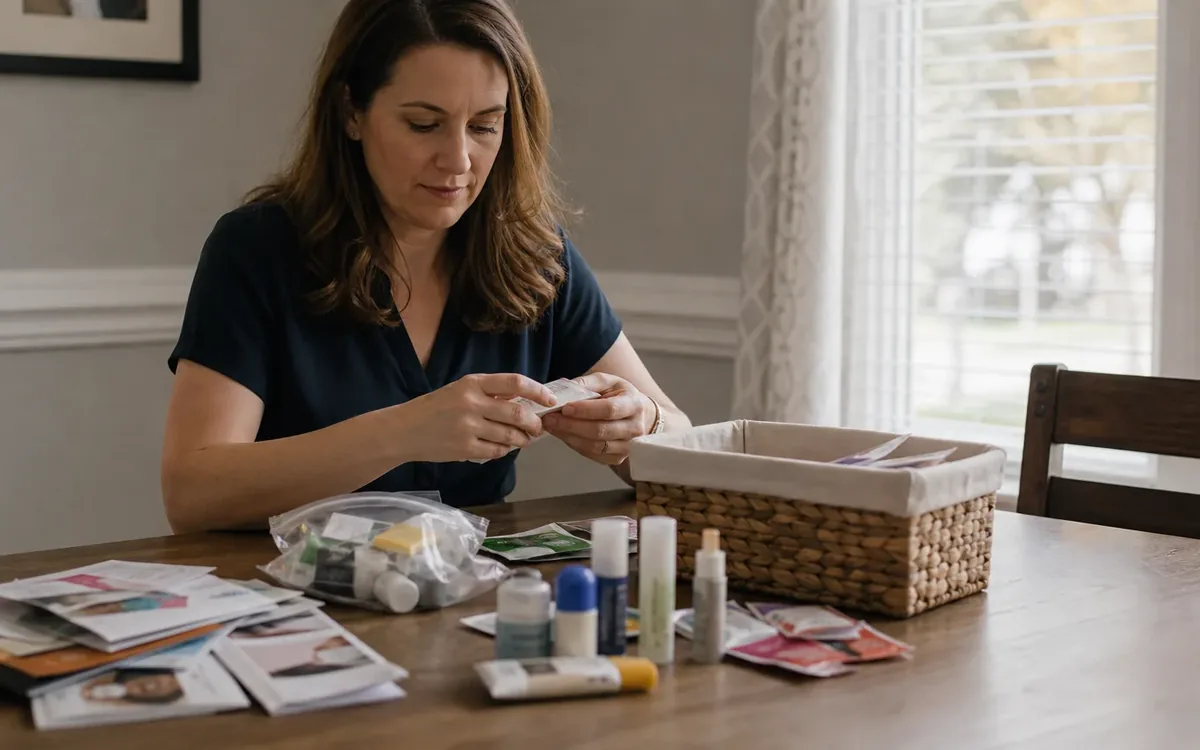
Stop free sample clutter by choosing what you’ll use before accepting it. For households in North Charleston, SC, the same rule fits shopping trips and community events. Keep samples tied to a real need. Give each accepted item a place and a review date.
A free item still needs space, time, and care. A tote bag may bring home several things you never chose. Small packets can hide in drawers long after their purpose fades. The goal is to stop that flow at its source.
Quick answer: Ask, “Will I use this, and where will it go?” Accept it only when both answers are clear. Keep samples in one small space. Set a personal review date, separate from any printed expiration date. Decline items that don’t fit your needs.
What acceptance rule stops free sample clutter?
Use the downsizing and organizing service overview to frame household choices. Browse the home-transition resource guides for broader planning needs.
A useful rule checks need, space, and intent before an item enters your bag. Accept a sample when you want the product and know its place. Decline items taken from habit, pressure, or fear of missing out. Free doesn’t mean useful, and polite doesn’t mean you must say yes.
Make the rule easy to recall in a busy setting. “A real use and a real place” works well. You don’t need to judge every possible future use. You need a clear reason that fits your life now.
Before a South Carolina community event or shopping trip, name your limits. You might welcome one food sample that fits your diet. You might decline pens because your desk drawer is full. Those choices can change as your needs change.
Use a few clear checks before accepting an item:
- Name a real task the sample will serve before accepting it.
- Check that its planned storage spot has room for it.
- Decline a repeat item when you already have enough.
- Ask other household members before bringing home items meant for them.
A simple refusal can be warm and brief. “Thanks, I’ll pass today” needs no added reason. If someone offers a whole gift bag, ask what it contains. You can decline the bag instead of sorting unwanted goods later.
An item can be appealing without earning a place at home. Enjoy the offer, thank the person, and move on. This keeps the decision at the source, where it’s easiest to make.
Give incoming samples a small, clear home
Review the downsizing and organizing service information for help defining scope. The home organizing and transition blog offers related reading for larger household changes.
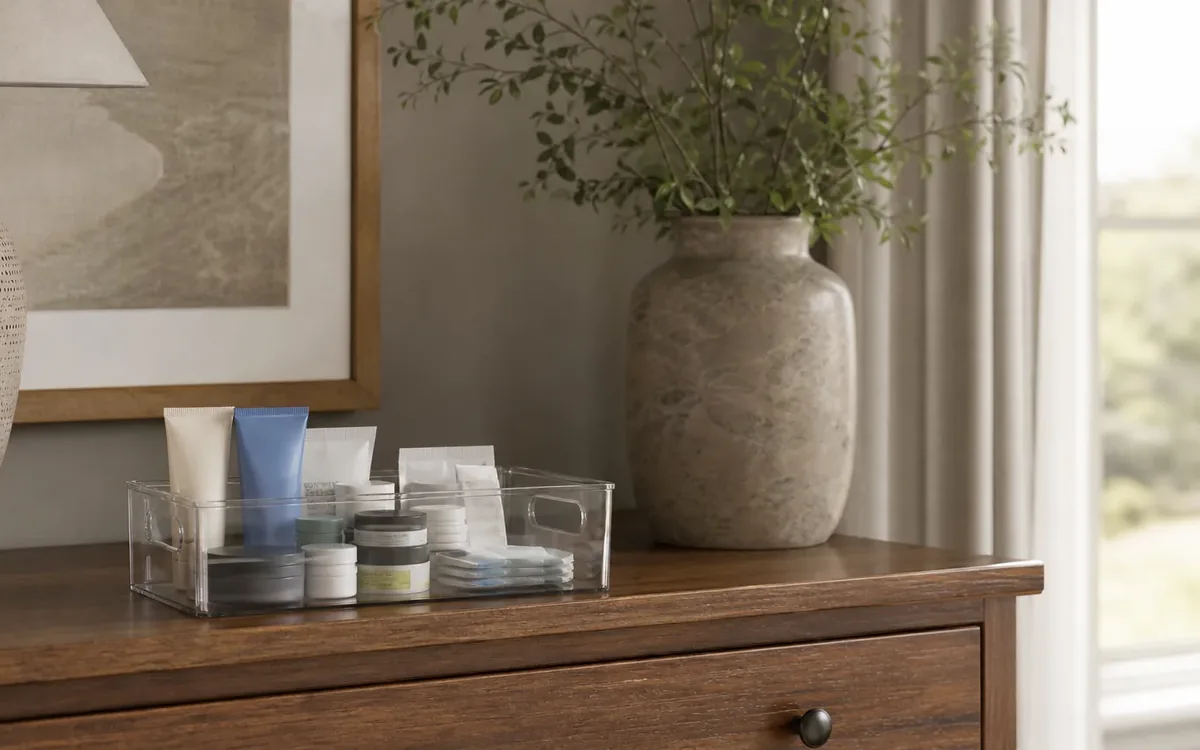
One small sample space makes incoming items easy to see. Choose a spot that fits the contents and follows product labels. Keep your normal supplies separate from the sample collection. When the sample space fills, pause new arrivals. More bins would hide the need to make choices.
The space should serve the rule, rather than become a new project. An existing drawer section or small container may be enough. Choose a size based on what you can reasonably use. Don’t size it around everything you’ve saved so far.
Some samples need different storage conditions. Follow their labels rather than forcing all items into one container. A simple written list can track items kept elsewhere. The point is one clear view of your stock, not one physical box at any cost.
Keep the system light with a few task-based habits:
- Place each accepted sample in its assigned spot after the trip.
- Keep printed product names and label details with their samples.
- Record items stored elsewhere so they remain part of the review.
- Pause incoming giveaways when the chosen space has no room.
Promotional pens, notebooks, and bags can join regular household supplies. They don’t need a special category simply because they were free. Count them with the items they replace. A free pen adds to your pen total.
Avoid making a hidden overflow area. A second drawer can turn a useful limit into a vague wish. If the chosen space fills, review what belongs there. The answer may be fewer incoming items, rather than better storage.
How should you review samples already stored?
The downsizing and organizing overview can support a focused sorting discussion. For inherited household stock, read the guide to cleaning out an estate.
Review stored samples by asking what each item is, why you kept it, and when you’ll use it. Set a personal review date for items worth keeping. That date is a sorting prompt, not proof of product safety. Printed labels and qualified advice still govern health or safety questions.
Start with one drawer, shelf, or bag. Gather its contents without opening every packet or testing products. Keep label details intact. Missing names, unclear contents, or unreadable dates are reasons to seek proper guidance, rather than guess.
Use this five-step review for each small group:
- List the items and note any missing names or label details.
- Match each wanted item to a real use in your current routine.
- Choose a personal review date based on that planned use.
- Mark unwanted items for a suitable next step outside your keep space.
- Review kept items on that date and close any unfinished decisions.
A review date helps prevent endless “someday” storage. You might tie it to your next pantry review or trip packing. Choose a date that fits your own routine. There’s no need to invent a fixed schedule for every home.
Keep review dates distinct from printed expiration dates. Don’t change, cover, or extend the manufacturer’s date. Questions about medicine belong with a pharmacist or other qualified health professional. For an unknown product, seek guidance before deciding its next step.
Write a short note when you keep something. “Use for next trip” is clearer than “might need.” If that trip passes and the item stays untouched, reconsider it. A new date should reflect a new plan, rather than delay a choice.
Where should unwanted promotional items go?
The downsizing and organizing service page helps frame sorting goals. The estate cleanout process guide explains a broader handoff context when small items join a larger clear-out.
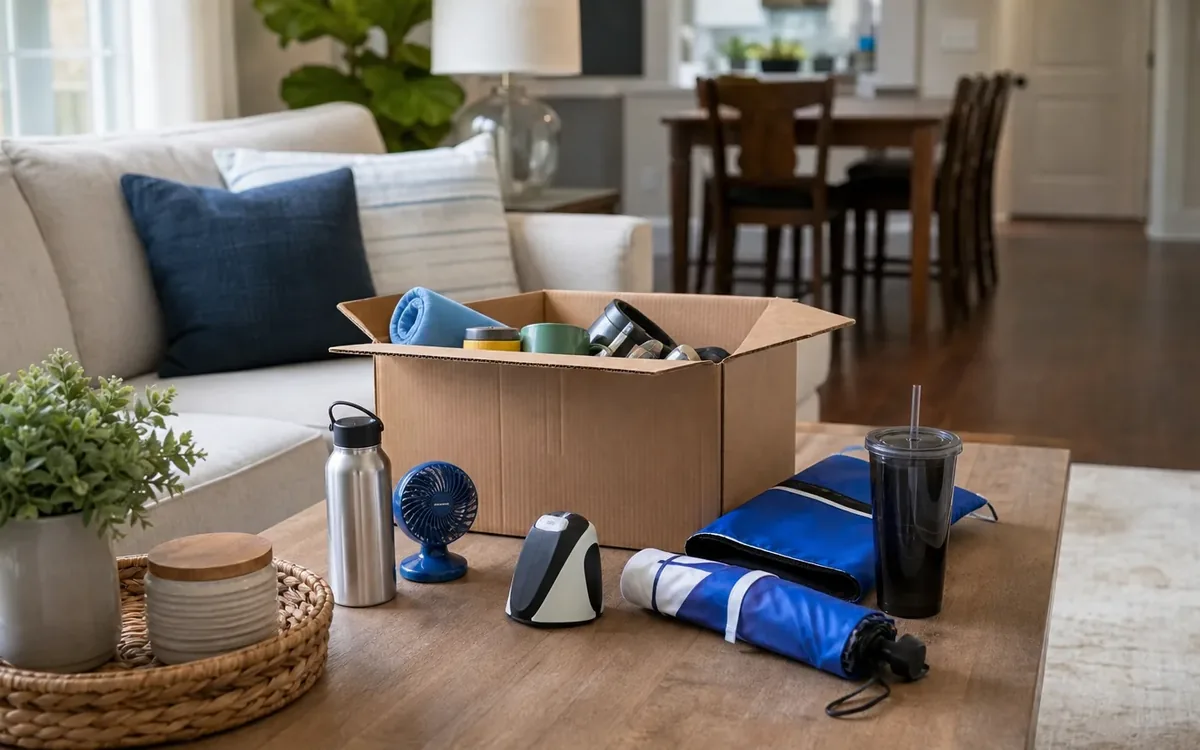
Unwanted items need a planned next step, not a new holding pile. A recipient may welcome some usable goods, but acceptance rules vary. Confirm those rules before setting items aside for donation. Recycling and disposal choices depend on the item and the responsible local program or provider.
Start by separating reusable goods from products that need specific guidance. A clean tote bag and an unknown liquid aren’t the same task. Mixed gift bags often contain several materials. Avoid assuming the whole bag belongs in one waste stream.
The EPA’s waste reduction guidance supports reducing waste and checking recycling options. Use your local program’s rules for the actual decision. A recycling symbol alone doesn’t settle local acceptance. Product contents may affect the next step too.
For donations, confirm that the recipient wants the type and condition offered. Describe branded items honestly. Ask about sealed personal-care samples before delivering them. An unwanted item shouldn’t become someone else’s sorting burden.
The AARP guide to getting rid of things offers broader options for household belongings. Treat it as a starting point, not approval for every sample. Specific product questions still need the right recipient or provider.
Give each outgoing group a named destination or decision owner. “Ask the donation site about sealed packets” is an actionable task. “Donate someday” isn’t. Keep only the amount you can manage while awaiting an answer, then follow the confirmed plan.
Keep event bags from restarting the cycle
Return to the downsizing and organizing planning page for household scope choices. Explore the home-transition guides when incoming clutter connects with a move or downsizing plan.
A shared acceptance rule works best when everyone knows it before leaving home. Talk about which giveaways meet a current need. Let each person choose within an agreed space limit. Review event bags before their contents scatter across the house. This keeps choices visible without turning free items into conflict.
An event bag can feel like one item at first. At home, it may become ten separate storage decisions. Look inside before accepting it when possible. If contents aren’t clear, declining the whole bag is a valid choice.
Children may value a small giveaway more than adults expect. Let them explain what they want to keep. Focus on use and space instead of calling their choices junk. A shared limit works better when it applies to adults too.
Try these habits on future trips:
- Tell each person which sample space is available before leaving home.
- Ask permission before accepting promotional items for someone else’s room.
- Check gift bag contents before agreeing to bring the bag home.
- Sort accepted items before they spread into drawers and closets.
Watch for new sources of repeat items. Store reward offers, mail promotions, and checkout extras can bypass an event rule. Where the sender offers a choice, decline future product samples. Avoid sharing details solely to receive goods you don’t need.
Keep useful exceptions tied to a stated purpose. A travel-size item may fit a real trip. A branded notebook may replace one you’ve finished. The rule should allow clear needs while stopping automatic collection. It needn’t become a ban on every free item.
What can a cleanout or move team help discuss?
Read the downsizing and organizing service overview before discussing a focused project. The estate cleanout process guide provides context if the samples sit within a larger household transition.
A practical team may discuss sorting zones, household choices, and the handoff plan. You decide what to keep and who may approve removal. Confirm the team’s scope before work begins. Separate providers handle specialized questions, and the right professional or authority retains any legal, health, appraisal, or compliance decision.
Describe the issue in plain terms. “Several drawers hold old samples and promotional gifts” is useful. Explain which areas are included and which are private. Point out items that need label review or an owner’s consent.
Clutter Cleaner of South Carolina lists downsizing and organizing among its services. Its service territory covers all of South Carolina, including North Charleston. The physical business location is Mount Pleasant, SC. Charleston is its primary market, rather than its physical office location.
For powered promotional items, record the item name and visible model details. Keep any supplied paperwork with the inventory. Ask the proposed provider about handoff requirements. Sorting alone doesn’t establish an item’s condition or fitness for use.
Storage, disposal, and donation arrangements remain separate scope choices. Ask who will contact each provider and confirm acceptance. Appraisals belong with an appraiser. Legal ownership questions belong with the responsible legal professional. Real-estate, inspection, and compliance decisions remain with their proper professional or authority.
A useful handoff ends with clear ownership of each open task. Name who approves the keep list and who checks recipients. State what remains unresolved. That prevents a pile of small giveaways from becoming a larger, vague project.
FAQ: Small choices that keep samples under control
Use the downsizing and organizing service details for project scope questions. Find related household topics in the home-transition resource library.
Is it rude to decline a free sample?
A brief, kind refusal is enough. Say, “Thank you, I’ll pass,” and continue your trip. You don’t owe a storage or budget explanation. If another household member wants the item, ask them directly. Don’t accept it on their behalf and assume they’ll make room for it.
Should every sample have a review date?
A review date helps when a sample has no clear place in your routine. Items used as part of regular stock may need less tracking. Keep any printed expiration date visible. Your personal review date prompts a clutter decision; it doesn’t replace product directions or advice from a qualified professional.
Can unopened samples be donated?
Sometimes, but the recipient must confirm acceptance. Ask about the product type, condition, packaging, and dates before setting up a drop-off. Don’t assume sealed means wanted or suitable. Keep labels intact while checking. Disposal questions for rejected products should go to the relevant program or provider, not the donation recipient by default.
What if a promotional item feels like a keepsake?
Treat it as a keepsake choice instead of pretending you’ll use it. Ask what memory it holds and where you’ll keep it. A photo may preserve the logo or event connection. You can keep a meaningful item within your chosen space limit without saving every giveaway from the same event.
How can I prevent a new sample pile?
Keep the acceptance rule visible where you prepare for shopping trips. Review the chosen sample space before bringing in more. If you spot a pile, identify its source rather than buying another container. A clear need, an assigned place, and a planned review make the next decision much easier.



