
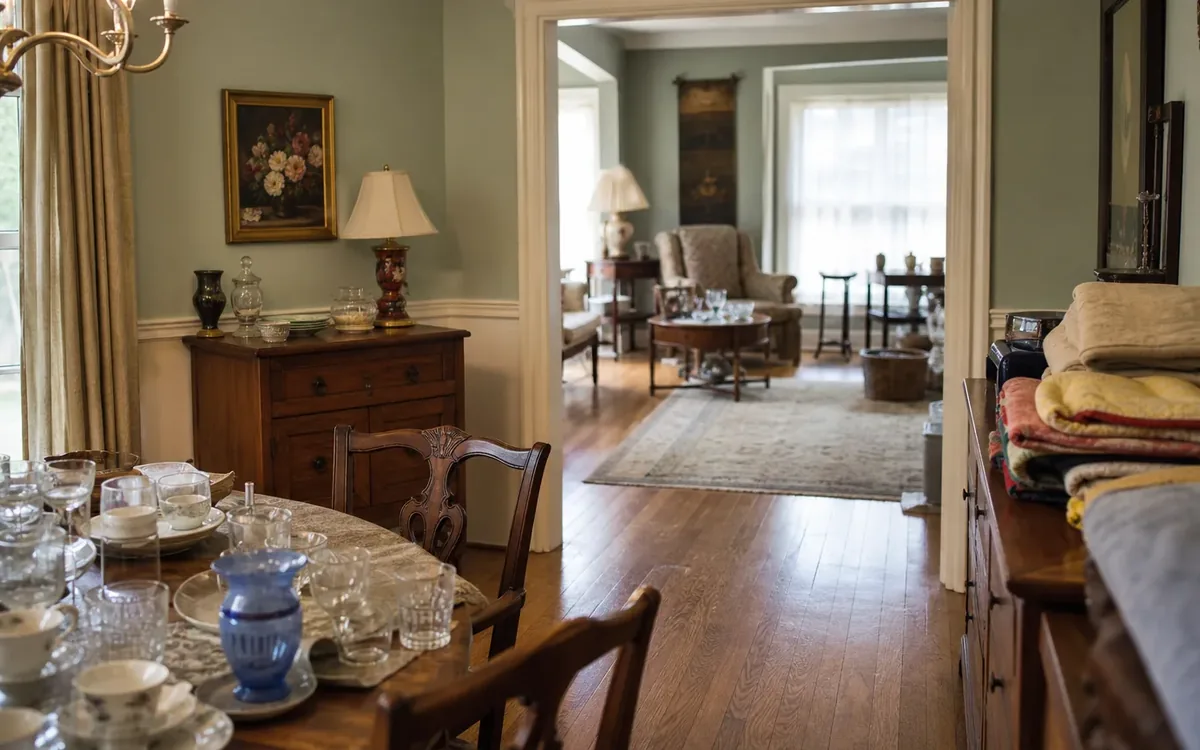
Managing an estate sale entry line starts with setting a conservative indoor capacity, choosing one person to control the door, and giving waiting shoppers clear instructions before the sale opens. A numbered queue, weather-aware waiting area, and consistent one-out, one-in policy can reduce confusion without turning the residence into an event venue.
Quick answer: Decide who controls entry, establish a capacity that reflects the home’s usable space, issue numbers in a documented order, and tell shoppers where to wait. Keep the line away from roads, neighboring property, unstable surfaces, sale merchandise, and active work areas. A household or sale organizer can manage customer procedures, but fire-code limits, accessibility requirements, parking enforcement, and other compliance questions belong to the appropriate authority or qualified professional.
This guide focuses on the outside queue and front-door handoff rather than traffic flow throughout the sale. South Carolina heat, sudden rain, porches, narrow driveways, and limited residential parking all affect how that handoff should work.
What should be decided before shoppers arrive?
The household, estate representative, and sale organizer should agree on the entry process before advertising or opening the property. Decisions made at the door while a crowd is waiting tend to feel arbitrary, even when the intent is reasonable.
Write down these five decisions:
- Who has authority at the entrance? Name one door lead and one backup. Other helpers should direct questions to that person instead of offering conflicting answers.
- How will capacity be set? Base the working limit on usable rooms, blocked areas, stairways, exits, fragile displays, and the ability to supervise shoppers. Do not count closed or unsafe spaces as available capacity.
- How will the queue be ordered? Choose numbered cards, a written list, or another clear system. Explain whether a number preserves order only or also permits someone to leave the waiting area.
- Where will people wait? Identify a location that does not block a public sidewalk, roadway, mailbox, neighboring driveway, accessible route, or emergency access.
- What happens during bad weather? Decide when the line will move, pause, or be released, and how updates will reach people waiting in vehicles or sheltered locations.
The household can decide sale rules such as whether bags are allowed, whether shoppers may hold a place for companions, and when unclaimed queue numbers expire. Those rules should be visible and applied consistently.
A practical sale or move team may discuss layout, staffing, item staging, queue materials, and the door-control process. For broader planning, review the auctions and estate sales service overview. Capacity mandated by fire officials, lawful use of public space, accessibility compliance, and traffic control remain matters for the responsible authority or qualified professional.
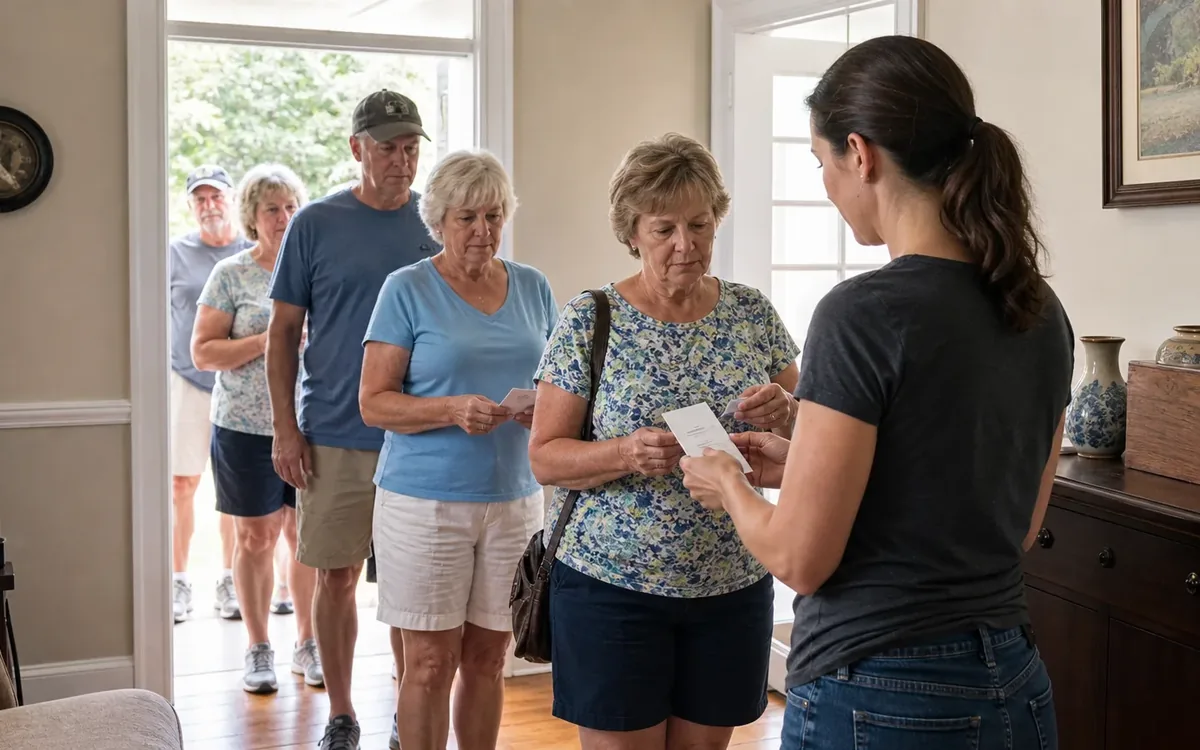
How does a numbered queue work without causing disputes?
A queue number should answer one narrow question: who may approach the entrance next. It should not imply early access to a specific item, guarantee admission, reserve merchandise, or promise that a shopper can enter at a particular time.
Use a simple sequence:
- Give each arriving shopper or shopping party the next available number.
- Record the number issued and, if useful, a brief identifier.
- State where the holder must wait and how numbers will be called.
- Call a small, clearly announced range when capacity becomes available.
- Mark numbers as admitted, absent, or declined.
- Apply the same missed-number rule to everyone.
Avoid informal practices that are difficult to verify, such as shoppers creating their own sign-up sheet unless the organizer has expressly adopted and supervised it. A privately created list can produce arguments over when it began, whether names were added fairly, and whether it represents the sale organizer’s policy.
Post a concise notice near the queue station. It might say that numbers determine entry order only, admission depends on available indoor capacity, merchandise is not reserved, and instructions may change if weather or safety conditions require it.
Keep the process accessible to people who cannot stand for an extended wait. The organizer can discuss a practical method for preserving queue order while someone waits in a suitable nearby location. A qualified adviser or appropriate authority should address whether a particular accommodation is legally required and how it must be provided.
Estate-sale preparation often overlaps with sorting and property clearing, but these are different tasks. The guide on the best way to clean out an estate explains how to separate belongings before removal decisions are made. Completing that work before the sale can reduce closed-room conflicts and prevent shoppers from entering sorting zones.
Where should the waiting line be placed?
The most convenient-looking spot is not always the safest or most workable one. A front porch may be narrow, a driveway may need to remain open, and the roadside edge may expose shoppers to moving vehicles.
Walk the proposed line from the arrival point to the entrance. Look for:
- Uneven pavement, roots, loose gravel, wet leaves, and abrupt steps
- Porch railings or flooring that need professional evaluation
- Slopes where water collects or footwear loses traction
- Doors, gates, and walkways that must remain usable
- Driveways serving the residence or neighboring homes
- Areas where parked vehicles would block visibility
- Sale signs, tables, cords, boxes, or merchandise in the route
- Trash collection, delivery, contractor, or emergency access points
Use visible queue markers that guide people without creating a new tripping hazard. Signs should be readable from the natural approach to the property. Do not place stakes, tape, cones, or furniture on land the household does not control without permission.
If the porch condition, retaining wall, steps, railing, or walking surface is uncertain, keep shoppers away until it has been assessed by the relevant inspector or contractor. A sale team can identify a practical concern and relocate the queue, but it should not provide a structural conclusion.
Residential parking needs its own plan. The household can identify property it controls and communicate where shoppers should not park. It cannot authorize parking on neighboring property or override posted restrictions. Questions about street parking, traffic direction, permits, or enforcement should go to the applicable property owner or public authority.
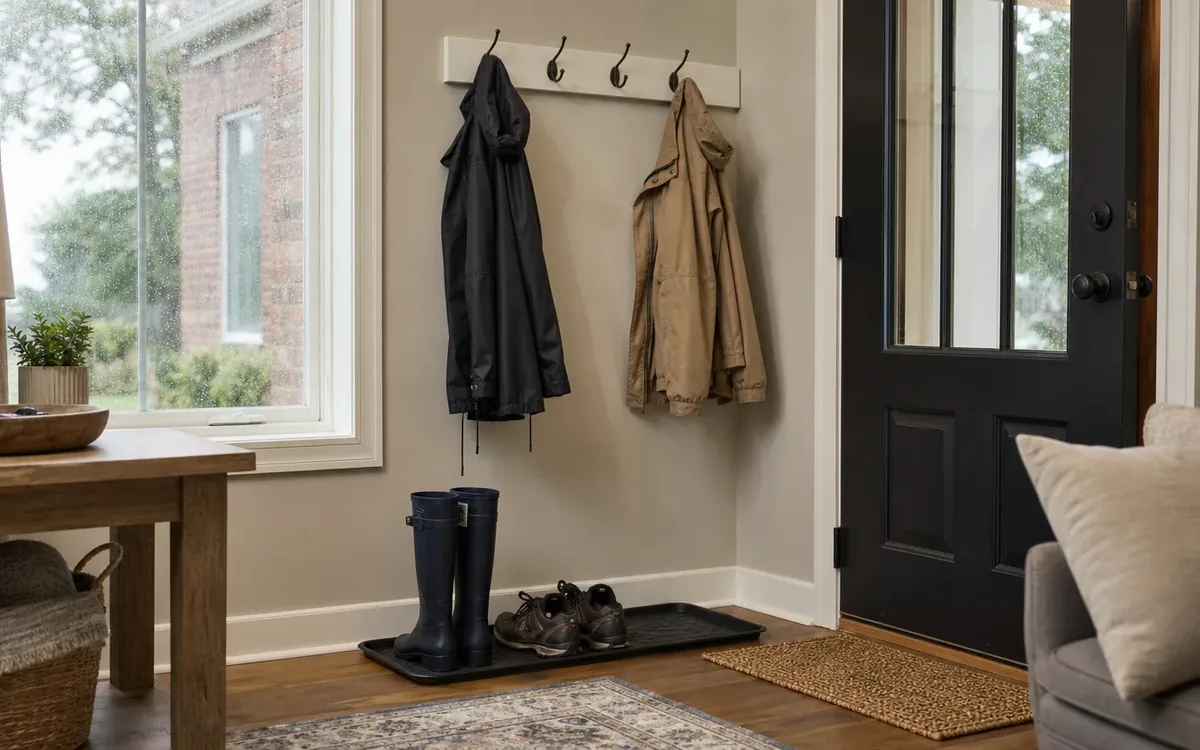
How should weather change the entry-line plan?
South Carolina conditions can shift from strong sun to heavy rain, and residential properties rarely have purpose-built waiting areas. Weather planning should therefore focus on communication and movement, not on promising that every shopper will remain fully sheltered.
For heat and sun, consider:
- Moving the queue away from prolonged direct exposure when the property allows
- Letting number holders wait in an announced location rather than requiring a tight standing line
- Keeping the entrance process brief and instructions visible
- Watching for signs that a person needs assistance and contacting emergency services when appropriate
- Avoiding improvised electrical cooling equipment across walking routes
For rain, protect the entrance from crowding. People naturally compress under an awning or porch roof, which can block the door and place too many people on a structure. Ask most number holders to remain in the designated waiting area and call only those who can be admitted.
Umbrellas create additional spacing needs and can drip onto smooth interior floors. Establish an umbrella location only if it does not obstruct an exit or accessible route. Assign someone to monitor the threshold and address water promptly rather than allowing the entry surface to become saturated.
Lightning, high winds, flooding, and other severe conditions may justify pausing entry or ending the sale session. The household or organizer can make an operational decision to stop admitting shoppers. Official emergency instructions, evacuation orders, road closures, and weather warnings come from the responsible authorities.
Temporary tents or canopies should not be treated as automatic solutions. Placement, anchoring, utility clearance, permission, and any applicable rules need proper review. A rental provider, contractor, property owner, or relevant authority should address those decisions.
How do you control admission at the front door?
Door control works best when the entrance lead does not also handle checkout, answer pricing questions, or supervise distant rooms. The lead needs a current count and a direct view of arrivals and departures.
Use this four-part handoff:
- Confirm the next number. Admit shoppers in the announced order and document skipped numbers.
- State essential rules. Mention closed rooms, bag policies, payment location, and any fragile or restricted area without giving a long speech.
- Update the count. Record each person entering and leaving. If parties received one number, still count the actual people admitted.
- Pause when uncertain. If the count is unclear, stop entry until it is reconciled rather than estimating upward.
A one-out, one-in policy is easy to understand, but the organizer may admit fewer people if congestion develops or supervision becomes difficult. The stated maximum is a ceiling, not a target that must always be filled.
Do not prop open a door if doing so compromises household security, climate control, pets, or an exit arrangement. Keep keys, private papers, medicines, firearms, valuables, and non-sale possessions secured outside shopper-access areas. Decisions about handling regulated items or legally controlled property belong to the estate representative and appropriate legal or other qualified professional.
If a shopper challenges a rule, move the discussion away from the threshold when practical so the entrance remains usable. The door lead should repeat the written policy calmly, avoid debating ownership or value, and refer estate authority questions to the authorized representative.
What should waiting shoppers be told?
Uncertainty causes more friction than a modest wait with reliable updates. Communication should explain the process without predicting exact admission times.
Provide updates about:
- The number or range currently entering
- Whether the line is active, temporarily paused, or closed
- Where number holders may wait
- How a missed number will be handled
- Whether companions need their own number
- Where parking is prohibited or discouraged
- Any weather-related relocation
- The fact that numbers do not reserve items
Use the same message on posted signs and in verbal announcements. If sale advertising mentions an entry process, make sure the on-site process matches it.
Avoid saying that everyone in line will enter or that particular merchandise will remain available. Capacity may need to decrease, weather may interrupt operations, and items may sell before later shoppers enter.
A designated communicator can walk the approved waiting area with updates while the door lead remains at the entrance. For shoppers waiting in vehicles, choose a notification method that does not encourage them to block the driveway, idle in unsafe locations, or repeatedly crowd the door to check progress.
Keep line management separate from other estate decisions
Entry control is an operational task. It does not decide ownership, value, sale authority, disposal rights, or the condition of the property.
The household or authorized estate representative can generally establish practical house rules, approve the sale area, identify non-sale property, and choose whether to pause admission. Authority over estate assets should be confirmed through the responsible legal process when there is any uncertainty.
Other decisions remain separate:
- Appraisals: A qualified appraiser determines value opinions within the scope of the appraisal. Queue staff should not promise that an item is authentic or correctly valued.
- Real estate: A real-estate professional handles listing strategy, showing concerns, and transaction advice. An estate sale does not itself establish that a home is ready to list.
- Inspection and repairs: Inspectors and appropriate contractors evaluate structural, electrical, plumbing, or other property conditions and propose work.
- Storage: The household chooses whether to retain items and selects any storage provider. Availability, terms, security, and insurance require separate review.
- Disposal: The authorized party decides what may be discarded or donated after ownership and document-retention questions are resolved. Disposal providers determine what they accept.
- Compliance: Public authorities and qualified professionals interpret applicable fire, parking, accessibility, occupancy, permit, and code requirements.
A cleanout or move team may discuss sorting zones, removal sequencing, staging, and practical access needs. It should not replace an attorney, appraiser, real-estate professional, inspector, contractor, or government authority.
A compact opening-day station
Keep the entry station small enough that it does not become another obstacle. Useful materials include:
- Sequentially numbered cards or tickets
- A clipboard and queue log
- Pens and a backup marker
- A clearly printed entry-policy sign
- A current indoor count sheet or counter
- Weather-protected copies of instructions
- Contact information for the authorized estate representative
- Basic supplies for keeping the threshold dry
Do not leave personal estate documents, pricing records, keys, or customer information unattended at the station. Retain only the queue information needed for the process, and dispose of it appropriately afterward.
Before opening, conduct a brief staff review. Confirm who controls the door, who communicates with the line, which areas are closed, how departures are counted, and who can decide to pause entry. The goal is consistent execution, not a complicated command structure.
FAQ
Should every person receive a separate number?
Either individual or party numbering can work. State the rule clearly, and always count actual people for indoor capacity. If one number covers a party, define whether all members must be present when called.
Can shoppers leave after receiving a number?
The organizer can allow this, but it should specify where holders may wait and what happens if they miss their call. A number should not be described as a reservation for merchandise or guaranteed admission.
Who sets the legal occupancy limit?
Applicable limits and code interpretations belong to the responsible fire, building, or other public authority, not the household or a cleanout team. The organizer may choose a lower working capacity based on supervision and usable sale space.
What if the line blocks a neighbor’s driveway?
Relocate it immediately and ask shoppers to keep the driveway clear. The household cannot grant access to neighboring property. Parking disputes or enforcement issues should be directed to the property owner or appropriate authority.
Should the sale continue during severe weather?
The household or organizer may pause or close entry for practical safety reasons. Follow official alerts and instructions. Do not shelter a crowd on a porch, beneath trees, or in another area that has not been evaluated as suitable.
Can Clutter Cleaner of South Carolina decide what enters the sale?
The authorized household or estate representative decides what may be sold, retained, stored, donated, or discarded, subject to legal authority and professional advice where needed. Clutter Cleaner of South Carolina can discuss relevant estate cleanout, organizing, sale, move-management, home-preparation, and code-support needs across South Carolina at (843) 972-7020, while legal, valuation, inspection, real-estate, contractor, and official compliance decisions remain with the responsible professionals or authorities.



