
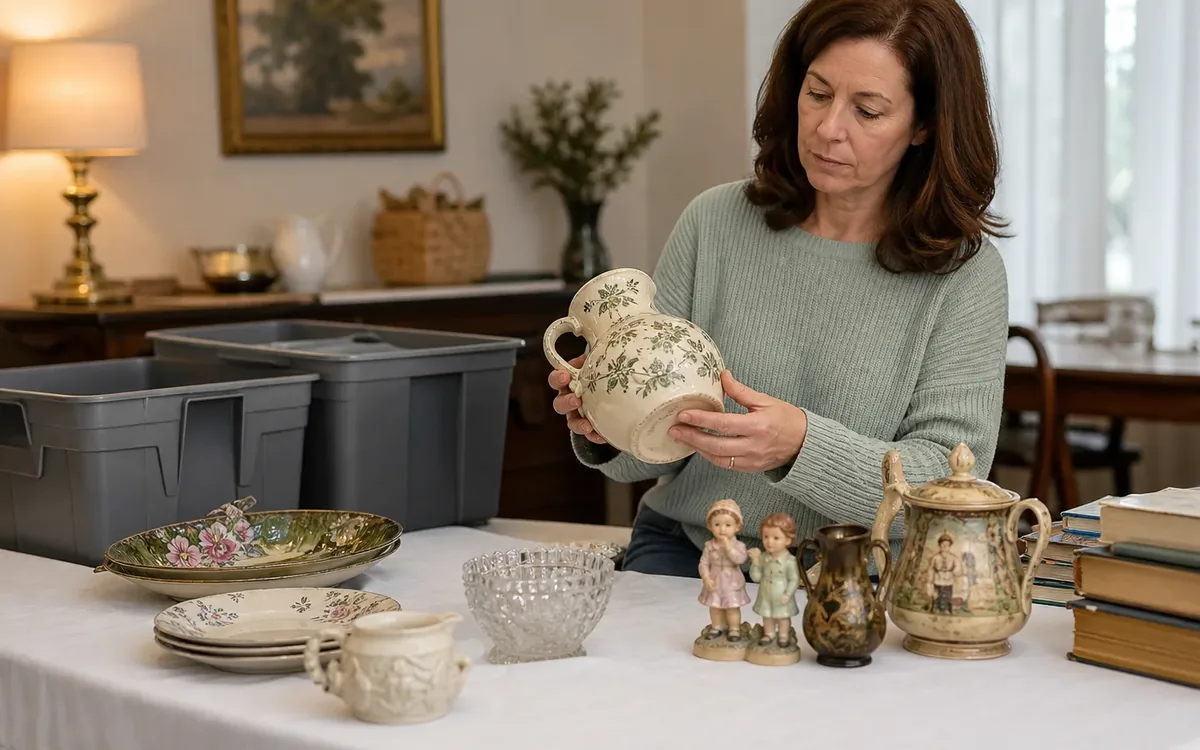
Replica listings for an estate sale in Columbia, SC should preserve labels, paperwork, and clear wording. Describe what you can support, and leave unknown facts open. Keep any reproduction marks with the item’s record. Ask the right professional to review claims about age, maker, origin, or value before publication.
Quick answer: Keep reproduction labels intact. Match each item with its papers and photos. Use plain terms such as “reproduction” when the evidence supports them. If facts conflict, pause the disputed claim. A sale team can discuss listing wording, while an appraiser handles value opinions within their field.
What should replica listings say about labels?
The auctions and estate sales service page helps frame the sale discussion. The guide to how estate cleanouts work helps place records within the wider plan. Start with the item’s actual marks. A visible reproduction label should stay part of the description, even when the piece looks old.
An aged finish does not settle an item’s age. A worn frame, faded print, or ornate base may suggest a style. Those features alone do not support an original maker claim. The listing should separate appearance from facts backed by records.
Record the label’s exact words before drafting a summary. Include its location in the item record. For example, note “paper label on back reads ‘reproduction.’” Keep a clear photo with that note so the sale writer can check it.
Leave attached labels in place. If a label is already loose, give it a separate record. Note where it was found and who linked it to the item. Don’t treat a nearby tag as proof that it belongs to that piece.
Use these checks when reviewing label details:
- Photograph the full item and its label so their connection stays clear.
- Copy the label text exactly, including maker names, dates, and reproduction wording.
- Record unreadable text as unreadable rather than filling gaps from memory.
- Keep loose tags with their notes without claiming an unproven match.
- Flag conflicts between labels, receipts, and family accounts for further review.
A label may support a narrow fact without proving everything else. “Reproduction” does not establish a maker, date, or value by itself. Likewise, a printed signature does not settle who made a print. Keep each claim tied to its own support.
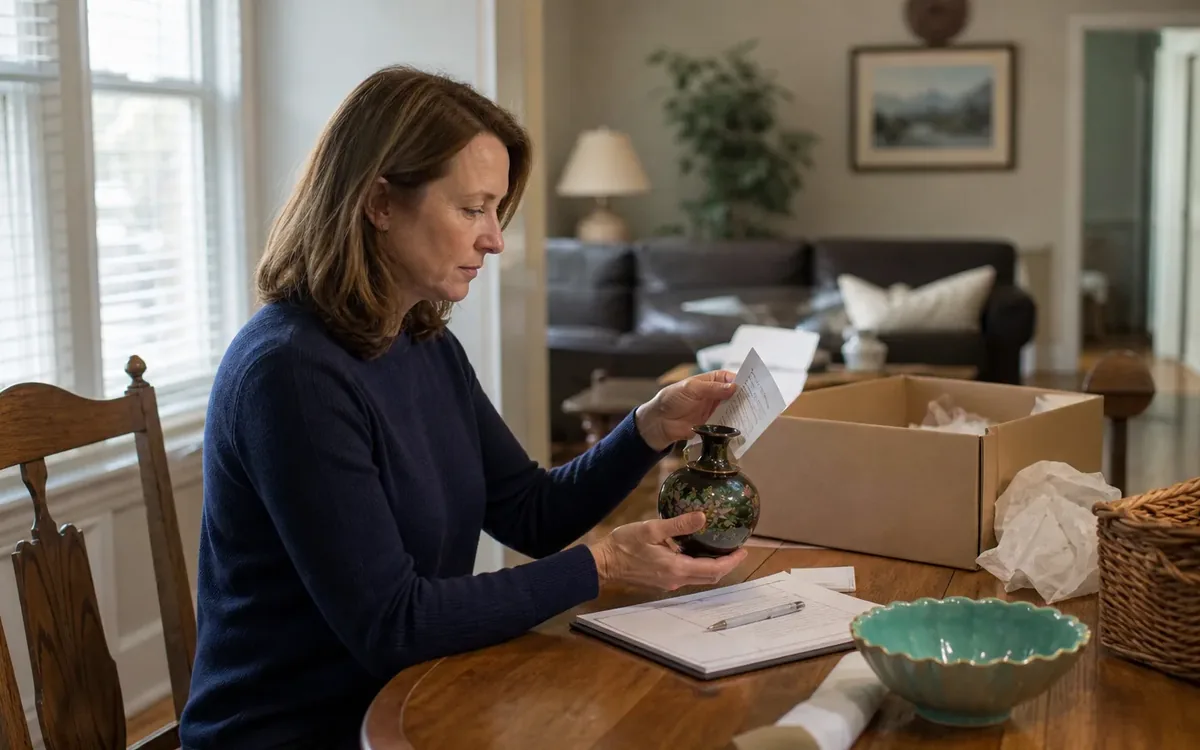
Keep paperwork tied to the right item
The estate cleanout planning guide offers context for sorting household records. The auctions and estate sales service page can support questions about the listing handoff. Give each item a simple record number. Use that number across photos, papers, draft text, and notes about open questions.
A receipt can help explain where a piece came from. It may name a shop, purchase date, or product line. It does not always prove the piece’s age. Read its terms closely before repeating them as facts in a listing.
Keep original papers apart from working notes. A family note should not look like a maker’s certificate. Name the source in the record, such as “handwritten family note, author unknown.” This lets the sale writer judge what still needs review.
A useful item record can contain:
- Assign one record number to each item before linking its papers.
- Save clear copies of receipts while keeping original documents under household control.
- Mark family accounts as personal recollections rather than verified maker records.
- Note which papers match the item and which matches remain uncertain.
- Keep contact details private in copies prepared for public listing review.
Several similar pieces may share one folder of papers. Don’t assign a receipt to one vase based on color alone. Note the uncertainty and keep the group records together. A qualified reviewer may need that context to assess the match.
The household should decide who holds originals and who gets copies. It should also choose who can approve public text. The person with authority over estate property must remain involved. A practical team can organize records without deciding that legal authority.
How do you describe a replica without overstating it?
Use the auctions and estate sales service page to frame questions for the sale provider. The estate cleanout process guide adds context for keeping item records clear. Lead with a plain object name, then the supported reproduction term. Separate observed features from claims about maker, age, or origin.
“Decorative reproduction print in a gold-tone frame” gives a useful starting point. If the label supports more detail, add it with care. For example: “Label on back reads ‘reproduction’; artist and production date unverified.” That wording states the evidence without filling gaps.
Avoid using “antique” as a loose style word. “Antique-style” describes a look, but it should not hide a known reproduction label. If the record supports reproduction status, say that clearly. A buyer should not need to search photos to find that fact.
Terms such as “original,” “rare,” and “museum quality” need support. A seller’s old note may use those words without explaining them. Copying that note into a new listing can repeat an uncertain claim. Keep it in the research file instead.
Condition notes should describe visible facts within the reviewer’s knowledge. A photo may show a chip or a stain. It cannot prove that a piece is sound or ready for use. Keep claims about function separate from the object’s style and history.
For furniture and powered items, limit household work to records and handoff planning. Inventory marks, papers, and known history for provider review. Don’t draft repair, assembly, anchoring, electrical, or safe-use advice from appearance. Model-specific questions need exact-model evidence from a qualified source.
If new facts arrive, revise both the heading and description. Fixing a small note is not enough when the main title still says “original.” Ask the sale provider how updated text reaches each place the item appears.
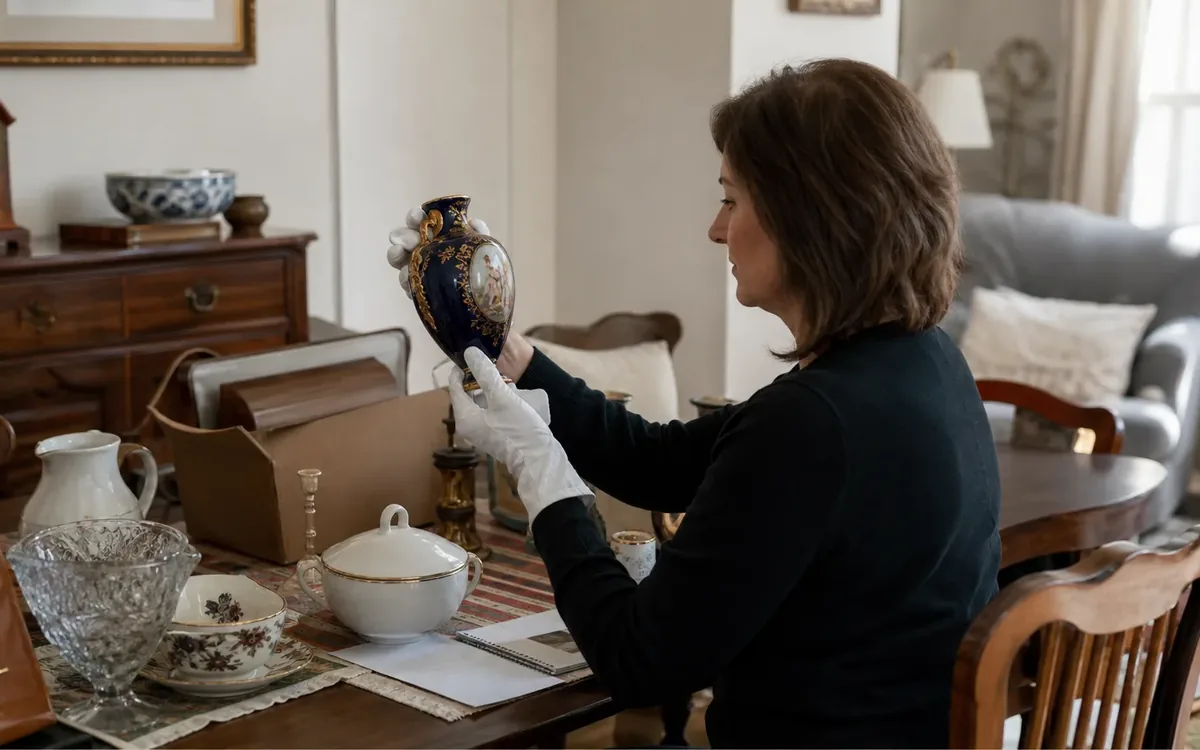
Who decides authenticity, value, and sale terms?
The auctions and estate sales service page helps define questions for a sale discussion. The estate cleanout planning guide supports the broader household plan. The household can share records and state its goals. Qualified professionals should handle disputed identity, value opinions, legal authority, and specialized inspection questions within their roles.
A practical cleanout or move team may discuss inventory, photos, and record handoffs. It may ask which items need a hold pending review. Those talks help avoid a rushed listing. They do not replace an expert opinion about a disputed maker or origin.
An appraiser’s role depends on their field and agreed scope. Ask what object types they assess and what their report addresses. A value opinion and an authenticity opinion are separate questions. Confirm which question the professional has agreed to answer.
For donation choices, the IRS guide to determining donated property value addresses valuation and appraisal topics. It is not a price guide for estate sale listings. Keep donation tax questions with the appropriate tax professional. Don’t treat a donation figure as a sale estimate.
The person with estate authority should approve what may be offered. A lawyer can address disputed ownership or estate powers. A real-estate professional handles property marketing decisions within their role. Inspection and compliance decisions stay with the responsible specialist or authority.
Households can still make useful choices before those answers arrive. They can choose to seek more research, keep an item, or leave it out. Storage, appraisal, donation, and disposal are separate choices with separate providers. None should be treated as an automatic part of a cleanout plan.
Build a review path before listings go live
The estate cleanout process guide provides a wider planning reference. The auctions and estate sales service page helps focus the provider discussion. A shared review path keeps facts from changing between drafts. Name one household contact, record unresolved claims, and agree on who approves the final wording before it goes live.
Use this five-step review path for items with reproduction marks or uncertain papers:
- Assign an item number and gather photos, labels, papers, and source notes.
- Draft a plain description that separates supported facts from open questions.
- Route disputed age, maker, value, or authority claims to the responsible professional.
- Have the authorized household contact review the final text and linked photos.
- Ask the sale provider how corrections will reach all published versions.
Keep a short change log beside the draft. It can state what changed, why, and who approved it. For example, note that “original” was removed after a reproduction label surfaced. This preserves the reason without turning a working file into a long report.
Some items need a hold rather than more creative wording. Conflicting maker marks or unclear rights to sell can warrant a pause. Mark the record “not approved for listing” while the issue remains open. The hold is a planning choice, not a finding about authenticity.
Group listings need the same care as single pieces. Don’t let one labeled object define a whole shelf. State which items carry marks and which remain unverified. If records differ, separate descriptions may be clearer than one broad group claim.
Review the title, main text, photo notes, and any public item tag together. They should tell the same story. A clear description loses value if another field calls the piece an original antique. Ask the provider to resolve that mismatch before approval.
Plan the records handoff with the item
The estate cleanout planning guide helps connect item choices with the larger transition. The auctions and estate sales service page supports the next provider discussion. Keep records attached to the plan, even when items take different paths. The handoff should identify each item, its status, and the person responsible for open questions.
A household may keep one replica and offer another for sale. It may seek an appraisal for a third. Those choices should appear in the record so papers follow the right path. Avoid sending one shared folder away before checking what else it covers.
Clutter Cleaner of South Carolina serves all of South Carolina. Its physical business location is Mount Pleasant, and Charleston is its primary market. For a Columbia estate, discuss the needed scope directly. Keep appraisals, contractor work, storage, disposal, and legal decisions separate from any agreed cleanout or move work.
FAQ
Should we remove a reproduction sticker before photos?
Keep the sticker in place and include it in the record. Its wording may be key to an honest description. Take photos that show the object and the mark clearly. If a label is already loose, record that fact rather than presenting it as firmly linked to the piece.
Can an old reproduction still have value?
Reproduction status alone does not settle value. Avoid treating it as proof of either high worth or no worth. The household can ask an appraiser with relevant knowledge for an opinion. Give that person the labels, receipts, and known history rather than a polished story that hides gaps.
What if a family member insists the piece is original?
Record the family account as a recollection and ask what supports it. Keep any matching papers with the item file. If that account conflicts with a reproduction label, flag the conflict for review. Don’t choose the more appealing story just to finish a listing. Seek a qualified opinion when needed.
Should we call an uncertain item a replica?
Use that term when the evidence supports it. If the item’s status is unknown, state the known facts and leave the claim open. “Maker and date unverified” may be more accurate than an unsupported label. A qualified reviewer can help resolve the question before the household approves the listing.
What belongs in a buyer-facing paperwork packet?
Discuss the packet with the sale provider before publication. Relevant label photos and copies of matching records may help explain the description. Keep unrelated estate papers and private contact details out of public copies. The authorized household contact should decide who holds originals and which copies may pass with the item.



