
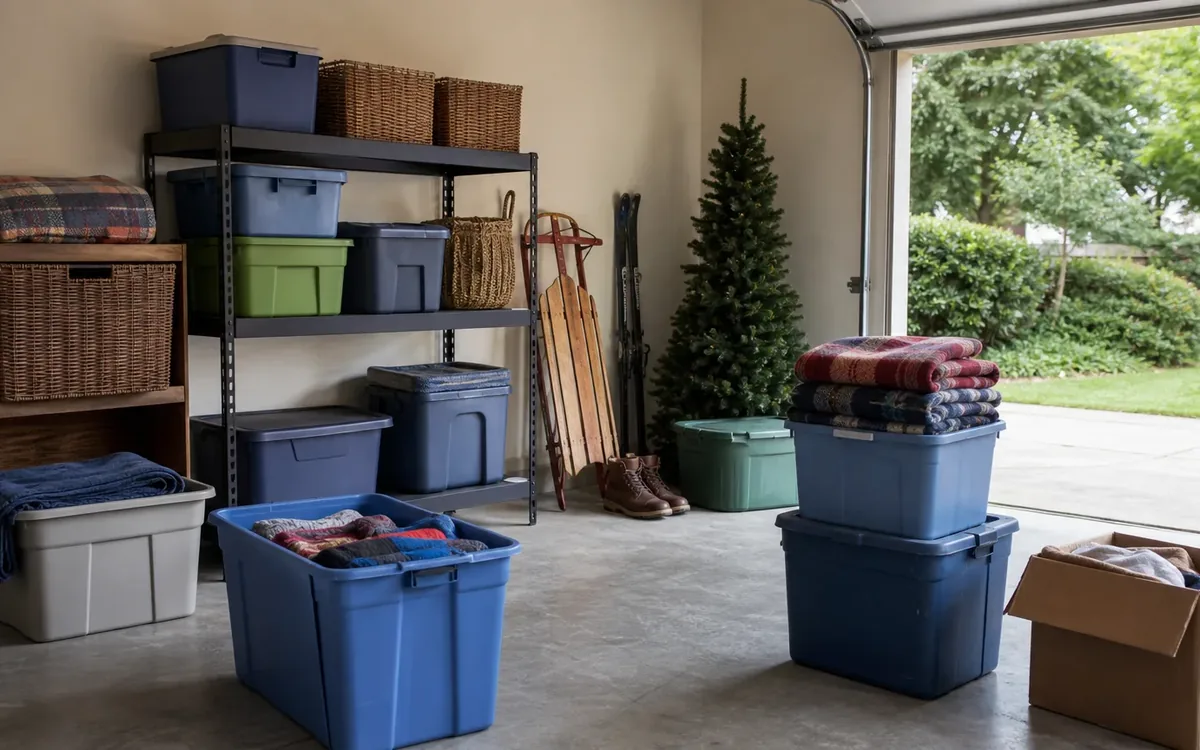
Store out-of-season items during downsizing by assigning each item a specific destination, packing it for that environment, and recording when you will need it again. Keep frequently used seasonal belongings accessible in the new home; consider separate storage for items that genuinely cannot fit. The goal is not another decluttering round, but a storage plan that protects belongings without creating an indefinite overflow problem.
Quick answer:
- Measure the storage space available at the new home before choosing containers.
- Separate temporary move-related storage from long-term seasonal storage.
- Match the location to the item’s sensitivity to moisture, heat, pests, and handling.
- Label containers by season, contents, and destination.
- Give every stored group a retrieval date or event and a person responsible for it.
South Carolina’s mild winters can leave holiday decorations and seasonal gear unused for much of the year. That makes retrieval planning especially important: something needed only occasionally can easily disappear behind everyday belongings during a move.
Which seasonal items should stay accessible in the new home?
Start with the next occasion when each group will be used. Holiday decorations needed soon after moving belong in a different location from equipment that will not be used until a later season.
Accessibility also depends on the person retrieving the item. A container on a high shelf may technically fit, but it is not practical if retrieving it requires lifting overhead or moving heavy furniture.
Build a seasonal access map with categories such as:
- Next-use items: Decorations, guest linens, or clothing needed around the move.
- Recurring seasonal items: Holiday ornaments, gardening accessories, and rotating bedding.
- Occasional specialty items: Camping equipment, beach gear, or large entertaining pieces.
- Sensitive items: Paper decorations, photographs, textiles, and fragile heirlooms needing a suitable environment.
Assign each category a proposed location in the new home. Check closet openings, shelf depth, and the route to the space, not just the room’s overall dimensions.
The household decides what it wants nearby and what it can reasonably retrieve elsewhere. A practical team offering downsizing and organizing support may discuss sorting by destination, labeling, and space constraints. That conversation does not replace the household’s decisions about sentimental value or future use.
Separate temporary holding from long-term seasonal storage
Temporary storage solves a specific transition problem. Examples include holding decorations while the new home’s closets are made usable or keeping seasonal furniture elsewhere until the household can confirm its layout.
Long-term storage serves a recurring purpose. A family might store a holiday collection off-site and retrieve it each year. That requires a workable access routine, not merely an available unit.
Write a short purpose statement for each stored group:
- Temporary: “Hold guest bedding until the new linen cabinet is ready.”
- Seasonal: “Retrieve holiday decorations before decorating, then return them afterward.”
- Decision-dependent: “Keep the outdoor pieces protected until patio measurements are confirmed.”
For temporary storage, identify the condition that ends the arrangement. For recurring storage, identify who will retrieve and return the items. An appointment or calendar reminder helps prevent the arrangement from becoming invisible.
If downsizing is part of an estate transition, ownership must be clear before belongings leave the property. The existing guide, What Is the Best Way to Clean Out an Estate?, provides broader context for that process. This storage plan should begin after the responsible person confirms what may be moved and who will receive it.
Where should you store seasonal belongings in South Carolina?
Choose a location according to the belongings, not simply the amount of empty space. A garage, attic, interior closet, and rented storage unit create different conditions and retrieval challenges.
For any location, consider:
- Exposure to leaks, dampness, or water entering at floor level.
- Heat and temperature variation.
- Signs of pests or gaps around doors.
- Whether shelving and access routes support safe handling.
- How easily someone can inspect and retrieve the contents.
An interior closet may suit frequently retrieved textiles or paper decorations if it stays dry. A garage may be more practical for durable outdoor gear, provided conditions and access are appropriate. An attic should not become the default destination merely because it appears empty.
When considering a rented unit, ask the storage provider what its climate-control description means, whether humidity is managed, what access restrictions apply, and which materials are prohibited. Review insurance requirements and coverage limitations rather than assuming protection is included.
Climate control is not a guarantee against water intrusion, pests, or damage. Storage selection and contract terms remain household and storage-provider decisions. Questions about structural safety, electrical conditions, or building suitability belong with the appropriate inspector, contractor, or authority.
Pack for the item and its storage environment
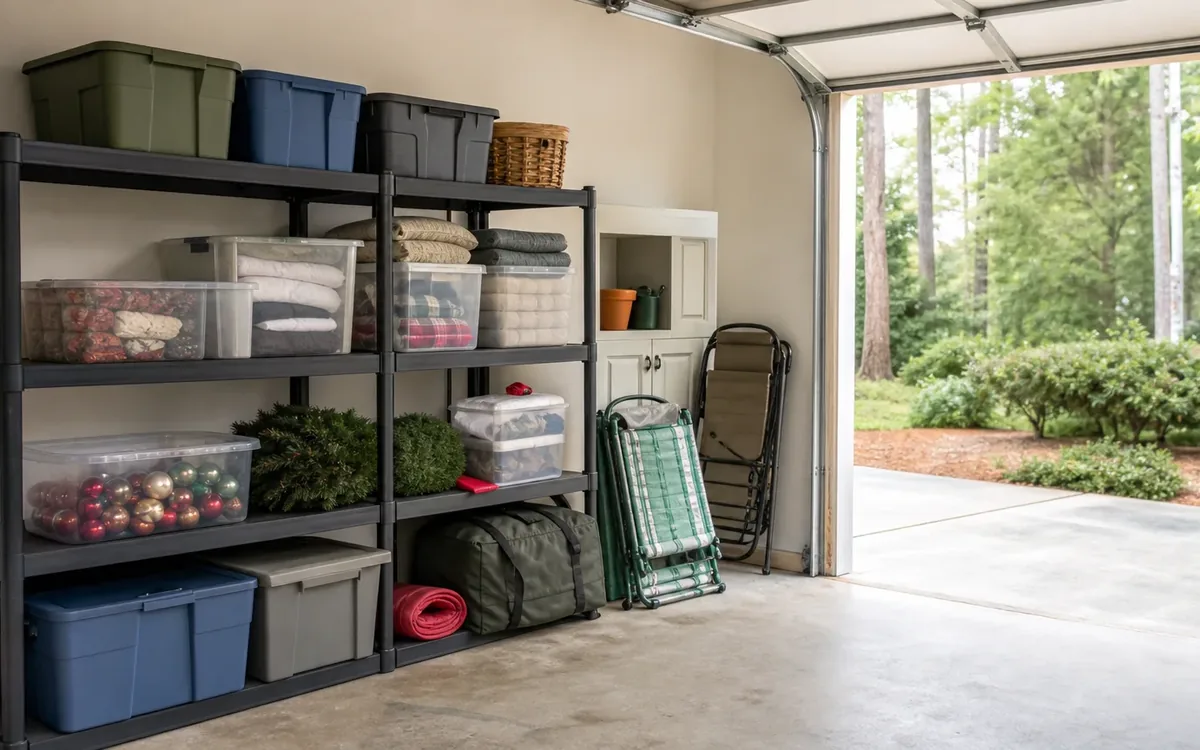
Pack belongings only when they are clean and fully dry. Moisture sealed inside a container can damage contents even when the surrounding space seems suitable.
Use containers sized for both the contents and the person who will move them. A large bin full of dense objects may be harder to handle than several smaller containers. Avoid overfilling lids or relying on crushed boxes to support a stack.
Different groups need different approaches:
- Holiday ornaments: Use dividers or individual wrapping, with fragile pieces protected from shifting.
- Seasonal clothing and linens: Follow care instructions, dry thoroughly, and choose packaging suited to the fabric.
- Artificial greenery: Protect shapes and branches from compression; contain loose decorative material.
- Outdoor equipment: Remove soil and moisture, and follow manufacturer storage instructions.
- Paper keepsakes: Use appropriate protective materials and avoid spaces prone to dampness.
- Battery-powered decorations: Follow manufacturer guidance on battery removal and storage.
Sealed plastic bins can help contain sturdy items, but they are not the right answer for every material. Valuable textiles, artwork, or unusual collectibles may need advice from a qualified conservator or other relevant specialist.
Check restrictions before storing fuels, chemicals, propane containers, or equipment that contains them. Ask the storage provider and follow applicable safety requirements. Do not assume that an item allowed in a household garage is permitted in a commercial unit.
Make labels useful when the season returns
A label reading “Christmas” is less useful than “Holiday tree ornaments, fragile, living-room closet.” Include the season, specific contents, intended destination, and any handling note.
Give each container a simple identifier, such as “Holiday A” or “Beach B.” Keep a matching inventory in a phone note, spreadsheet, or paper folder. Photograph the contents before closing the container, especially when several bins look alike.
Useful inventory fields include:
- Container identifier and contents.
- Current location, including shelf or zone.
- Intended destination in the new home.
- Next-use occasion.
- Owner or responsible household member.
- Handling or environmental concerns.
Place labels where they can be read without unstacking everything. Keep detailed information about valuable contents in a private inventory rather than on an exterior label visible to others.
Update the record whenever a container moves. An accurate inventory makes it easier to retrieve a particular wreath or bedding set without opening every box.
How can you keep storage from becoming permanent overflow?
Storage works best when the household can explain why each group is there and what happens next. An undefined “we might need it” arrangement offers no practical way to evaluate the space later.
Tie review points to real events: completion of the move, the first holiday in the new home, installation of planned shelving, or the next use of outdoor equipment. Avoid setting a deadline that depends on unconfirmed contractor work or an uncertain property transaction.
At each review, ask:
- Did the items get used as expected?
- Was retrieval manageable?
- Did the packaging protect them?
- Can the new home now accommodate them?
- Does the storage arrangement still serve its original purpose?
This is a review of the storage system, not an instruction to discard belongings. The household may choose to change locations, improve shelving, adjust container sizes, or continue storing the items.
If costs or access have become difficult, compare alternatives with the storage provider. Consider the total arrangement, including transportation, insurance, and the effort required to retrieve belongings, rather than looking only at the advertised rental charge.
Coordinate storage with the move and home preparation
A seasonal container should have its destination assigned before loading begins. Otherwise, items intended for storage may arrive at the new home’s front door while belongings needed immediately go elsewhere.
Use clearly separated destination labels, such as “new home,” “temporary storage,” and “seasonal storage.” Keep next-use items out of stacks that will be difficult to reach. Share the destination list with everyone handling the move.
A practical cleanout or move team may discuss:
- Which containers need to remain accessible.
- Whether packing and labels are ready for transport.
- Access limitations at each destination.
- Handling concerns for bulky or fragile belongings.
- Which tasks are included in the agreed scope.
Confirm responsibilities rather than assuming storage rental, specialty packing, or transportation to every destination is included. Storage facilities and any contractor work are separate provider choices.
Clutter Cleaner of South Carolina offers downsizing and organizing and move management across South Carolina. Its physical business location is Mount Pleasant, and Charleston is its primary market. Households can call (843) 972-7020 to discuss the transition and confirm an appropriate scope.
The household chooses destinations and priorities. Legal authority over estate property stays with the responsible representative and legal adviser. Appraisals belong with qualified appraisers; listing and presentation decisions belong with the homeowner and real-estate professional. Inspection findings and compliance requirements stay with the responsible professionals or authorities. Any disposal arrangement should also be confirmed separately.
Short FAQ
Is a climate-controlled unit necessary for holiday decorations?
It depends on their materials and the actual storage conditions. Paper, textiles, electronics, and fragile keepsakes need different protection from durable outdoor decorations. Ask the provider about environmental controls and inspect for moisture concerns.
Can seasonal items stay packed after the move?
Yes, if the containers remain suitable, dry, labeled, and accessible. Check the contents after transport for shifting or damage, and update the inventory with their final locations.
Should valuable seasonal heirlooms go into ordinary storage?
Do not treat valuable or unusually fragile pieces like general household decorations. Discuss packaging with a relevant specialist, confirm ownership, and review insurance coverage before choosing a location.
What should be unpacked first?
Unpack seasonal belongings needed for the next planned occasion or household activity. Leave later-use items in their assigned locations, with enough access to inspect them and retrieve them safely.



