
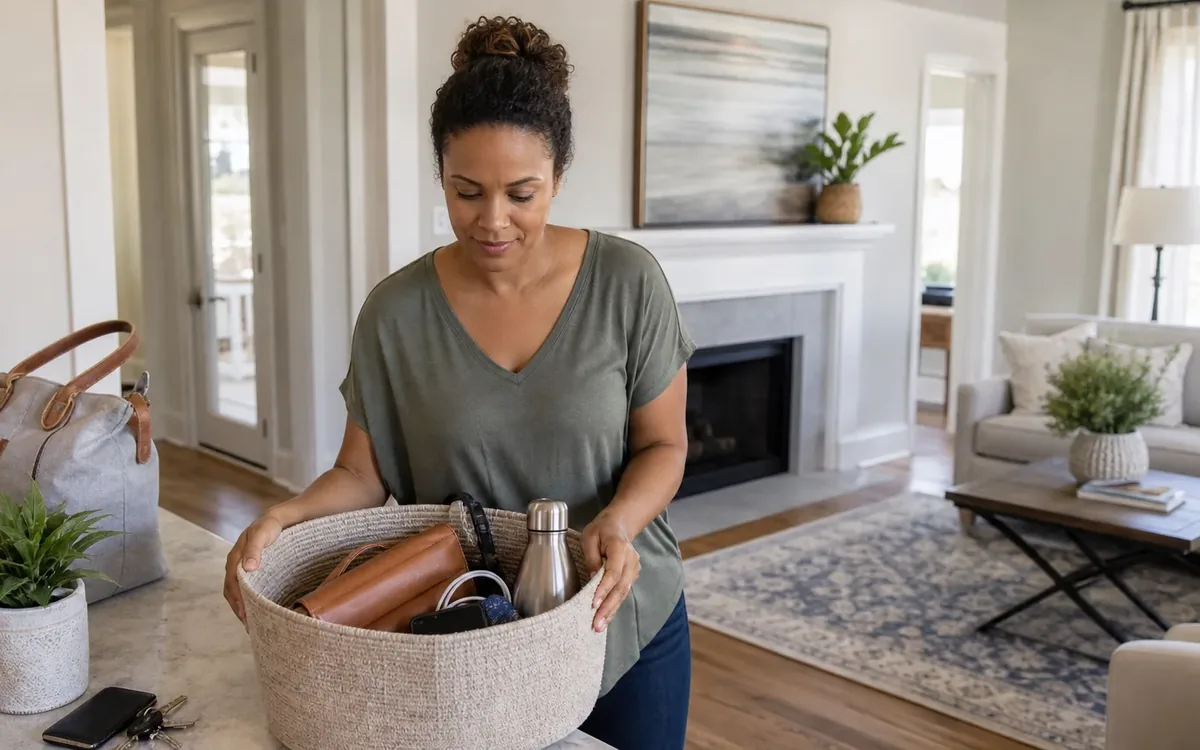
Store daily essentials during home showings in portable, labeled containers that can be removed or placed in a secure, designated location before visitors arrive. Keep only what your household regularly uses, separate private or valuable items, and assign every person a grab-and-go kit. The goal is not to make the home look unoccupied. It is to keep necessities accessible without leaving counters, closets, and personal information exposed.
Quick answer: Create one portable daily-use kit per household member, plus separate kits for medications, pets, cleaning supplies, and important documents. Choose a consistent storage location outside the main showing areas, then use a short reset list before leaving. Ask the real-estate professional how buyers will access the property and which spaces must remain visible.
This approach works across South Carolina because it can be adjusted for an occupied house, condominium, rural property, or second home. It also avoids a common problem: putting essentials into random drawers before every showing and then being unable to find them afterward.
What should stay accessible during home showings?
Keep accessible only the items needed for ordinary routines between showings. That usually means toiletries, current medications, chargers, a few garments, work or school materials, pet necessities, and basic food-preparation supplies.
Start by sorting daily possessions into three groups:
- Needed every day: toothbrushes, current prescriptions, keys, wallets, chargers, work devices, school items, and pet food.
- Needed occasionally: backup toiletries, specialty cookware, extra linens, seasonal clothing, hobby equipment, and paper files.
- Not needed before the move: decor collections, excess serving pieces, archived records, spare furniture, and packed seasonal goods.
Pack the third group for the move if the household has decided to keep it. Place occasional-use items in clearly labeled containers away from prime storage areas. Give daily necessities the most convenient and controlled locations.
A household preparing an occupied property may benefit from professional help with sorting, packing coordination, or room resets. Review the scope of home sale preparation services before deciding whether outside assistance fits the situation. The homeowner still decides what to retain, donate, sell, discard, or move unless another person has documented authority to make those choices.
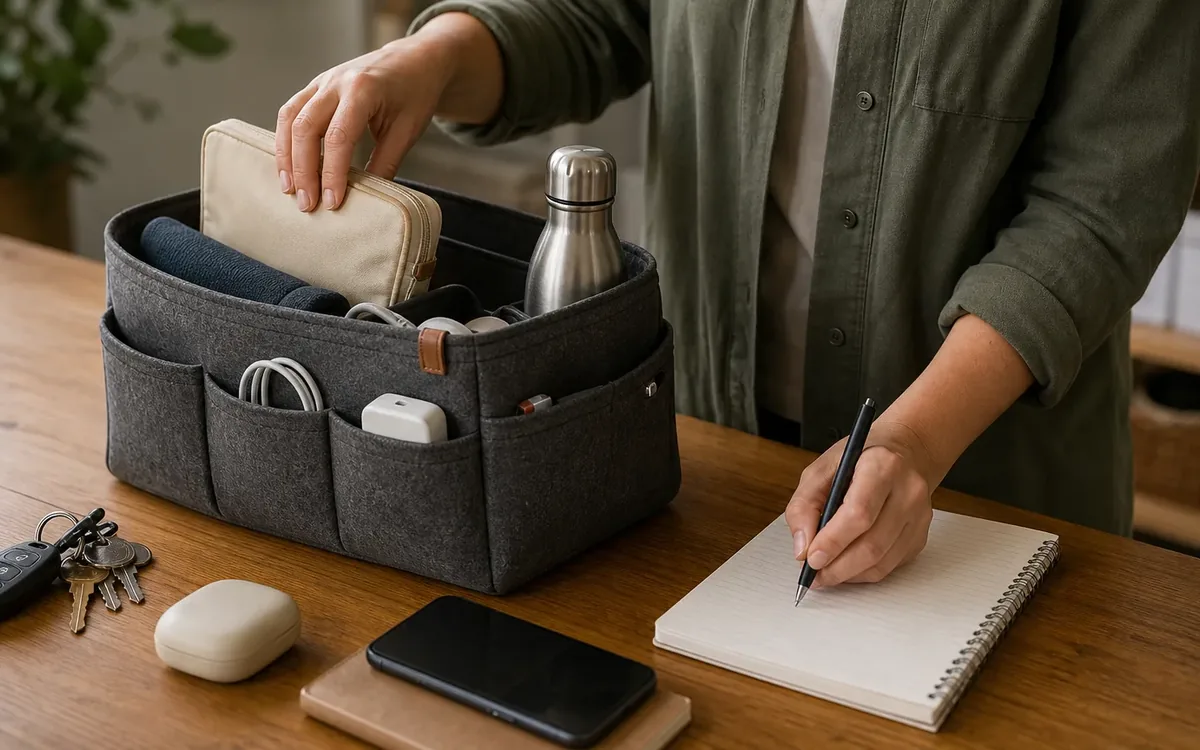
Build a portable daily-essentials system
A portable system prevents last-minute clutter sweeps. It also makes each reset repeatable when showing requests vary.
Use these five container types:
- Personal caddies: Give each household member a handled bin or zippered bag for grooming products, devices, and other personal items.
- Document case: Place sensitive papers in a lockable case or secure off-site location rather than an unlocked desk or cabinet.
- Medication kit: Keep current medications together and under the control of the person who uses or administers them.
- Pet kit: Group leashes, carriers, waste bags, food, bowls, and any animal medication needed while away from the property.
- Reset basket: Collect the few loose items that must leave countertops immediately before a showing.
Choose containers that are easy to carry and easy to recognize. Labels such as “Bathroom Daily,” “Work,” or “Pet Outing” are more useful than labels based only on a room name.
Avoid overfilling the kits. A portable bin that is too heavy or packed with rarely used products will soon become another cluttered storage area. Review its contents whenever the household routine changes.
If the home contains a large volume of inherited or accumulated belongings, solve that issue separately from daily-item storage. The guide to how clean should a house be for showings explains decision-making, sorting, and cleanout roles without treating every possession as part of the showing routine.
Where can essentials go while buyers tour the home?
The best location depends on security, access, weather exposure, and whether buyers are expected to inspect the storage area. A real-estate agent should explain which closets, cabinets, garages, sheds, and other spaces may be opened during a showing.
Possible household choices include:
- Taking personal kits in the household’s vehicle when leaving
- Keeping nonvaluable supplies in matching bins inside a designated cabinet
- Using a locked case for records or sensitive electronics
- Leaving selected packed possessions with a trusted person
- Renting storage directly from a third-party provider
- Moving nonessential goods to the household’s next residence, when practical
Do not treat a garage, attic, crawl space, detached building, or parked vehicle as automatically safe. Heat, humidity, moisture, pests, theft risk, and access conditions can affect what belongs there. Follow product labels for anything sensitive to temperature or moisture. A qualified provider should advise on specialty storage needs.
Off-site storage is a separate household arrangement, not a guaranteed part of cleanout or move support. Compare facility access, climate controls, insurance terms, prohibited items, and contract conditions directly with the storage provider. The household should also decide who holds keys or access credentials.
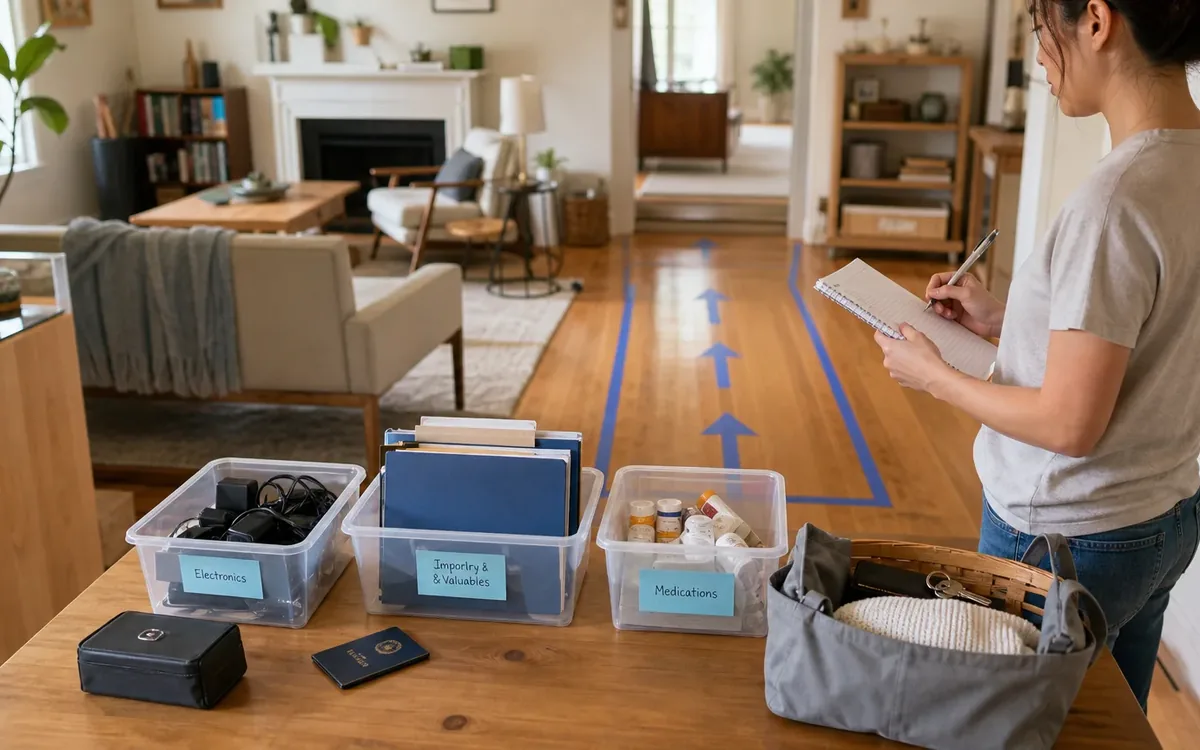
How should private, valuable, or hazardous items be handled?
Remove or secure anything that reveals private information, has significant financial or sentimental value, creates a safety concern, or should not be handled by visitors. An attractive container is not a substitute for security.
Pay particular attention to:
- Passports, tax records, checks, account statements, and identity documents
- Jewelry, cash, collectible items, and small electronics
- Prescription and over-the-counter medications
- Firearms, ammunition, and other weapons
- Keys, access cards, alarm details, and garage remotes
- Family calendars showing names, schedules, or travel plans
- Mail, school paperwork, medical records, and legal correspondence
- Chemicals, sharp tools, and potentially hazardous materials
The household can decide where ordinary belongings will be kept and who will carry them out. A practical cleanout or move team may discuss sorting categories, portable containers, packing order, access paths, and which items should be separated for another provider.
Different decisions remain elsewhere. An attorney or other appropriately authorized professional should address ownership, estate authority, disputes, or document-retention questions. A qualified appraiser should determine value when a formal valuation is needed. Firearm storage and transport questions should be directed to the appropriate authority or qualified professional. Hazardous-material handling and disposal must follow applicable rules and facility requirements.
Do not place valuables in a box marked only “personal” and assume it will remain private. If an item cannot safely remain in the property during access by prospective buyers or service providers, arrange secure custody elsewhere.
Keep kitchens and bathrooms usable but visually calm
Kitchens and bathrooms create most of the recurring daily clutter. They also contain products that are easy to consolidate.
In the bathroom, give each person a washable caddy for frequently used items. After the morning routine, the caddy can go into the designated cabinet or leave with the household. Remove prescriptions, personal medical products, and identifying labels from view. Keep one modest set of clean towels available rather than filling the room with extra linens.
In the kitchen, reserve one accessible zone for everyday food and equipment. Group breakfast items, reusable bottles, coffee or tea supplies, and lunch-making materials in separate bins. Store countertop appliances only if the household can retrieve and replace them without disrupting the room.
Refrigerated medicine or specialty food needs a different plan. Follow its storage instructions and do not leave it in a hot vehicle or uncontrolled location. If the appliance itself will be disconnected, moved, repaired, or inspected, confirm safe handling with the relevant product guidance or qualified professional.
Create a small cleaning kit containing only products used for showing resets. Keep chemicals secured from children and animals, retain original labels, and never mix products. Excess chemicals and restricted materials may require an approved disposal option rather than ordinary trash.
Plan for children, pets, work, and school
Daily storage must support the people and animals still living in the property. A staged-looking room is not useful if schoolwork disappears or the pet carrier is buried behind packed boxes.
For children, use one open-top routine bin per child. It may contain current school materials, a comfort item, headphones, and a small selection of activities. Keep names, school details, schedules, and identifying photographs out of public view.
For remote work, use a laptop sleeve or portable office case. Include the charger, headset, notebook, and any authentication device. Store confidential client or employer materials according to the organization’s requirements. A home-showing plan does not override workplace privacy or records policies.
For pets, decide in advance how they will leave the property and who is responsible. Keep the carrier or leash accessible, not behind moving cartons. Food, medication, identification, and cleanup supplies should travel together. Discuss animal presence and showing arrangements with the real-estate professional rather than assuming a pet can remain inside.
Mobility devices and medical equipment require priority access. Do not conceal essential equipment in a way that creates a fall hazard or interrupts care. A household may organize the surrounding supplies, but equipment placement or transport questions should be addressed with the relevant medical provider, manufacturer guidance, or qualified mover as appropriate.
Use a room-by-room reset without hiding defects
A showing reset should remove daily clutter, not cover property conditions. Do not place bins in front of electrical panels, mechanical equipment, attic access, doors, windows, or areas that a buyer or inspector may need to view.
Use this six-step reset:
- Return daily products to their assigned portable kits.
- Remove documents, valuables, medications, keys, and work materials.
- Clear dishes, food waste, bathroom waste, and pet waste.
- Check floors and walkways for cords, bags, toys, and other obstacles.
- Place remaining bins only in the agreed storage location.
- Take household members, pets, and departure kits as planned.
Do not make repairs, disconnect systems, or conceal staining, damage, odors, moisture, or code concerns as part of a cosmetic reset. Contractors determine their own repair scope. Inspectors assess property conditions within their professional role. Real-estate professionals advise on presentation, access, disclosures, and transaction strategy. Local or state authorities determine compliance requirements and enforcement.
Clutter Cleaner of South Carolina may discuss practical home sale preparation, move management, downsizing and organizing, estate cleanouts, auctions and estate sales, or code compliance support when relevant. The exact scope should be confirmed directly. Household authorization is still needed for disposition choices, and professional decisions remain with the responsible specialist or authority.
What should you do when showing plans change?
Build a system that works even when household plans shift. The most reliable approach is to reduce the number of decisions required before leaving.
Keep departure items together near a consistent exit, but do not block the door or walkway. Maintain a written reset list in a private location or on a phone. Assign responsibilities by person, such as pet kit, bathroom caddies, kitchen check, or document case.
If a showing cannot be accommodated safely, contact the listing professional. That professional controls scheduling advice and communication within the listing relationship. A cleanout or move team should not decide whether a buyer may enter, whether a showing must proceed, or what transaction disclosures are required.
Revisit the storage system after each use. If loose items repeatedly appear, either add them to an existing kit or assign a permanent location. If packed boxes keep being reopened, the contents may not have been ready for long-term packing. Move those items into an occasional-use category rather than repeatedly disturbing the home.
Useful next steps for South Carolina households
Begin with one bathroom, one kitchen zone, and one departure station. Once those routines work, apply the same categories to bedrooms, workspaces, and pet areas.
The household can then decide whether to:
- Pack nonessential possessions for the eventual move
- Donate or discard items it has authority to release
- Consult an appraiser about potentially valuable property
- Hire a storage provider under a separate agreement
- Ask a contractor about repairs or physical modifications
- Ask the listing professional about showing access and presentation
- Request organizing, cleanout, or move-management support
For assistance within the approved statewide scope, contact Clutter Cleaner of South Carolina at (843) 972-7020 to discuss the property and desired support. The business is physically located in Mount Pleasant, and Charleston is its primary market. Service availability and exact scope should be confirmed for the South Carolina property involved.
Short FAQ
Should daily essentials be stored in closets during a showing?
Only if the listing professional confirms that the chosen closet is appropriate and the contents can remain orderly. Buyers may look at storage spaces, so portable kits or secure off-site custody may be better for private items.
Can packed boxes stay in the garage?
That is a household and real-estate presentation decision. Consider buyer access, moisture, heat, pests, security, and blocked systems. Never obstruct panels, equipment, doors, or inspection access.
Who decides whether an item should be sold or donated?
The owner or another person with documented authority makes that decision. A cleanout, auction, estate-sale, or move professional may explain practical options, while an appraiser addresses formal valuation and an attorney addresses disputed authority or ownership.
Where should medications go during a showing?
Keep them secured and under the control of the person responsible for them. Follow label requirements, especially for temperature-sensitive medication, and consult a pharmacist or medical professional when storage instructions are unclear.
Should storage hide unfinished repairs or property problems?
No. Storage should organize belongings, not conceal conditions. Direct repair questions to qualified contractors, inspection questions to inspectors, disclosure questions to the real-estate professional or attorney, and compliance questions to the responsible authority.



